EK’ BALAM, Mexico — It might not be for the vertigo-challenged, but getting to the top of the Acropolis at Ek’ Balam is definitely worth the effort. It is, quite literally, a view fit for a king.
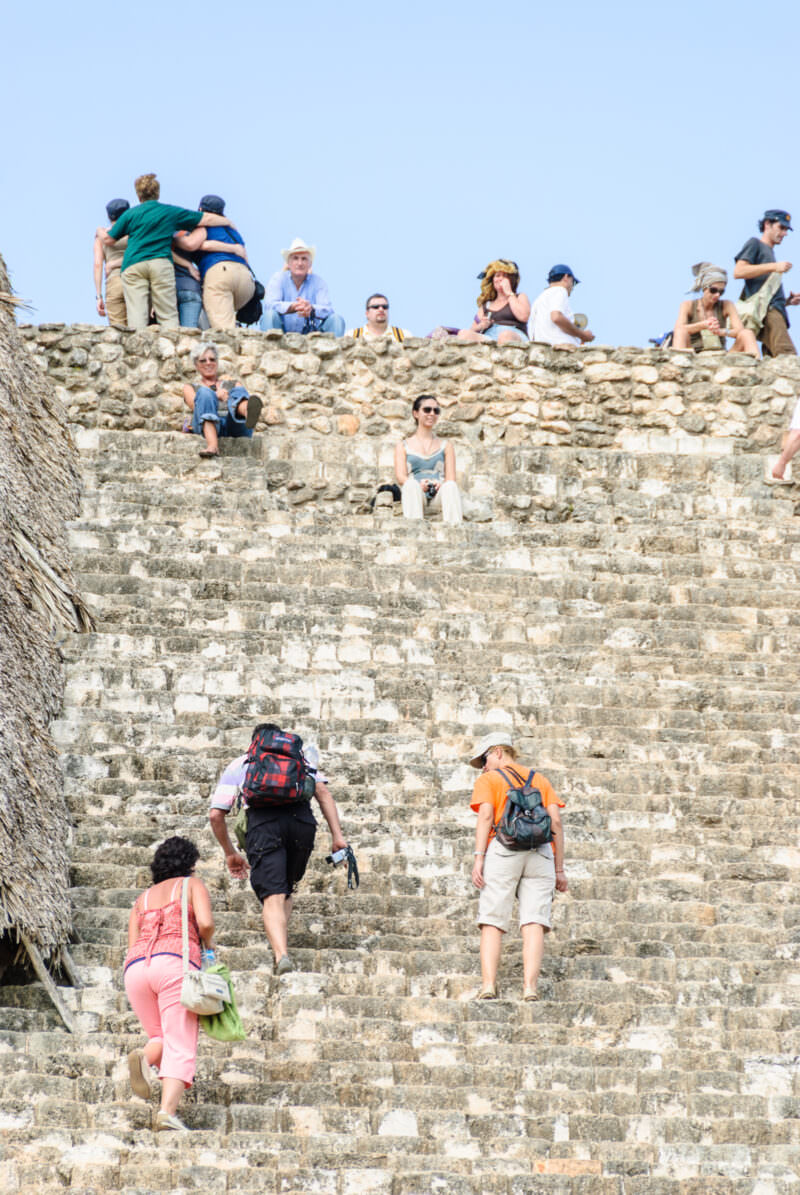
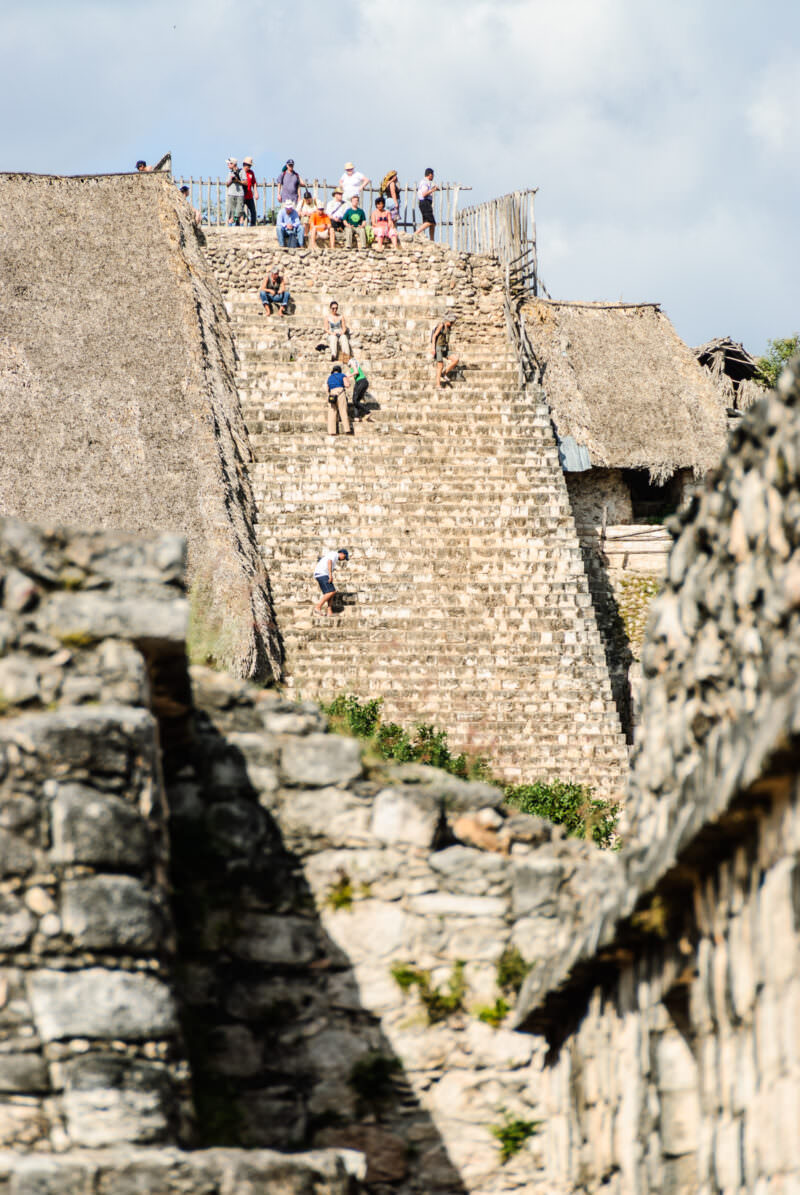
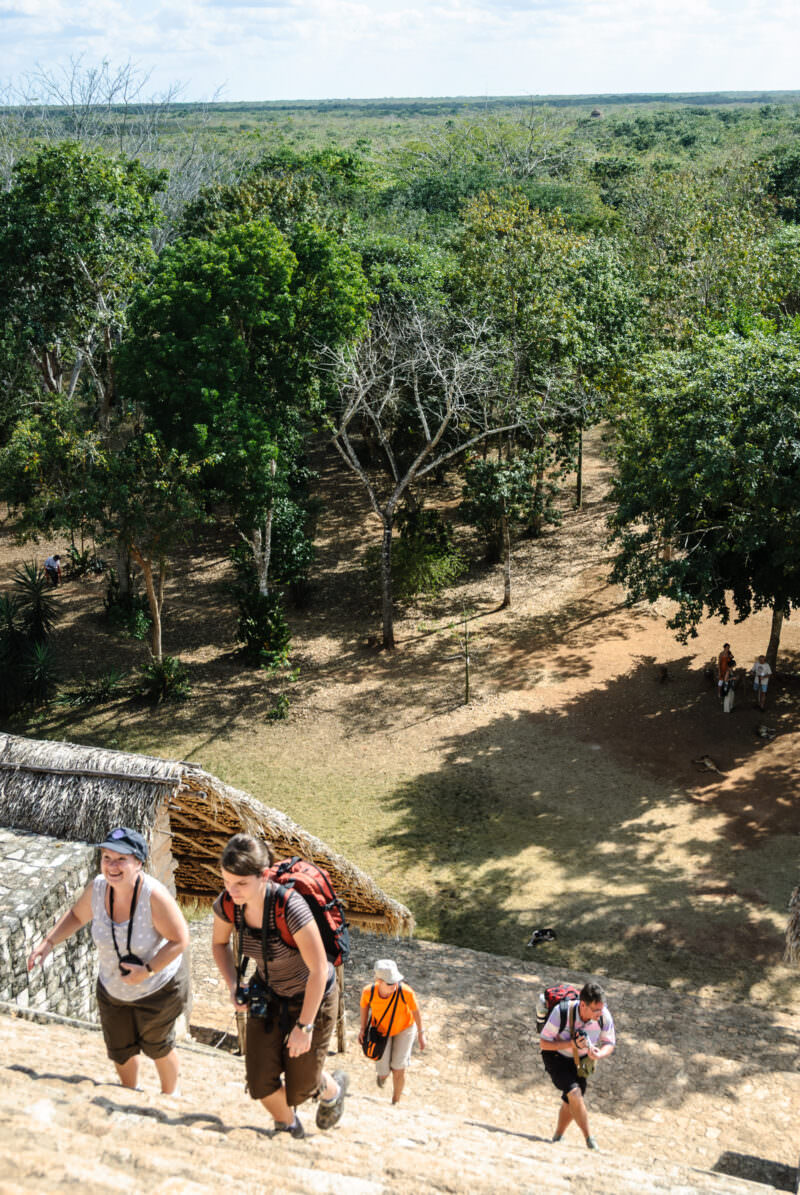
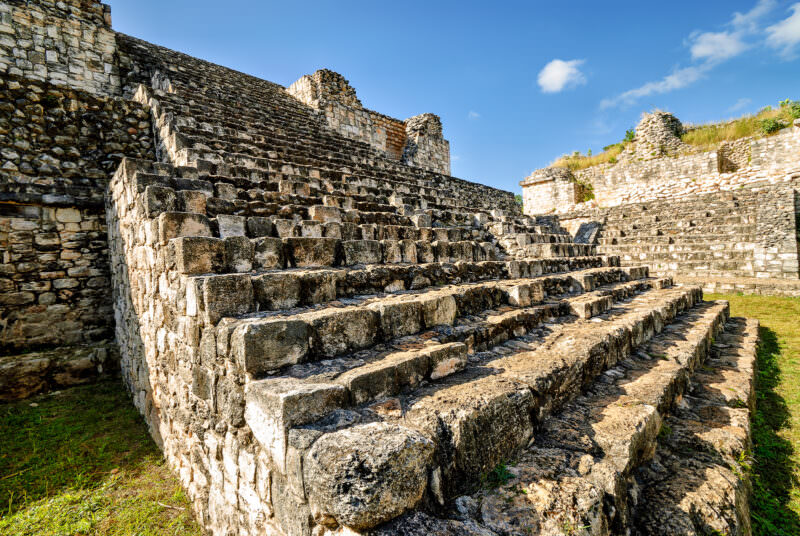
It’s a deceptively hard climb considering it is only 106 steps. The stones are old, worn, and uneven. It’s steep — surprisingly so — and there are no railings running along the side of the wide steps and nothing else at hand to hang on to. It might not be for the vertigo-challenged, but getting to the top of the Acropolis at Ek’ Balam is well worth the effort. It is, quite literally, a view fit for a king.
It’s also somewhat eerie.
Like Chichen Itza and a number of other sites in Maya Mesoamerica, a thousand years ago this was once a thriving city. Actually, covering about 12 square kilometers (4.63 square miles), it was the largest regional center for about three centuries from 600 to 900 CE, more than half a millennium before the Spanish arrived.1
TEMOZÓN, Yucatán, Mexico — The multi-tiered Structure 2 and adjacent platforms of Ek’ Balam (also known as Ek Balam) emerge from dense Yucatán jungle as seen from the summit of the Acropolis, the largest structure in the complex at roughly 160 meters (525 feet) long and 32 meters (105 feet) high. This elevated view illustrates why Ek’ Balam’s defensive walls were among the most substantial in Late Classic northern Yucatán: the ceremonial core — barely visible within the surrounding forest — was a tightly bounded elite precinct, its access governed by five gateways aligned to the cardinal directions. Photo by David Coleman / Have Camera Will TravelLicense this image at:DirectlyAlamy
No one lives here now — at least, not on the archaeological site itself — and the mounds of stone remnants are largely overgrown with the forest, except where the forest has been peeled back since the mid-1980s to make way for archaeologists and tourists.
It’s a marvel in itself that the jungle could have been tamed a millennium ago to make way for sophisticated crop farming and such extensive engineering feats.
Located about 32 miles (51 km) north of Chichen Itza, Ek’ Balam is among the half-dozen largest Maya sites of the Yucatan northern plains. Ek’ Balam, in particular, is both more intimate and has more personality than its better-known brethren, and it has only been fairly recently that the site has been open to visitors.
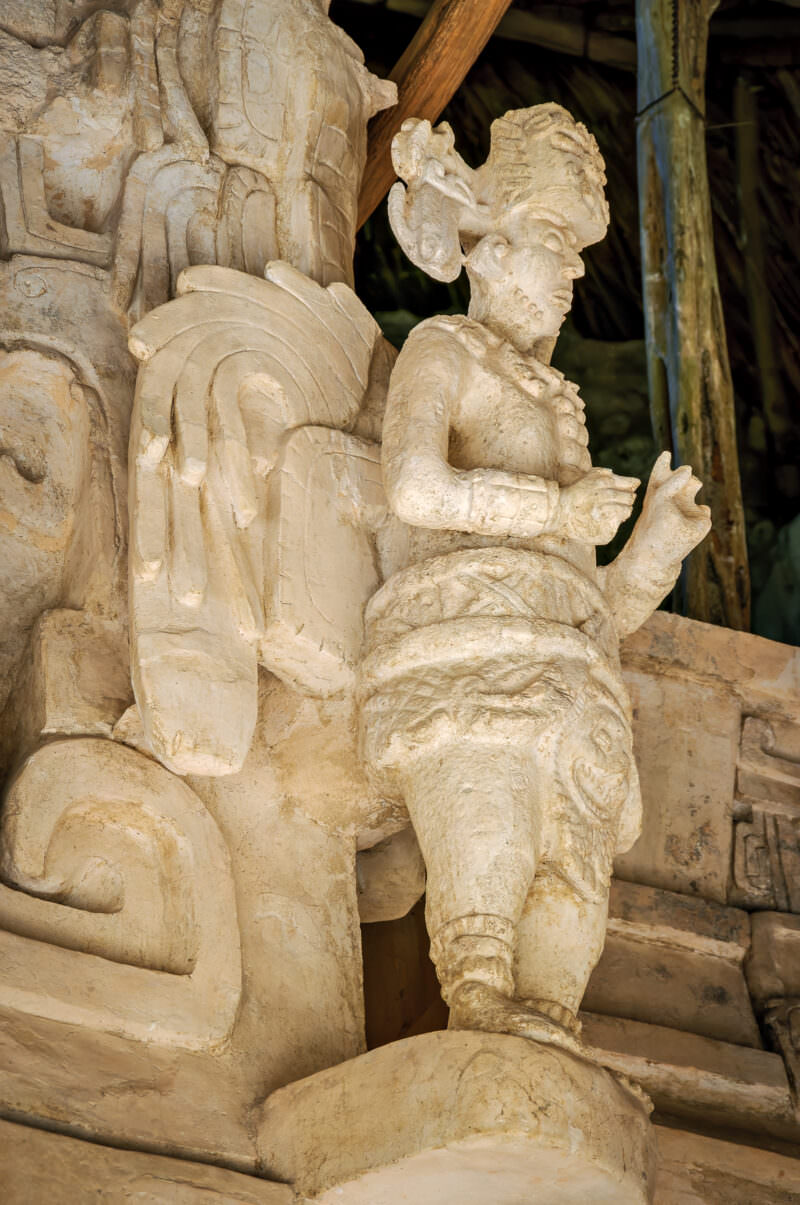
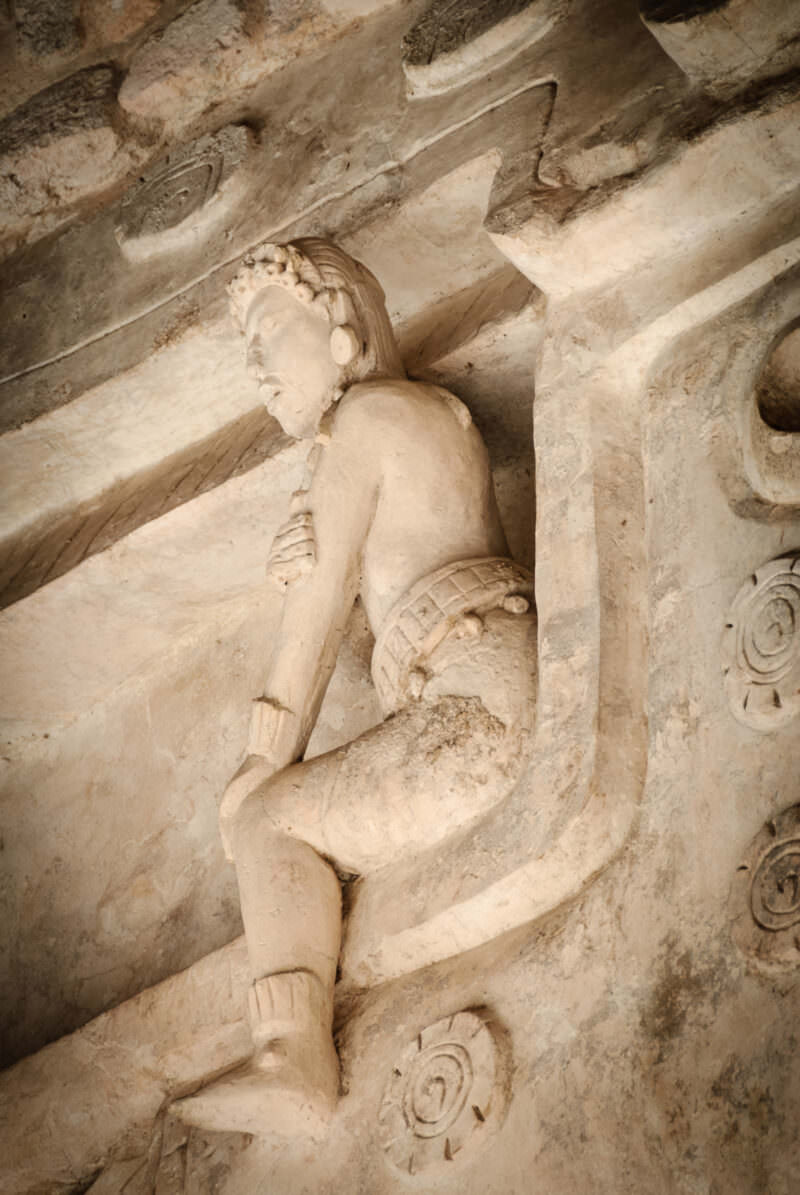
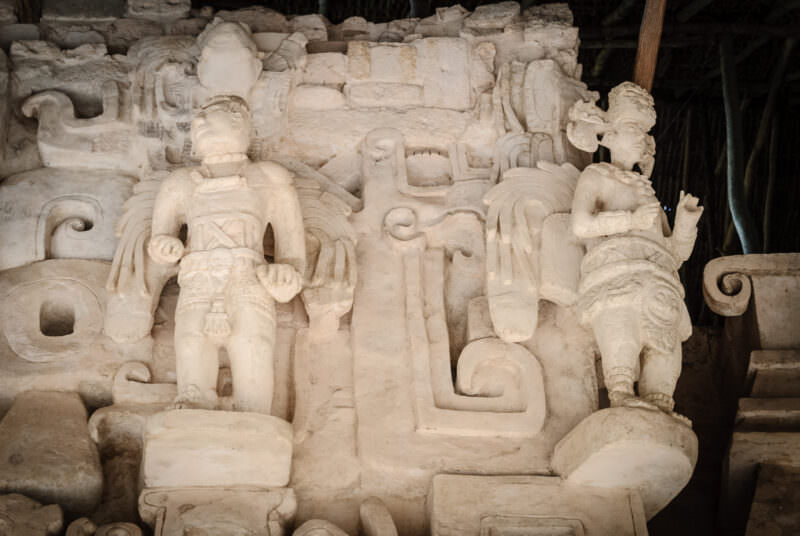
TEMOZÓN, Yucatán, Mexico — A winged stucco figure from the Sak Xok Naah façade at Ek’ Balam wears a zoomorphic headdress — a bird or reptile head rising from the crown — and a large feathered back-element, both modeled fully in the round from successive coats of lime plaster over the masonry core. The technique gave Maya sculptors an almost clay-like plasticity unavailable in stone, producing figures with no close parallel at any other Classic-period site. Photo by David Coleman / Have Camera Will TravelLicense this image at:DirectlyAlamy
Calm and serene and lightly visited — the only way in and out is by foot — it’s a world away from the glitzy, luxury resorts of Cancun.
The hordes of hard-drinking, hard-partying tourists staying at the beach strip of Cancun and Tulum often miss out on one of the world’s great spots just a couple of hours to that commercialized beach resort’s west: the spectacular ruins of the Maya civilization that once thrived on the Yucatan Peninsula.
Have Camera Will Travel // Newsletter
Practical field notes, hands-on gear tests.
Chichen Itza has received pretty intense attention since the late 19th century. But it wasn’t until the mid-1980s that archaeologists turned more of their attention to Ek’ Balam. As a result, it retains its rather unkempt feel — as if it has only recently been discovered in the jungle — something that just adds to the charm.
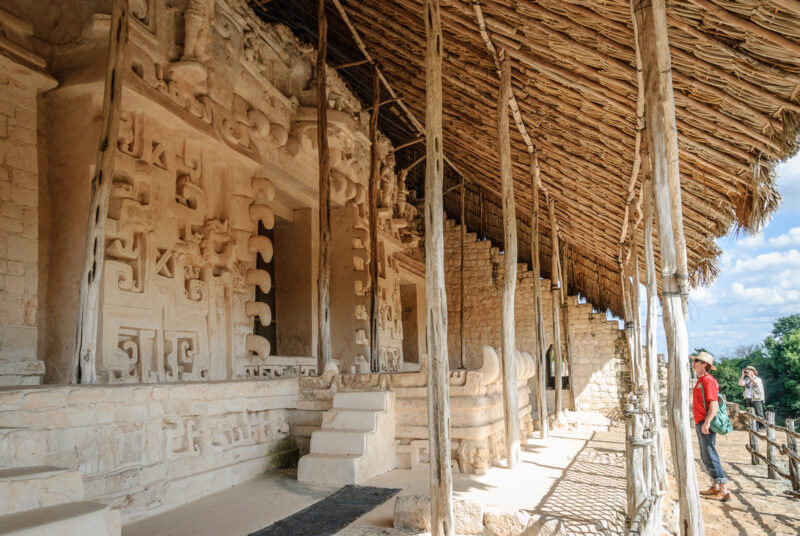
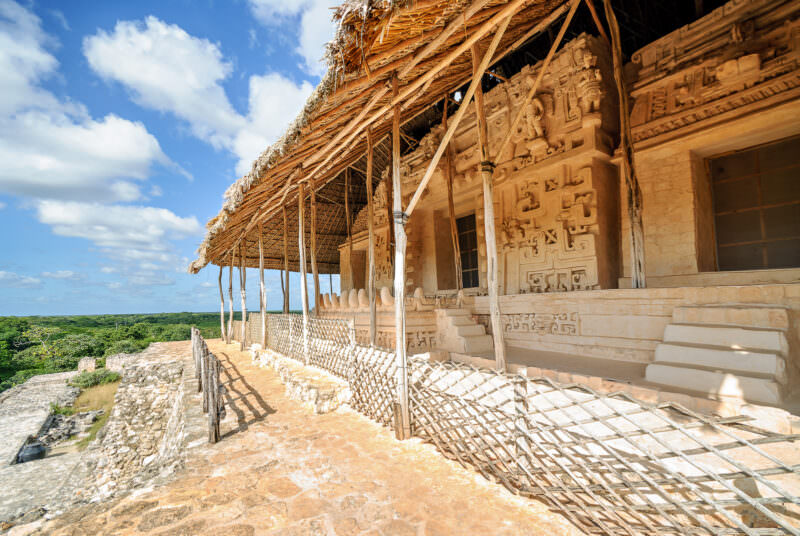
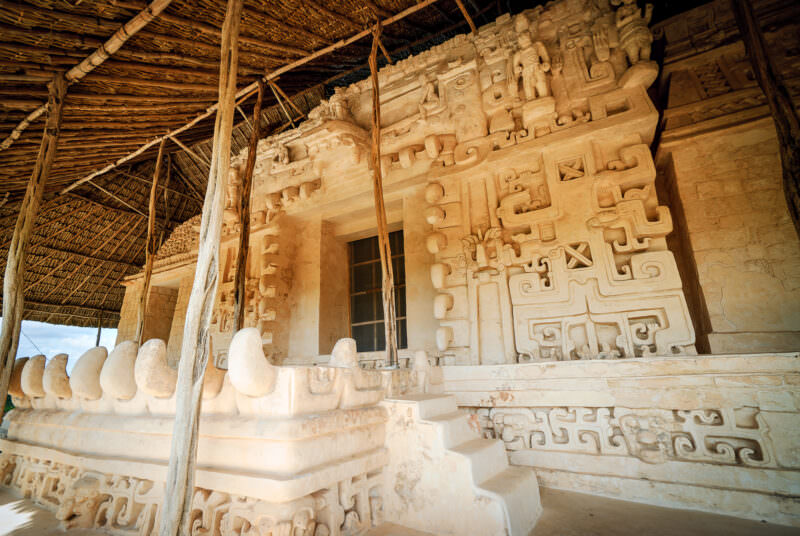
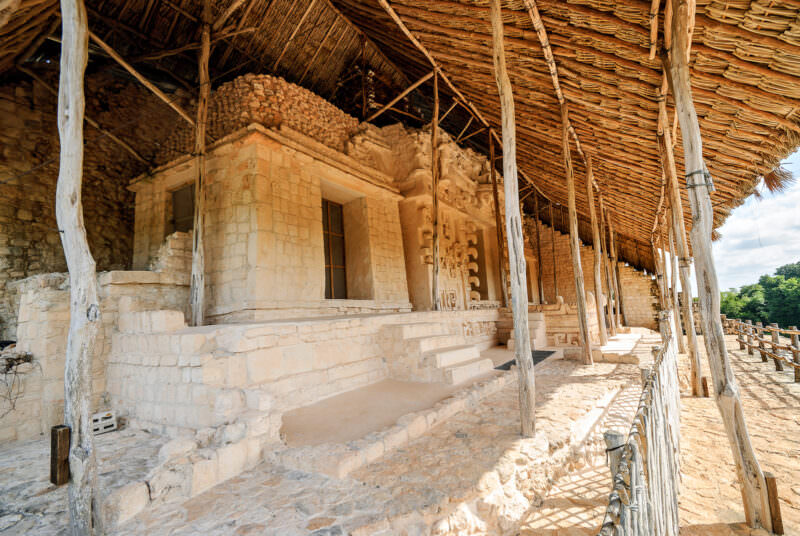
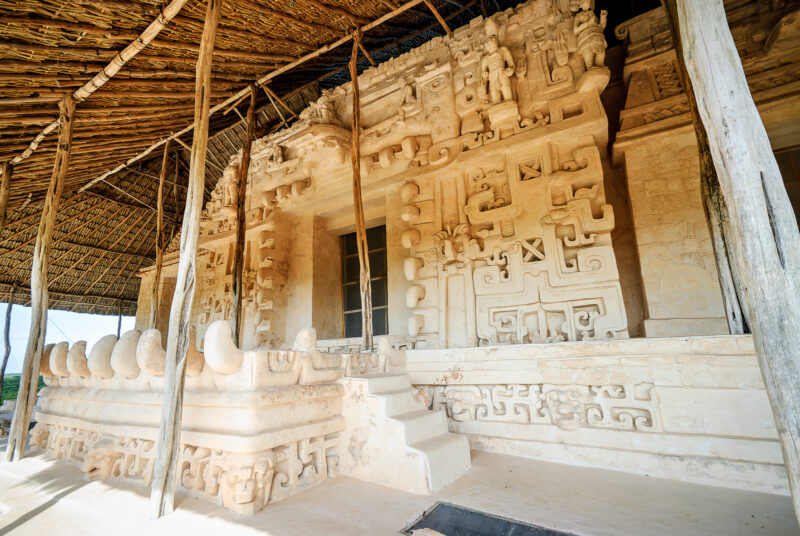
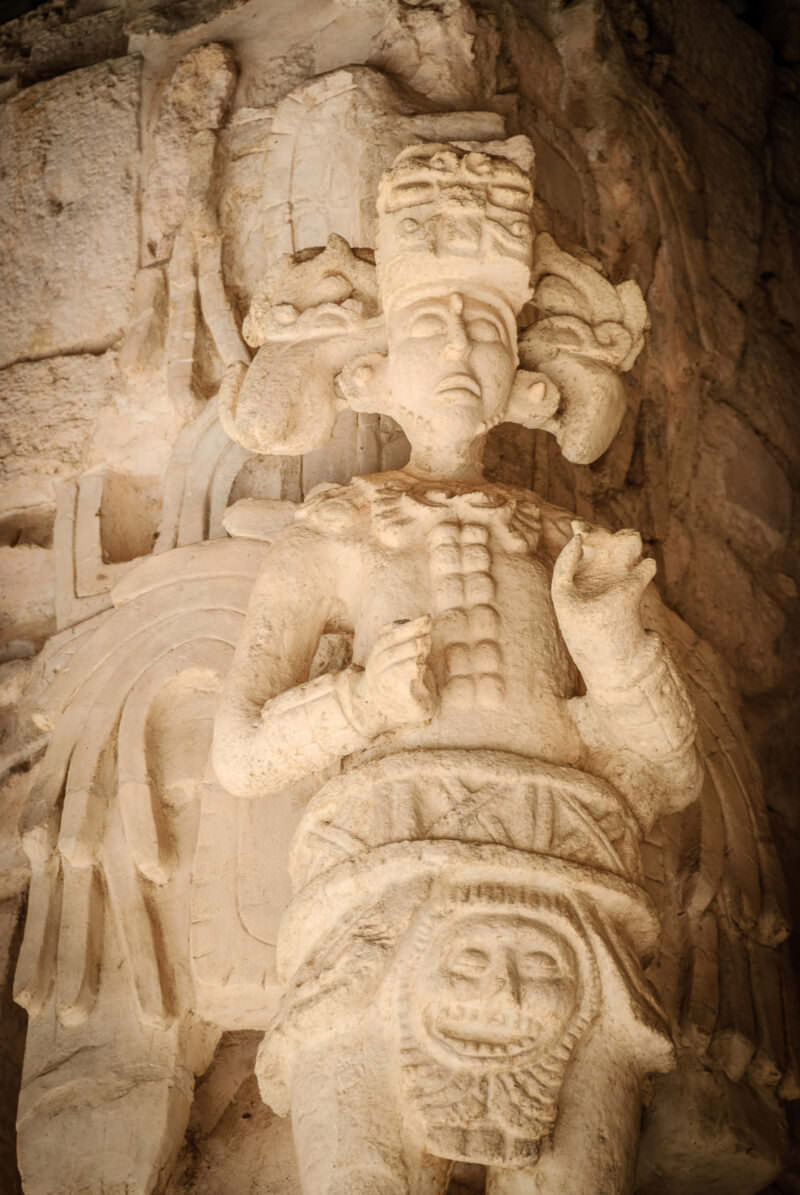
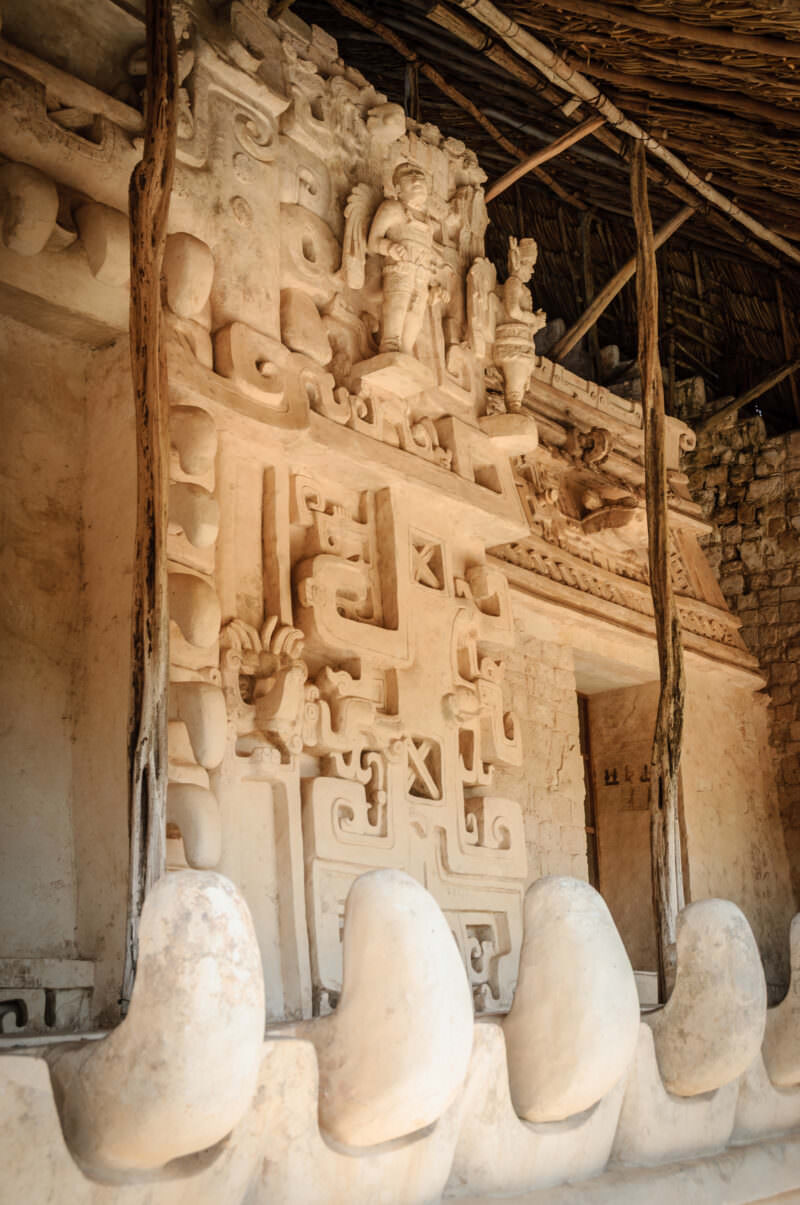
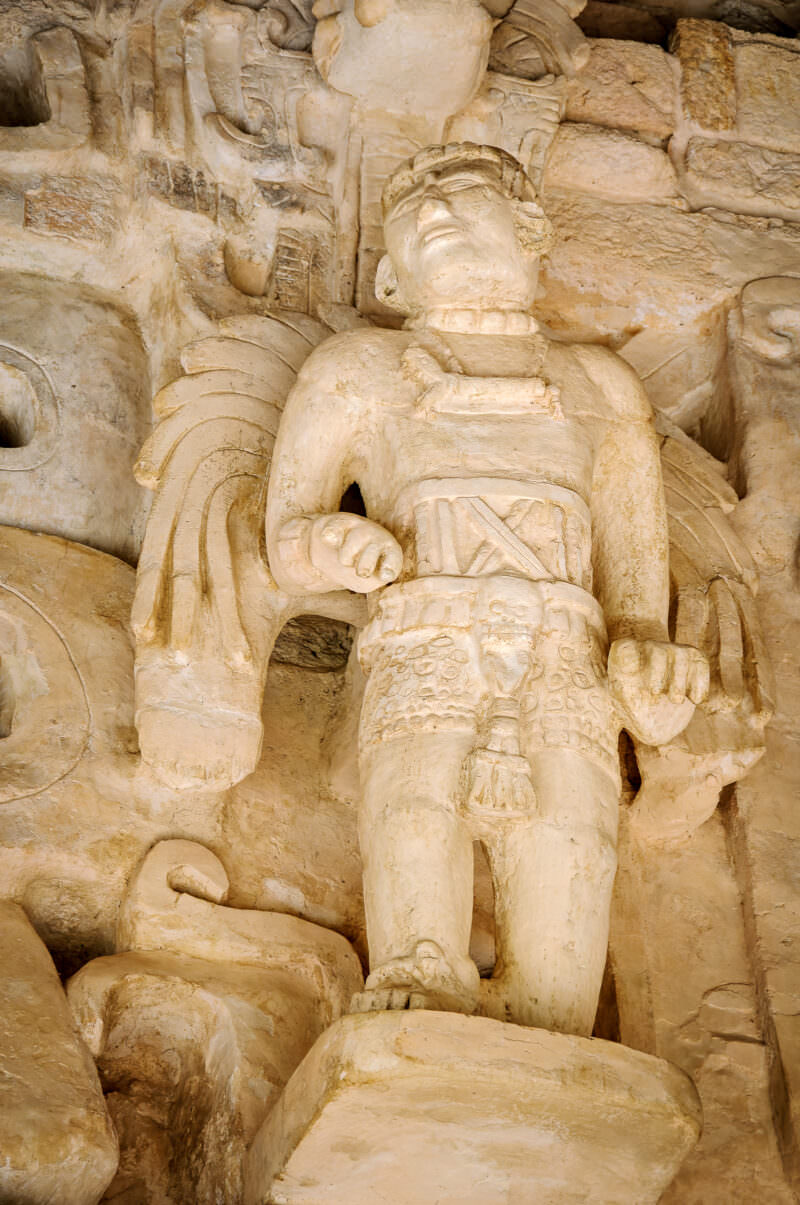
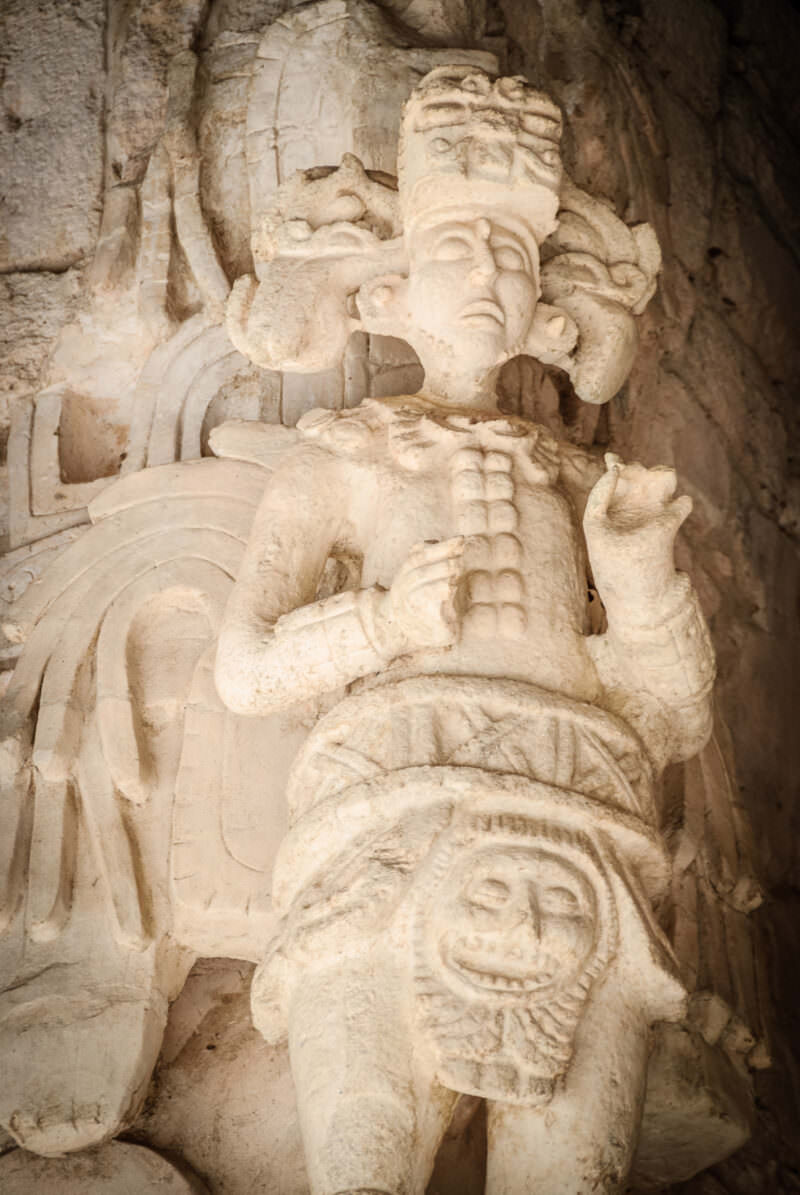
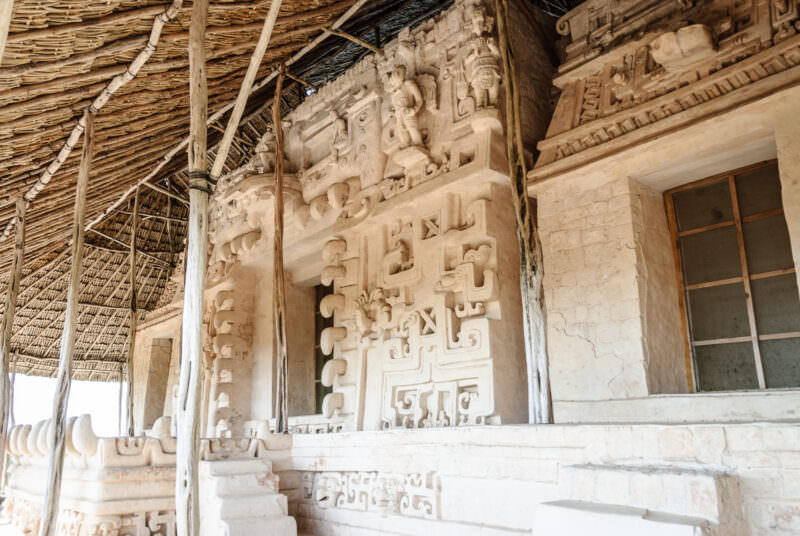
The most striking building on the site is the Acropolis, at once a temple and a palace. It features ornate carvings about two-thirds of the way up, decorating the exterior of the Tomb of Ukit Kan Le’k Tok’.
Many of these have been restored, but you still get an excellent sense of how grand and unusual it was originally.
Rising over 100 feet and measuring about 525 by 345 feet at its base, the Acropolis dominates the area and rises well above the surrounding forest. It was up here that the king and his family lived, with a 360-degree view of unbroken horizons.
For some extraordinary photography on the local Mayan peoples and their environment, I highly recommend checking out the work of Santiago Sierra Soler. For his book, Nahual, he collaborated with the local community of Ek’ Balam. You can see some of his photographs from this project on his website.
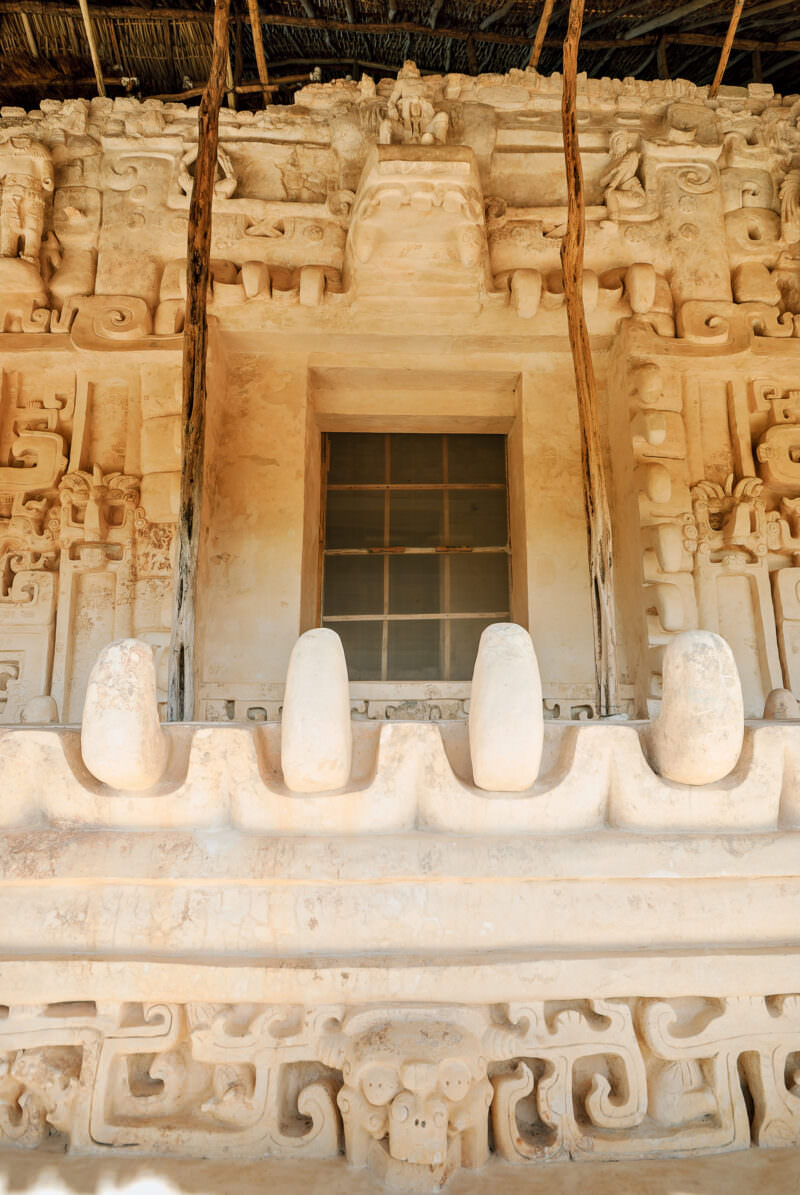
A recurring motif in the carvings is the jaguar — Ek’ Balam itself means “dark jaguar.” Large stone teeth create the impression of a massive jaguar’s mouth protecting the tomb, and frescoes and carved warriors remain uniquely well preserved (and reconstructed) among modern-day Maya sites.
To get there is a very steep climb on uneven steps without a handrail. It’s only a matter of time before Ek’ Balam follows several of the other Maya sites in banning visitors from climbing the structures, but for now one can freely scale the temple and not only see the fresco up close but also get a spectacular view of the surrounding region with unbroken views to the horizon.
Photos of the Ek’ Balam archeological site
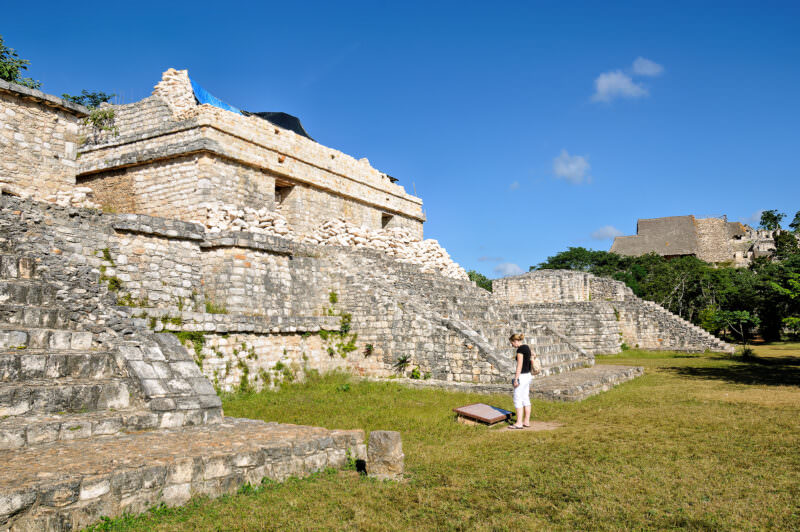
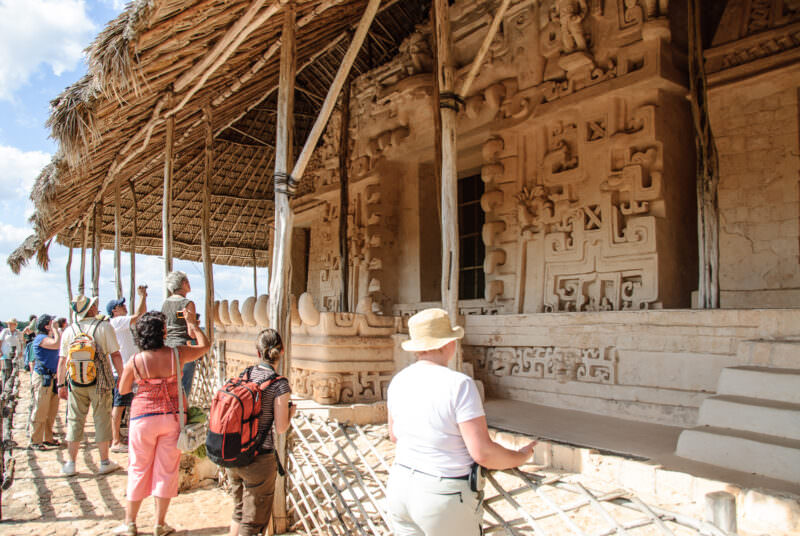
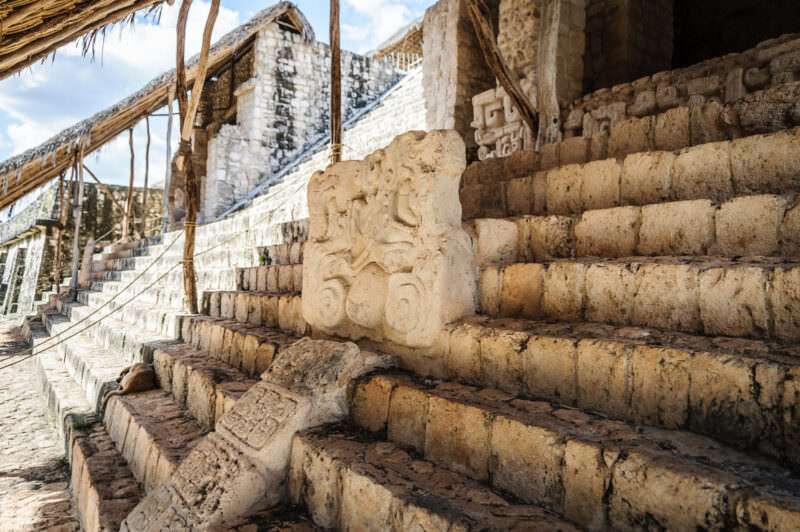
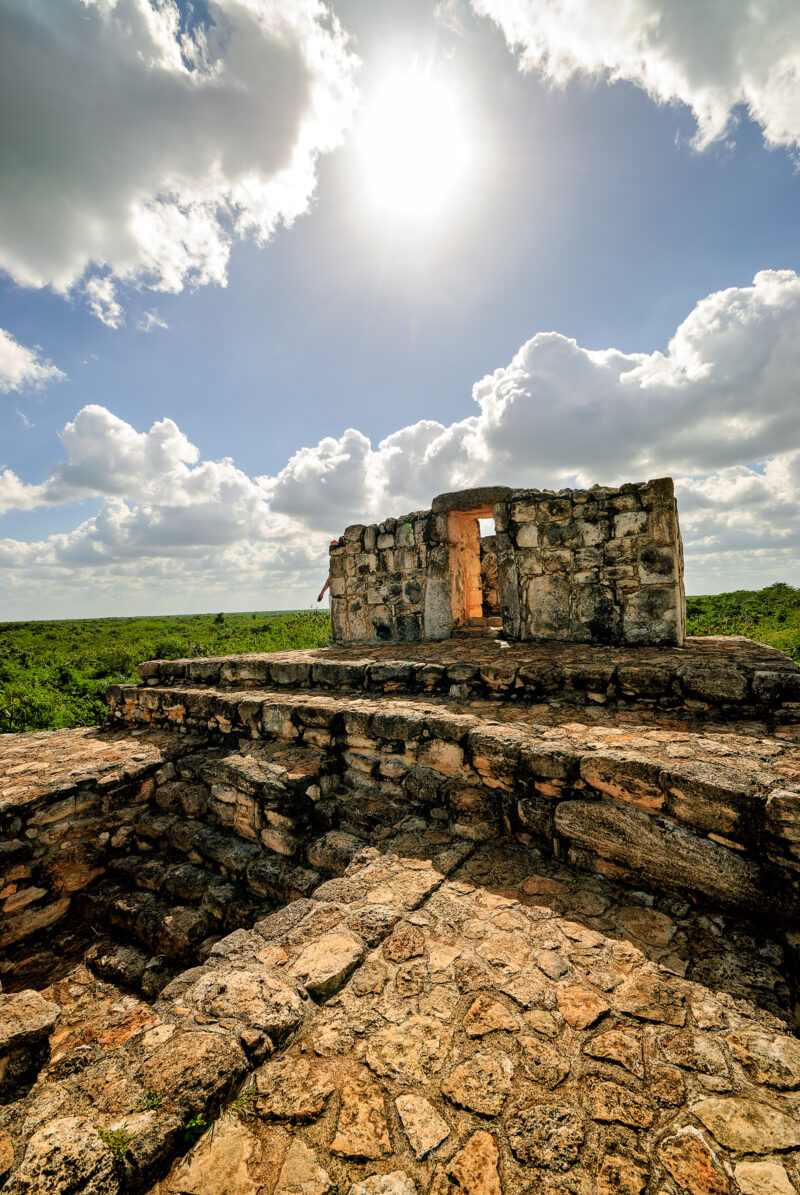
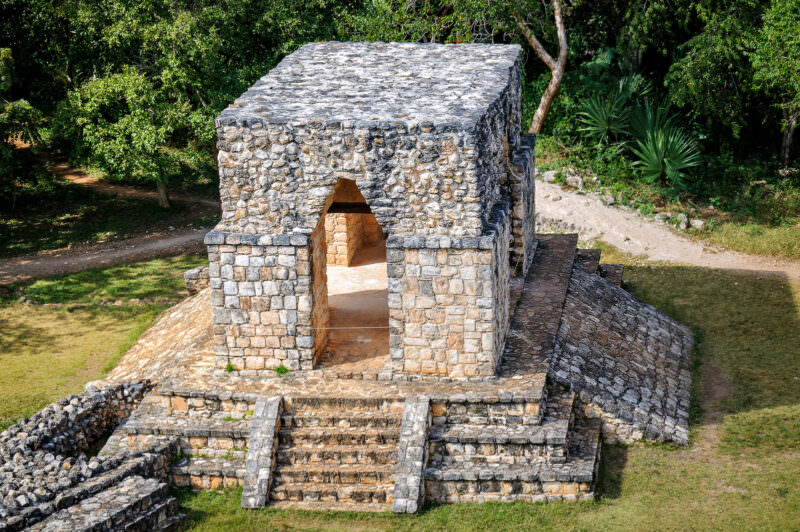
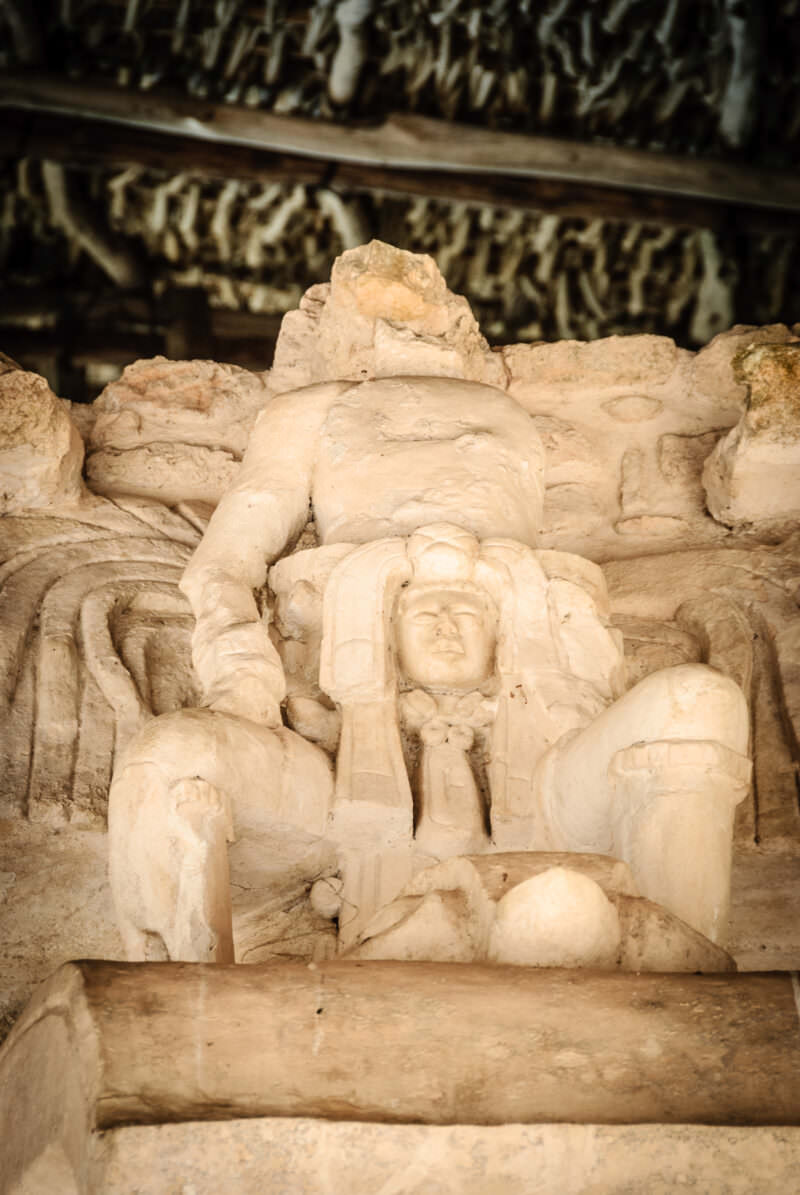
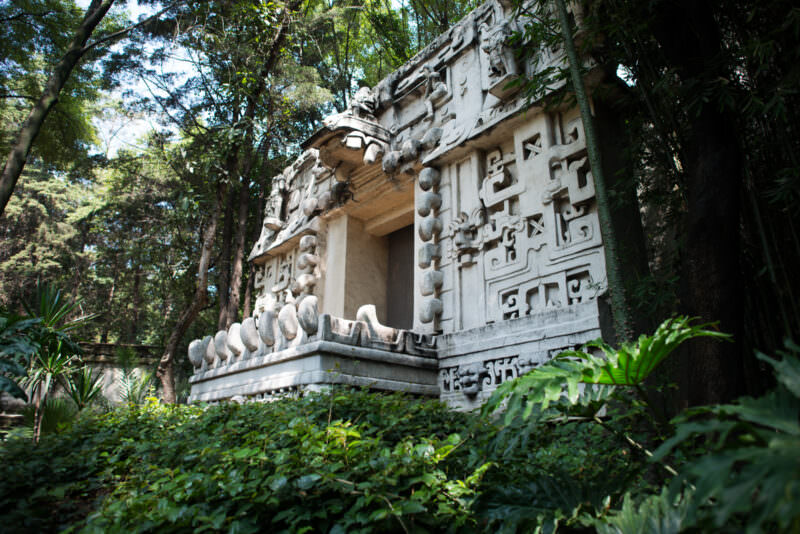
TEMOZÓN, Mexico — The stucco tooth row of the Sak Xok Naah lower jaw rises in the foreground at Ek’ Balam (also known as Ek Balam), the monster-mouth threshold through which one enters the tomb of Ukit Kan Lek Tok’, with the barred access window, flanking glyph panels, and the upper frieze of the Acropolis visible above. Each rounded tooth is modeled in high-lime plaster mixed with sascab — a friable weathered-limestone aggregate the Maya also used to surface their raised causeways — a material that allowed the deep undercutting visible in the scroll-and-fret panels surrounding the jaw. Photo by David Coleman / Have Camera Will TravelLicense this image at:DirectlyAlamyTEMOZÓN, Yucatán, Mexico — A visitor photographs the stucco façade of the Sak Xok Naah on Ek’ Balam’s Acropolis, where deeply modeled hieroglyphic scroll panels and supernatural figures rise above the monster-mouth threshold of ruler Ukit Kan Lek Tok’s tomb. The entire program is additive lime-stucco, built up from quicklime slaked with local sascab aggregate rather than cut from stone — a method that gave artisans sculptural freedom unmatched elsewhere in the Classic Maya north. Photo by David Coleman / Have Camera Will TravelLicense this image at:DirectlyAlamyTEMOZÓN, Yucatán, Mexico — A visitor reads a site panel beside Structure 17, nicknamed “The Twins” for its two near-identical temples on a single platform, in the South Plaza of Ek’ Balam (also known as Ek Balam), with the protected Sak Xok Naah palapa visible on the Acropolis in the distance. Ek’ Balam served as capital of the sovereign kingdom of Talol, whose emblem glyph — placing it among a select group of northern Yucatán centers claiming independent kingship — was deciphered by epigrapher Alfonso Lacadena García-Gallo from the site’s exceptionally rich painted inscriptions. Photo by David Coleman / Have Camera Will TravelLicense this image at:DirectlyAlamyTEMOZÓN, Yucatán, Mexico — Tourists crowd the fourth-level terrace of the Acropolis at Ek’ Balam (also known as Ek Balam) to photograph the Sak Xok Naah, the tomb temple of ruler Ukit Kan Lek Tok’, sheltered beneath a modern palapa roof. The stucco façade’s near-life-sized winged figures, modeled fully in the round from successive coats of lime plaster over a masonry key coat, survived intact because the ancient Maya deliberately sealed the entire face behind dry-rubble fill shortly after the ruler’s death around 800–802 CE, blocking sunlight until INAH excavations cleared it between 1998 and 2003. Photo by David Coleman / Have Camera Will TravelLicense this image at:DirectlyAlamyTEMOZÓN, Yucatán, Mexico — A stucco-decorated element rests on the limestone steps of the Acropolis at Ek’ Balam (also known as Ek Balam), with the massive six-level pyramid rising behind it. The stucco is an additive lime-plaster construction — quicklime fired from local limestone, slaked and mixed with sascab, a friable weathered-limestone aggregate the Maya also used to surface their raised causeways — built up in successive coats to achieve near-sculptural relief unmatched at any other northern Yucatán site. Photo by David Coleman / Have Camera Will TravelLicense this image at:DirectlyAlamyTEMOZÓN, Yucatán, Mexico — Visitors climb and rest on the broad limestone terraces of the Ek’ Balam (also known as Ek Balam) Acropolis under a clear blue sky, the thatched protective shelter over the Sak Xok Naah tomb-temple visible at left. The Acropolis served simultaneously as royal palace and funerary monument — a dual function that concentrated the political authority of the Talol kingdom in a single 31-meter (102-foot) mass of superimposed construction phases. Photo by David Coleman / Have Camera Will TravelLicense this image at:DirectlyAlamyTEMOZÓN, Yucatán, Mexico — A rooftop Maya chamber at Ek’ Balam (also known as Ek Balam) stands against a sunlit sky above a low-angle limestone terrace, the Yucatán jungle stretching to the horizon in every direction. The flat canopy visible from this elevation is a signature of the northern Yucatán lowlands: the peninsula’s porous karst bedrock holds almost no surface rivers, so the Maya built their cities around seasonal water storage rather than riverine corridors, making elevated vantage points strategic markers of territorial control. Photo by David Coleman / Have Camera Will TravelLicense this image at:DirectlyAlamyTEMOZÓN, Yucatán, Mexico — Tourists pick their way up and down the near-vertical main staircase of the Ek’ Balam (also known as Ek Balam) Acropolis, one of the few major Maya pyramids in the Yucatán where climbing is still permitted. The structure rises 31 meters (102 feet) over six levels and stretches roughly 160 meters (525 feet) long — making it among the largest single buildings in the northern Maya lowlands and the funerary monument of Ukit Kan Lek Tok’, the Talol kingdom’s peak-period ruler. Photo by David Coleman / Have Camera Will TravelLicense this image at:DirectlyAlamyTEMOZÓN, Yucatán, Mexico — Visitors ascend the Ek’ Balam (also known as Ek Balam) Acropolis staircase as an aerial view opens across the Yucatán lowland forest stretching to the horizon. The flat canopy visible in every direction reflects the karst topography of the peninsula — a thin soil layer over porous limestone with no surface rivers — the same geology that supplied the Maya with the sascab aggregate and quicklime they fired to build the Acropolis’s celebrated stucco façades. Photo by David Coleman / Have Camera Will TravelLicense this image at:DirectlyAlamyTEMOZÓN, Yucatán, Mexico — The stucco frieze of Ek’ Balam’s Sak Xok Naah, the tomb-temple of ruler Ukit Kan Lek Tok’, stretches along the Acropolis’s fourth level with the Yucatán lowland jungle visible far below. The figures flanking the doorway — near-life-sized winged humans in full feathered costume, modeled in the round rather than carved in relief — have no close parallel in the Maya world and survived only because the ancient builders sealed the entire façade behind dry-rubble fill after the ruler’s death. Photo by David Coleman / Have Camera Will TravelLicense this image at:DirectlyAlamyTEMOZÓN, Yucatán, Mexico — A smaller stucco figure, part of the Sak Xok Naah façade program on the Ek’ Balam (also known as Ek Balam) Acropolis, reclines in a niche framed by scroll and geometric ornament, its fully modeled torso and articulated limbs built up in successive coats of high-lime plaster. The technique — additive stucco modeling over keyed masonry rather than stone carving — gave Late Classic Maya sculptors at Talol an almost clay-like plasticity that produced figures unique in the Maya world. Photo by David Coleman / Have Camera Will TravelLicense this image at:DirectlyAlamyTEMOZÓN, Mexico — The Sak Xok Naah (“White House of Reading”), the tomb temple of Ukit Kan Lek Tok’ on the fourth level of the Ek’ Balam (also known as Ek Balam) Acropolis, is photographed in wide view under its modern protective palapa, showing the stucco tooth row of the lower jaw, the layered glyph-scroll frieze, and small winged figures along the upper register. The entire façade survived in near-pristine condition because the ancient Maya sealed it behind dry-rubble fill shortly after the ruler’s death around 800 CE; INAH cleared the fill between 1998 and 2003 to reveal what is now regarded as the best-preserved Late Classic stucco program in the northern Maya lowlands. Photo by David Coleman / Have Camera Will TravelLicense this image at:DirectlyAlamyTEMOZÓN, Mexico — Structure 17, “The Twins,” rises from the South Plaza of the Ek’ Balam (also known as Ek Balam) archaeological zone, its broad limestone staircase and ruined vaulted temples visible from ground level. The structure’s symmetry — two near-identical temples on a single platform — reflects the Maya architectural convention of pairing temples to express cosmic duality, a design choice that sets it apart from the great pyramidal forms dominating the rest of the Talol kingdom’s ceremonial core. Photo by David Coleman / Have Camera Will TravelLicense this image at:DirectlyAlamyTEMOZÓN, Yucatán, Mexico — The Sak Xok Naah temple on the fourth level of Ek’ Balam’s Acropolis, now sheltered beneath a modern thatched roof, holds the sealed tomb of the Talol kingdom’s ruler Ukit Kan Lek Tok’, who acceded in 770 CE. The stucco survived in near-pristine condition because the ancient Maya deliberately packed the façade behind dry-rubble fill shortly after the ruler’s death, blocking sunlight and stabilizing humidity until INAH cleared it between 1998 and 2003. Photo by David Coleman / Have Camera Will TravelLicense this image at:DirectlyAlamyTEMOZÓN, Yucatán, Mexico — The Sak Xok Naah (“White House of Reading”) on the fourth level of Ek’ Balam’s Acropolis displays its full stucco program: a row of giant skeletal lower-jaw teeth along the plinth marks the monster-mouth threshold, while hieroglyphic scrolls, supernatural figures, and a frieze of winged beings rise above in successive registers. The entire program is additive lime-stucco modeling — figures and glyphs built up in successive plaster coats over a limestone masonry core, not cut from stone — making it unique among surviving Maya façades. Photo by David Coleman / Have Camera Will TravelLicense this image at:DirectlyAlamyTEMOZÓN, Mexico — A near-life-sized winged figure from the Sak Xok Naah façade on the Acropolis at Ek’ Balam (also known as Ek Balam) fills the frame in close detail, its elaborate headdress and ritual costume rendered fully in the round in additive lime stucco. These figures — unique in the Maya world — guard the tomb of ruler Ukit Kan Lek Tok’ and survived intact because ancient builders sealed the entire façade behind dry-rubble fill shortly after his death around 800 CE, blocking light and stabilizing humidity until INAH excavated it between 1998 and 2003. Photo by David Coleman / Have Camera Will TravelLicense this image at:DirectlyAlamyTEMOZÓN, Mexico — The lower jaw of the Sak Xok Naah “monster-mouth” doorway at Ek’ Balam (also known as Ek Balam) dominates the foreground, its row of blunt stucco teeth forming the threshold of the tomb of ruler Ukit Kan Lek Tok’ of the Talol kingdom; winged figures stand atop the frieze above. The Chenes-style zoomorphic portal frames entry as a passage into the open maw of a supernatural earth monster — a symbolic threshold between the world of the living and the underworld that held the ruler’s burial, which yielded more than 7,000 objects including a gold frog pendant imported from Panama. Photo by David Coleman / Have Camera Will TravelLicense this image at:DirectlyAlamyTEMOZÓN, Yucatán, Mexico — One of the near-life-sized winged stucco figures flanking the Sak Xok Naah doorway on Ek’ Balam’s Acropolis, displaying a feathered back-rack, ceremonial belt, and collar modeled fully in the round from additive lime plaster — a sculptural technique found nowhere else at this scale in the Maya world. Visitors often call these figures “angels,” but they are thought to represent supernatural beings or deified ancestors guarding the tomb of ruler Ukit Kan Lek Tok’, who died around 800–802 CE. Photo by David Coleman / Have Camera Will TravelLicense this image at:DirectlyAlamyTEMOZÓN, Yucatán, Mexico — A close-up of one of the near-life-sized winged stucco figures flanking the Sak Xok Naah tomb-temple on the Ek’ Balam (also known as Ek Balam) Acropolis, showing the elaborate headdress, beaded pectoral, and deity mask belt element. Modeled fully in the round from additive lime plaster rather than carved from stone, these figures have no exact parallel in the Maya world and are thought to represent supernatural guardians of ruler Ukit Kan Lek Tok’s burial — a status sealed when ancient builders packed the entire façade behind rubble fill around 800 CE. Photo by David Coleman / Have Camera Will TravelLicense this image at:DirectlyAlamyTEMOZÓN, Yucatán, Mexico — The Sak Xok Naah temple façade on the fourth level of the Ek’ Balam (also known as Ek Balam) Acropolis, sheltered under a modern thatched palapa, displays its hieroglyphic scrollwork and ritual figures in additive lime-stucco modeling — each element built up in successive plaster coats over keyed masonry rather than carved from stone. The façade survived intact because ancient Maya builders deliberately packed it behind dry-rubble fill shortly after ruler Ukit Kan Lek Tok’s death around 800 CE, sealing it until INAH excavations cleared it between 1998 and 2003. Photo by David Coleman / Have Camera Will TravelLicense this image at:DirectlyAlamyTEMOZÓN, Mexico — Two near-life-sized winged figures flank the central serpent element of the Sak Xok Naah façade on the Acropolis at Ek’ Balam (also known as Ek Balam), the tomb temple of ruler Ukit Kan Lek Tok’ of the ancient kingdom of Talol. Built in additive lime stucco — successive coats of plaster over a keyed masonry substrate — the figures have no close parallel anywhere else in the Maya world and were preserved by dry-rubble fill that sealed the façade until INAH cleared it between 1998 and 2003. Photo by David Coleman / Have Camera Will TravelLicense this image at:DirectlyAlamyTEMOZÓN, Yucatán, Mexico — A corbel-vaulted gateway stands at the entrance to the walled ceremonial core of Ek’ Balam (also known as Ek Balam), photographed from a slightly elevated angle that reveals the arch’s inner chamber and flanking steps. Five such gateways pierce the site’s concentric defensive walls, each aligned with a raised limestone causeway, or sacbé, oriented to a cardinal direction — a cosmological plan that placed the capital of the Talol kingdom at the center of a four-part world. Photo by David Coleman / Have Camera Will TravelLicense this image at:DirectlyAlamyTEMOZÓN, Mexico — A seated or crouching winged figure from the Sak Xok Naah façade at Ek’ Balam (also known as Ek Balam) is shown in wide-angle context beneath the dense upper stucco frieze of the Acropolis, kingdom of Talol. The figure is modeled fully in the round — not carved from stone — using successive coats of quicklime plaster over a sascab aggregate base, a technique that gave Maya sculptors near-clay plasticity but left surfaces vulnerable to weathering once the protective rubble fill was removed after INAH excavation in 1998–2003. Photo by David Coleman / Have Camera Will TravelLicense this image at:DirectlyAlamyMEXICO CITY, Mexico — A full-scale replica of facade ornament from Ek’ Balam (also known as Ek Balam), a Late Classic Maya site in Yucatán, stands in the Museo Nacional de Antropología’s outdoor garden, its stacked rounded masks and serpentine relief forms distinct from the flat geometric Puuc-style mosaics on neighboring replicas. At the real Ek’ Balam Acropolis in Yucatán, stucco reliefs survive in exceptional condition because later construction sealed and protected them — the same masking technique that preserved the winged figure above its principal tomb entrance. Photo by David Coleman / Have Camera Will TravelLicense this image at:DirectlyAlamy
What to know before you go
About a half-hour drive north of Valladolid, you need to keep your wits about you lest you miss the turnoff or crunch into a pothole. The site is not yet ready for the tourist buses, something that helps preserve its charm for the time being. There’s also a village of Ek’ Balam nearby. And don’t expect an arrival fanfare — this site is as low-key as you can get.
If you can’t make it to Ek’ Balam but can make it to Mexico City, the National Museum of Anthropology has a replica of some of the Ek’ Balam complex in an outdoor display area of the museum.
With a central core of three large structures, including the impressive temple (Acropolis), surrounded by a series of a few dozen smaller structures, Ek’ Balam is much more compact than Chichen Itza, although there are some outlying structures are up to a mile away.2
It’s easy to take it all in in about a couple of hours, and it makes for a great day trip from Cancun (tip: stop in the nearby colonial town of Valladolid for lunch) or en route to Chichen Itza. There’s a shiny new welcome center with a ticket counter and bathrooms that have been built in the past few years. It’s nothing like what you’ll find at tour-bus-friendly Chichen Itza, but it serves its purpose nicely.
Ek’ Balam is not very accessible for wheelchairs and there are no paved paths, but the ground is mostly flat. Climbing the buildings — especially the Acropolis — is definitely only for the ambulatorily able, though, and not for anyone who has issues with heights.
More about Ek Balam
Ancient Mayan city in the Yucatan Peninsula
Flourished between 700 and 1000 CE
Known for well-preserved murals and sculptures
Features the impressive El Torre pyramid
Located near the Cenote Xcanche
Ek Balam is an ancient Mayan city located in the Yucatan Peninsula of Mexico, approximately 30 kilometers north of Valladolid. The site reached its peak between 700 and 1000 CE, and its name translates to “Black Jaguar” in the Yucatec Maya language. Ek Balam was an influential city during its time, with evidence of its rulers’ wealth and power visible in the architectural and artistic elements found throughout the site.
The city covers an area of approximately 12 square kilometers (4.63 square miles), and its core is comprised of a central plaza surrounded by various structures, including temples, palaces, and the ball court.
The Acropolis, the most prominent structure at Ek Balam, measures 32 meters (105 feet) in height. The pyramid’s well-preserved façade features intricate carvings and stucco reliefs, providing valuable insights into the city’s history and its inhabitants.
Archaeological excavations at Ek Balam have uncovered numerous artifacts, including pottery, vessels, and burial relics, which help paint a picture of the city’s economic and political landscape. Many of the structures at Ek Balam feature glyphs and inscriptions, with the emblem glyph representing the city’s name and symbolizing its power and authority.
One of the unique aspects of Ek Balam is the presence of well-preserved murals and stucco sculptures, which are rare among Mayan ruins. These artworks depict various scenes from Mayan mythology, as well as portrayals of rulers and other prominent figures. The murals are particularly significant, as they offer a glimpse into the artistic styles and techniques employed by the Mayan civilization.
In addition to its architectural and artistic treasures, Ek Balam is also located near several cenotes, including Cenote Xcanche, which provided the city with a vital source of freshwater. These natural sinkholes were essential for the survival of the Mayan civilization and were often associated with religious and ceremonial practices.
Nearest airport: Cancun International Airport (CUN)
Nearest public transport hub: Valladolid ADO Bus Station
Accessible by taxi or organized tours from popular destinations like Playa del Carmen, Tulum, Cancun, and Merida
Notes & References:
A George J. Bey III, Tara M. Bond, William M. Ringle, Craig A. Hanson, Charles W. Houck, and Carlos Peraza Lope, “The Ceramic Chronology of Ek Balam, Yucatan, Mexico,” Ancient Mesoamerica, 9, (1998): 101-120. [↩︎]
George J. Bey, III, Craig A. Hanson, and William M. Ringle, “Classic to Postclassic at Ek Balam, Yucatan: Architectural and Ceramic Evidence for Defining the Transition,” Latin American Antiquity, 8, 3 (September 1997): 237-254. [↩︎]
Enjoyed this article? Personalize your search results.
I'm a freelance travel photographer based in Washington DC. Seven continents, up mountains, underwater, and a bunch of places in between. My images have appeared in numerous publications, and you can check out some of my gear reviews and tips here. More »