Photography workflow
Capturing the image is just the start. This part of my site focuses on what comes next: editing, sharing, backing up, and printing. It's here that I post my guides to using image processing apps like Lightroom and DxO, tools for prepping and sharing images, and other tips for the post-processing workflow.
Lightroom

How to Use Lightroom’s Layout Image Loupe Overlay Feature
There are different ways to add visual guides over photos in Lightroom. The Layout Image Loupe Overlay is a handy tool to find images that work with specific design requirements.
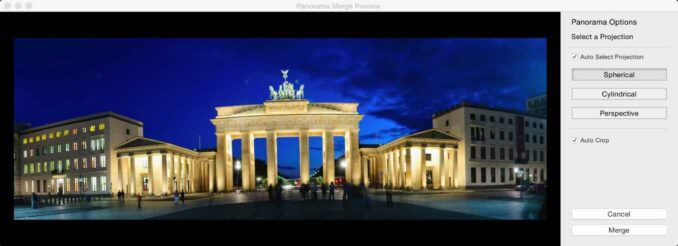
Lightroom Classic’s Panorama Stitcher
Lightroom Classic's built-in Panorama Stitcher makes for a very quick and convenient way to stitch panoramas without ever leaving Lightroom. And it works remarkably well!
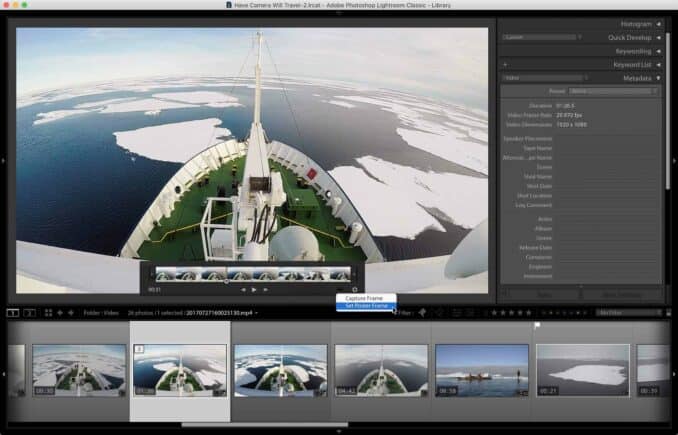
How to Change the Thumbnail Image for a Video in Lightroom
Changing the thumbnail image, or poster frame, used for videos in Lightroom can be a handy way to provide a more useful visual reference point when you're trying to find the video you're after. Here's how to do it.
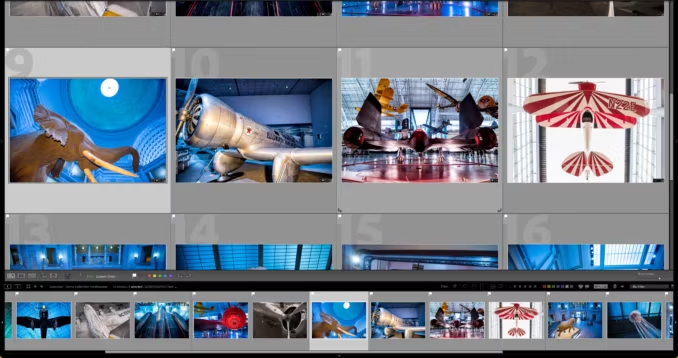
How to Resize Thumbnails in Lightroom’s User Interface
If you're using Lightroom on different computers, you might want to change the size of the thumbnails in Lightroom's user interface. Here's how to do it.
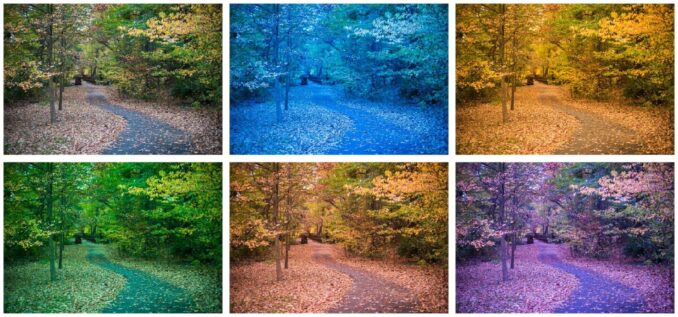
How to Use Lightroom’s White Balance Sliders
Lightroom's white balance tools help reduce color casts. They can be used to neutralized any casts or break the rules and create an entirely new look.

How to Remove Unwanted Adobe Creative Cloud Apps
If you've got current and older versions of your Adobe Creative Cloud apps installed, here's how to remove the unwanted versions.
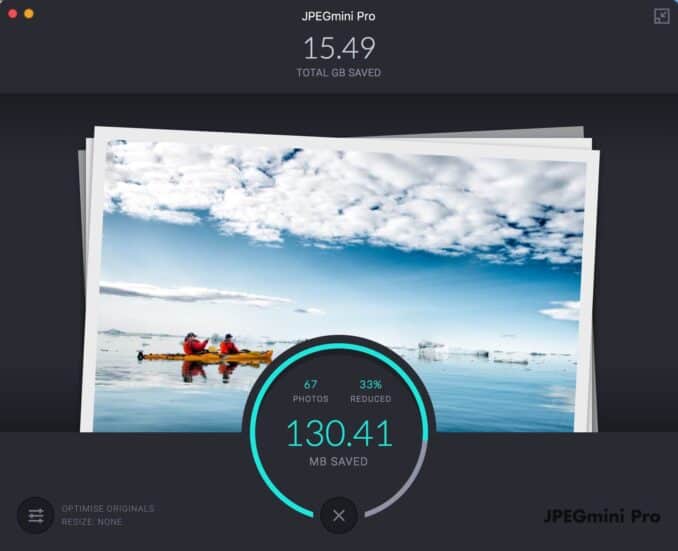
How to Use JPEGmini Pro with Lightroom Classic
JPEGmini Pro offers a way to make filesizes impressively smaller with next to no quality loss. While it's usually used as a standalone app, you can also hook it up with Lightroom Classic exports or Publish Services, making for a very useful workflow tool.
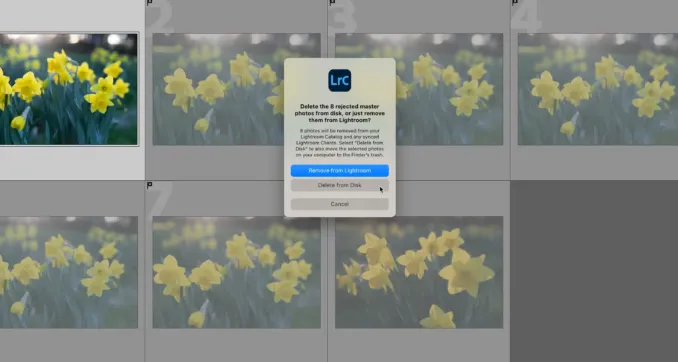
How to Delete Rejected Photos in Lightroom Classic
Here's how to quickly delete rejected photos in Lightroom to help speed up the culling part of the workflow.
Calculators

How Much 4K Video Your Memory Card Can Actually Hold
A 128GB card can hold anywhere from under an hour to 8 hours of 4K footage, depending entirely on your camera's bitrate. Use the calculator and charts below to work out your exact recording time by card size.
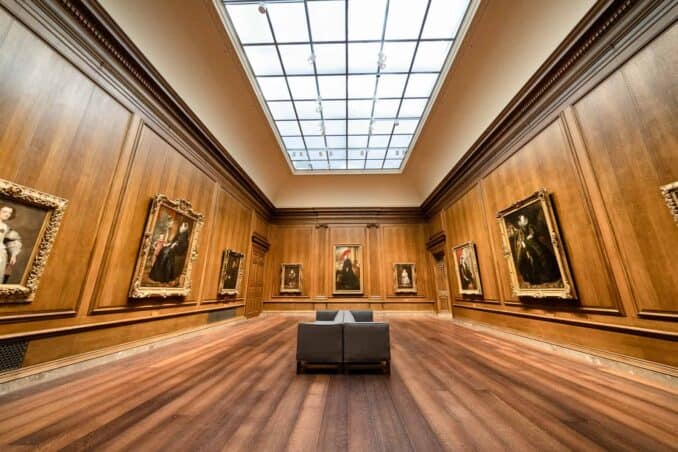
Angle of View, Explained: Calculator, Charts, and Why Diagonal Matters
Enter a focal length to see its angle of view across full-frame, APS-C, and Micro Four Thirds sensors, with charts for quick reference and an explanation of why the diagonal measurement is the one lens makers actually quote.

Memory Card Speed Converter (X-Rating to MB/s)
Memory card marketing is littered with jargon, but the "x-rating" multiplier is one of the most confusing. Here is a simple tool to convert those outdated speed ratings back into a standard MB/s format so you can accurately compare cards.
How Many Megapixels? A Quick Calculator for Photographers
A simple calculator to convert pixel dimensions into megapixels — handy for photographers working out print sizes, checking how much headroom you've got for a heavy crop, sizing files for stock agencies, or staying under Lightroom's 512-megapixel import ceiling.

How Much Will Be in Focus? A Depth of Field Calculator
A practical depth of field calculator for photographers. Punch in your sensor, focal length, aperture, and subject distance to see your near and far limits, total depth of field, and hyperfocal distance. Useful for landscape work, portraits, macro, and group shots where you need to know exactly where the sharpness falls off.

Mbps to MB/s Converter: Camera Bitrates vs. Memory Card Speeds
The difference between a flawless 4K recording and a locked-up camera often comes down to a single capitalized letter. Here is how to quickly translate your camera's Mbps video bitrate into MB/s memory card speeds.
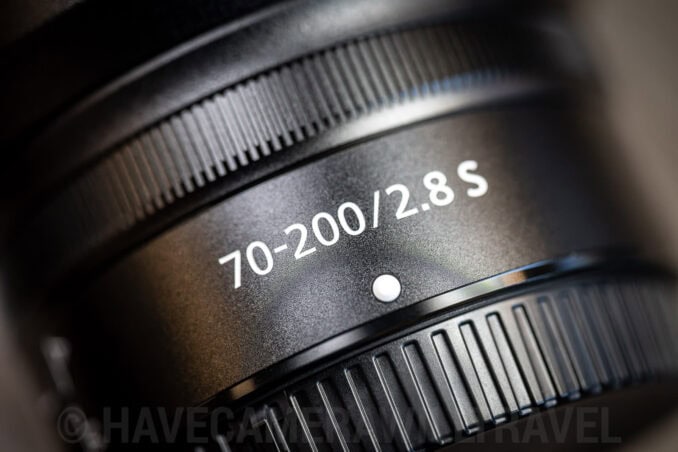
The Crop Factor Calculator: Find Your True Focal Length
Mount the same lens on a full-frame and an APS-C body and the framing changes, but does your aperture really change too? Use the calculator below to find your true equivalent focal length and depth of field, and see why exposure stays the same.

The Aspect Ratio Calculator: Perfect Crops for Print & Web
You shoot a perfectly framed 3:2 portrait, but the client orders an 8x10 print. If you don't calculate the aspect ratio and crop it yourself, the lab's automated software will do it for you — usually right across your subject's forehead. Here is how to take control of your output dimensions.