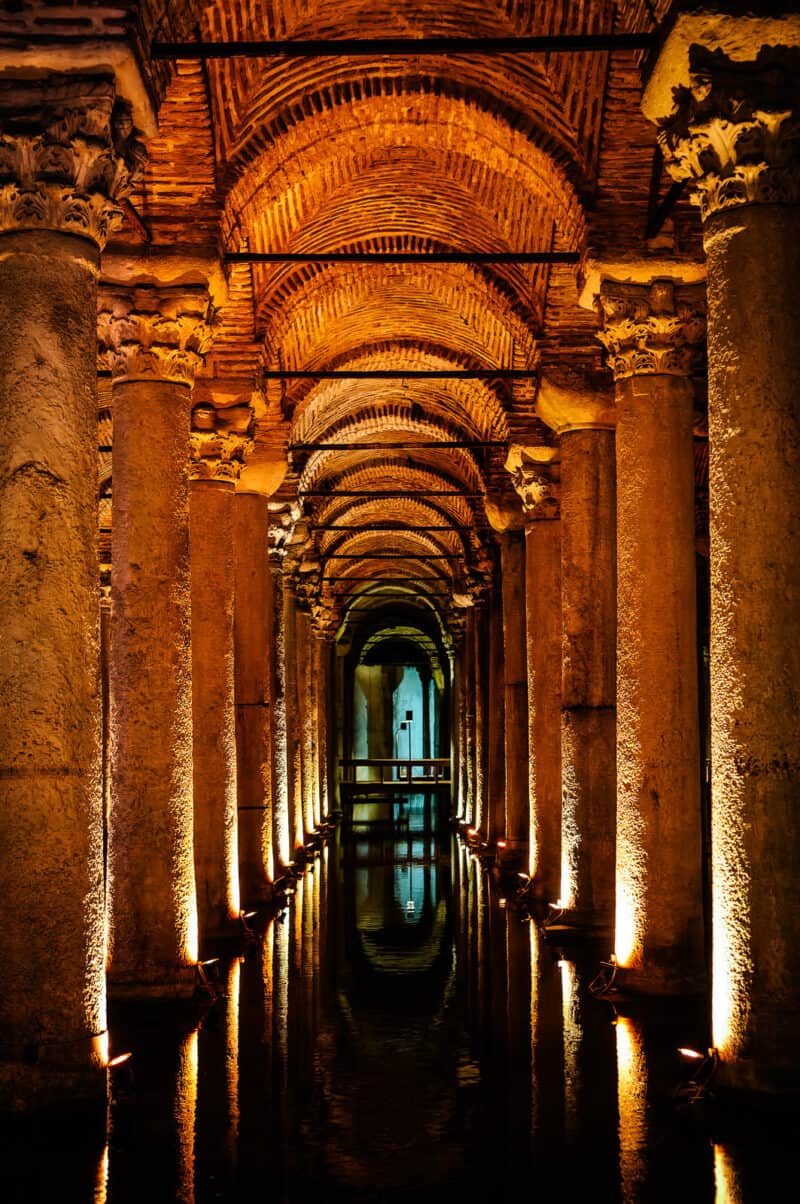
Not Just Any Old Water Tank: Istanbul’s Basilica Cistern
It was built purely as a functional water tank for Byzantine Constantinople, yet its builders filled it with 336 recycled marble columns and two mysterious Medusa heads. Here’s a look at Istanbul’s Basilica Cistern, the underground space now nicknamed the Sunken Palace.
This isn’t just any old water tank. Buried under the streets next to Hagia Sophia might well be the most impressive water tank you’ll ever see. Its purpose was entirely functional. Built during the reign of Byzantine Emperor Justinian (527-565), it provided water to the imperial palace and local residents of Constantinople.
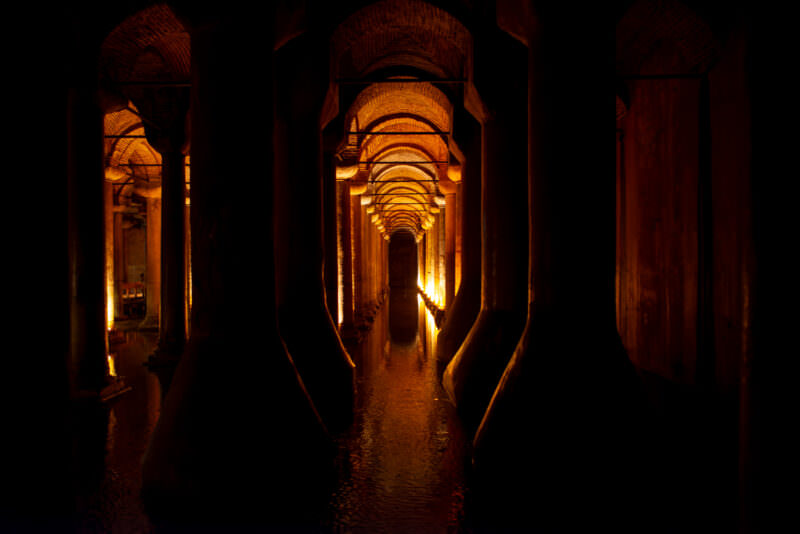
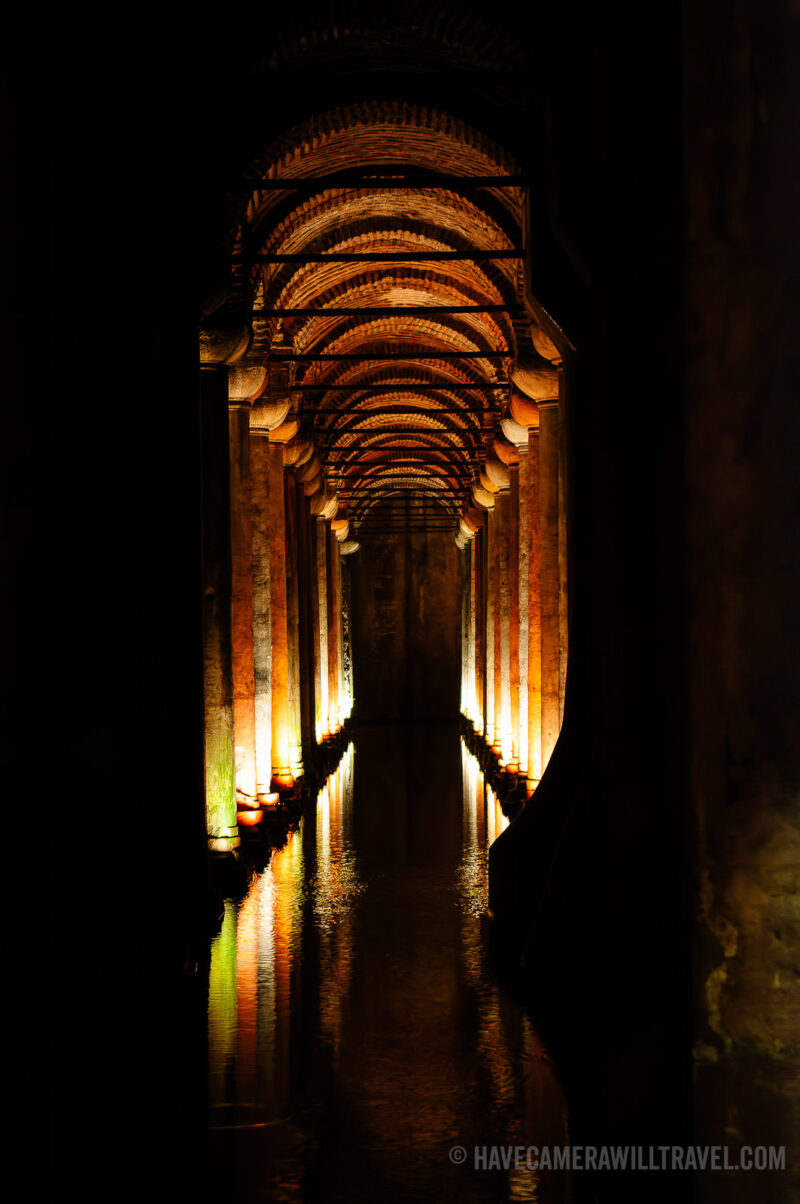
It is 140 meters long and 70 meters wide, with brick walls nearly 5 meters thick and the brick floor covered in Khorasan mortar to make it waterproof. It has the capacity to hold 100,000 tons of water. Above it once stood a basilica, now long gone.
The cistern’s builders could have been content at the engineering feat of building such an impressive underground tank in the middle of a city, let alone transporting the water from the Belgrade Forest 19 kilometers away over a series of aqueducts.
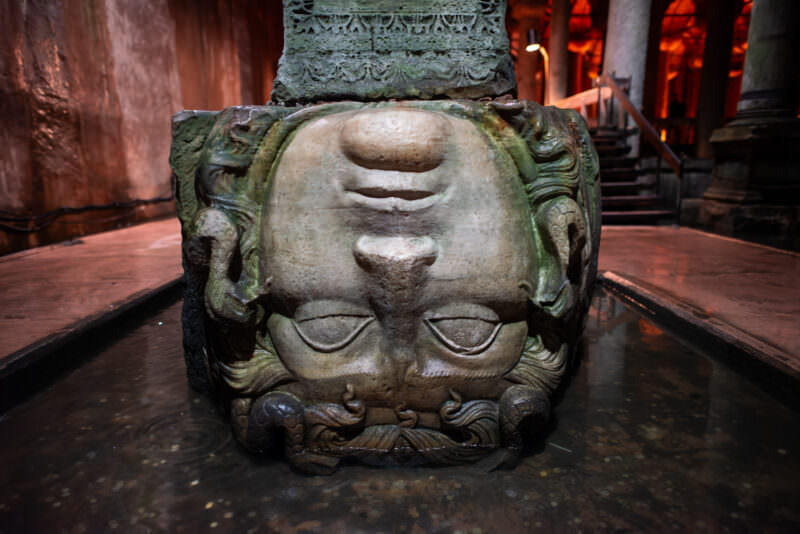
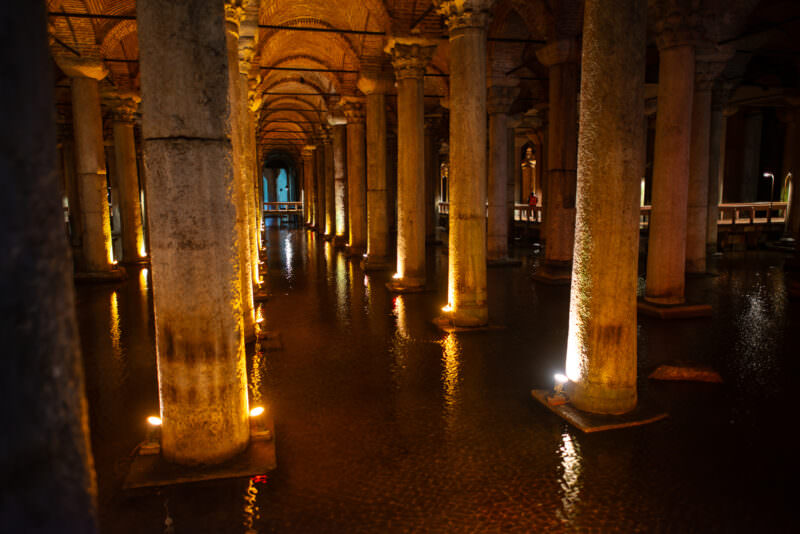
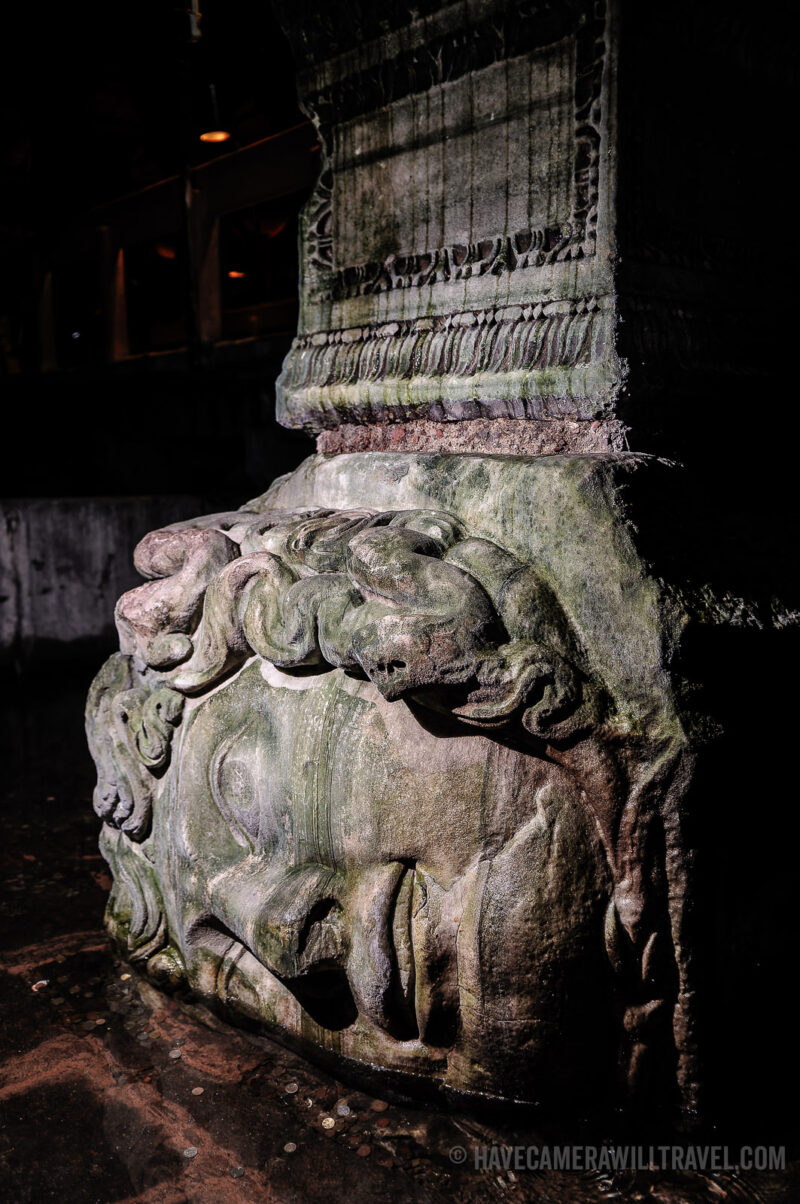
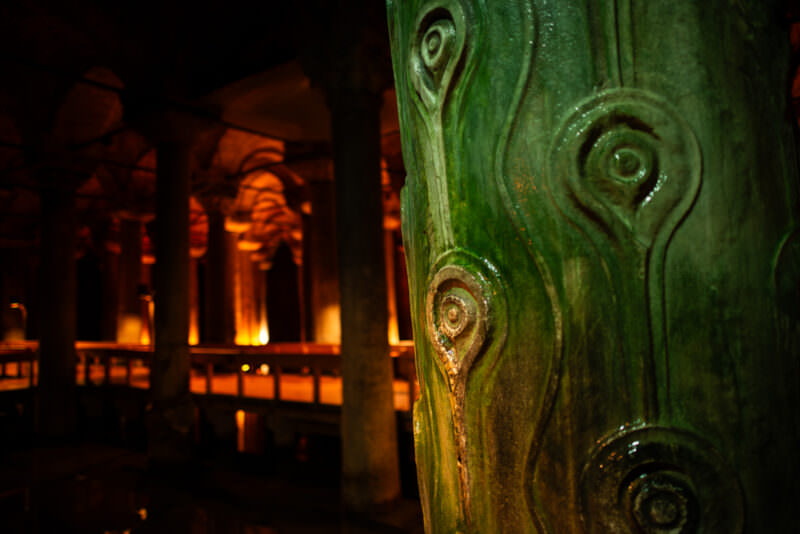
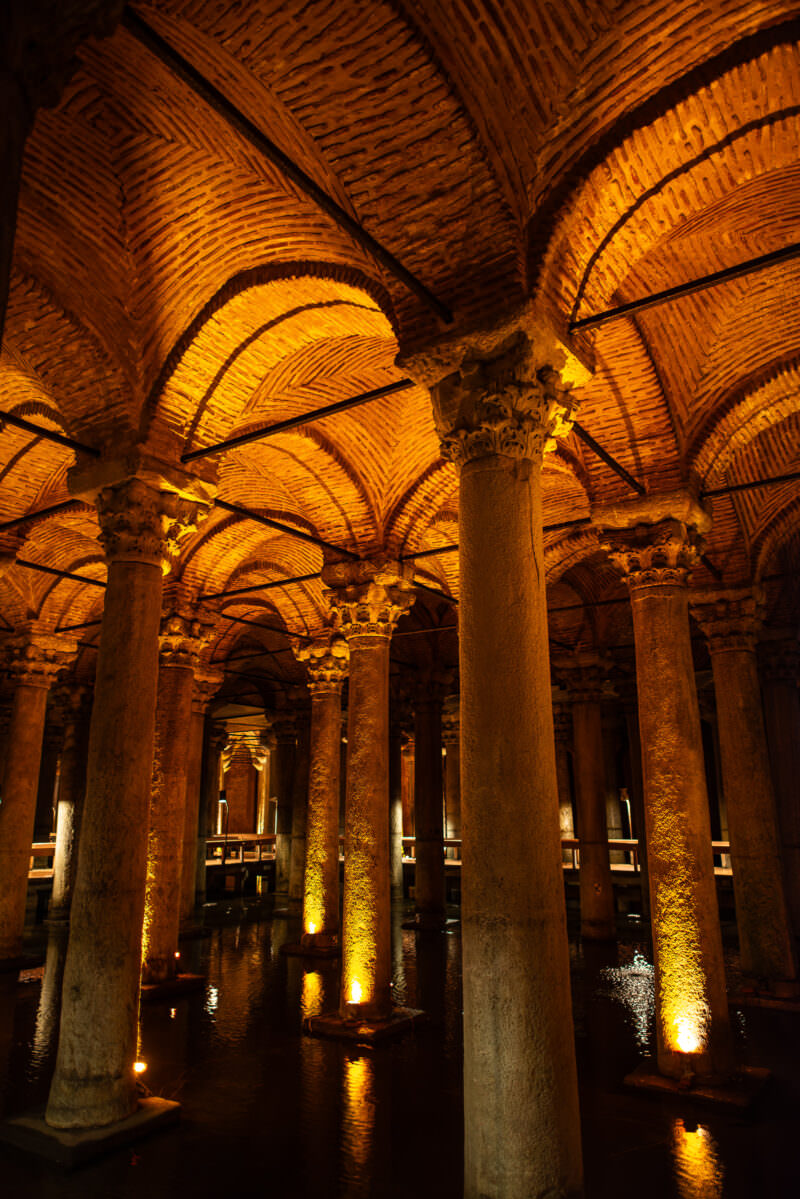
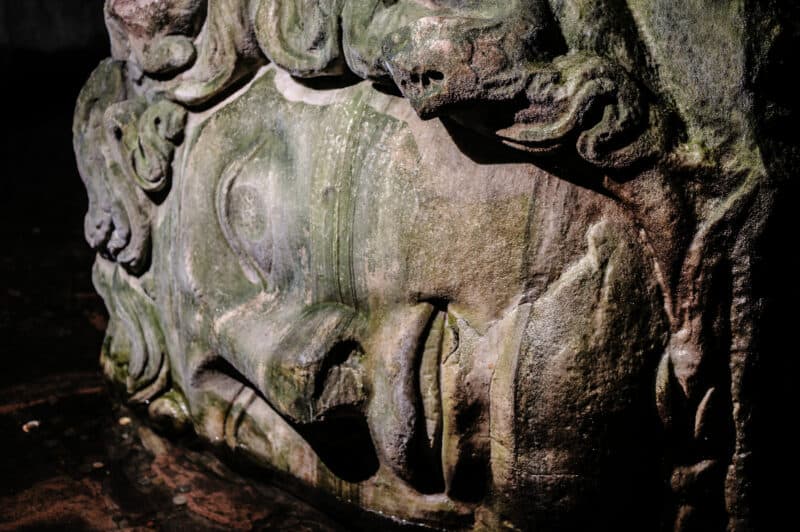
But they decided to also show off their ornamental skills by recycling marble columns from other structures, creating what became popularly known as the Sunken Palace. There are 336 marble columns, each 9 meters high, arranged in 12 rows of 28 columns. Brick arches distribute the ceiling’s considerable weight evenly over the columns. And to top it off, they added two Medusa’s heads, themselves fine examples of Roman Period art. It’s not known where they came from or why they were installed, although over the centuries, a number of legends have been used to explain them.
After the Ottomans took over Istanbul in 1453, the water was used in the gardens of Topkapi Palace — the Ottomans preferred running water over stagnant water and installed their own water supply system for drinking and cooking water. The cistern became largely forgotten until a French traveler, P. Gyllius, rediscovered them in the mid-16th century.
These days the Basilica Cistern is preserved only as a historic landmark. Wooden walkways have been installed, with a few lights to illuminate the gloom. Large fish still cruise the shallow waters, darting in and out of the light.
Photos of the Basilica Cistern
ISTANBUL, Turkey (Turkiye) — The Basilica Cistern is located in the historical peninsular of Istanbul in the Sultanahmet district. It was built in the 6th century during the reign of Justinianus. It’s 140 meters long and 70 meters wide. There are 336 marble columns, each 9 meters high, arranged in 12 rows of 28 columns. Most are in the ionic and Corinthian styles, although a few are Doric style. The water comes from the Belgrade Woods, 19 kilometers north of the city, transported by aqueducts. Among Roman age art sculptures are two Medusa’s heads carved into columns. Photo by David Coleman / Have Camera Will TravelISTANBUL, Turkey — The Basilica Cistern, located 500 feet from the Hagia Sophia on Istanbul’s historical Sarayburnu peninsula, features 336 marble columns dating to the 6th century CE. Two ancient Medusa head sculptures serve as column bases within the underground chamber, with one positioned upside down and the other sideways. The cistern was constructed during the reign of Byzantine Emperor Justinian I as part of Constantinople’s complex water storage system. Photo by David Coleman / Have Camera Will TravelISTANBUL, Turkey — The Basilica Cistern, constructed in the 6th century during Emperor Justinian’s reign, stands as the largest surviving Byzantine cistern in Istanbul. The underground chamber measures 140 meters long by 70 meters wide and features 336 marble columns arranged in 12 rows. Two famous Medusa head sculptures serve as column bases within the ancient water storage facility, which once supplied water to the Great Palace of Constantinople and surrounding buildings. Photo by David Coleman / Have Camera Will TravelISTANBUL, Turkey — The Basilica Cistern, constructed in the 6th century during Emperor Justinian’s reign, stands as the largest surviving Byzantine cistern in Istanbul. The underground chamber measures 140 meters long by 70 meters wide and features 336 marble columns arranged in 12 rows. Two famous Medusa head sculptures serve as column bases within the ancient water storage facility, which once supplied water to the Great Palace of Constantinople and surrounding buildings. Photo by David Coleman / Have Camera Will TravelISTANBUL, Turkey — The Basilica Cistern, located 500 feet from the Hagia Sophia on Istanbul’s historical Sarayburnu peninsula, features 336 marble columns dating to the 6th century CE. Two ancient Medusa head sculptures serve as column bases within the underground chamber, with one positioned upside down and the other sideways. The cistern was constructed during the reign of Byzantine Emperor Justinian I as part of Constantinople’s complex water storage system. Photo by David Coleman / Have Camera Will TravelISTANBUL, Turkey — The Basilica Cistern, constructed in the 6th century during Emperor Justinian’s reign, stands as the largest surviving Byzantine cistern in Istanbul. The underground chamber measures 140 meters long by 70 meters wide and features 336 marble columns arranged in 12 rows. Two famous Medusa head sculptures serve as column bases within the ancient water storage facility, which once supplied water to the Great Palace of Constantinople and surrounding buildings. Photo by David Coleman / Have Camera Will TravelISTANBUL, Turkey — The Basilica Cistern, constructed in the 6th century during Emperor Justinian’s reign, stands as the largest surviving Byzantine cistern in Istanbul. The underground chamber measures 140 meters long by 70 meters wide and features 336 marble columns arranged in 12 rows. Two famous Medusa head sculptures serve as column bases within the ancient water storage facility, which once supplied water to the Great Palace of Constantinople and surrounding buildings. Photo by David Coleman / Have Camera Will TravelISTANBUL, Turkey — The Basilica Cistern, constructed in the 6th century during Emperor Justinian’s reign, stands as the largest surviving Byzantine cistern in Istanbul. The underground chamber measures 140 meters long by 70 meters wide and features 336 marble columns arranged in 12 rows. Two famous Medusa head sculptures serve as column bases within the ancient water storage facility, which once supplied water to the Great Palace of Constantinople and surrounding buildings. Photo by David Coleman / Have Camera Will TravelISTANBUL, Turkey — The Basilica Cistern, constructed in the 6th century during Emperor Justinian’s reign, stands as the largest surviving Byzantine cistern in Istanbul. The underground chamber measures 140 meters long by 70 meters wide and features 336 marble columns arranged in 12 rows. Two famous Medusa head sculptures serve as column bases within the ancient water storage facility, which once supplied water to the Great Palace of Constantinople and surrounding buildings. Photo by David Coleman / Have Camera Will TravelISTANBUL, Turkey (Turkiye) — At the base of two of the 336 columns in the Basilica Cistern are two heads of Medusa. One is upside down and the other is sideways. Why they were placed that way is unknown. The cistern, located 500 feet of the Hagia Sophia on the historical peninsula of Sarayburnu, was built in the 6th century during the reign of Byzantine Emperor Justinian I. Photo by David Coleman / Have Camera Will TravelISTANBUL, Turkey (Turkiye) — The Basilica Cistern is located in the historical peninsular of Istanbul in the Sultanahmet district. It was built in the 6th century during the reign of Justinianus. It’s 140 meters long and 70 meters wide. There are 336 marble columns, each 9 meters high, arranged in 12 rows of 28 columns. Most are in the ionic and Corinthian styles, although a few are Doric style. The water comes from the Belgrade Woods, 19 kilometers north of the city, transported by aqueducts. Among Roman age art sculptures are two Medusa’s heads carved into columns. Photo by David Coleman / Have Camera Will Travel
What to know before you go
It’s damp down here. It’s also slippery. The Turks have mastered many things over the millennia, but the non-skid surface isn’t one of them. So watch your step not only on the stairs but also on the walkways.
The Basilica Cistern is relatively compact and can be comfortably visited in half an hour or less.
It’s very close to both Hagia Sophia and the Blue Mosque.
Where is it?
Basilica Cistern is located in the historic district of Sultanahmet in Istanbul, Turkey. The nearest major airport is Istanbul Airport (IST). To reach the cistern using public transportation, take the M1A Yenikapı-Atatürk Havalimanı tram line to the Sultanahmet stop. From there, it is a short walk to the Basilica Cistern.
Enjoyed this article? Personalize your search results.
I'm a freelance travel photographer based in Washington DC. Seven continents, up mountains, underwater, and a bunch of places in between. My images have appeared in numerous publications, and you can check out some of my gear reviews and tips here. More »