WATERLOO, Belgium — Nearly 33,000 men died on these fields. And it was here, on 18 June 1815, that Napoleon’s march toward nearby Brussels was halted and he lost his empire for a second time.
Victor Hugo described it as the morne plaine (bleak wilderness). Nearly 33,000 men died on these fields. And it was here, on 18 June 1815, that Napoleon’s march toward nearby Brussels was halted and he lost his empire for a second time. Had he decided to launch his first attack earlier than he did — the very civilized hour of 11 am — things might have turned out quite differently. The Duke of Wellington ultimately won the day, but it was a near thing.
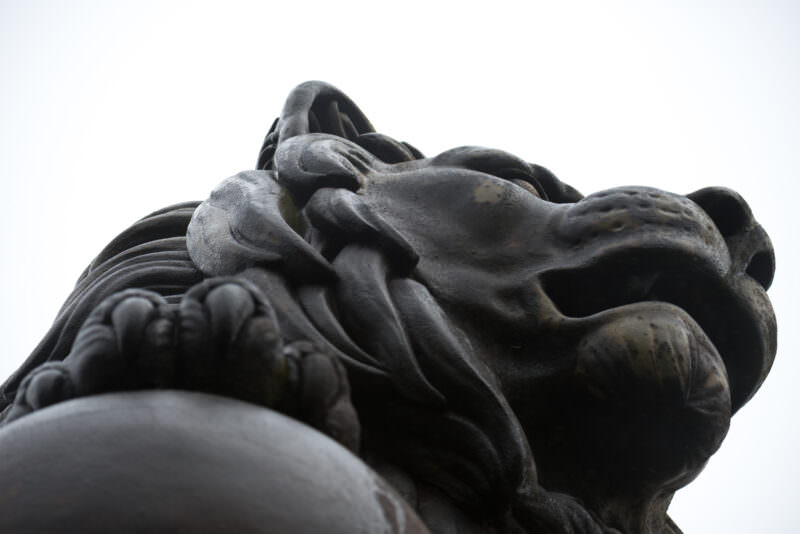
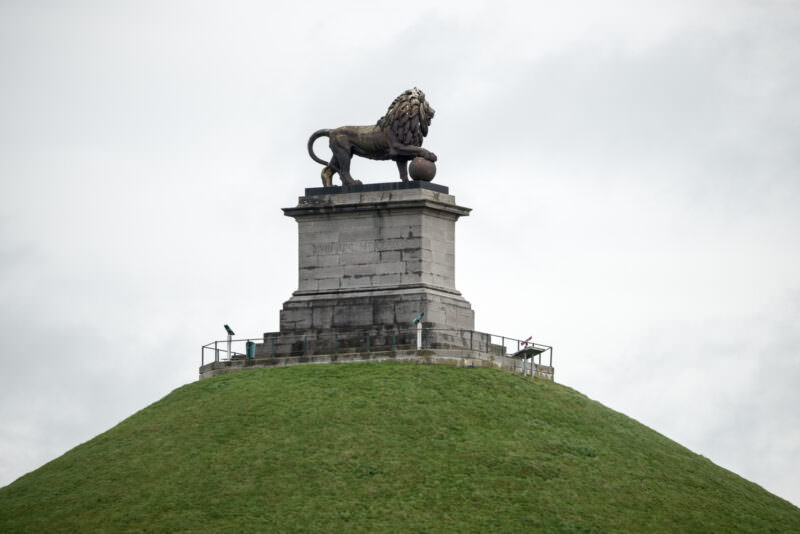
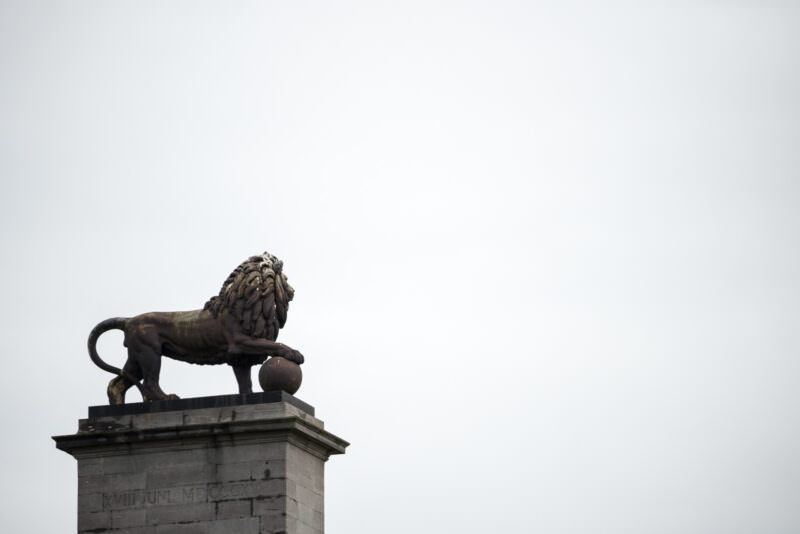
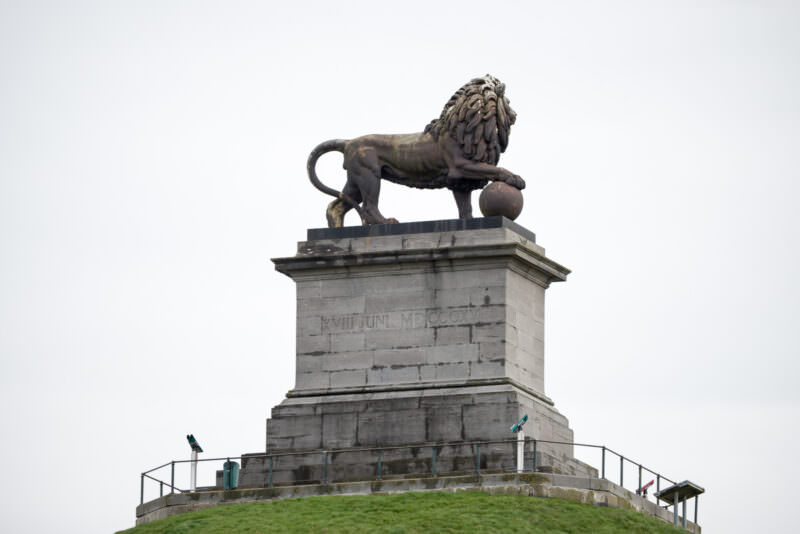
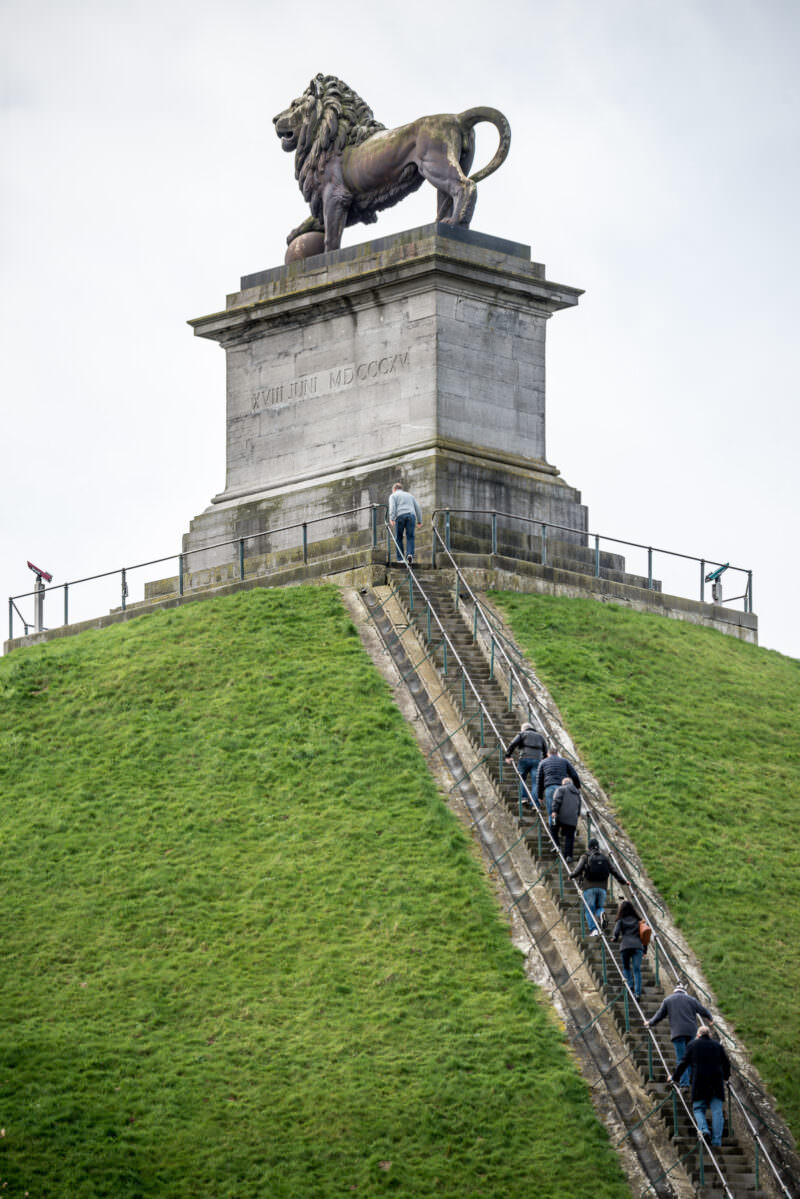
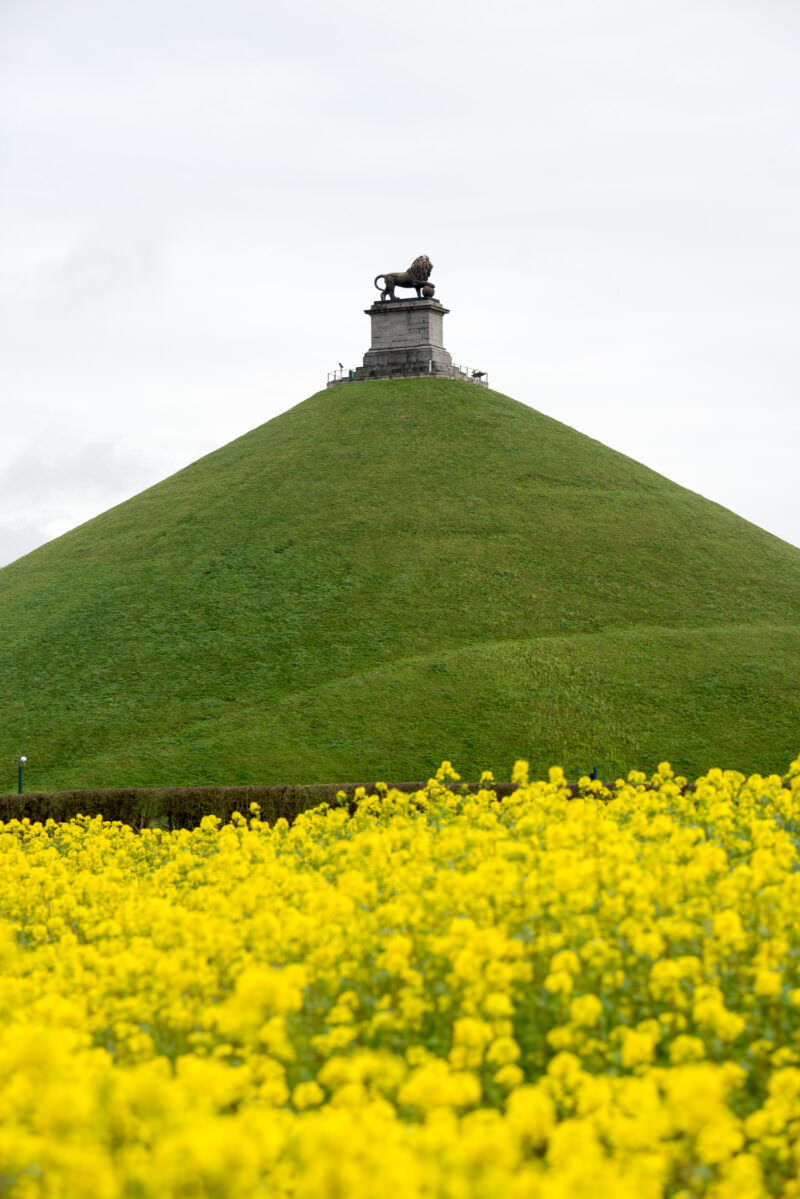
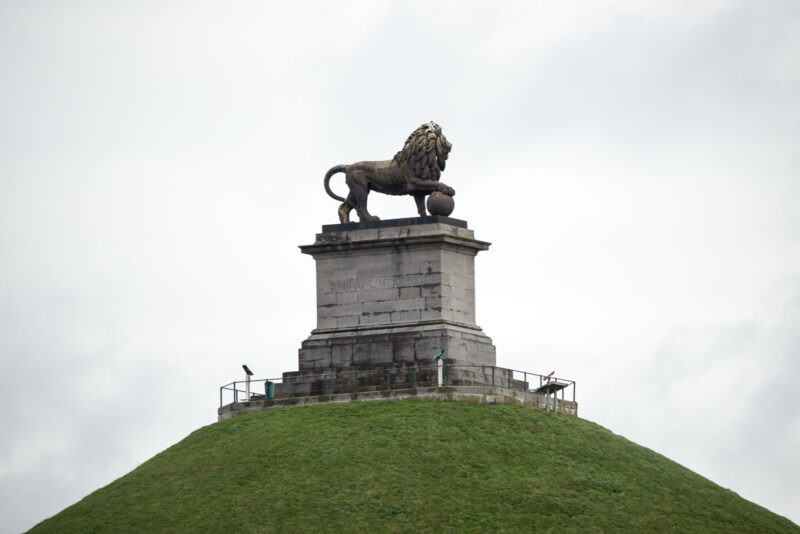
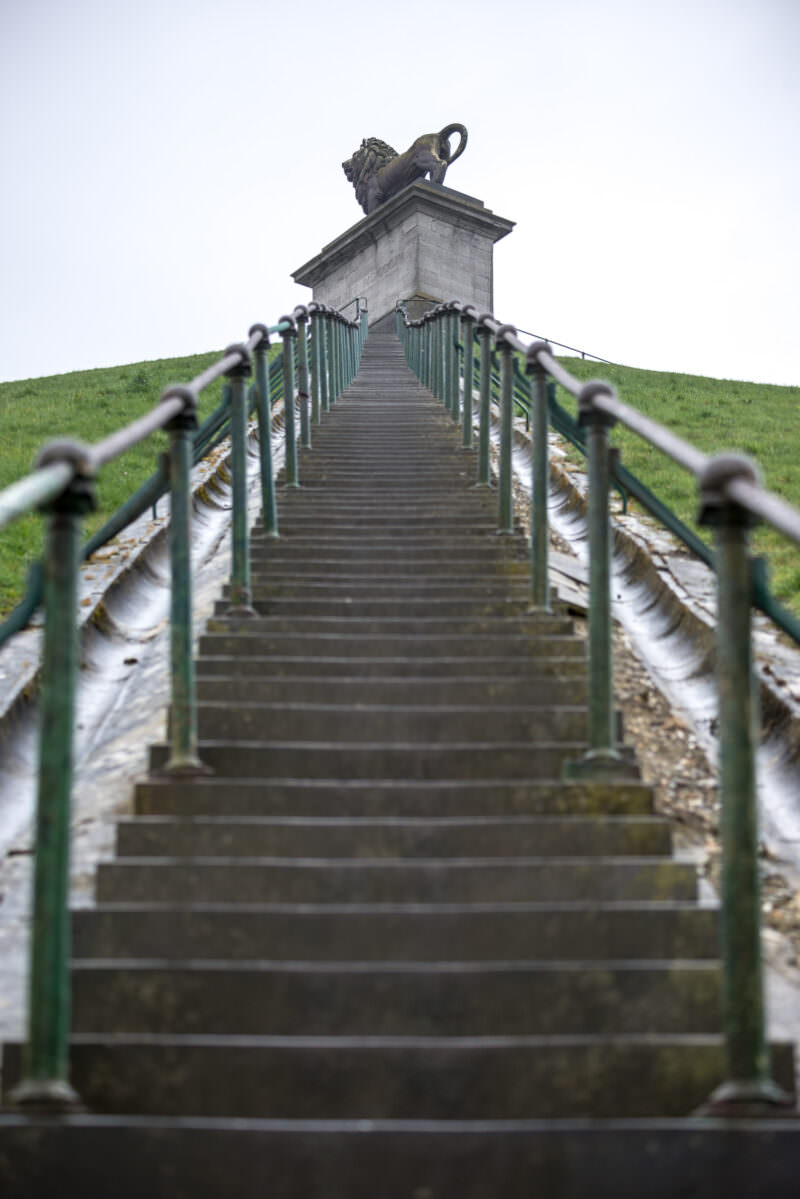
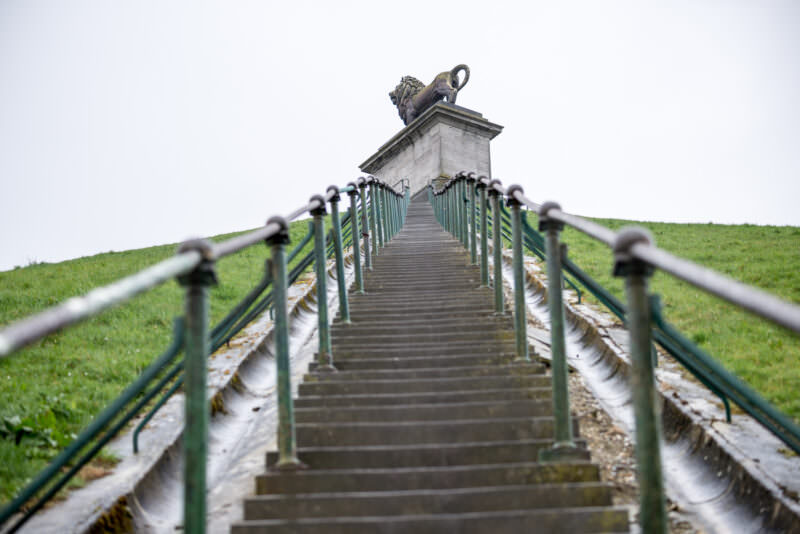
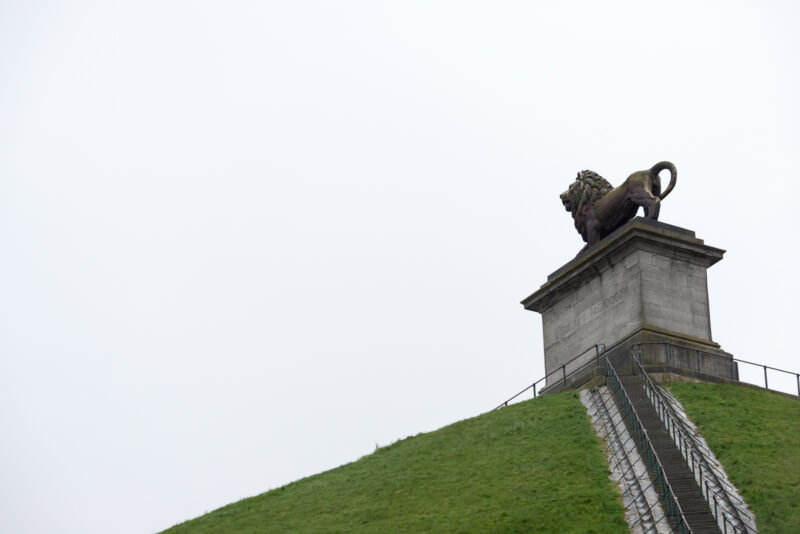
The most distinctive thing you see when you visit the battlefield of Waterloo today wasn’t there during the battle. There’s a large mound of earth with a bronze statue of a lion on top.
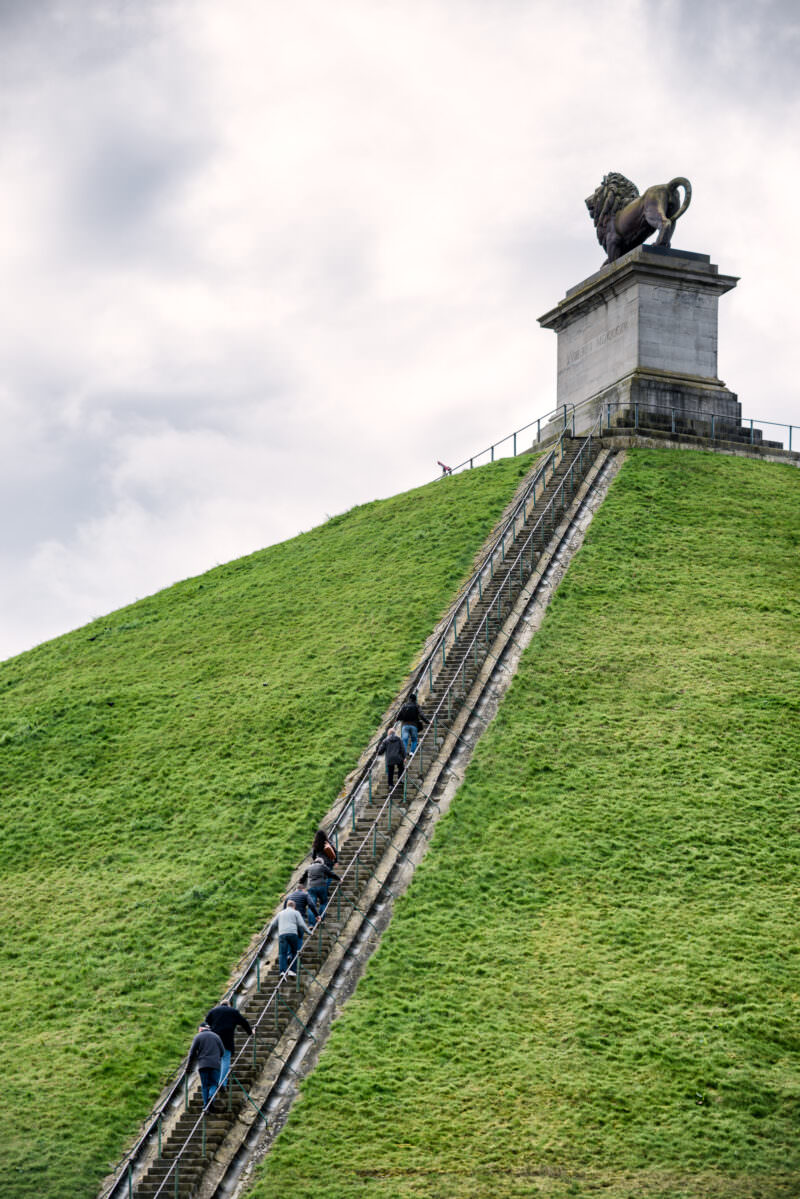
Appropriately enough, it’s known as the Lion’s Mound (or Butte du Lion). It provides a sweeping view of the battlefield, but it didn’t spring up until 1820, when the King of the Netherlands ordered it be built to commemorate as a monument to the spot where his son, the Prince of Orange, was wounded on the battlefield, taking a musket ball to the shoulder that knocked him off his horse. The Prince lived on; 25 years later he succeeded his father as King of the Netherlands and became known as William II of the Netherlands.
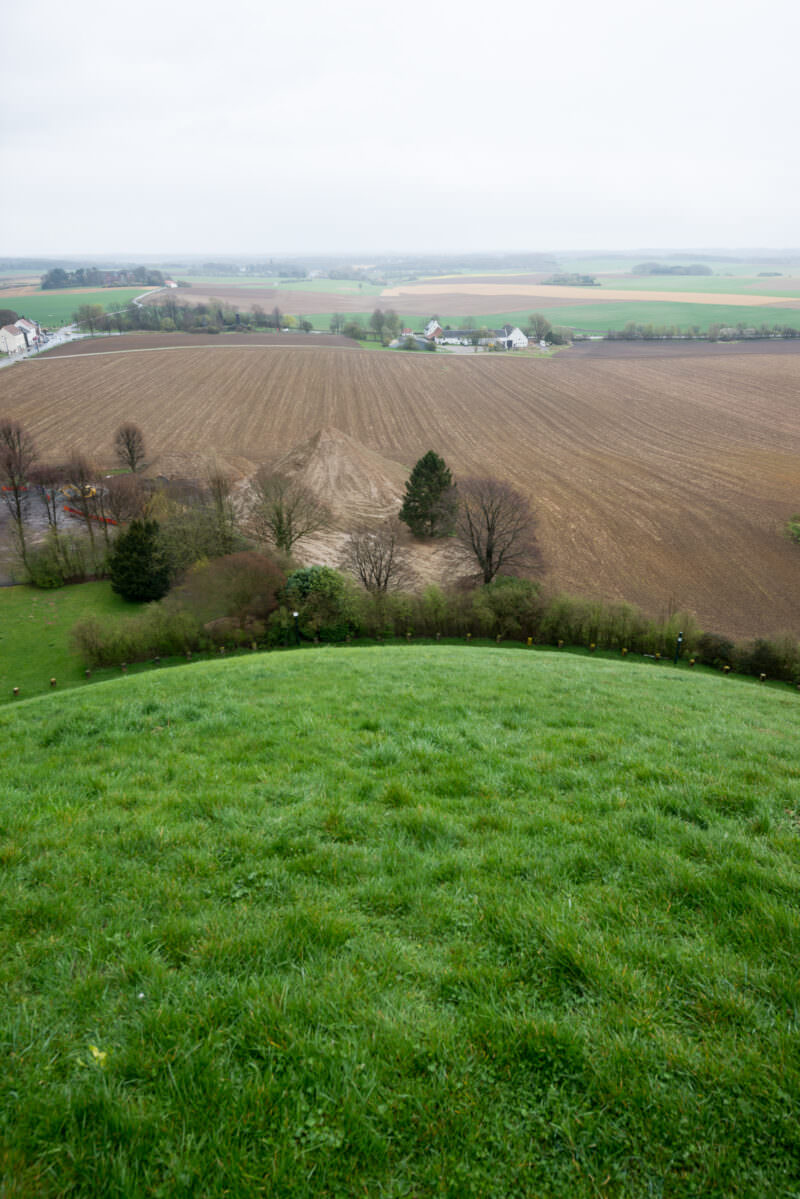
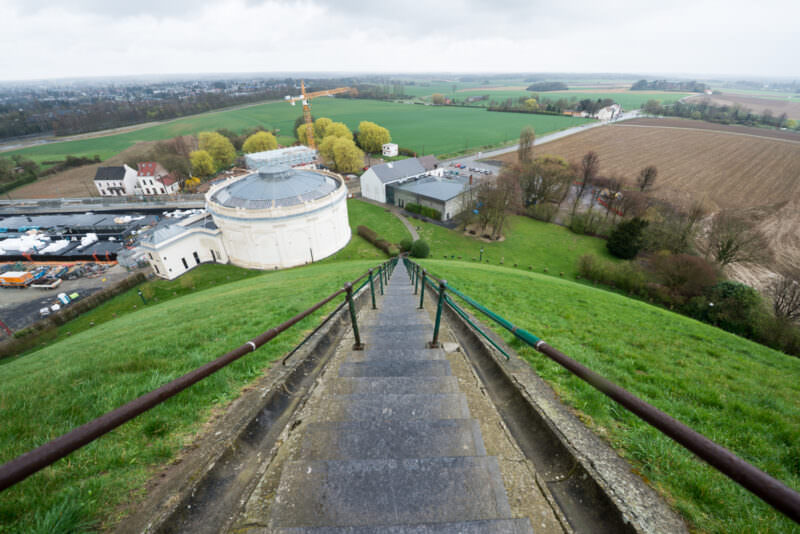
The Lion’s Mound provides a wonderful vista out over the farm fields where the main battle was fought. In the distance, off to the right, there’s the Hougoumont Farm. It changed hands multiple times during the day, and its capture cost both sides dearly. Just beyond the gently rolling hills, down the road to the left, is Pebble Farm (Ferme du Caillou), where Napoleon spent the night and morning before the battle and laid out his battle plan for his commanders.
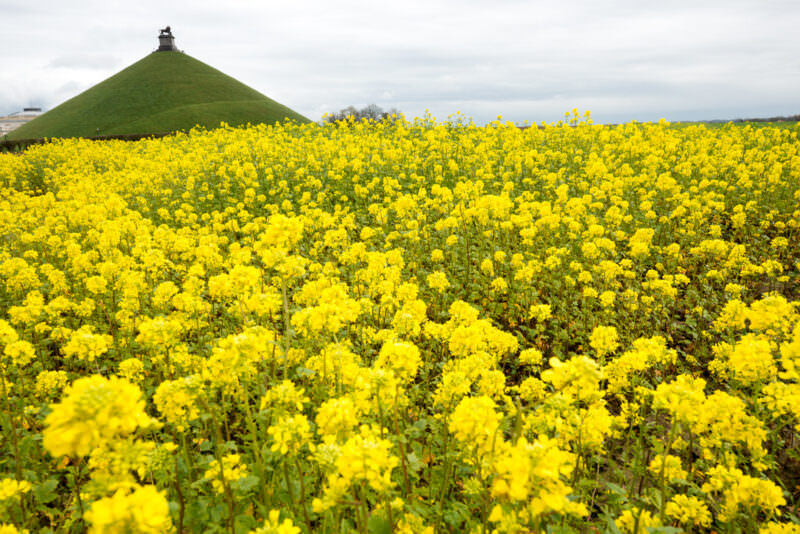
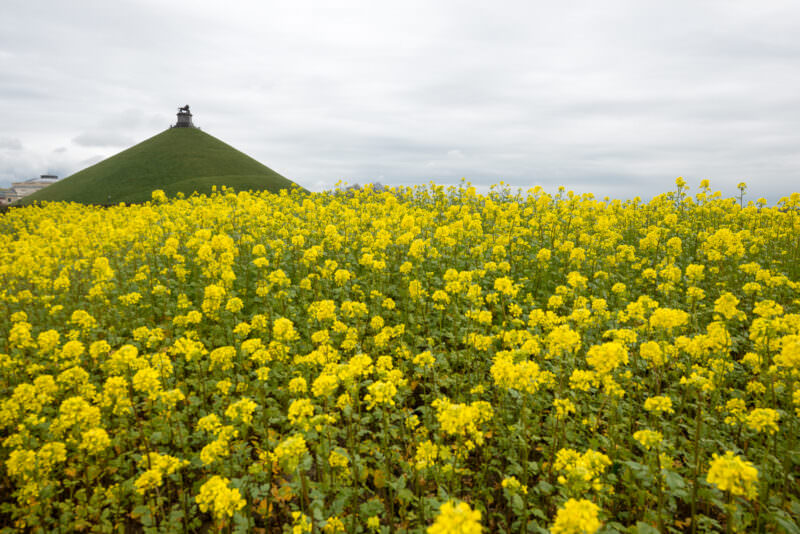
Now the battlefield lies mostly still. The pathways, ditches, and rolling countryside that played such important roles in the outcome are still there. It is now mostly farmland once again. Parts of it lie fallow, covered in yellow wildflowers in the spring. That stillness is interrupted once each year on the anniversary of the battle, when re-enactments provide a taste of what it must have been like to be standing on this field on that chaotic and bloody day that changed the course of history.
Here are some of the photos I’ve taken at the Waterloo Battlefield.
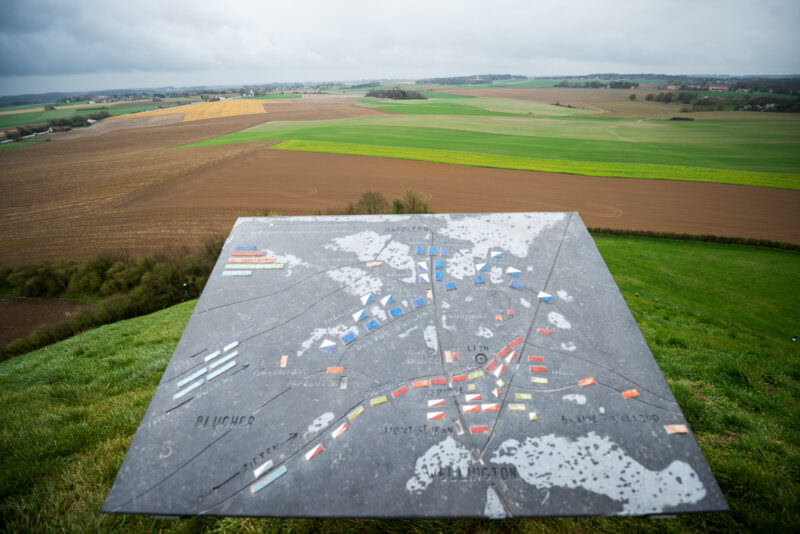
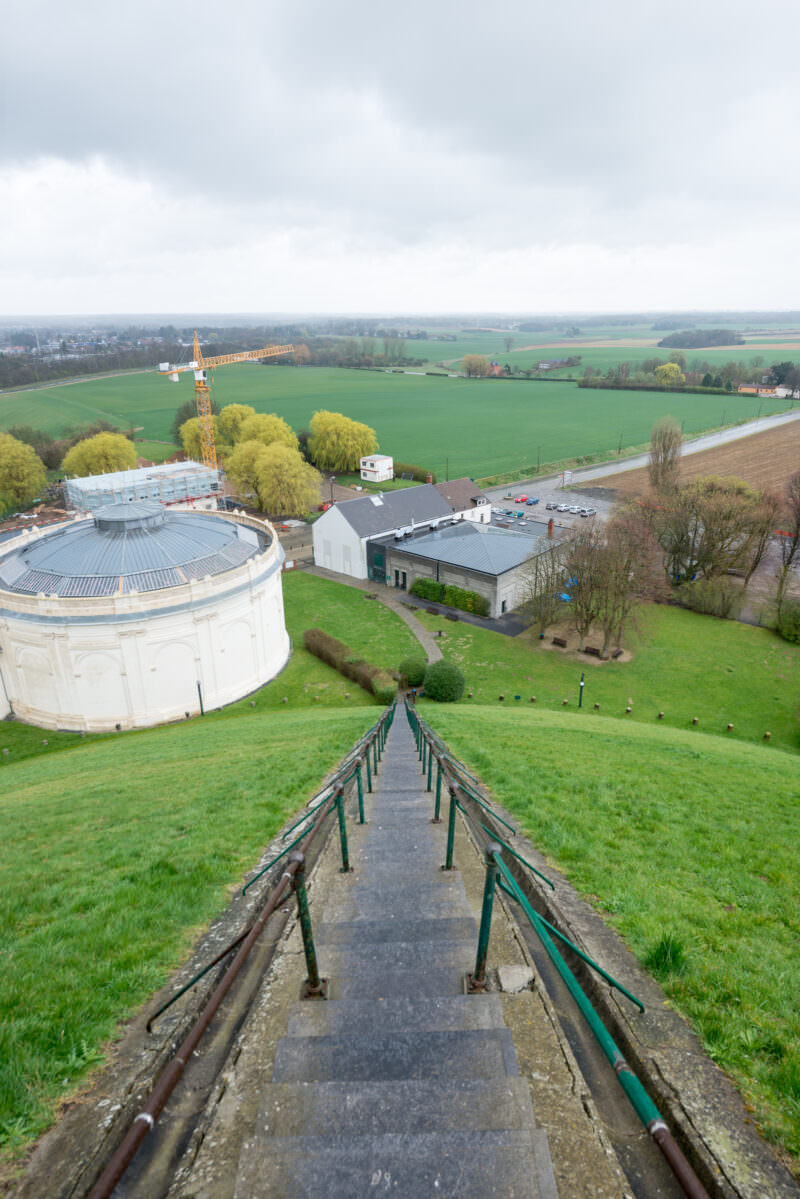
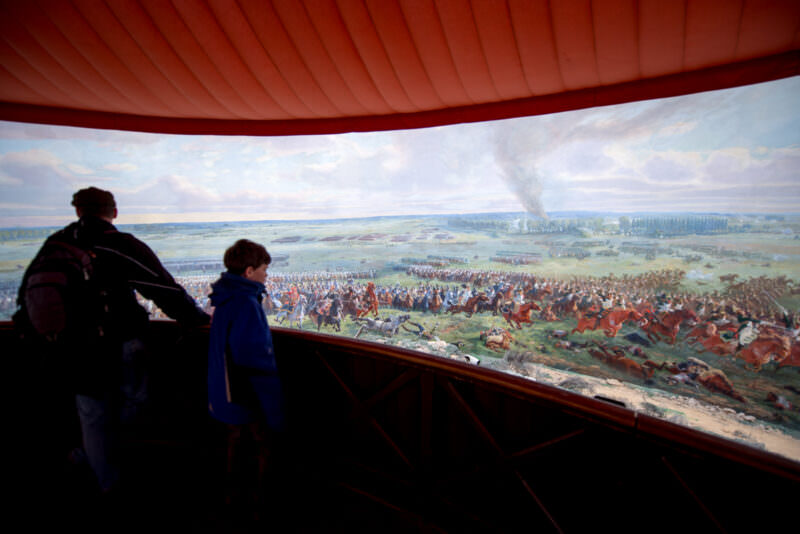
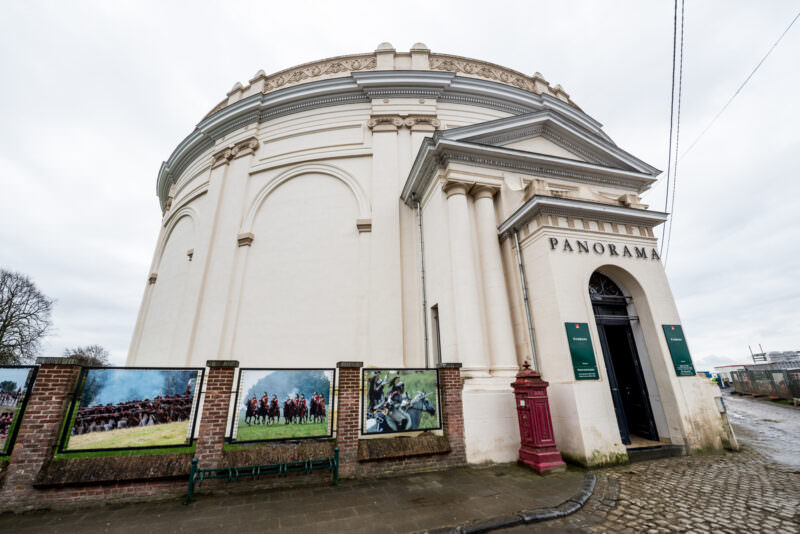
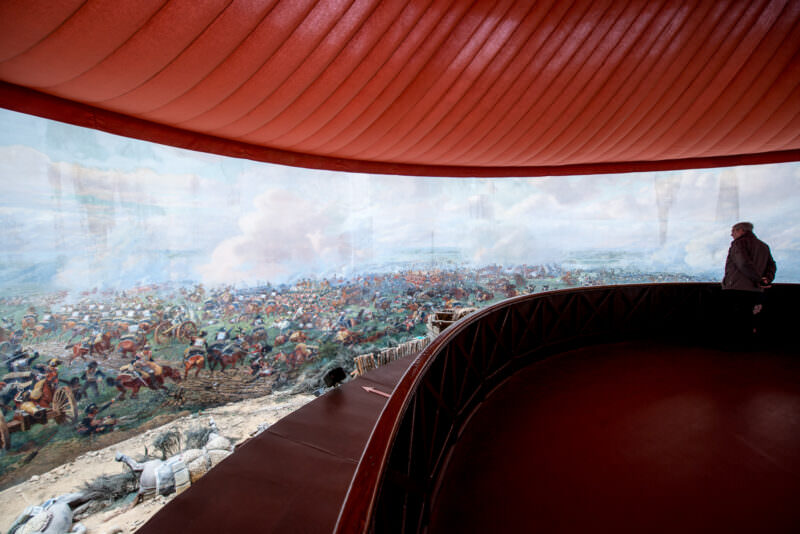
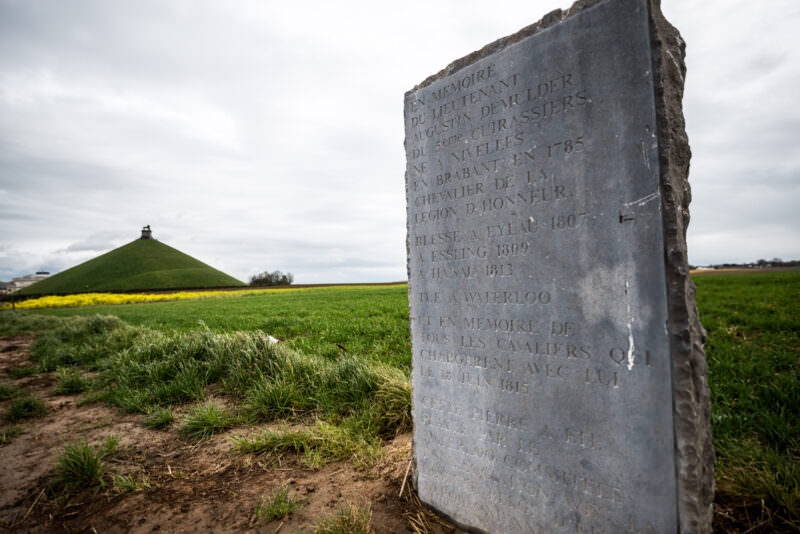
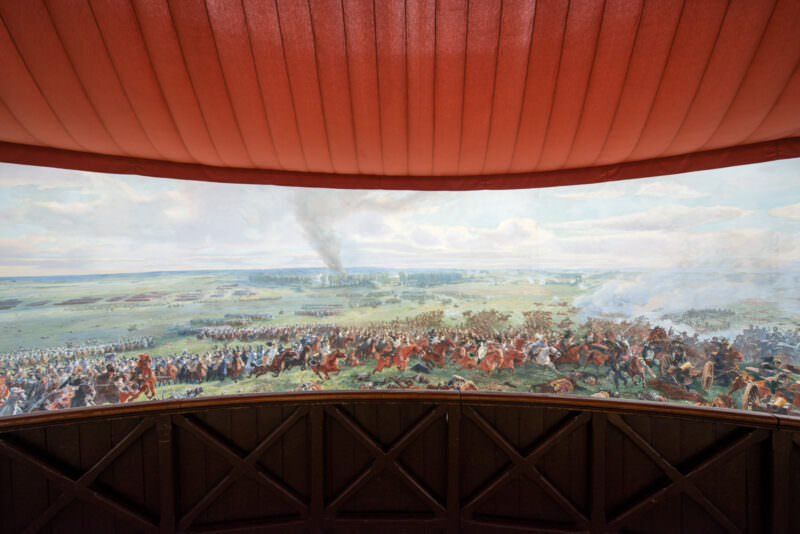
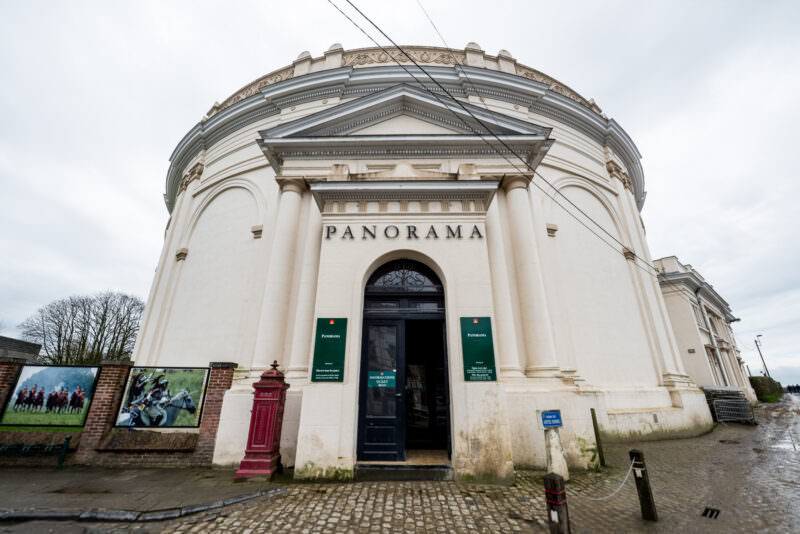
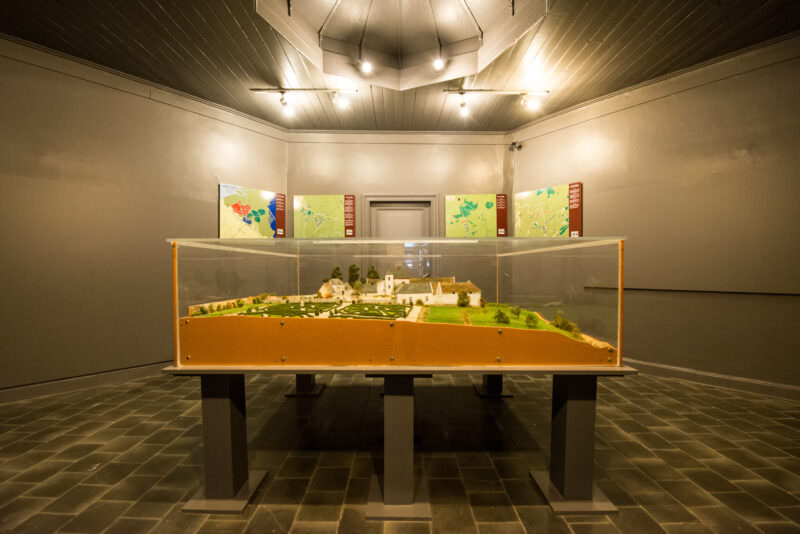
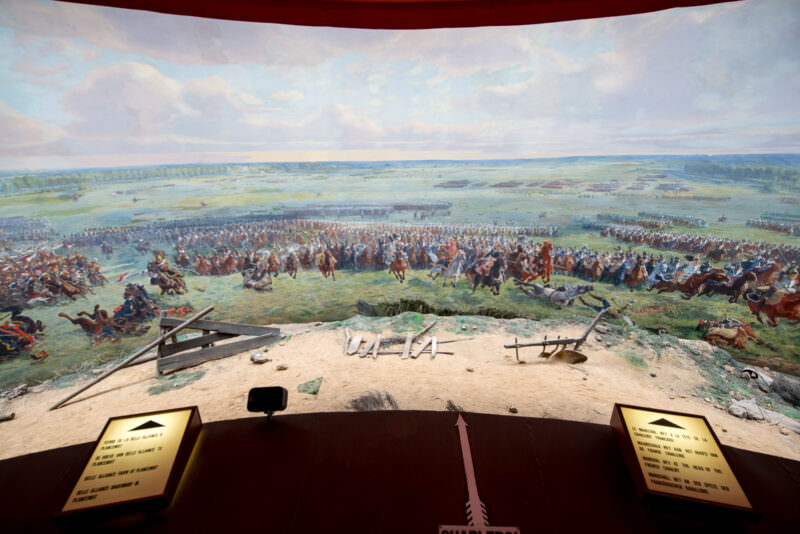
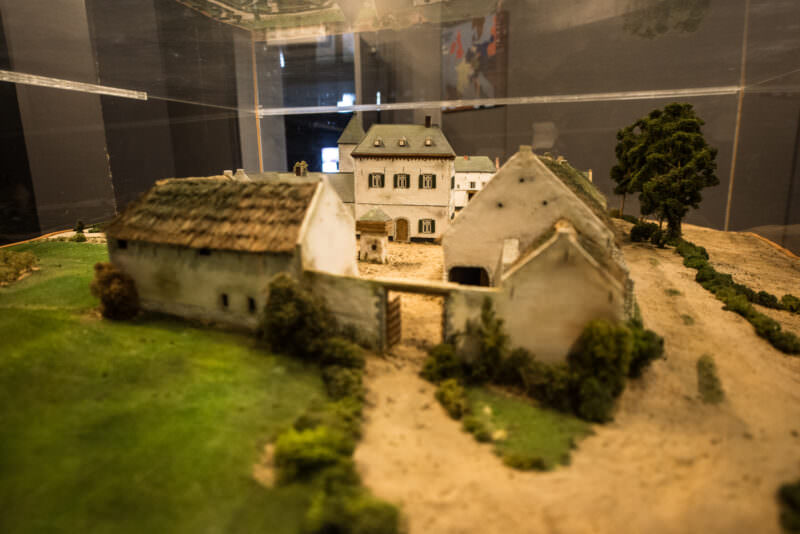
WATERLOO, Belgium — Fixed public viewing binoculars positioned at the summit of the Lion’s Mound (Butte du Lion) provide visitors with magnified views of the historic battlefield. The observation equipment allows tourists to examine key positions held by both Allied and French forces during the Battle of Waterloo. These mounted binoculars offer detailed views of the preserved battlefield landscape from atop the 141-foot artificial hill. Photo by David Coleman / Have Camera Will TravelLicense this image at:DirectlyAlamyWATERLOO, Belgium — Yellow blooms blanket the preserved fields of the Waterloo battlefield, backed by the towering Lion’s Mound (Butte du Lion). The active cultivation of this land is no accident: a Belgian law of March 26, 1914 — the first protective landscape law in Belgium — restricted development and mandated that the terrain remain working farmland, preserving the historic sightlines and open topography of Napoleon’s final defeat. The cast-iron lion visible at the summit marks the spot where William II, Prince of Orange, was wounded on June 18, 1815. Photo by David Coleman / Have Camera Will TravelLicense this image at:DirectlyAlamyWATERLOO, Belgium — Rolling agricultural fields stretch across the historic Waterloo battlefield, viewed from the elevated vantage of the Lion’s Mound. The preserved farmland maintains the undulating terrain of the Mont-Saint-Jean plateau where the Duke of Wellington anchored his Allied forces on June 18, 1815. The subtle ridges visible here were central to Wellington’s signature reverse-slope defense, which shielded his infantry from Napoleon’s artillery — a tactic made possible by terrain the Lion’s Mound itself partly consumed when roughly 300,000 cubic meters of battlefield soil was excavated to build the monument between 1824 and 1826. Photo by David Coleman / Have Camera Will TravelLicense this image at:DirectlyAlamyWATERLOO, Belgium — An orientation map atop the Lion’s Mound overlooks the agricultural fields of the Waterloo battlefield. The plaque charts the June 18, 1815, positions of French, Allied, and Prussian armies using colored troop blocks. The undulating terrain beyond forms the Mont-Saint-Jean ridge where the Duke of Wellington anchored his infantry on a reverse slope, shielding his men from Napoleon’s artillery — a defensive posture that held through nearly nine hours of fighting until the repulse of the Imperial Guard sealed Napoleon’s final defeat. Photo by David Coleman / Have Camera Will TravelLicense this image at:DirectlyAlamyWATERLOO, Belgium — A 28-ton (28-tonne) cast-iron lion rests its paw on a sphere at the summit of the Lion’s Mound (Butte du Lion) on the Waterloo battlefield. Modelled by sculptor Jean-Louis Van Geel and cast in nine separate pieces at the Cockerill ironworks in Seraing, near Liège, the statue stands 14.6 feet (4.45 m) high and 14.8 feet (4.50 m) long, its single forepaw on a globe and its gaze turned toward France as a deliberate political gesture. The monument marks the spot where William II, Prince of Orange, was wounded on June 18, 1815, and the pedestal’s only inscription — XVIII JUNI MDCCCXV — records that date. Photo by David Coleman / Have Camera Will TravelLicense this image at:DirectlyAlamyWATERLOO, Belgium — The iconic Lion’s Mound (Butte du Lion) stands as a prominent memorial on the historic Waterloo battlefield. The artificial hill, constructed between 1820 and 1826, marks the spot where William II of the Netherlands was wounded during the Battle of Waterloo. A steep staircase leads to the summit, which offers panoramic views of the former Allied army positions commanded by the Duke of Wellington. Photo by David Coleman / Have Camera Will TravelLicense this image at:DirectlyAlamyWATERLOO, Belgium — A 28-ton (28-tonne) cast-iron lion rests its paw on a sphere atop the Lion’s Mound (Butte du Lion), its gaze directed toward France. Modelled by Jean-Louis Van Geel and cast in nine pieces at the Cockerill ironworks in Seraing, the monument was hoisted into place on October 28, 1826, and commissioned by King William I of the Netherlands to mark the exact battlefield location where his son, William II, Prince of Orange, was wounded on June 18, 1815. The globe beneath the lion’s forepaw symbolizes peace returning to Europe after the Napoleonic Wars. Photo by David Coleman / Have Camera Will TravelLicense this image at:DirectlyAlamyWATERLOO, Belgium — Panoramic view of the historic Waterloo battlefield from atop the Lion’s Mound (Butte du Lion), where the Allied forces faced Napoleon’s army on June 18, 1815. The artificial hill provides a strategic overview of the battlefield where the Duke of Wellington commanded his troops. The surrounding agricultural landscape preserves much of the battlefield’s original terrain, allowing visitors to understand the strategic positions of the opposing armies. Photo by David Coleman / Have Camera Will TravelLicense this image at:DirectlyAlamyWATERLOO, Belgium — Visitors climb the 226 blue-stone steps of the Lion’s Mound (Butte du Lion), an artificial earthwork rising above the historic battlefield. The summit pedestal bears the inscription XVIII JUNI MDCCCXV, while the hill itself — constructed between 1824 and 1826 on the commission of King William I of the Netherlands — marks the exact location where William II, Prince of Orange, was wounded. The monument overlooks the former Allied army positions commanded by the Duke of Wellington on the Mont-Saint-Jean ridge. Photo by David Coleman / Have Camera Will TravelLicense this image at:DirectlyAlamyBRAINE-L’ALLEUD, Belgium — Large serif lettering marks the entrance to the Panorama of the Battle of Waterloo, a rare surviving rotunda completed in 1912 and designed by architect Frantz Van Ophem. The classified Walloon monument was custom-built to house French artist Louis Dumoulin’s 360-degree canvas — approximately 360 feet (110 m) in circumference and 39 feet (12 m) in height — providing a life-sized visualization of the French cavalry charges led by Marshal Ney at 6 p.m. on June 18, 1815. The building has been listed as Exceptional Heritage of Wallonia since 2006 and appears on Belgium’s UNESCO World Heritage Tentative List. Photo by David Coleman / Have Camera Will TravelLicense this image at:DirectlyAlamyWATERLOO, Belgium — The monumental cast-iron lion statue crowning the Lion’s Mound (Butte du Lion) stands as a symbol of peace returned to Europe after the Napoleonic Wars. Created by Malines artist Van Geel and cast at Cockerill’s ironworks in Liege, the 28-ton sculpture rests atop the 141-foot artificial hill. The statue marks the spot where the Prince of Orange was wounded during the Battle of Waterloo while commanding Wellington’s first corps. Photo by David Coleman / Have Camera Will TravelLicense this image at:DirectlyAlamyWATERLOO, Belgium — Yellow wildflowers bloom across the agricultural fields of the Waterloo battlefield, the site of Napoleon’s final defeat on June 18, 1815. The landscape remains active farmland today under protections first established by a Belgian law of March 26, 1914, preserving the original topography. During the engagement, tall summer crops across this rolling terrain physically obscured infantry movements — a factor in the fog of battle that made the ridge of Mont-Saint-Jean both a defensive asset and a source of dangerous uncertainty for both sides. Photo by David Coleman / Have Camera Will TravelLicense this image at:DirectlyAlamyWATERLOO, Belgium — A 28-ton (28-tonne) cast-iron lion crowns the summit of the Lion’s Mound (Butte du Lion), its single forepaw resting on a globe that symbolizes peace returning to Europe after the Napoleonic Wars. The pedestal’s inscription — XVIII JUNI MDCCCXV — records the date of the Battle of Waterloo in Roman numerals, the monument’s only text. Modelled by Jean-Louis Van Geel and cast in nine pieces at the Cockerill ironworks in Seraing, the lion was hoisted into place on October 28, 1826, marking the exact spot where William II, Prince of Orange, was wounded while commanding Wellington’s first corps. Photo by David Coleman / Have Camera Will TravelLicense this image at:DirectlyAlamyBRAINE-L’ALLEUD, Belgium — Visitors on the central viewing platform observe the Panorama of the Battle of Waterloo, a 360-degree canvas depicting the French cavalry charges led by Marshal Ney at 6 p.m. on June 18, 1815. Painted by the French artist Louis Dumoulin and a team of collaborators, the work measures approximately 360 feet (110 m) in circumference and 39 feet (12 m) in height and was completed for the battle’s centenary in 1912. A physical faux-terrain of sand, dried vegetation, and papier-mâché figures fills the foreground, seamlessly blending the gallery floor into the painted scene — a hallmark of the era’s panorama rotundas, of which only about fourteen historic examples survive worldwide. Photo by David Coleman / Have Camera Will TravelLicense this image at:DirectlyAlamyWATERLOO, Belgium — The iconic Lion’s Mound (Butte du Lion) stands as a prominent memorial on the historic Waterloo battlefield. The artificial hill, constructed between 1820 and 1826, marks the spot where William II of the Netherlands was wounded during the Battle of Waterloo. A steep staircase leads to the summit, which offers panoramic views of the former Allied army positions commanded by the Duke of Wellington. Photo by David Coleman / Have Camera Will TravelLicense this image at:DirectlyAlamyWATERLOO, Belgium — Yellow blooms and plowed earth mark the agricultural fields where the Battle of Waterloo was fought on June 18, 1815. This active cultivation is a deliberate conservation strategy mandated by a Belgian law of March 26, 1914 — the first protective landscape law of its kind in Belgium, funded in part by British public subscription to indemnify local landowners. By restricting development and maintaining the terrain as working farmland, the legislation preserves the historic sightlines and open topography of Napoleon’s final defeat. Photo by David Coleman / Have Camera Will TravelLicense this image at:DirectlyAlamyBRAINE-L’ALLEUD, Belgium — The classicising brick rotunda of the Panorama of the Battle of Waterloo stands at the foot of the Lion’s Mound, its pedimented entrance and engaged pilasters articulating the windowless cylindrical facade. Designed by architect Frantz Van Ophem and completed in 1912, the structure measures approximately 115 feet (35 m) in exterior diameter and 49 feet (15 m) in height, purpose-built to house Louis Dumoulin’s canvas of approximately 360 feet (110 m) in circumference. Classified as a Walloon monument in 1998 and listed as Exceptional Heritage of Wallonia since 2006, the building stands as a rare surviving example of the specialized rotunda architecture once constructed across Europe to house monumental panorama paintings. Photo by David Coleman / Have Camera Will TravelLicense this image at:DirectlyAlamyWATERLOO, Belgium — Yellow wildflowers bloom in the preserved fields of the historic Waterloo battlefield, with the Lion’s Mound (Butte du Lion) rising in the background. The artificial hill, topped by its iconic cast-iron lion statue, marks the spot where the Prince of Orange was wounded during the Battle of Waterloo. The pastoral landscape maintains much of its historic character from the famous battle of June 18, 1815. Photo by David Coleman / Have Camera Will TravelLicense this image at:DirectlyAlamyWATERLOO, Belgium — The monumental cast-iron lion statue crowning the Lion’s Mound (Butte du Lion) stands as a symbol of peace returned to Europe after the Napoleonic Wars. Created by Malines artist Van Geel and cast at Cockerill’s ironworks in Liege, the 28-ton sculpture rests atop the 141-foot artificial hill. The statue marks the spot where the Prince of Orange was wounded during the Battle of Waterloo while commanding Wellington’s first corps. Photo by David Coleman / Have Camera Will TravelLicense this image at:DirectlyAlamyWATERLOO, Belgium — The Panorama of the Battle of Waterloo, constructed in 1912, houses a monumental 360-degree painting depicting the battlefield at 6 p.m. on June 18, 1815. Created by Louis Dumoulin and a team of French military artists, the 110-meter-long by 12-meter-high canvas provides a life-sized visualization of the historic battle. This rare surviving panorama building stands as a classified monument near the Lion’s Mound. Photo by David Coleman / Have Camera Will TravelLicense this image at:DirectlyAlamyWATERLOO, Belgium — A steep staircase descends the Lion’s Mound (Butte du Lion) toward the circular Panorama building and the fields of the Mont-Saint-Jean plateau. Constructed between 1824 and 1826 under commission from King William I of the Netherlands, the artificial earthwork consumed some 300,000 cubic meters of soil excavated from the battlefield itself — permanently flattening the very ridge along which Wellington’s centre had fought. Its 226 blue-stone steps lead to the summit platform where a 28-ton (28-tonne) cast-iron lion marks the spot where William II, Prince of Orange, was wounded on June 18, 1815. Photo by David Coleman / Have Camera Will TravelLicense this image at:DirectlyAlamyBRAINE-L’ALLEUD, Belgium — Physical faux-terrain elements including a discarded plow and fallen horses blend directly into the canvas of the Panorama of the Battle of Waterloo. Completed by Louis Dumoulin and his team in 1912, the installation uses cast plaster on metal-mesh armatures, real objects, and papier-mâché figures to obscure the boundary between the gallery floor and the canvas some 360 feet (110 m) in circumference. The continuous scene depicts the massive French cavalry charges led by Marshal Ney that swept the battlefield at 6 p.m. on June 18, 1815, as the farm of La Haie-Sainte was on the verge of falling. Photo by David Coleman / Have Camera Will TravelLicense this image at:DirectlyAlamyWATERLOO, Belgium — The iconic Lion’s Mound (Butte du Lion) stands as a prominent memorial on the historic Waterloo battlefield. The artificial hill, constructed between 1820 and 1826, marks the spot where William II of the Netherlands was wounded during the Battle of Waterloo. A steep staircase leads to the summit, which offers panoramic views of the former Allied army positions commanded by the Duke of Wellington. Photo by David Coleman / Have Camera Will TravelLicense this image at:DirectlyAlamyWATERLOO, Belgium — A stone memorial to Lieutenant Augustin Demulder stands on the Waterloo battlefield, with the Lion’s Mound (Butte du Lion) rising in the background. The French inscription records that the 5th Cuirassiers officer was wounded at Eylau, Essling, and Hanau before his death here on June 18, 1815. The marker uses this combat-tested veteran to commemorate all French cavalrymen who charged the Allied lines during Napoleon’s final defeat — one of many national and regimental monuments that make the Waterloo battlefield a layered, multi-national memorial landscape rather than a single victors’ monument. Photo by David Coleman / Have Camera Will TravelLicense this image at:DirectlyAlamyBRAINE-L’ALLEUD, Belgium — Viewed from the central observation platform beneath the rotunda’s fabric velum, the Panorama of the Battle of Waterloo envelops visitors in a continuous 360-degree battlefield scene. Painted by French artist Louis Dumoulin and his team for the battle’s 1912 centenary, the canvas stretches approximately 360 feet (110 m) around and 39 feet (12 m) high, capturing the massed cavalry charges led by Marshal Ney at 6 p.m. on June 18, 1815. The installation remains one of roughly fourteen historic panoramas surviving worldwide in their original rotundas — and the only surviving panorama of the Battle of Waterloo. Photo by David Coleman / Have Camera Will TravelLicense this image at:DirectlyAlamyWATERLOO, Belgium — Yellow wildflowers bloom in the preserved fields of the historic Waterloo battlefield, with the Lion’s Mound (Butte du Lion) rising in the background. The artificial hill, topped by its iconic cast-iron lion statue, marks the spot where the Prince of Orange was wounded during the Battle of Waterloo. The pastoral landscape maintains much of its historic character from the famous battle of June 18, 1815. Photo by David Coleman / Have Camera Will TravelLicense this image at:DirectlyAlamyBRAINE-L’ALLEUD, Belgium — The circular rotunda of the Panorama of the Battle of Waterloo features a neoclassical pedimented entrance marked with the attraction’s name. Designed by architect Frantz Van Ophem and completed in 1912, the rendered brick structure was purpose-built to house Louis Dumoulin’s canvas measuring approximately 360 feet (110 m) in circumference by 39 feet (12 m) in height. Classified as a Walloon monument in 1998 and placed on Belgium’s UNESCO World Heritage Tentative List in 2008, the building stands near the Lion’s Mound as the sole surviving rotunda purpose-built for a panorama of the Battle of Waterloo. Photo by David Coleman / Have Camera Will TravelLicense this image at:DirectlyAlamyBRAINE-L’ALLEUD, Belgium — A scale diorama and tactical maps occupy an exhibition room at the Panorama of the Battle of Waterloo. The model details the Château d’Hougoumont, the walled farming estate that anchored the Duke of Wellington’s right flank against repeated French assaults on June 18, 1815. The surrounding displays chart the day’s troop movements, offering strategic context before visitors enter Louis Dumoulin’s 1912 rotunda — one of only about fourteen historic panoramas surviving worldwide and the only surviving panorama of the Battle of Waterloo. Photo by David Coleman / Have Camera Will TravelLicense this image at:DirectlyAlamyBRAINE-L’ALLEUD, Belgium — The Panorama of the Battle of Waterloo surrounds visitors with a continuous canvas approximately 360 feet (110 m) around depicting the historic clash of June 18, 1815. Painted by French artist Louis Dumoulin and his collaborators for the battle’s 1912 centenary, the installation employs a faux-terrain of sand, dried vegetation, real objects, and papier-mâché soldiers to seamlessly connect the central platform to the painted action. Illuminated plaques guide viewers through the scene, which captures the French cavalry charges led by Marshal Ney at around 6 p.m., at the moment the farm of La Haie-Sainte was about to fall. Photo by David Coleman / Have Camera Will TravelLicense this image at:DirectlyAlamyWATERLOO, Belgium — A steep staircase ascends the Lion’s Mound (Butte du Lion) toward a summit pedestal bearing the Roman numerals for 1815. Constructed between 1824 and 1826, the artificial earthwork marks the location where William II of the Netherlands was wounded during the Battle of Waterloo. The 226-step climb and its 40.5-to-43-foot (12.3 to 13.1 m) range in reported height reflect the massive earthwork’s consumption of some 300,000 cubic yards (roughly 300,000 m³) of soil scraped from the battlefield itself, permanently altering the very ridge along which Wellington’s centre had fought. Photo by David Coleman / Have Camera Will TravelLicense this image at:DirectlyAlamyBRAINE-L’ALLEUD, Belgium — A scale diorama displayed near the Panorama of the Battle of Waterloo details the layout of a traditional Brabantine farm. The model’s enclosed courtyard and high masonry walls illustrate why the Duke of Wellington utilized these robust agricultural compounds as fortified strongpoints, breaking the momentum of French forces on June 18, 1815. The walled farm of Hougoumont, which anchored Wellington’s right flank, endured repeated French assaults throughout the day and is among the battle’s most studied defensive positions. Photo by David Coleman / Have Camera Will TravelLicense this image at:DirectlyAlamyWATERLOO, Belgium — The iconic Lion’s Mound (Butte du Lion) stands as a prominent memorial on the historic Waterloo battlefield. The artificial hill, constructed between 1820 and 1826, marks the spot where William II of the Netherlands was wounded during the Battle of Waterloo. A steep staircase leads to the summit, which offers panoramic views of the former Allied army positions commanded by the Duke of Wellington. Photo by David Coleman / Have Camera Will TravelLicense this image at:DirectlyAlamy
How to get to Waterloo battlefield
Waterloo Battlefield is located near the town of Waterloo in Belgium. The nearest major airport is Brussels Airport (BRU), approximately 25 kilometers (15.5 miles) from the battlefield. From the airport, visitors can take a train or taxi to Waterloo and explore the battlefield and its surrounding attractions.
What to know before you go
The battlefield itself is a field. If you’re an aficionado of the battle you can see the original undulations that played such a role in the battle for hiding troops or providing obstacles.
There’s a complex of attractions at the base of the Butte du Lion (Lion’s Mound) that require entry tickets but are well worth it to better appreciate what you’re looking at. The view from the top of the Lion’s Mound has a great view of the battlefield. The Waterloo Panorama (in the round building) provides old-world tourist charm. There’s a restaurant, gift shop, and some new attractions that were still being built when I was last there.
Enjoyed this article? Personalize your search results.
I'm a freelance travel photographer based in Washington DC. Seven continents, up mountains, underwater, and a bunch of places in between. My images have appeared in numerous publications, and you can check out some of my gear reviews and tips here. More »