Catedral Metropolitana de Panamá (Basílica Santa María la Antigua)
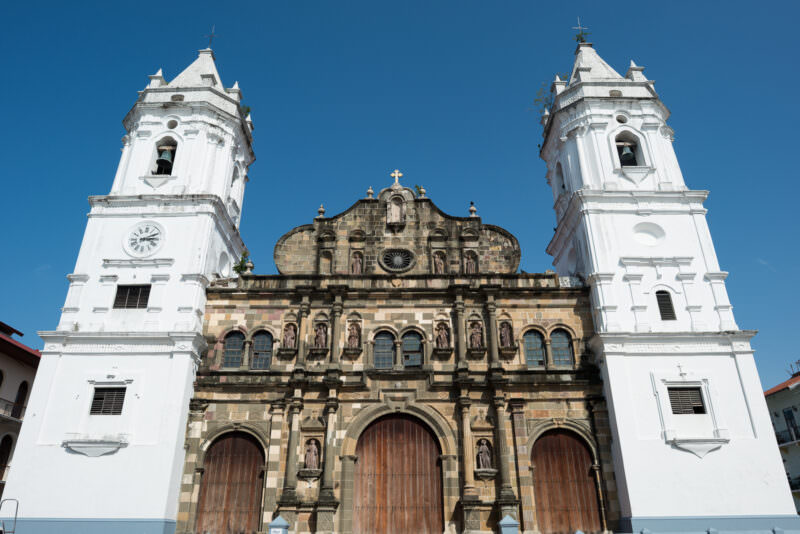
PANAMA CITY, Panama — The Catedral Metropolitana in Casco Viejo, Panama City’s old quarter, is one of the largest colonial-era churches in Central America and dates to 1688 to 1796.
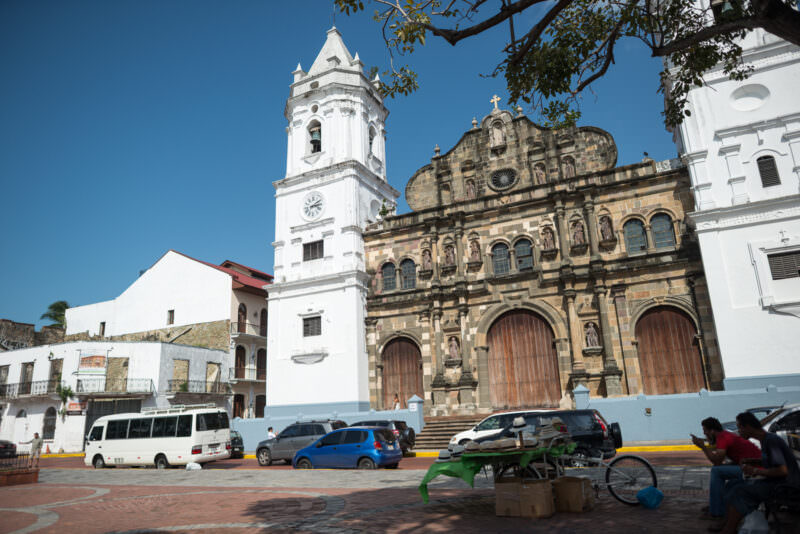
Standing on the western side of Plaza de la Independencia (or Plaza de la Catedral), the Catedral Metropolitana (or Metropolitan Cathedral) is one of the largest colonial-era churches in Central America.
It dates to 1688 to 1796, but went through a long period of neglect. Between 2015 and 2018 it underwent major restorations.
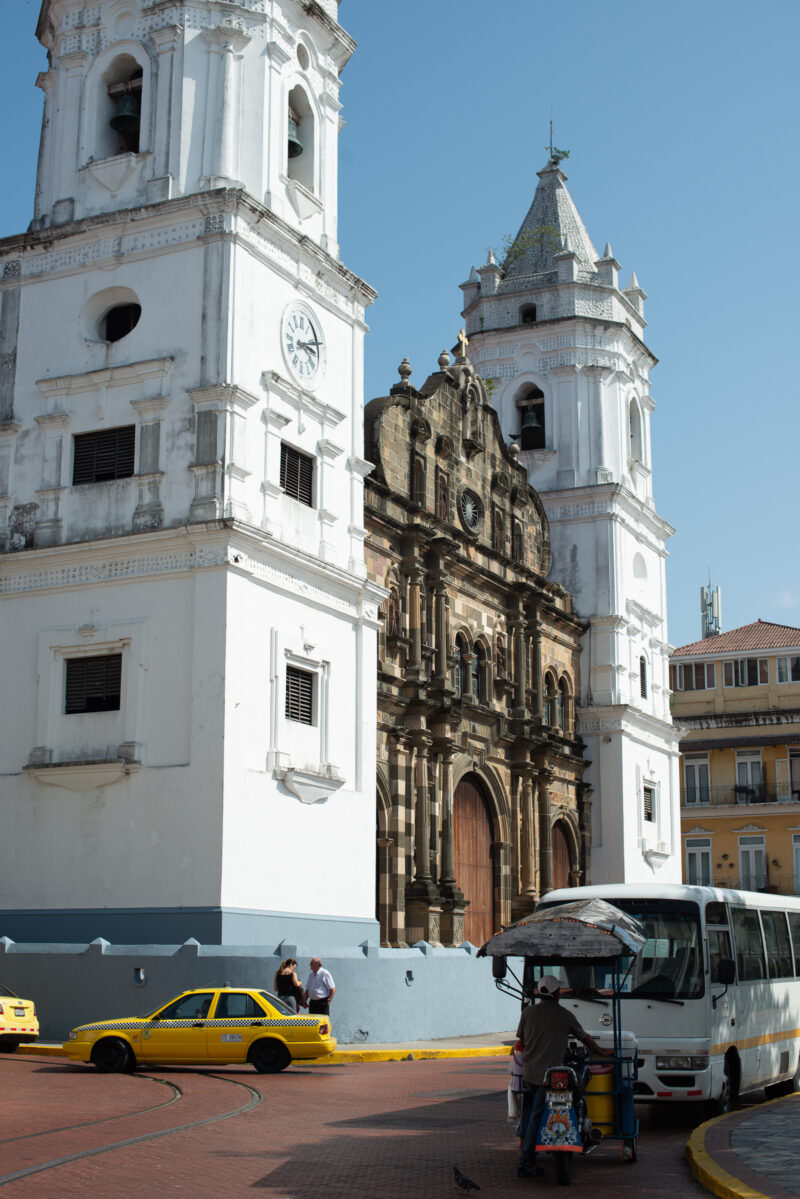
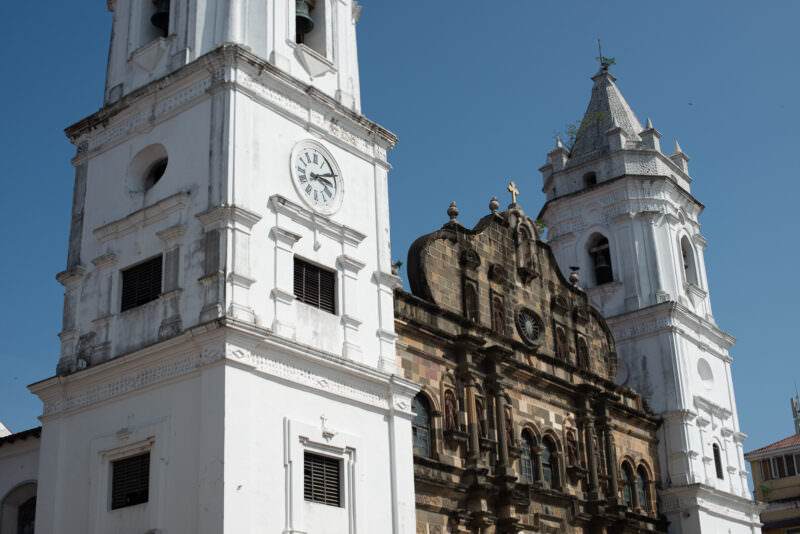
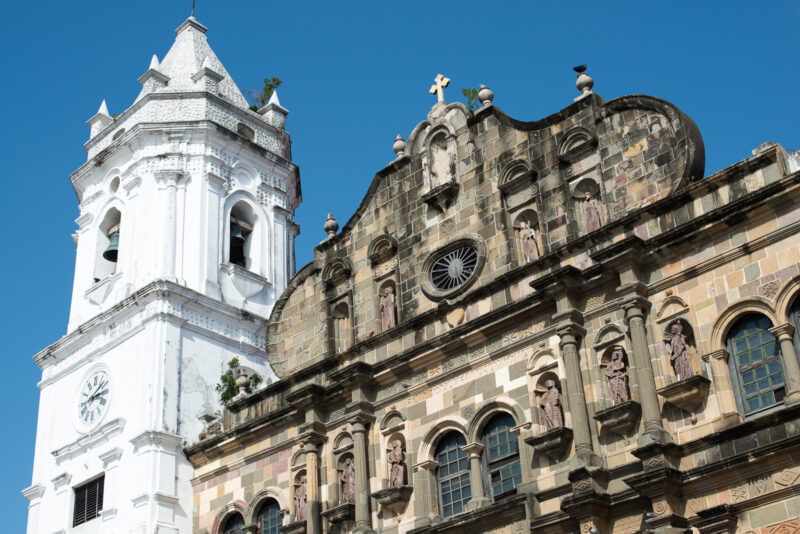
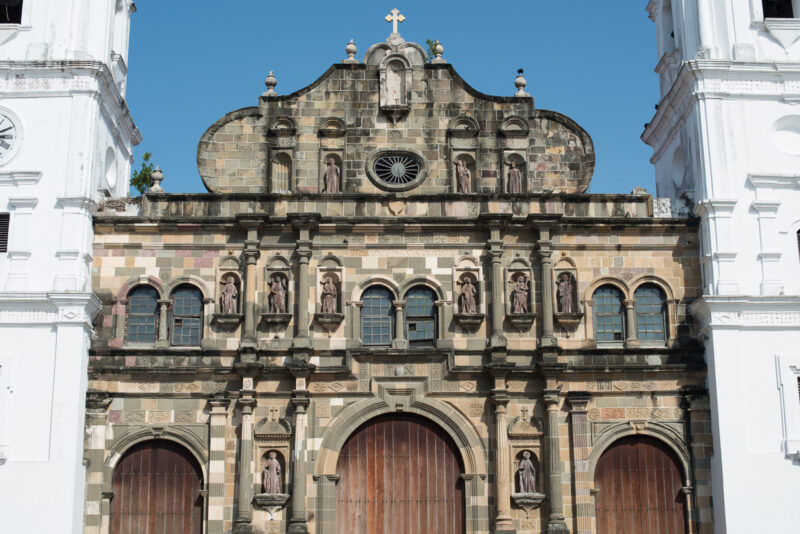
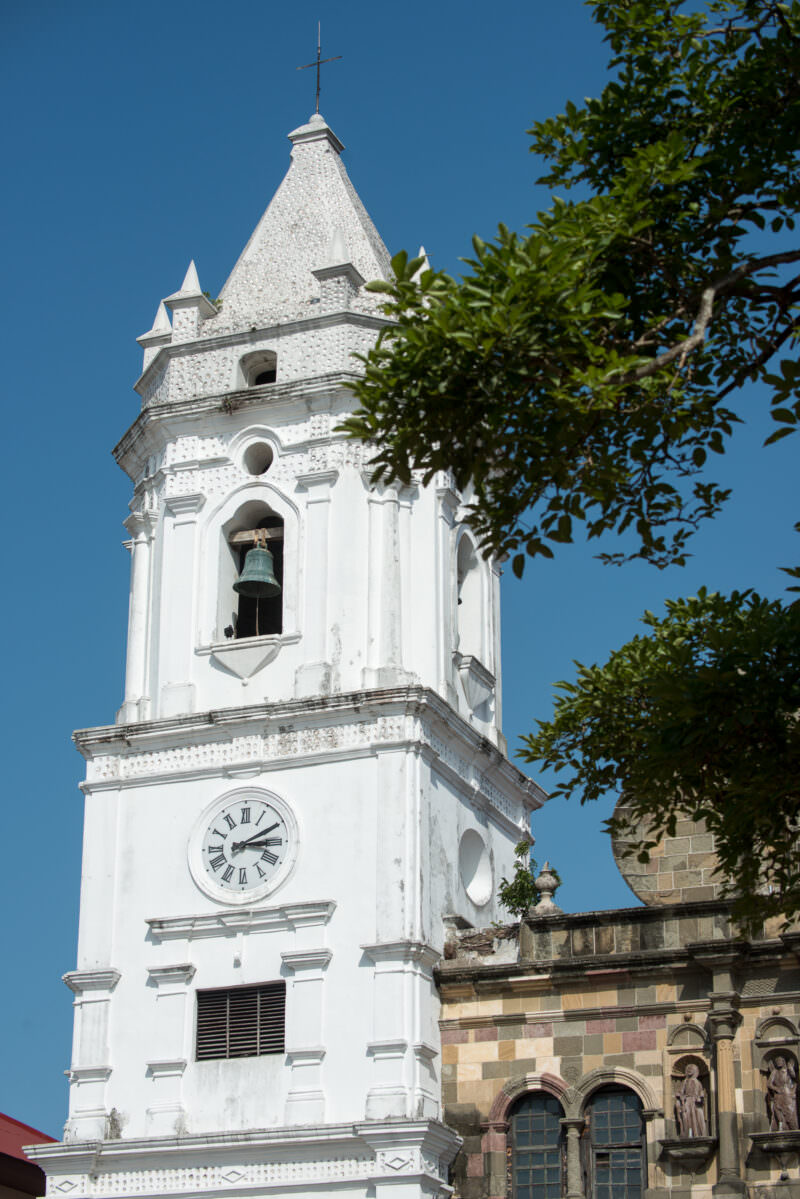
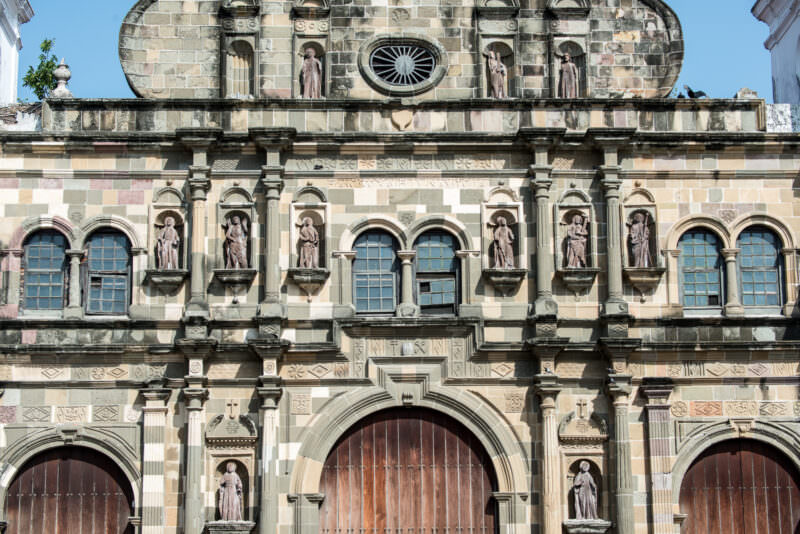
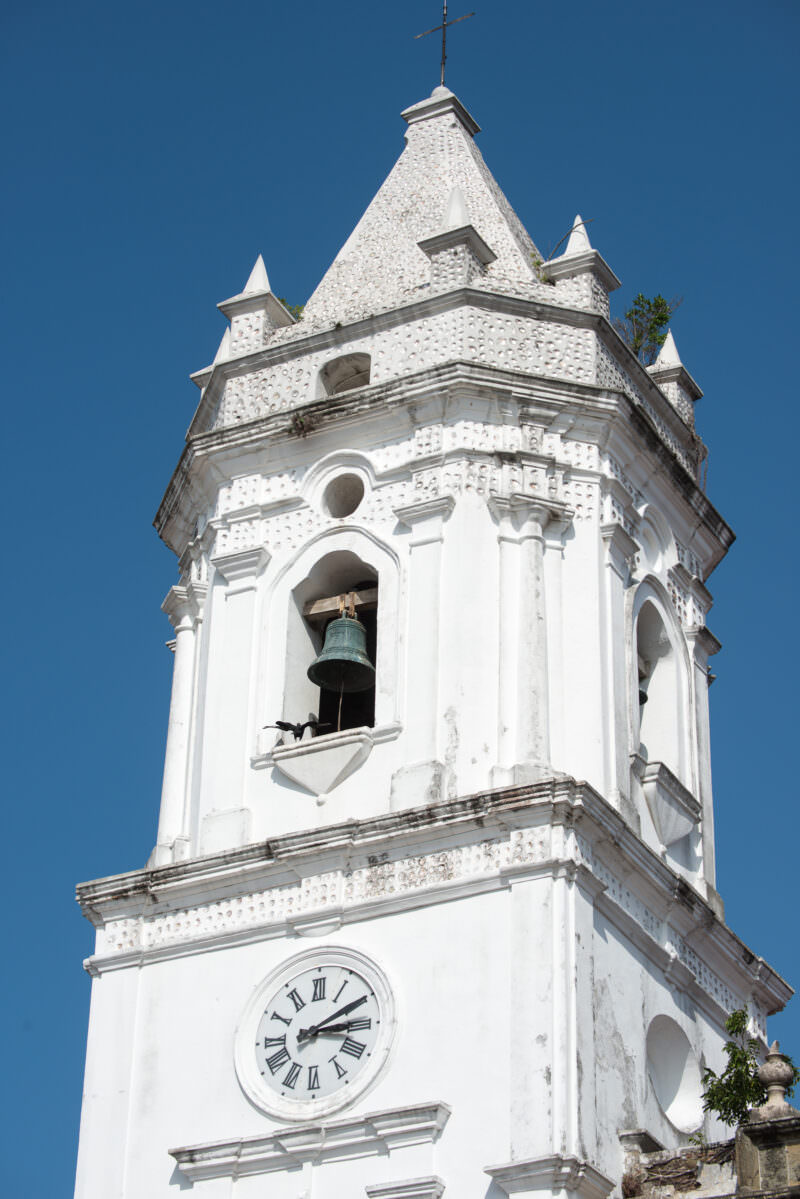
On the front, two gleaming white bell towers flank its weathered stone face. The dimples you can see at the tops of the towers are mother-of-pearl from oyster shells from the Pearl Islands, just off Panama’s Pacific coast. The effect is a unique shimmering finish. And the use of local natural resources doesn’t stop there; the facade is constructed from volcanic stone and coral.
The cathedral’s story begins with the destruction of Panama Viejo in 1671, when pirate Henry Morgan reduced the city to smoldering ruins. Which wasn’t at all helped by the original version being constructed of wood.
Determined to rebuild, Spanish colonists relocated Panama City to what is now Casco Viejo. Construction of the new cathedral began in 1688 but took over a century to complete, finally opening its grand doors in 1796.
And it would no longer be constructed predominantly of wood. While they did reuse some of the original materials, the core structure was redone with hardier, non-flammable construction materials.
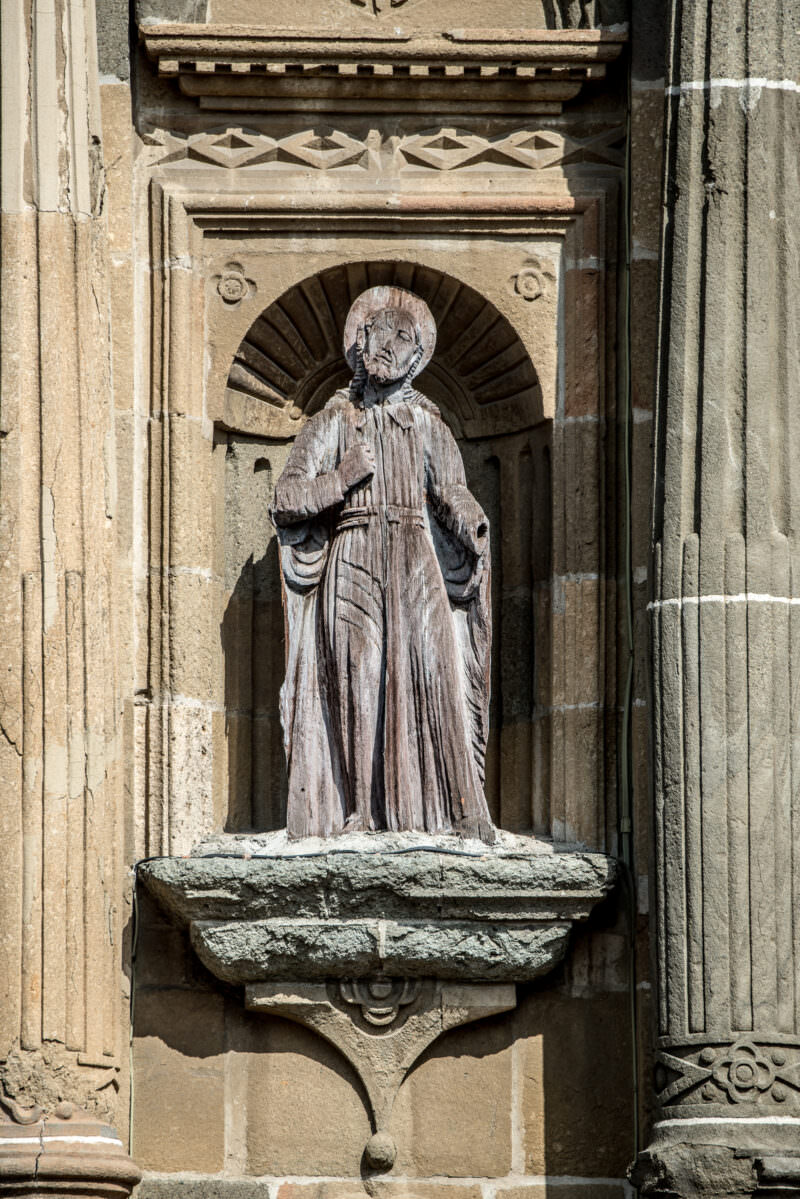
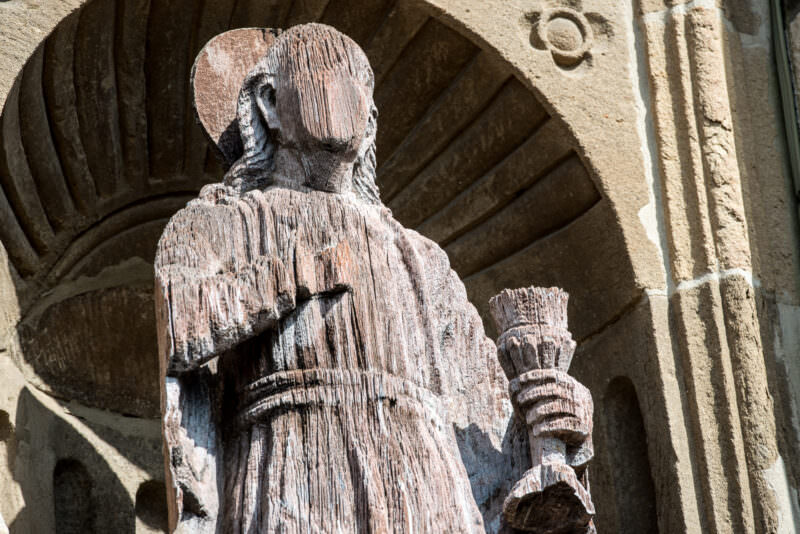
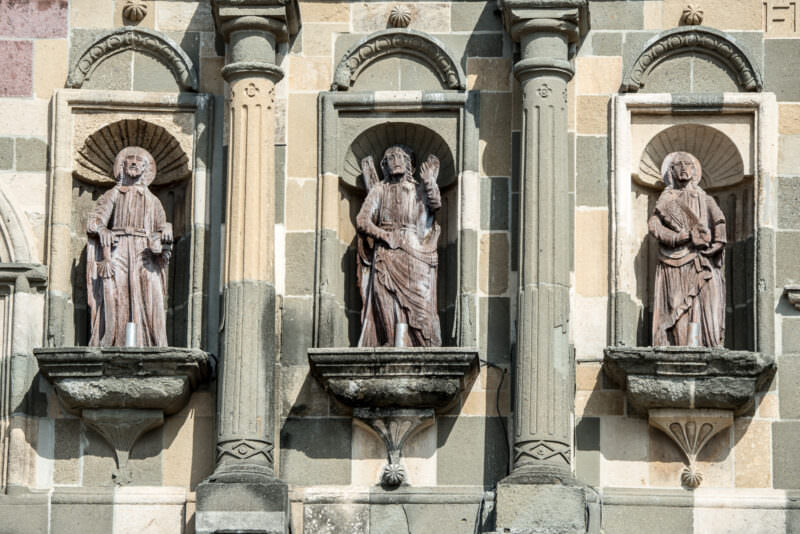
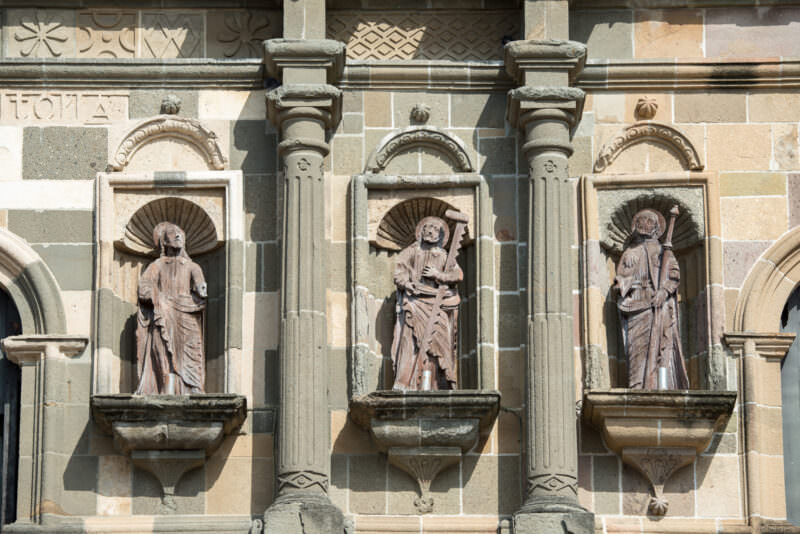
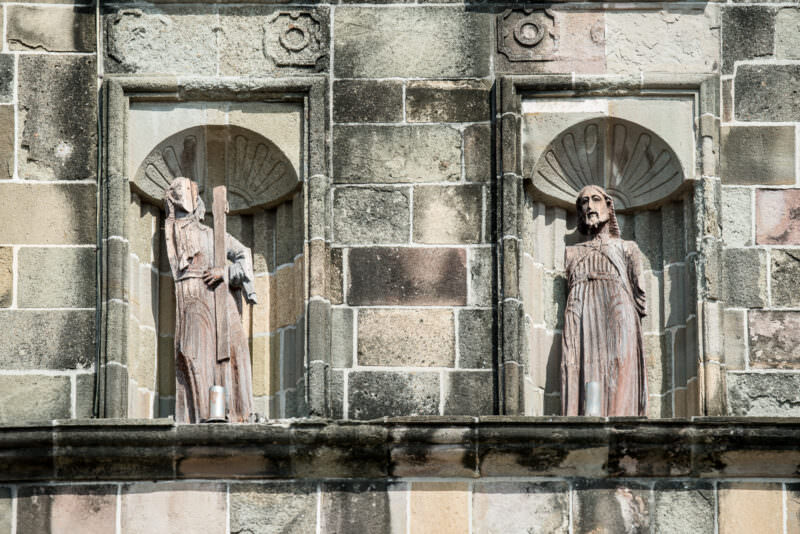
But wood wasn’t entirely banished. Unusually, the statues decorating the front are wood, not stone. And they haven’t all fared very well over the centuries against Panama’s weather.
Catedral Metropolitana has hosted a number of significant historical moments. It was here that Panama celebrated its independence from Spain in 1821 and later from Colombia in 1903. In 2019, Pope Francis celebrated Mass here during World Youth Day, reaffirming the cathedral’s global spiritual importance.
Photos of Catedral Metropolitana de Nuestra Señora de la Asunción
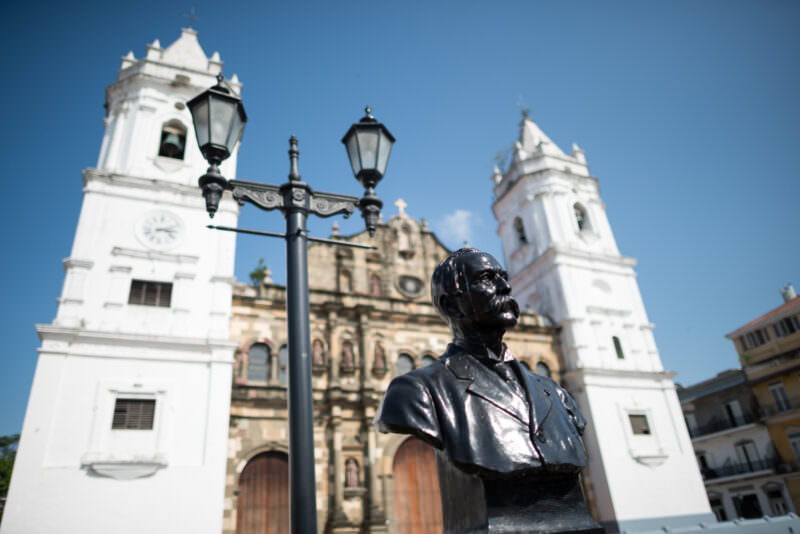
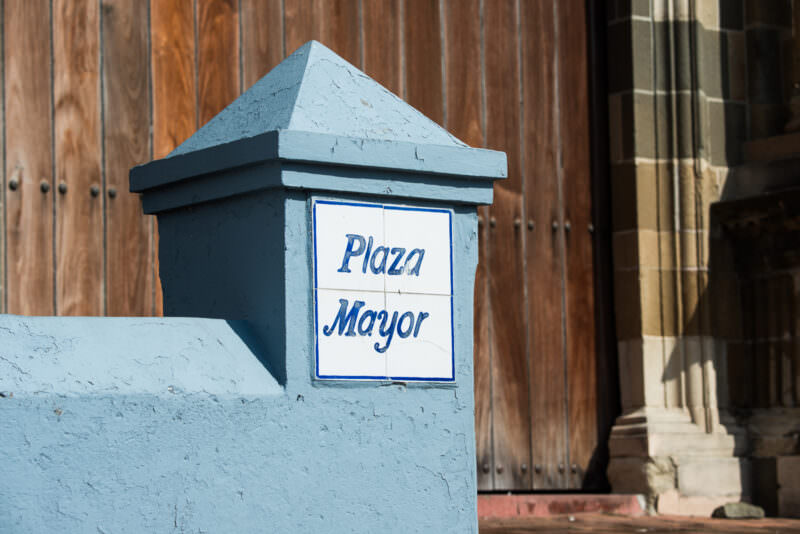
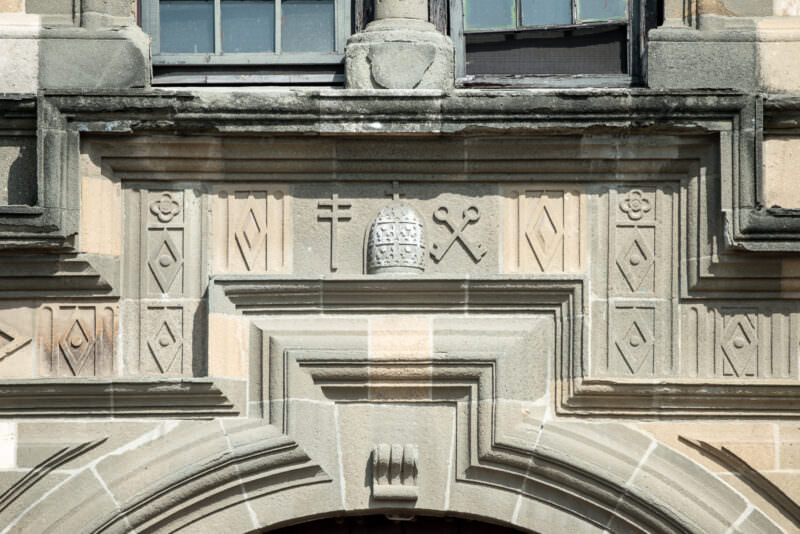
PANAMA CITY, Panama — The Catedral Basílica Santa María la Antigua dominates the western side of Plaza de la Independencia in Panama City’s Casco Viejo district, with the open plaza stretching out in the foreground. Construction began with the first stone in 1688 and concluded with the raising of the two lateral bell towers in 1796, the year of the cathedral’s consecration by Bishop Remigio de la Santa y Ortega — a campaign of more than a century that produced one of the largest colonial-era churches in Central America. The building’s distinctive features include two bell towers inlaid with mother-of-pearl (concha nácar) and a stone nave carried on approximately 67 cruciform columns. A comprehensive restoration between 2015 and 2018 preceded a visit by Pope Francis, who consecrated the new altar here on 26 January 2019 during World Youth Day. Photo by David Coleman / Have Camera Will TravelLicense this image at:DirectlyAlamyPANAMA CITY, Panama — Carved wooden statues in the niches of the Catedral Metropolitana’s façade, part of the classical and Renaissance decorative scheme of the Catedral Basílica Santa María la Antigua in Casco Viejo. The cathedral stands on the western side of Plaza de la Independencia and is built of stone, its nave carried on approximately 67 cruciform stone-and-brick columns and lit by ten stained-glass windows. First stone was laid in 1688; the principal façade was completed around 1741, the body of the church toward 1762, and the two bell towers by 1796. It is one of the largest colonial churches in Central America and was restored between 2015 and 2018 in a project overseen by Panama’s national heritage authority. Photo by David Coleman / Have Camera Will TravelLicense this image at:DirectlyAlamyPANAMA CITY, Panama — A bust of Dr. Manuel Amador Guerrero, the first President of Panama, stands in Plaza de la Independencia in Casco Viejo, with the Catedral Metropolitana rising behind it. Amador Guerrero played a central role in Panama’s separation from Colombia on 3 November 1903 and served as president from 1904 to 1908. The Catedral Basílica Santa María la Antigua in the background was consecrated on 4 April 1796 after a construction campaign of more than a century, beginning with the first stone in 1688. The same plaza where the bust stands served as the public stage for Panama’s independence proclamations — from Spain in 1821 and from Colombia in 1903 — making it one of the most historically charged spaces in the country. Photo by David Coleman / Have Camera Will TravelLicense this image at:DirectlyAlamyPANAMA CITY, Panama — The Catedral Basílica Santa María la Antigua — the Metropolitan Cathedral of Panama — seen across Plaza de la Independencia, the central square of Casco Viejo that also served as the stage for Panama’s independence proclamations from Spain in 1821 and from Colombia in 1903. Begun in 1688 and consecrated in 1796, the cathedral was designed in a classical and Renaissance style and is built of stone with approximately 67 cruciform stone-and-brick columns. The building was declared a Panamanian national historic monument in 1941, elevated to a minor basilica in December 2014, and restored between 2015 and 2018 at a cost of approximately US$11.9 million. Casco Viejo forms part of the UNESCO World Heritage property inscribed in 1997. Photo by David Coleman / Have Camera Will TravelLicense this image at:DirectlyAlamyPhoto by David Coleman / Have Camera Will TravelPANAMA CITY, Panama — Carved wooden statues in the niches of the Catedral Metropolitana’s façade in Casco Viejo, part of the classical and Renaissance decorative program of the Catedral Basílica Santa María la Antigua. The cathedral fronts the western side of Plaza de la Independencia and is built of stone, with its nave carried on approximately 67 cruciform stone-and-brick columns. Construction spanned more than a century from the first stone in 1688 to the consecration in 1796, and the building was declared a Panamanian national historic monument in 1941. A state-funded restoration between 2015 and 2018, overseen by Panama’s national heritage authority with international consultants from the cathedrals of Palencia and Toledo, reversed decades of deterioration. Photo by David Coleman / Have Camera Will TravelLicense this image at:DirectlyAlamyPANAMA CITY, Panama — Wooden statues occupy the niches of the Catedral Metropolitana’s façade in Casco Viejo, the historic colonial district of Panama City. The Catedral Basílica Santa María la Antigua carries a dedication transferred from Santa María la Antigua del Darién, the first diocese on the American mainland, and was built on a new city site after Henry Morgan’s 1671 raid destroyed Panamá Viejo and forced the city’s relocation in 1673. Construction ran from the first stone in 1688 through the completion of the lateral bell towers in 1796, the year of the cathedral’s consecration. Casco Viejo was designated part of the UNESCO World Heritage property in 1997, and the cathedral has served as the metropolitan see of the Archdiocese of Panama since its founding. Photo by David Coleman / Have Camera Will TravelLicense this image at:DirectlyAlamyPANAMA CITY, Panama — The carved stone façade of the Catedral Metropolitana rises above Plaza de la Independencia on the western side of Casco Viejo’s central square. The decorative scheme combines classical and Renaissance elements — a manner Panamanian writers commonly describe as the “Jesuit” style — and the two flanking bell towers are inlaid with mother-of-pearl (concha nácar), a feature cited as distinctive among colonial churches of the Americas. Construction of the Catedral Basílica Santa María la Antigua spanned more than a century, from the first stone laid in 1688 to the completion of the towers and consecration in 1796. A state-funded restoration between 2015 and 2018 reversed decades of deterioration, and the building remains the seat of the Roman Catholic Archdiocese of Panama. Photo by David Coleman / Have Camera Will TravelLicense this image at:DirectlyAlamyPANAMA CITY, Panama — Carved wooden statues occupy niches on the façade of the Catedral Metropolitana in Casco Viejo. The façade of the Catedral Basílica Santa María la Antigua combines classical and Renaissance decorative elements and was raised roughly between 1688 and 1741, forming the first major phase of a construction campaign that ultimately spanned more than a century. Standing on the western side of Plaza de la Independencia, the cathedral is one of the largest colonial-era churches in Central America and was declared a Panamanian national historic monument in 1941. A state-funded restoration between 2015 and 2018 conserved its architectural fabric; the building was elevated to a minor basilica in December 2014 and remains the seat of the Archdiocese of Panama. Photo by David Coleman / Have Camera Will TravelLicense this image at:DirectlyAlamyPANAMA CITY, Panama — The Catedral Basílica Santa María la Antigua — the Metropolitan Cathedral of Panama — stands on the western side of Plaza de la Independencia in Casco Viejo. Construction began with the first stone in 1688; the principal façade was raised roughly between 1688 and 1741, the body of the church completed toward 1762, and the two lateral bell towers — inlaid with mother-of-pearl — finished by 1796, the year of the cathedral’s consecration. The building is constructed of stone with approximately 67 cruciform stone-and-brick columns and ten stained-glass windows, and its façade combines classical and Renaissance decorative elements. A comprehensive state-funded restoration between 2015 and 2018, valued at approximately US$11.9 million, was completed when Pope Francis consecrated the new Carrara-marble altar on 26 January 2019 during World Youth Day. Photo by David Coleman / Have Camera Will TravelLicense this image at:DirectlyAlamyPhoto by David Coleman / Have Camera Will TravelPANAMA CITY, Panama — A Plaza Mayor sign on the front steps of the Catedral Metropolitana, marking the square also known as Plaza de la Independencia in Casco Viejo. The Catedral Basílica Santa María la Antigua fronts the western side of this central plaza, which served as the public stage for Panama’s declarations of independence from Spain in 1821 and from Colombia in 1903. Construction of the cathedral began with the first stone in 1688 and concluded with the raising of the two bell towers and the consecration on 4 April 1796. The building is among the largest colonial-era cathedrals in Central America and underwent a major state-funded restoration between 2015 and 2018. Photo by David Coleman / Have Camera Will TravelLicense this image at:DirectlyAlamyPANAMA CITY, Panama — The Catedral Metropolitana anchors the western side of Plaza de la Independencia, the central square of Casco Viejo, Panama City’s historic colonial district. The Catedral Basílica Santa María la Antigua carries a dedication transferred from Santa María la Antigua del Darién, the first diocese on the American mainland, and replaced an earlier cathedral at Panamá Viejo after Henry Morgan’s 1671 raid forced the city’s relocation to its present site in 1673. Construction began with the first stone in 1688 and concluded with the raising of the two bell towers in 1796, the year of the cathedral’s consecration. The building lies within the UNESCO World Heritage property inscribed in 1997 and was elevated to a minor basilica in December 2014. Photo by David Coleman / Have Camera Will TravelLicense this image at:DirectlyAlamyPANAMA CITY, Panama — A detail of the carved stone façade of the Catedral Metropolitana on the western side of Plaza de la Independencia in Casco Viejo. The Catedral Basílica Santa María la Antigua’s principal façade was raised roughly between 1688 and 1741 and features classical and Renaissance decorative elements — a manner Panamanian writers commonly describe as the “Jesuit” style. The façade’s crowning was damaged by an 1882 earthquake, and the building suffered further deterioration before a state-funded restoration between 2015 and 2018 conserved its historical fabric. The cathedral is one of the largest colonial-era churches in Central America and remains the seat of the Archdiocese of Panama. Photo by David Coleman / Have Camera Will TravelLicense this image at:DirectlyAlamyPANAMA CITY, Panama — The white stone façade of the Catedral Metropolitana faces the Plaza de la Independencia (also known as Plaza Mayor) from its western side. Construction of the Catedral Basílica Santa María la Antigua began with the first stone in 1688 and proceeded in stages — the principal façade raised roughly between 1688 and 1741, the body of the church completed toward 1762, and the two flanking bell towers finished by 1796 — before the cathedral was consecrated on 4 April 1796. It is one of the largest colonial-era cathedrals in Central America and was declared a Panamanian national historic monument in 1941. A state-funded restoration costing approximately US$11.9 million was carried out between 2015 and 2018, restoring the building after decades of deterioration. Photo by David Coleman / Have Camera Will TravelLicense this image at:DirectlyAlamyPANAMA CITY, Panama — A bell tower of the Catedral Metropolitana, its pinnacle inlaid with mother-of-pearl (concha nácar), seen from Casco Viejo’s street level. The Catedral Basílica Santa María la Antigua was consecrated on 4 April 1796 by Bishop Remigio de la Santa y Ortega, completing a construction campaign begun with the first stone in 1688. It is the seat of the Roman Catholic Archdiocese of Panama, a national historic monument since 1941, and a minor basilica since December 2014. Pope Francis consecrated the cathedral’s new Carrara-marble altar here on 26 January 2019 during World Youth Day, depositing relics of Santa Rosa de Lima, San Óscar Romero, San Martín de Porres, and San Juan Pablo II. Photo by David Coleman / Have Camera Will TravelLicense this image at:DirectlyAlamyPANAMA CITY, Panama — The façade of the Catedral Metropolitana faces west across Plaza de la Independencia (also known as Plaza Mayor) in the heart of Casco Viejo. The Catedral Basílica Santa María la Antigua took more than a century to build — from the first stone in 1688 to the consecration on 4 April 1796 — and is among the largest colonial-era cathedrals in Central America. A general fire swept the city in 1737 during construction, and an 1882 earthquake later destroyed the crowning of the façade. The building was declared a Panamanian national historic monument in 1941 and underwent a comprehensive state-funded restoration between 2015 and 2018. Photo by David Coleman / Have Camera Will TravelLicense this image at:DirectlyAlamyPANAMA CITY, Panama — Carved wooden statues stand in niches across the façade of the Catedral Metropolitana, details of the classical and Renaissance decorative program that Panamanian writers commonly call the “Jesuit” style. The Catedral Basílica Santa María la Antigua fronts the western side of Plaza de la Independencia in Casco Viejo, the colonial district of Panama City. Construction ran from the laying of the first stone in 1688 through the completion of the two bell towers in 1796, the year of the cathedral’s consecration by Bishop Remigio de la Santa y Ortega. The building is a national historic monument, a UNESCO World Heritage site component, and since December 2014 a minor basilica. Photo by David Coleman / Have Camera Will TravelLicense this image at:DirectlyAlamyPANAMA CITY, Panama — A bell tower of the Catedral Metropolitana rises above the rooftops of Casco Viejo, its upper section inlaid with mother-of-pearl (concha nácar), a feature widely cited as distinctive among colonial churches of the Americas. The Catedral Basílica Santa María la Antigua was consecrated on 4 April 1796 after a construction campaign of more than a century, beginning with the first stone in 1688. It is the seat of the Roman Catholic Archdiocese of Panama and was elevated to a minor basilica in December 2014. Casco Viejo forms part of the UNESCO World Heritage property “Archaeological Site of Panamá Viejo and Historic District of Panamá,” inscribed in 1997. Photo by David Coleman / Have Camera Will TravelLicense this image at:DirectlyAlamy
What to know before you go
The church is very easy to find — Plaza de la Independencia (aka Plaza Mayor) is the very heart of what is known as Casco Antiguo — but as an especially active hub, it isn’t always open to visitors as much as some of the other historic churches in Casco.
XF37+5WC, Av. B 7-53, Panamá, Provincia de Panamá, Panama
Enjoyed this article? Personalize your search results.
I'm a freelance travel photographer based in Washington DC. Seven continents, up mountains, underwater, and a bunch of places in between. My images have appeared in numerous publications, and you can check out some of my gear reviews and tips here. More »