MEXICO CITY, Mexico – The Gran Hotel Ciudad de Mexico is an Art Nouveau gem in the heart of Mexico City’s historic district. It sits right on the Zócalo.
The Gran Hotel Ciudad de Mexico is well worth a visit even if you’re not staying there. It sits on a corner of the Zócalo in Centro Histórico, the old-town portion of Mexico City that was itself designated as a UNESCO World Heritage Site in 1987.
There are newer, fancier, and more luxurious hotels in Mexico City. But none of them have the combination of prime location and old-world charm. And the building itself is an Art Nouveau gem.
The building dates to 1899, and it was originally the most luxurious department store in Latin America, known as El Centro Mercantil. You can still see the direct legacy of its first owner, Sebastian Robert, in his initials on the grand staircase.
If the Gran Hotel Cuidad de Mexico looks familiar, it might be because you saw it in a movie or on TV. It’s used as a location in the recent James Bond film, Spectre. It also appears in the movie Frida, where it plays a Parisian nightclub where Frida sees Josephine Baker perform.
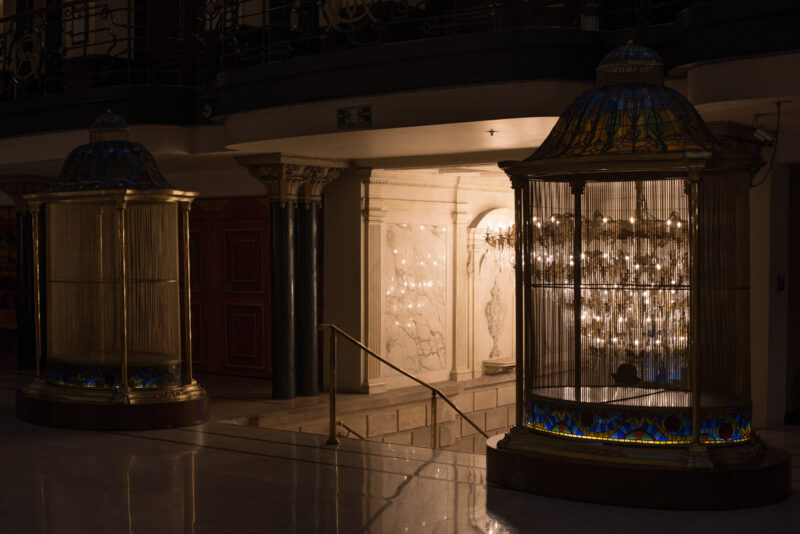
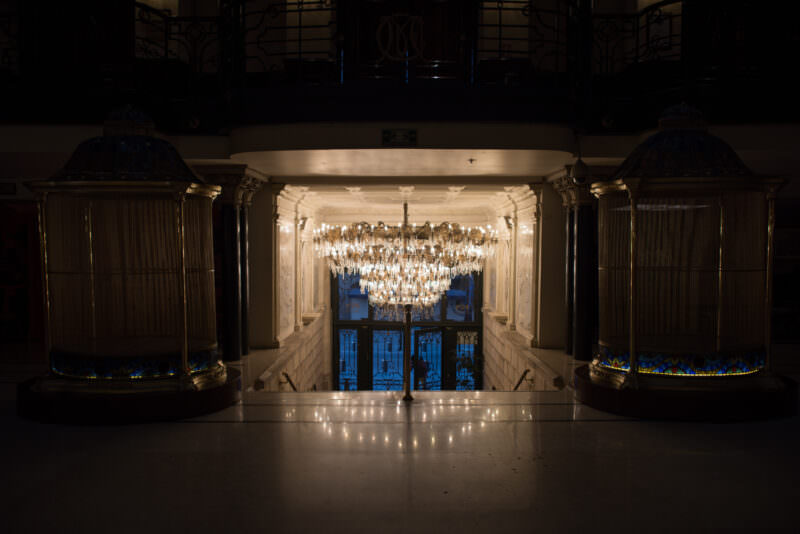
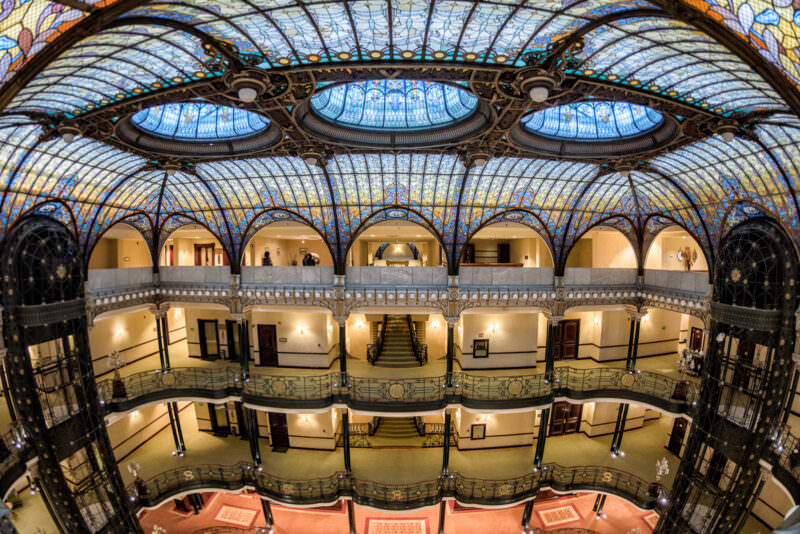
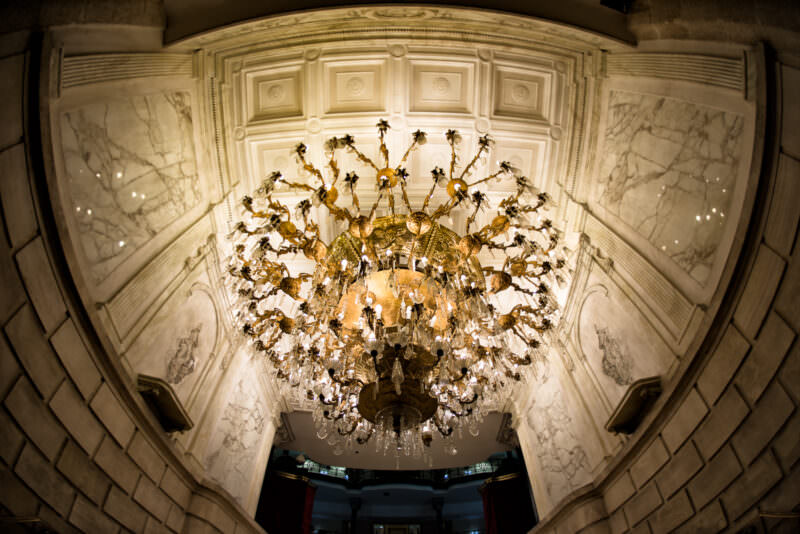
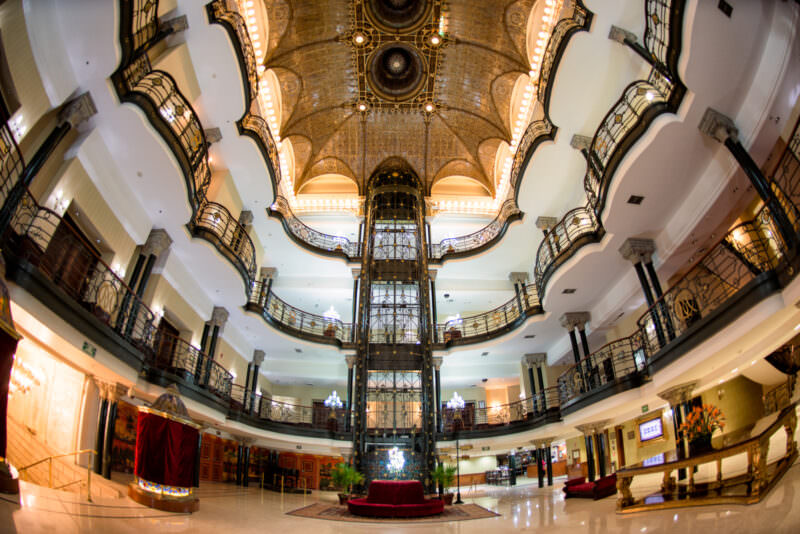
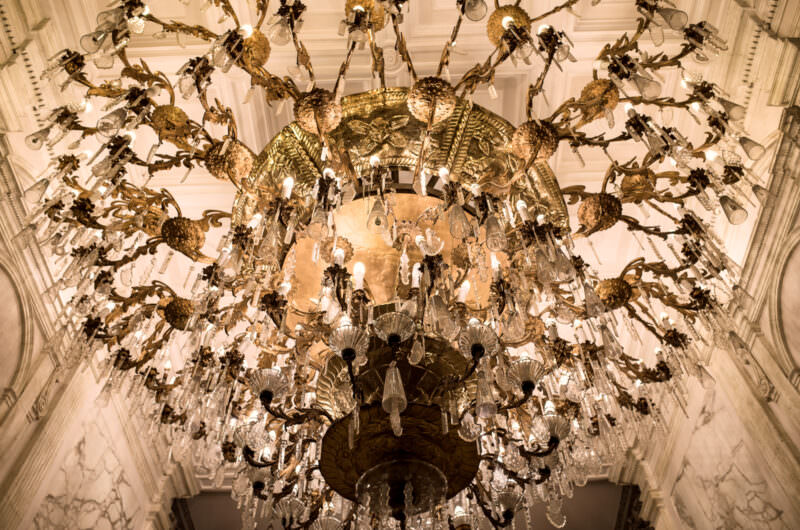
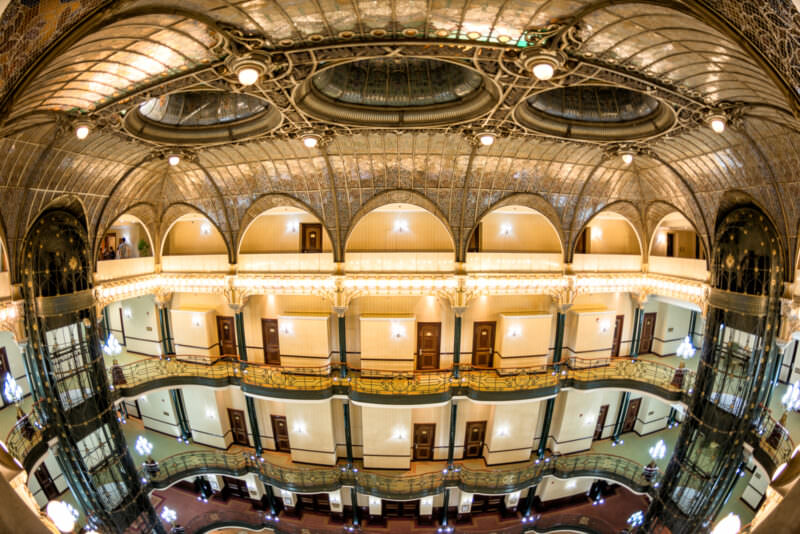
As you walk in the main entrance, just off the Zócalo, you walk under a massive Louis XV chandelier. Immediately opposite, across the atrium, is a grand staircase that scales the height of the building. As you walk past the ornate canary cages and enter the main hall, to your left and right are two of the oldest elevators in Latin America. They still work, although they’re supplemented these days by some more modern ones nearby that are more practical for day-to-day elevating.
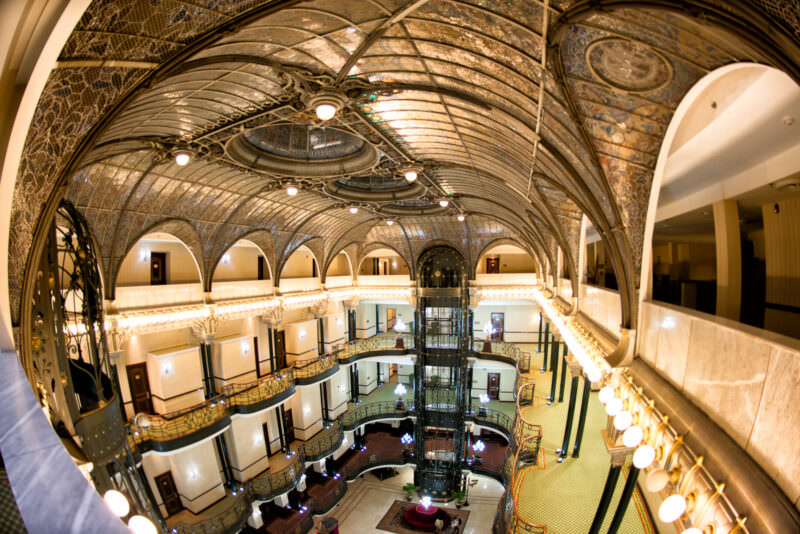
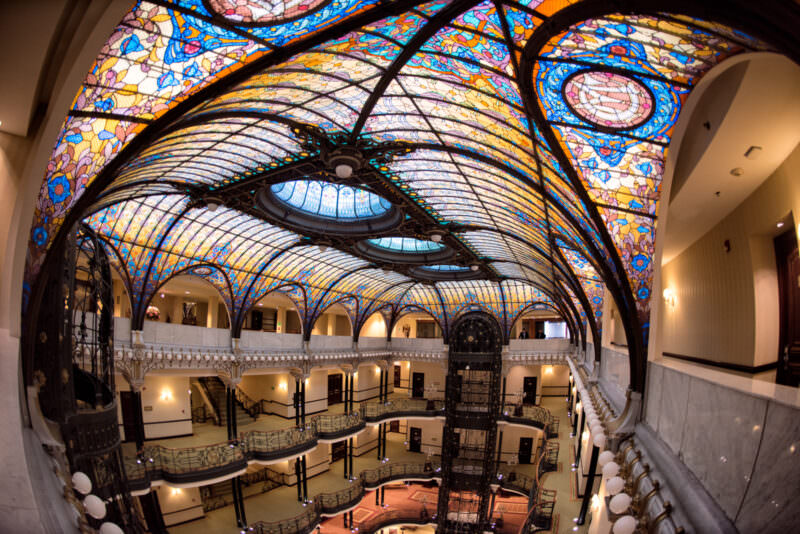
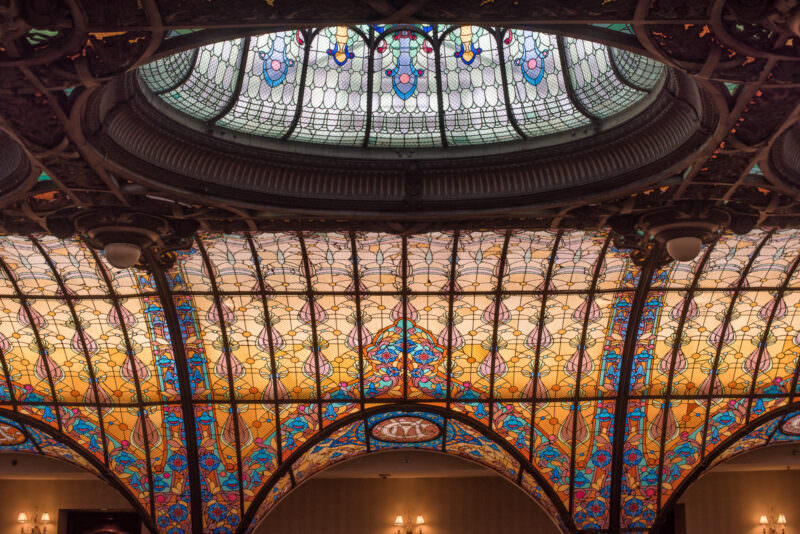
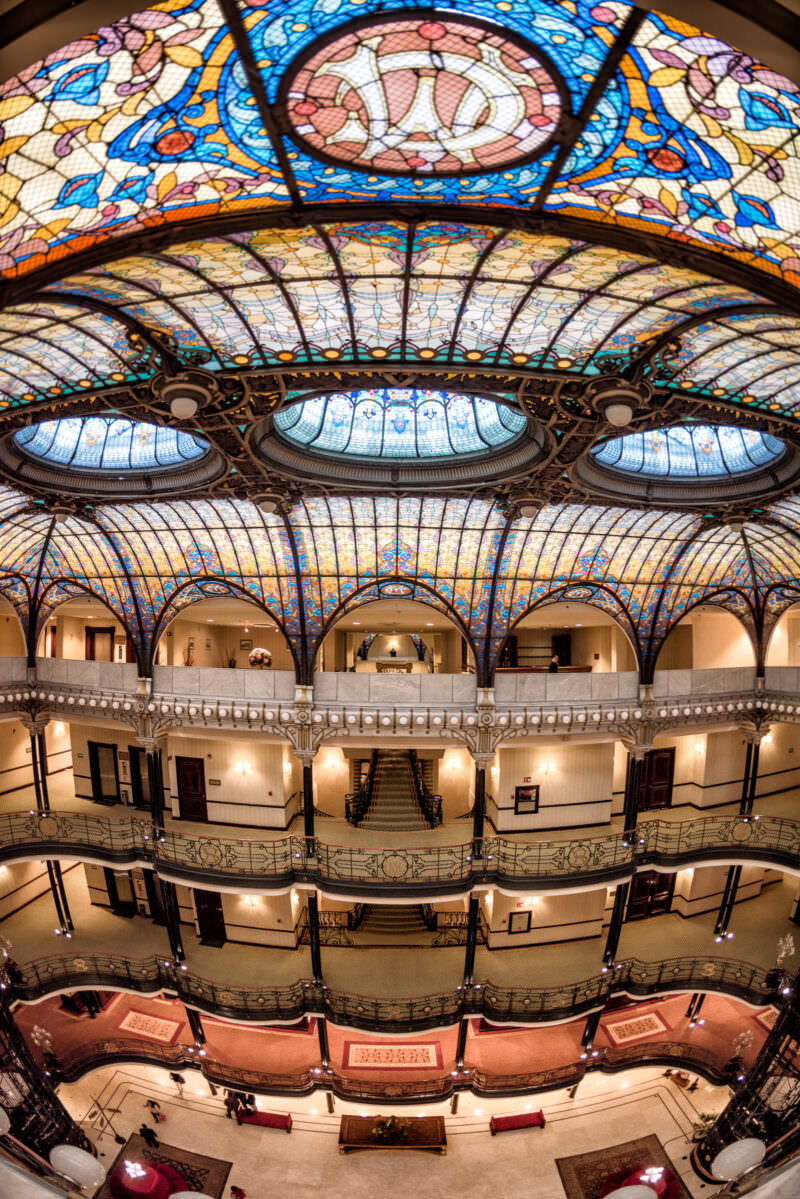
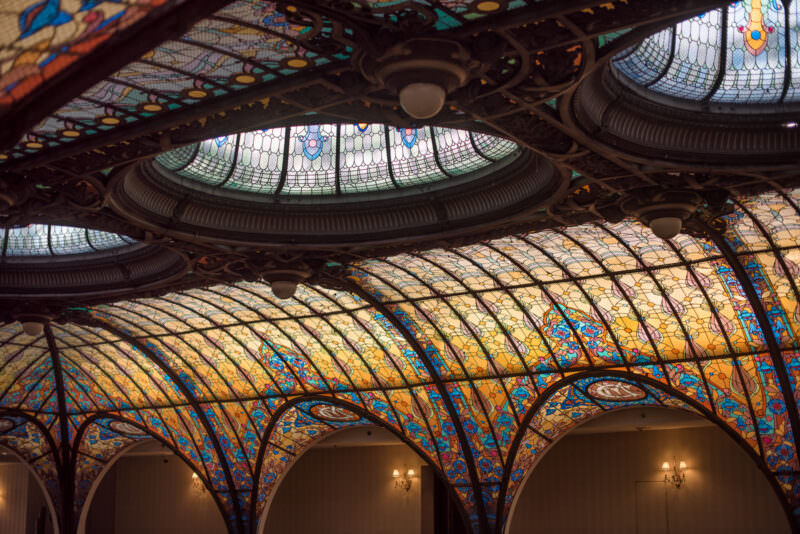
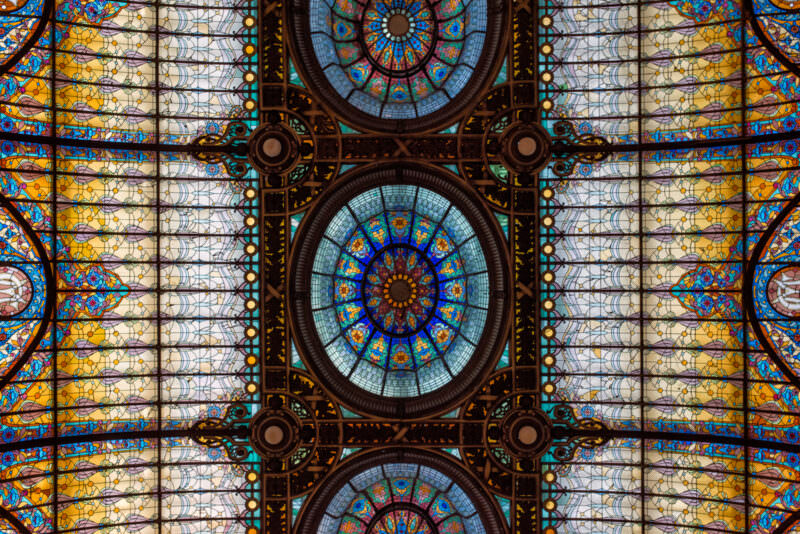
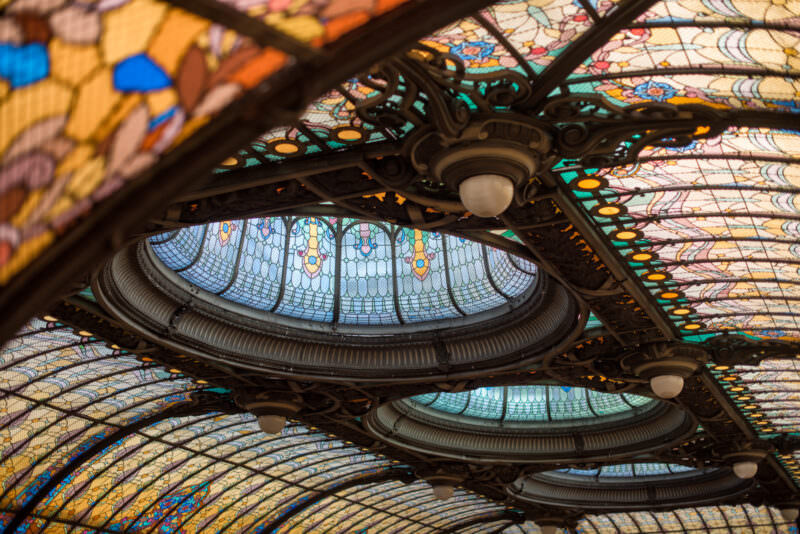
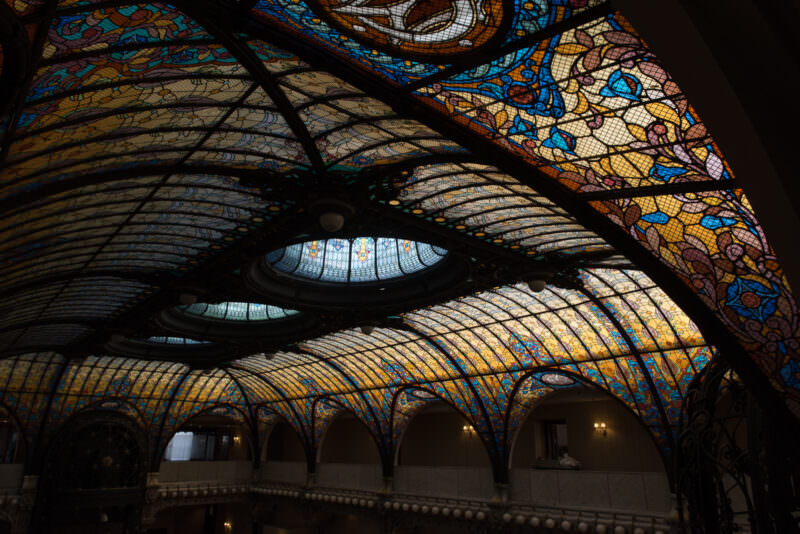
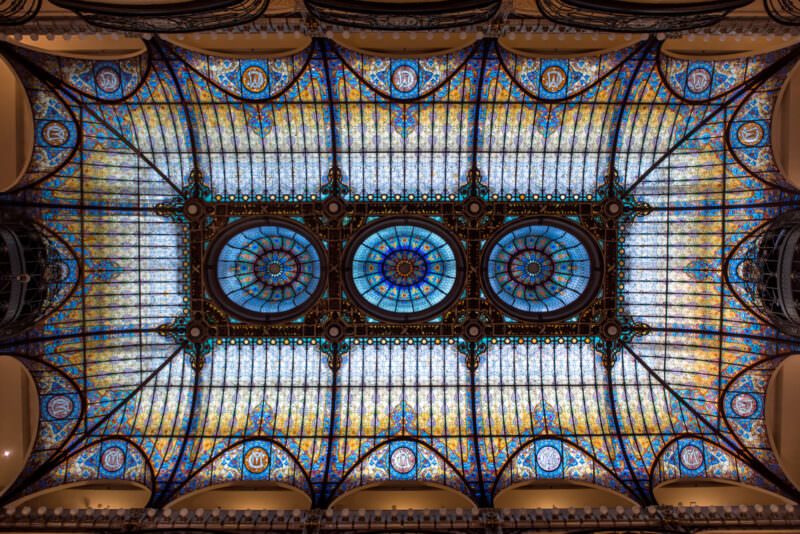
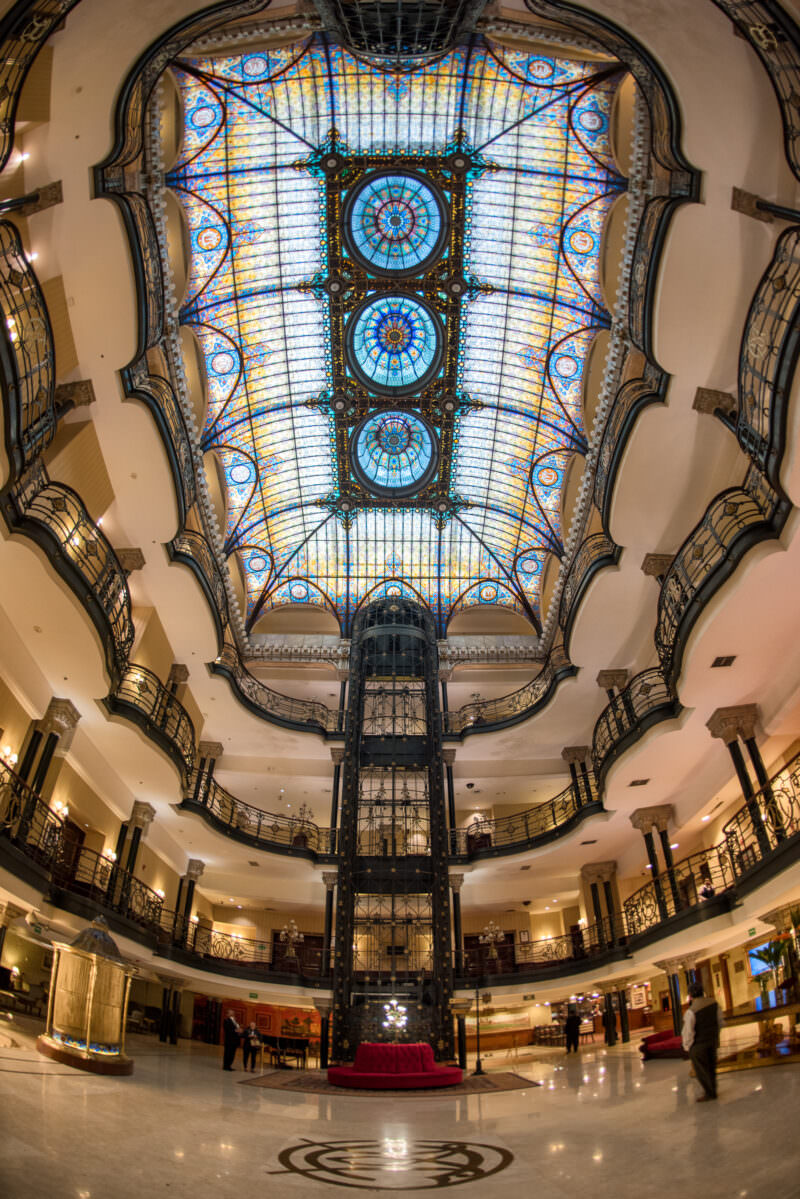
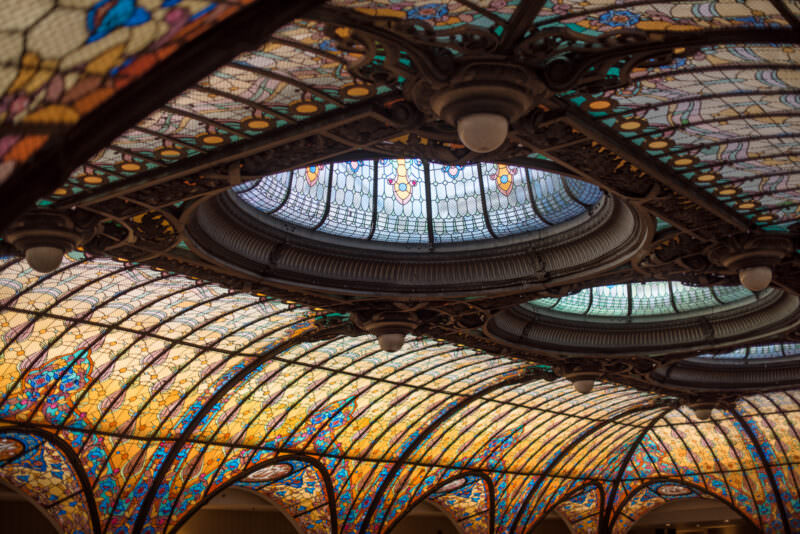
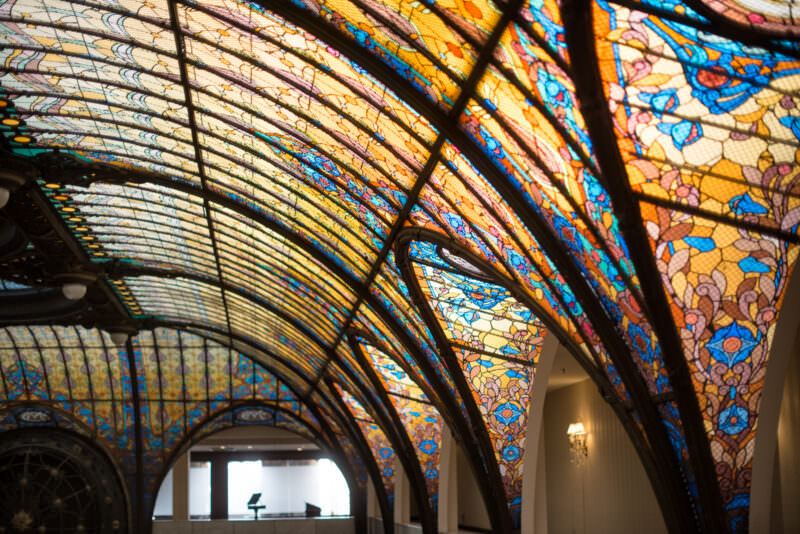
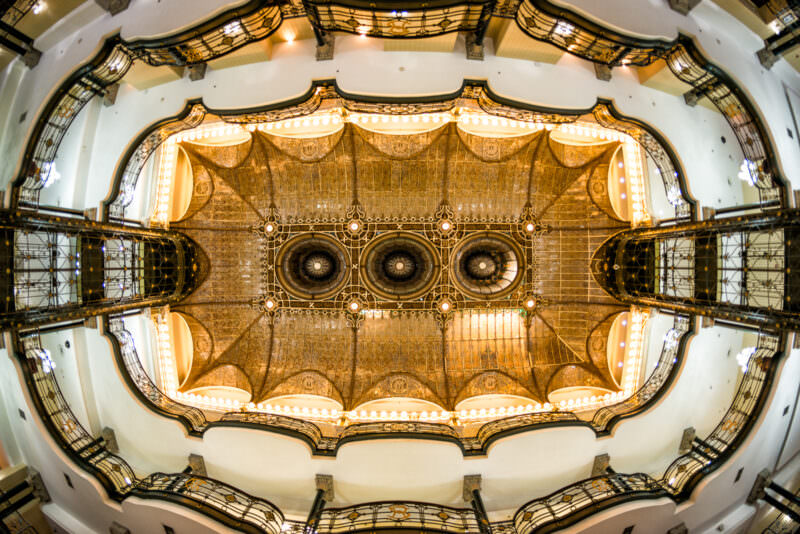
To see the building’s showstopper, look up. The domed roof is a massive Tiffany-style stained glass window. At night, it looks like wrought iron and glass — impressive enough, but not the spectacle it becomes when it’s backlit by natural light outside. Then it becomes a kaleidoscope of colors and intricate patterns. The building is hollowed out in its center so as to make one giant atrium under the colorful roof.
The department store was shuttered in 1959. Nearly a decade later, it was reopened as the Gran Hotel Cuidad de Mexico. It was given another round of renovations in 2004. If you’re planning to explore the Centro Historico on foot, it’s well worth considering.
Have Camera Will Travel // Newsletter
Practical field notes, hands-on gear tests.
Photos of Gran Hotel Cuidad de Mexico
MEXICO CITY, Mexico — The Art Nouveau stained glass ceiling of the Gran Hotel Ciudad de Mexico illuminated by natural daylight. The hotel’s atrium features a Tiffany-style stained glass dome that serves as the architectural centerpiece of the early 20th-century building. Located in Mexico City’s Centro Histórico, the Gran Hotel Ciudad de Mexico occupies a prominent position near the Zócalo, the city’s main square. The hotel was originally constructed as a department store in 1895 and later converted into a luxury hotel. The Centro Histórico is a UNESCO World Heritage Site that encompasses the original layout of the Aztec capital Tenochtitlan. The area contains numerous colonial-era buildings and represents one of the largest collections of Spanish colonial architecture in the Americas. Photo by David Coleman / Have Camera Will TravelLicense this image at:DirectlyAlamy
MEXICO CITY, Mexico — The ornate main foyer of Gran Hotel Ciudad de México displays Art Nouveau architecture beneath its renowned Tiffany stained glass ceiling. The hotel, originally built as a department store in 1895, was converted into a luxury hotel in 1968 and maintains its original architectural features. The building’s elaborate ironwork and decorative elements exemplify the Art Nouveau movement that influenced Mexican architecture in the early 20th century. Located on the eastern side of the Zócalo, the hotel occupies a prime position overlooking Mexico City’s main square. The Tiffany ceiling, installed during the building’s original construction, remains one of the most photographed architectural features in Mexico City’s Centro Histórico. The hotel’s location places it within walking distance of major attractions including the Metropolitan Cathedral and National Palace. Photo by David Coleman / Have Camera Will TravelLicense this image at:DirectlyAlamy
MEXICO CITY, Mexico — The Art Nouveau stained glass ceiling of the Gran Hotel Ciudad de Mexico illuminated by natural daylight. The hotel’s atrium features a Tiffany-style stained glass dome that serves as the architectural centerpiece of the early 20th-century building. Located in Mexico City’s Centro Histórico, the Gran Hotel Ciudad de Mexico occupies a prominent position near the Zócalo, the city’s main square. The hotel was originally constructed as a department store in 1895 and later converted into a luxury hotel. The Centro Histórico is a UNESCO World Heritage Site that encompasses the original layout of the Aztec capital Tenochtitlan. The area contains numerous colonial-era buildings and represents one of the largest collections of Spanish colonial architecture in the Americas. Photo by David Coleman / Have Camera Will TravelLicense this image at:DirectlyAlamy
MEXICO CITY, Mexico — The Art Nouveau atrium of the Gran Hotel Cuidad de Mexico in the heart of Mexico city’s historical district. A highlight is the Tiffany-style stained glass ceiling. Photo by David Coleman / Have Camera Will TravelLicense this image at:DirectlyAlamy
MEXICO CITY, Mexico — The Art Nouveau stained glass ceiling of the Gran Hotel Ciudad de Mexico illuminated by natural daylight. The hotel’s atrium features a Tiffany-style stained glass dome that serves as the architectural centerpiece of the early 20th-century building. Located in Mexico City’s Centro Histórico, the Gran Hotel Ciudad de Mexico occupies a prominent position near the Zócalo, the city’s main square. The hotel was originally constructed as a department store in 1895 and later converted into a luxury hotel. The Centro Histórico is a UNESCO World Heritage Site that encompasses the original layout of the Aztec capital Tenochtitlan. The area contains numerous colonial-era buildings and represents one of the largest collections of Spanish colonial architecture in the Americas. Photo by David Coleman / Have Camera Will TravelLicense this image at:DirectlyAlamy
MEXICO CITY, Mexico — The Art Nouveau stained glass ceiling of the Gran Hotel Ciudad de Mexico illuminated by natural daylight. The hotel’s atrium features a Tiffany-style stained glass dome that serves as the architectural centerpiece of the early 20th-century building. Located in Mexico City’s Centro Histórico, the Gran Hotel Ciudad de Mexico occupies a prominent position near the Zócalo, the city’s main square. The hotel was originally constructed as a department store in 1895 and later converted into a luxury hotel. The Centro Histórico is a UNESCO World Heritage Site that encompasses the original layout of the Aztec capital Tenochtitlan. The area contains numerous colonial-era buildings and represents one of the largest collections of Spanish colonial architecture in the Americas. Photo by David Coleman / Have Camera Will TravelLicense this image at:DirectlyAlamy
MEXICO CITY, Mexico — The Art Nouveau stained glass ceiling of the Gran Hotel Ciudad de Mexico illuminated by natural daylight. The hotel’s atrium features a Tiffany-style stained glass dome that serves as the architectural centerpiece of the early 20th-century building. Located in Mexico City’s Centro Histórico, the Gran Hotel Ciudad de Mexico occupies a prominent position near the Zócalo, the city’s main square. The hotel was originally constructed as a department store in 1895 and later converted into a luxury hotel. The Centro Histórico is a UNESCO World Heritage Site that encompasses the original layout of the Aztec capital Tenochtitlan. The area contains numerous colonial-era buildings and represents one of the largest collections of Spanish colonial architecture in the Americas. Photo by David Coleman / Have Camera Will TravelLicense this image at:DirectlyAlamy
MEXICO CITY, Mexico — The Art Nouveau stained glass ceiling of the Gran Hotel Ciudad de Mexico illuminated by natural daylight. The hotel’s atrium features a Tiffany-style stained glass dome that serves as the architectural centerpiece of the early 20th-century building. Located in Mexico City’s Centro Histórico, the Gran Hotel Ciudad de Mexico occupies a prominent position near the Zócalo, the city’s main square. The hotel was originally constructed as a department store in 1895 and later converted into a luxury hotel. The Centro Histórico is a UNESCO World Heritage Site that encompasses the original layout of the Aztec capital Tenochtitlan. The area contains numerous colonial-era buildings and represents one of the largest collections of Spanish colonial architecture in the Americas. Photo by David Coleman / Have Camera Will TravelLicense this image at:DirectlyAlamy
MEXICO CITY, Mexico — The Art Nouveau stained glass ceiling of the Gran Hotel Ciudad de Mexico illuminated by natural daylight. The hotel’s atrium features a Tiffany-style stained glass dome that serves as the architectural centerpiece of the early 20th-century building. Located in Mexico City’s Centro Histórico, the Gran Hotel Ciudad de Mexico occupies a prominent position near the Zócalo, the city’s main square. The hotel was originally constructed as a department store in 1895 and later converted into a luxury hotel. The Centro Histórico is a UNESCO World Heritage Site that encompasses the original layout of the Aztec capital Tenochtitlan. The area contains numerous colonial-era buildings and represents one of the largest collections of Spanish colonial architecture in the Americas. Photo by David Coleman / Have Camera Will TravelLicense this image at:DirectlyAlamy
MEXICO CITY, Mexico — A large, ornate chandelier hangs at the entrance of the Gran Hotel Ciudad de Mexico, an architectural landmark situated on a corner of the Zócalo in Mexico City’s historic center. The hotel, built in the early 20th century, is renowned for its Art Nouveau architecture and luxurious interior design. The building originally served as a department store before being converted into a hotel, preserving many of its original decorative elements. The Gran Hotel overlooks the Zócalo, Mexico City’s main square and one of the largest city squares in the world. The hotel’s ornate features, including elaborate chandeliers and stained glass ceiling, reflect the grandeur of Mexico’s Belle Époque period. The establishment continues to operate as a luxury hotel in the heart of Mexico City’s UNESCO World Heritage historic center. Photo by David Coleman / Have Camera Will TravelLicense this image at:DirectlyAlamy
MEXICO CITY, Mexico — The Art Nouveau stained glass ceiling of the Gran Hotel Ciudad de Mexico illuminated by natural daylight. The hotel’s atrium features a Tiffany-style stained glass dome that serves as the architectural centerpiece of the early 20th-century building. Located in Mexico City’s Centro Histórico, the Gran Hotel Ciudad de Mexico occupies a prominent position near the Zócalo, the city’s main square. The hotel was originally constructed as a department store in 1895 and later converted into a luxury hotel. The Centro Histórico is a UNESCO World Heritage Site that encompasses the original layout of the Aztec capital Tenochtitlan. The area contains numerous colonial-era buildings and represents one of the largest collections of Spanish colonial architecture in the Americas. Photo by David Coleman / Have Camera Will TravelLicense this image at:DirectlyAlamy
MEXICO CITY, Mexico — The Art Nouveau stained glass ceiling of the Gran Hotel Ciudad de Mexico illuminated by natural daylight. The hotel’s atrium features a Tiffany-style stained glass dome that serves as the architectural centerpiece of the early 20th-century building. Located in Mexico City’s Centro Histórico, the Gran Hotel Ciudad de Mexico occupies a prominent position near the Zócalo, the city’s main square. The hotel was originally constructed as a department store in 1895 and later converted into a luxury hotel. The Centro Histórico is a UNESCO World Heritage Site that encompasses the original layout of the Aztec capital Tenochtitlan. The area contains numerous colonial-era buildings and represents one of the largest collections of Spanish colonial architecture in the Americas. Photo by David Coleman / Have Camera Will TravelLicense this image at:DirectlyAlamy
MEXICO CITY, Mexico — The Art Nouveau stained glass ceiling of the Gran Hotel Ciudad de Mexico illuminated by natural daylight. The hotel’s atrium features a Tiffany-style stained glass dome that serves as the architectural centerpiece of the early 20th-century building. Located in Mexico City’s Centro Histórico, the Gran Hotel Ciudad de Mexico occupies a prominent position near the Zócalo, the city’s main square. The hotel was originally constructed as a department store in 1895 and later converted into a luxury hotel. The Centro Histórico is a UNESCO World Heritage Site that encompasses the original layout of the Aztec capital Tenochtitlan. The area contains numerous colonial-era buildings and represents one of the largest collections of Spanish colonial architecture in the Americas. Photo by David Coleman / Have Camera Will TravelLicense this image at:DirectlyAlamy
MEXICO CITY, Mexico — A large, ornate chandelier hangs at the entrance of the Gran Hotel Ciudad de Mexico, an architectural landmark situated on a corner of the Zócalo in Mexico City’s historic center. The hotel, built in the early 20th century, is renowned for its Art Nouveau architecture and luxurious interior design. The building originally served as a department store before being converted into a hotel, preserving many of its original decorative elements. The Gran Hotel overlooks the Zócalo, Mexico City’s main square and one of the largest city squares in the world. The hotel’s ornate features, including elaborate chandeliers and stained glass ceiling, reflect the grandeur of Mexico’s Belle Époque period. The establishment continues to operate as a luxury hotel in the heart of Mexico City’s UNESCO World Heritage historic center. Photo by David Coleman / Have Camera Will TravelLicense this image at:DirectlyAlamy
MEXICO CITY, Mexico — The Art Nouveau stained glass ceiling of the Gran Hotel Ciudad de Mexico illuminated by natural daylight. The hotel’s atrium features a Tiffany-style stained glass dome that serves as the architectural centerpiece of the early 20th-century building. Located in Mexico City’s Centro Histórico, the Gran Hotel Ciudad de Mexico occupies a prominent position near the Zócalo, the city’s main square. The hotel was originally constructed as a department store in 1895 and later converted into a luxury hotel. The Centro Histórico is a UNESCO World Heritage Site that encompasses the original layout of the Aztec capital Tenochtitlan. The area contains numerous colonial-era buildings and represents one of the largest collections of Spanish colonial architecture in the Americas. Photo by David Coleman / Have Camera Will TravelLicense this image at:DirectlyAlamy
MEXICO CITY, Mexico — The Art Nouveau stained glass ceiling of the Gran Hotel Ciudad de Mexico illuminated by natural daylight. The hotel’s atrium features a Tiffany-style stained glass dome that serves as the architectural centerpiece of the early 20th-century building. Located in Mexico City’s Centro Histórico, the Gran Hotel Ciudad de Mexico occupies a prominent position near the Zócalo, the city’s main square. The hotel was originally constructed as a department store in 1895 and later converted into a luxury hotel. The Centro Histórico is a UNESCO World Heritage Site that encompasses the original layout of the Aztec capital Tenochtitlan. The area contains numerous colonial-era buildings and represents one of the largest collections of Spanish colonial architecture in the Americas. Photo by David Coleman / Have Camera Will TravelLicense this image at:DirectlyAlamy
MEXICO CITY, Mexico — The ornate main foyer of the Gran Hotel Ciudad de Mexico displays Art Nouveau architecture and a Tiffany stained glass ceiling. The hotel, built in 1895 as a department store and converted to a hotel in 1968, overlooks the Zócalo in Mexico City’s Centro Histórico. The building was originally designed by French architect Jacques Grüber and features elaborate ironwork and decorative elements characteristic of the Art Nouveau movement. The famous stained glass dome ceiling was created by Tiffany Studios of New York. The hotel occupies a prime location facing Mexico City’s main square, which serves as the political and cultural heart of the capital. The Centro Histórico was designated a UNESCO World Heritage Site in 1987. Photo by David Coleman / Have Camera Will TravelLicense this image at:DirectlyAlamy
MEXICO CITY, Mexico — The Art Nouveau stained glass ceiling of the Gran Hotel Ciudad de Mexico illuminated by natural daylight. The hotel’s atrium features a Tiffany-style stained glass dome that serves as the architectural centerpiece of the early 20th-century building. Located in Mexico City’s Centro Histórico, the Gran Hotel Ciudad de Mexico occupies a prominent position near the Zócalo, the city’s main square. The hotel was originally constructed as a department store in 1895 and later converted into a luxury hotel. The Centro Histórico is a UNESCO World Heritage Site that encompasses the original layout of the Aztec capital Tenochtitlan. The area contains numerous colonial-era buildings and represents one of the largest collections of Spanish colonial architecture in the Americas. Photo by David Coleman / Have Camera Will TravelLicense this image at:DirectlyAlamy
MEXICO CITY, Mexico — A large, ornate chandelier hangs at the entrance of the Gran Hotel Ciudad de Mexico, an architectural landmark situated on a corner of the Zócalo in Mexico City’s historic center. The hotel, built in the early 20th century, is renowned for its Art Nouveau architecture and luxurious interior design. The building originally served as a department store before being converted into a hotel, preserving many of its original decorative elements. The Gran Hotel overlooks the Zócalo, Mexico City’s main square and one of the largest city squares in the world. The hotel’s ornate features, including elaborate chandeliers and stained glass ceiling, reflect the grandeur of Mexico’s Belle Époque period. The establishment continues to operate as a luxury hotel in the heart of Mexico City’s UNESCO World Heritage historic center. Photo by David Coleman / Have Camera Will TravelLicense this image at:DirectlyAlamy
MEXICO CITY, Mexico — The ornate main foyer of Gran Hotel Ciudad de México displays Art Nouveau architecture beneath its renowned Tiffany stained glass ceiling. The hotel, originally built as a department store in 1895, was converted into a luxury hotel in 1968 and maintains its original architectural features. The building’s elaborate ironwork and decorative elements exemplify the Art Nouveau movement that influenced Mexican architecture in the early 20th century. Located on the eastern side of the Zócalo, the hotel occupies a prime position overlooking Mexico City’s main square. The Tiffany ceiling, installed during the building’s original construction, remains one of the most photographed architectural features in Mexico City’s Centro Histórico. The hotel’s location places it within walking distance of major attractions including the Metropolitan Cathedral and National Palace. Photo by David Coleman / Have Camera Will TravelLicense this image at:DirectlyAlamy
MEXICO CITY, Mexico — The ornate Art Nouveau stained glass ceiling dominates the main foyer of the Gran Hotel Ciudad de Mexico at night. The elaborate Tiffany-style dome features intricate geometric and floral patterns characteristic of early 20th-century design, illuminated by artificial lighting. The Gran Hotel Ciudad de Mexico, originally built as a department store in 1895, was converted into a luxury hotel and is widely considered one of Mexico City’s most architecturally significant buildings. The hotel overlooks the Zócalo, Mexico City’s main square and one of the largest city squares in the world. Located in the heart of Mexico City’s Centro Histórico, the area was designated a UNESCO World Heritage Site in 1987. The hotel’s Art Nouveau interior represents one of the finest examples of the architectural movement in Latin America. Photo by David Coleman / Have Camera Will TravelLicense this image at:DirectlyAlamy
What to Know Before You Go
The best way to experience the hotel is, of course, to stay there. I stayed there on my most recent visit to the city and found the rates to be surprisingly reasonable. But tourists are welcome to wander in to take in the beauty of the main atrium or visit the restaurant or bar.
The hotel has a restaurant on its rooftop overlooking the Zócalo. There’s also a large bar on the floor directly below, but it’s less impressive. It’s a shame — the setting is just begging for a top-notch, old-school cocktail bar. On a lower floor is a breakfast/lunch restaurant that still has a view over the Zócalo, albeit a much lower perspective.
Map
Enjoyed this article? Personalize your search results.
I'm a freelance travel photographer based in Washington DC. Seven continents, up mountains, underwater, and a bunch of places in between. My images have appeared in numerous publications, and you can check out some of my gear reviews and tips here. More »