The Tombs of the Sultans: Ottoman Splendor Hidden Behind Hagia Sophia
Behind Hagia Sophia, a small unassuming courtyard hides five Ottoman tombs as lavish as any imperial mosque, holding sultans (some notoriously mad or drunken) buried alongside their entire families. Here’s what these opulent, little-visited chambers actually look like inside.
The Ottomans were as serious about their art and decoration in death as they were in life.
Tucked around the back of Hagia Sophia, accessible through a separate side entrance, is a small courtyard ringed by several small buildings that look like mini mosques.
From the outside, they don’t look that impressive, but once you step inside, they’re every bit as opulent as the most ornate imperial Ottoman mosque.
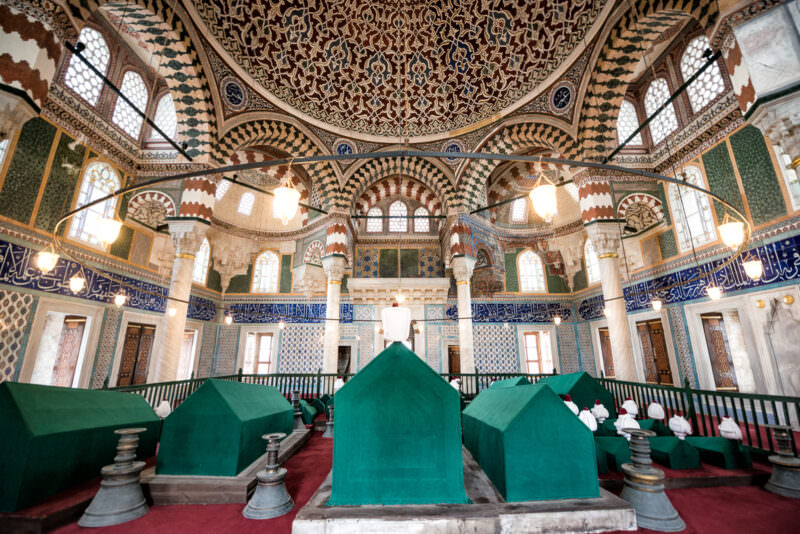
These are the Tombs of the Sultans. And they’re remarkable not just for their lavish decorations, each of which is different, but also because it wasn’t just the Sultan who was laid to rest here in his green-shrouded sarcophagus.
ISTANBUL, Turkey — One of five Ottoman imperial tombs in the cemetery on the south and southwest flank of Hagia Sophia. These mausoleums house the remains of three sultans buried in freestanding tombs — Selim II, Murad III, and Mehmed III — as well as sultans Mustafa I and Ibrahim, interred in the converted Byzantine baptistery, along with dozens of dynastic family members. Constructed during the period when Hagia Sophia served as the city’s chief imperial mosque, the tombs are important examples of Ottoman funerary architecture spanning the late 16th and early 17th centuries, and the complex sits within the UNESCO World Heritage property “Historic Areas of Istanbul,” inscribed in 1985. Hagia Sophia itself was originally a 6th-century Byzantine cathedral, converted to a mosque after the Ottoman conquest of 1453, designated a museum in 1934, and returned to mosque status by presidential decree on 24 July 2020. Photo by David Coleman / Have Camera Will TravelLicense this image at:DirectlyAlamy
His family members joined him, lying alongside, with large sarcophagi for adults and small ones for children. So what you’re seeing here is an entire extended family.
Süleyman the Magnificent, the longest-serving of the Ottoman Sultans, isn’t here. He has his own tomb behind Süleymaniye Mosque.
The tombs
The five tombs are those of:
Sultan Selim II
Reign: 1566 to 1574
Known as “Selim the Drunkard,” he was less interested in military campaigns than his father Suleiman the Magnificent. His reign saw the Ottoman defeat at the Battle of Lepanto (1571), marking the first major Ottoman naval defeat. Despite this, he successfully conquered Cyprus from Venice.
Have Camera Will Travel // Newsletter
Practical field notes, hands-on gear tests.
Sultan Murad III
Reign: 1574 to 1595
Expanded the empire in the Caucasus and waged a long war against Safavid Persia. His reign marked the beginning of the “Sultanate of Women” period, where the imperial harem gained significant political influence. He fathered 103 children and had all his sons except his successor executed upon taking the throne.
Sultan Mehmed III
Reign: 1595 to 1603
Led the Ottoman forces personally at the Battle of Keresztes (1596), achieving a crucial victory against Habsburg forces. Notable for executing 19 of his brothers upon ascending to secure his rule. His reign saw increasing economic problems and military revolts.
Sultan Mustafa I
Reigns: 1617 to 1618 and 1622 to 1623
Known as “Mustafa the Saint” at the time but known as “Mustafa the Mad” in retrospect, he was the first Sultan to be deposed by the Ottoman military. His mental instability led to two brief, ineffective reigns. His depositions marked a significant shift in Ottoman succession politics and demonstrated the growing power of the military.
Sultan Ibrahim I
Reign: 1640 to 1648
Known as “Ibrahim the Mad,” his erratic behavior and excessive spending strained the empire’s resources. Known for bizarre acts like drowning his entire harem and ordering all fur-bearing animals in his empire to be killed for his palace decoration. He was eventually deposed and executed by a coalition of officials and religious authorities.
Photos of the Tombs of the Sultans at Hagia Sophia in Istanbul
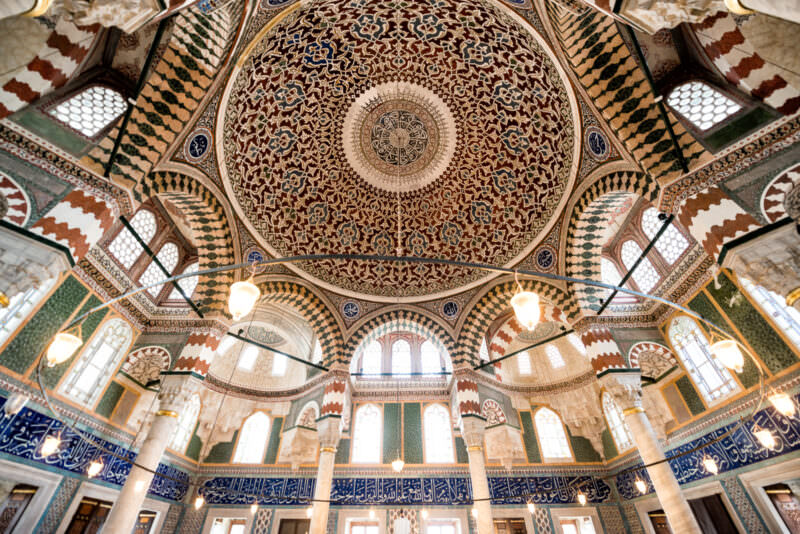
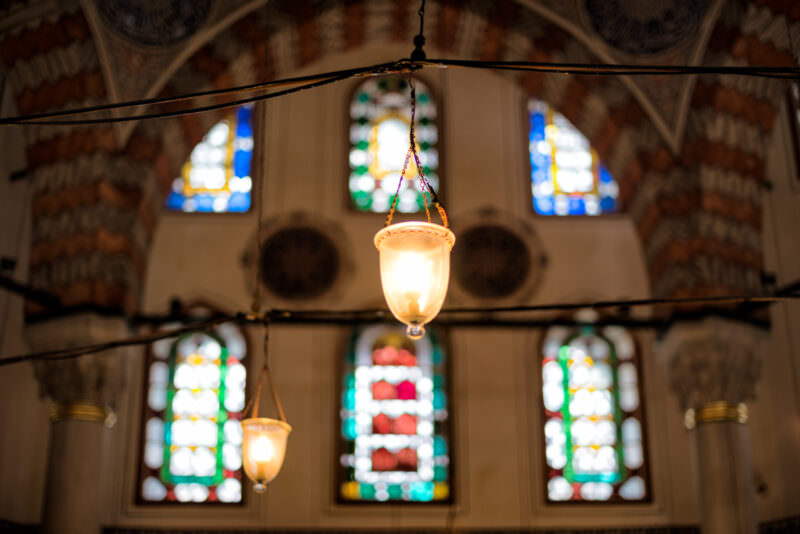
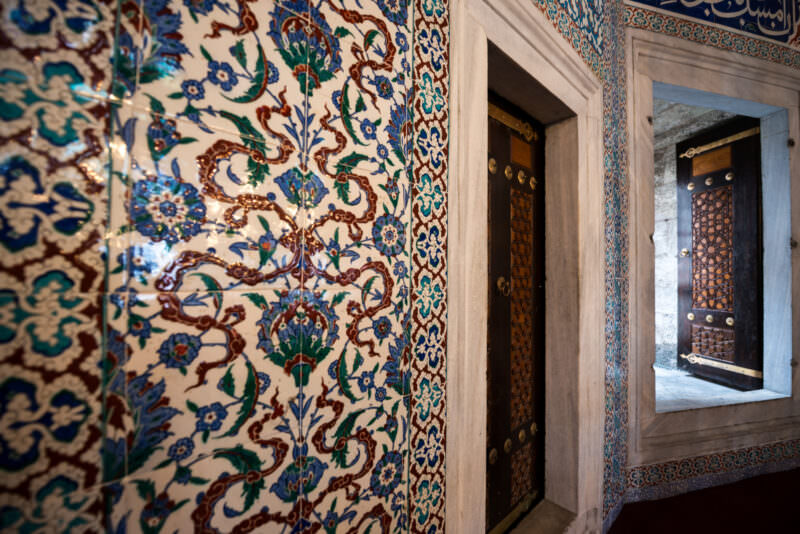
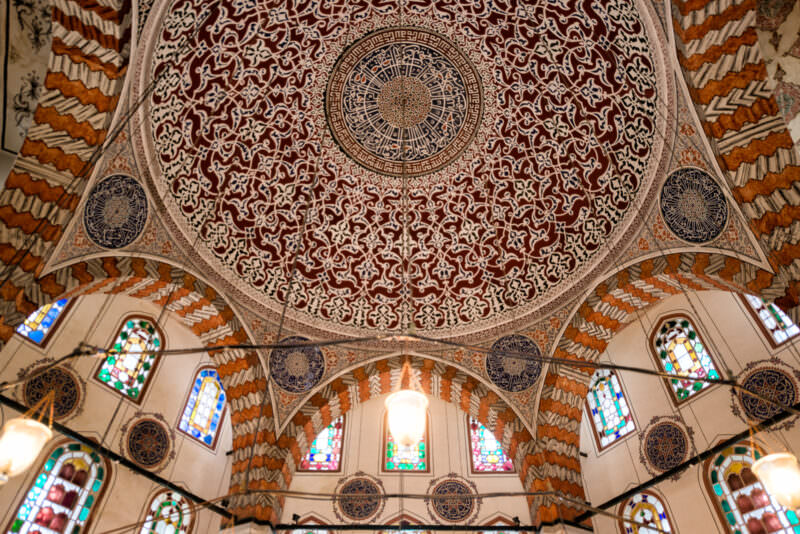
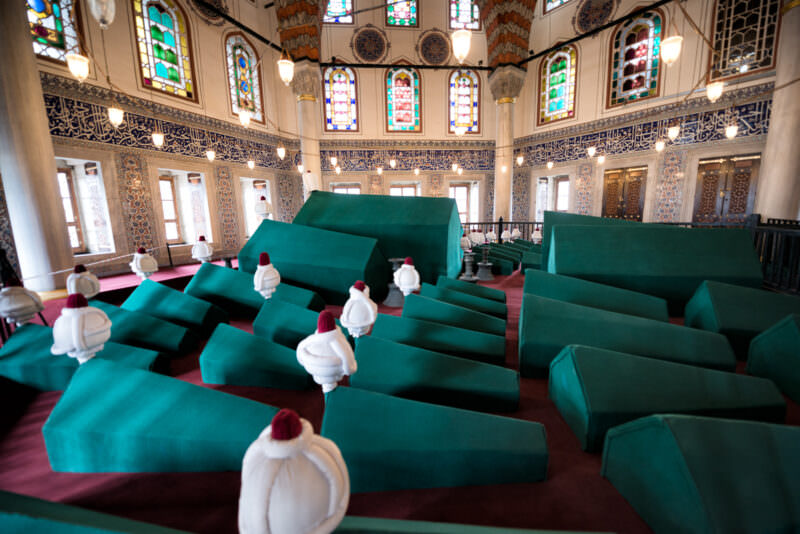
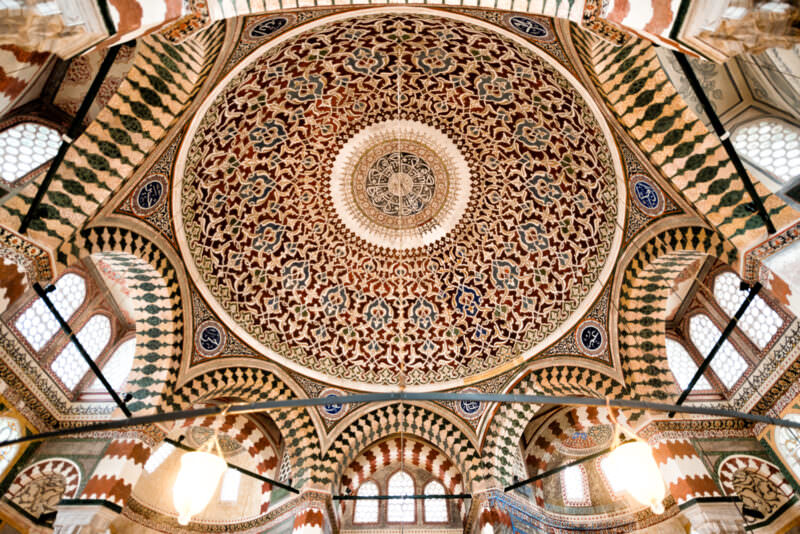
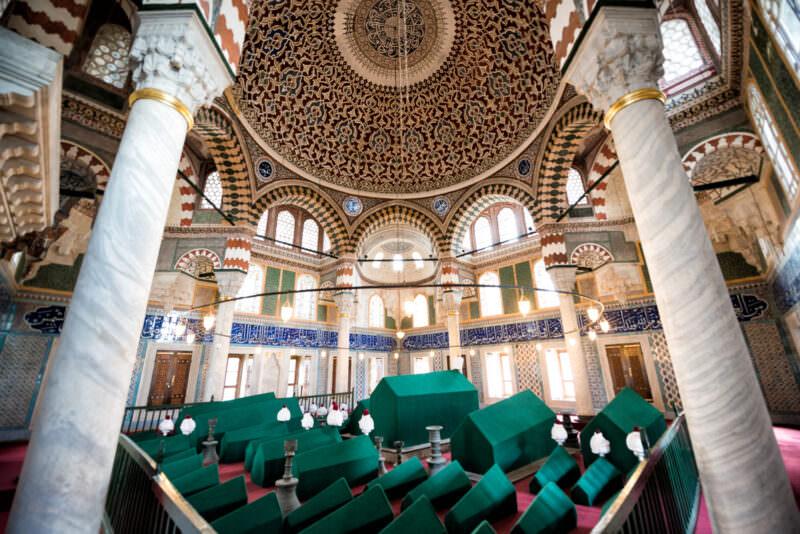
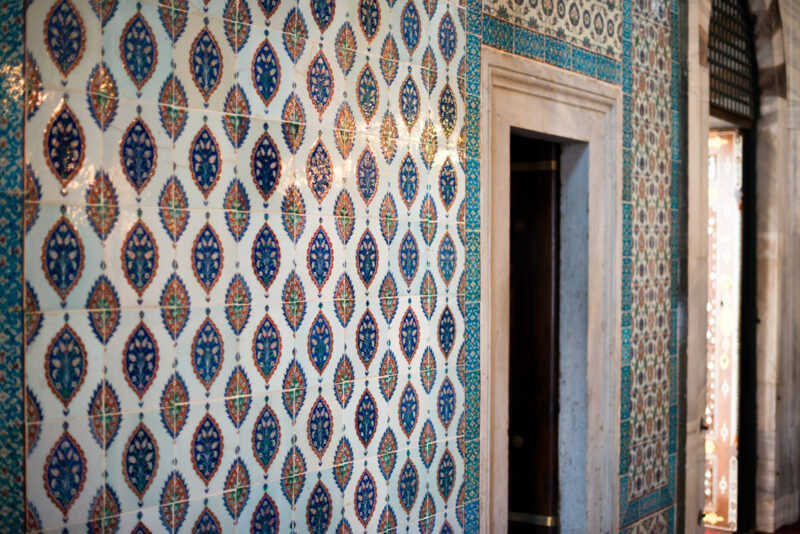
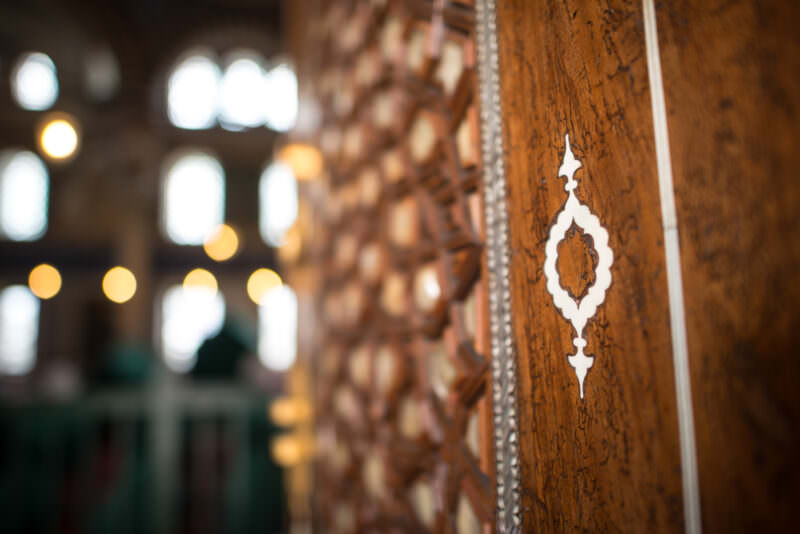
ISTANBUL, Turkey — The interior dome of the Tomb of Sultan Selim II is richly decorated with underglaze Iznik tiles and Arabic calligraphy, the tiles carrying the cobalt blues, turquoises, and saturated sealing-wax red of Iznik’s classical phase of around 1560 – 1580. Designed by chief court architect Mimar Sinan and completed in 1576 – 77, the mausoleum has a square exterior with broadly beveled corners and an octagonal interior gallery set under a double-shell dome. It is the burial site of Sultan Selim II (reigned 1566 – 1574), his wife Nurbanu Sultan, and other family members, and holds historical importance as the first imperial tomb constructed within the Hagia Sophia complex. The tomb is considered one of the most richly tiled of all Ottoman imperial mausoleums, and Sinan’s biographers treat its siting beside Hagia Sophia as an expression of reverence for the converted church’s sanctity. The Hagia Sophia cemetery, on the south and southwest flank of the main building, houses five imperial tombs of Ottoman sultans and their families. Photo by David Coleman / Have Camera Will TravelLicense this image at:DirectlyAlamyISTANBUL, Turkey — The interior of the Tomb of Sultan Murad III, its vibrant stained glass windows set against richly ornamented Ottoman decoration. Constructed in 1599, begun under Davud Aga and completed by Dalgic Ahmed Aga, this hexagonal tomb has a central dome supported by six columns, with the dome’s center decorated with the kalima-i tewhid — the Islamic declaration of faith — in Kufic script. The interior is lined with coral-red Iznik tiles, mother-of-pearl, and ebony, the tile bands carrying Quranic inscriptions produced at Iznik to designs made specifically for the building. The tomb houses Sultan Murad III, his wife Safiye Sultan, and their sons and daughters, with some 54 recorded interments. It is one of five tombs belonging to Ottoman sultans and their families in the cemetery of Hagia Sophia. Photo by David Coleman / Have Camera Will TravelLicense this image at:DirectlyAlamyISTANBUL, Turkey — A tiled corridor and doorway inside the Tomb of Sultan Murad III, its walls covered in coral-red Iznik floral tilework set within the Hagia Sophia cemetery. Completed in 1599 under architects Davud Aga and Dalgic Ahmed Aga, the hexagonal tomb was designed with tiles produced at Iznik specifically for the building, following patterns typical of the finest late-16th-century Ottoman workshops. Photo by David Coleman / Have Camera Will TravelLicense this image at:DirectlyAlamyISTANBUL, Turkey — The interior of the Tomb of Sultan Selim II, decorated with intricate Iznik tiles and calligraphy inscriptions, is the final resting place of Sultan Selim II (reigned 1566 – 1574), his wife Nurbanu Sultan, and other family members. Completed in 1576 – 77, the tomb was designed by chief court architect Mimar Sinan with a square exterior with broadly beveled corners and an octagonal interior gallery, sheathed in marble and lined with underglaze Iznik tiles in cobalt blue, turquoise, and the sealing-wax red of Iznik’s classical phase, alongside mother-of-pearl and ivory inlaid woodwork. It was the first tomb constructed within the Hagia Sophia cemetery — a choice scholars read as an expression of Ottoman reverence for the converted Byzantine church. The cemetery, adjacent to the main building on the south and southwest, contains five tombs belonging to Ottoman sultans and their family members. Photo by David Coleman / Have Camera Will TravelLicense this image at:DirectlyAlamyISTANBUL, Turkey — The domed ceiling of the Tomb of Sultan Murad III, its surface covered in Kufic calligraphy and dense floral tilework above stained-glass windows. Completed in 1599 by the architects Davud Aga and Dalgic Ahmed Aga, the hexagonal tomb’s dome bears the kalima-i tewhid, the Islamic declaration of faith, rendered in Kufic script at its center. Photo by David Coleman / Have Camera Will TravelLicense this image at:DirectlyAlamyISTANBUL, Turkey — The interior of the Tomb of Sultan Murad III in the Hagia Sophia cemetery, showing numerous sarcophagi — some 54 recorded interments, with around 50 sarcophagi currently present. Constructed in 1599, begun under Davud Aga and completed by Dalgic Ahmed Aga, this hexagonal tomb features a central dome decorated with the kalima-i tewhid in Kufic style. The interior is richly adorned with coral-red Iznik tiles, mother-of-pearl, and ebony, with tile bands bearing Quranic inscriptions produced at Iznik to designs made specifically for the building. It serves as the final resting place of Sultan Murad III, his wife Safiye Sultan, and their sons and daughters. The Hagia Sophia cemetery, adjacent to the main building, contains five tombs belonging to Ottoman sultans and their family members. Photo by David Coleman / Have Camera Will TravelLicense this image at:DirectlyAlamyISTANBUL, Turkey — The interior dome of the Tomb of Sultan Selim II in the Hagia Sophia cemetery, adorned with Iznik tiles and calligraphy inscriptions. Designed by chief court architect Mimar Sinan and completed in 1576 – 77, the mausoleum has a square exterior with beveled corners and an octagonal interior gallery set under a double-shell dome — one of the most richly tiled Ottoman imperial mausoleums. It is the burial place of Sultan Selim II (reigned 1566 – 1574), his wife Nurbanu Sultan, and their children, and was the first tomb constructed in the Hagia Sophia cemetery. The Hagia Sophia cemetery, on the south and southwest flank of the main building, contains five tombs of Ottoman sultans and their families. Photo by David Coleman / Have Camera Will TravelLicense this image at:DirectlyAlamyISTANBUL, Turkey — The interior of the Tomb of Sultan Selim II is adorned with elaborate Iznik tiles and intricate calligraphy, its walls carrying the saturated cobalt blues, turquoises, and sealing-wax reds characteristic of Iznik’s classical phase of around 1560 – 1580. Designed by chief court architect Mimar Sinan and completed in 1576 – 77, the mausoleum features a square exterior with beveled corners and an octagonal interior gallery under a double-shell dome, sheathed externally in marble and enriched inside with mother-of-pearl and ivory inlaid woodwork. It is the final resting place of Sultan Selim II (reigned 1566 – 1574), his wife Nurbanu Sultan, and other family members, and was the first tomb constructed in the Hagia Sophia cemetery. The cemetery, on the south and southwest flank of the main building, contains five imperial Ottoman mausoleums. Photo by David Coleman / Have Camera Will TravelLicense this image at:DirectlyAlamyISTANBUL, Turkey — The Tomb of Sultan Selim II, featuring intricate Iznik tiles and calligraphy inscriptions, within the Hagia Sophia complex. Designed by chief court architect Mimar Sinan and completed in 1576 – 77, the mausoleum has a square exterior with beveled corners and an octagonal interior gallery under a double-shell dome, its interior walls lined with underglaze Iznik tiles in cobalt blue, turquoise, and the sealing-wax red of Iznik’s classical phase of around 1560 – 1580, alongside mother-of-pearl and ivory inlaid woodwork. It serves as the final resting place of Sultan Selim II (reigned 1566 – 1574), his wife Nurbanu Sultan, and other family members, and was the first tomb constructed in the Hagia Sophia cemetery. The cemetery, adjacent to the main building on the south and southwest, contains five tombs belonging to Ottoman sultans and their families. Photo by David Coleman / Have Camera Will TravelLicense this image at:DirectlyAlamyISTANBUL, Turkey — Rows of coffins draped in green, inside the Tomb of Sultan Selim II within the Hagia Sophia cemetery. Completed in 1576-77 by chief court architect Mimar Sinan, the octagonal mausoleum was the first imperial tomb built at the Hagia Sophia complex, housing Selim II, his wife Nurbanu Sultan, and dozens of family members beneath its double-shell dome. Photo by David Coleman / Have Camera Will TravelLicense this image at:DirectlyAlamyISTANBUL, Turkey — A decorative detail of intricate mother-of-pearl or ivory inlay on a wooden surface is visible inside the Tomb of Sultan Selim II (reigned 1566 – 1574). Designed by chief court architect Mimar Sinan and completed in 1577, the octagonal-interior mausoleum is faced in marble and lined with underglaze Iznik tiles in cobalt blue, turquoise, sage green, and the saturated sealing-wax red characteristic of Iznik’s classical phase of around 1560 – 1580. The tomb was begun in 1573 – 74 on the sultan’s own order; his remains were held under a temporary tent over the unfinished structure until the completed building received them in 1576 – 77. It is the first imperial mausoleum constructed in the Hagia Sophia cemetery and serves as the burial place for Selim II, his wife Nurbanu Sultan, and other family members. The Hagia Sophia cemetery, on the south and southwest flank of the former Byzantine church, contains five tombs of Ottoman sultans and their families. Photo by David Coleman / Have Camera Will TravelLicense this image at:DirectlyAlamy
What to know before you go
There’s a separate entrance from the main Hagia Sophia complex. The entrance, which isn’t especially well signed, is on the southeastern corner of Hagia Sophia, around the corner from the main entrance. It’s next to the tourist shops and on the same road that leads into the entrance to the Topkapi Palace (Kabasakal Cd).
It’s closed Sundays and open on other days 9 to 5.
It’s free, although you’ll have to go through the obligatory security checkpoint on the way in.
It’s small. There are five tombs in a small courtyard. 30 minutes is plenty of time.
You’ll have to remove your shoes before entering any of the tombs.
Map
Enjoyed this article? Personalize your search results.
I'm a freelance travel photographer based in Washington DC. Seven continents, up mountains, underwater, and a bunch of places in between. My images have appeared in numerous publications, and you can check out some of my gear reviews and tips here. More »