Inside (and Outside) the Vietnam Military History Museum
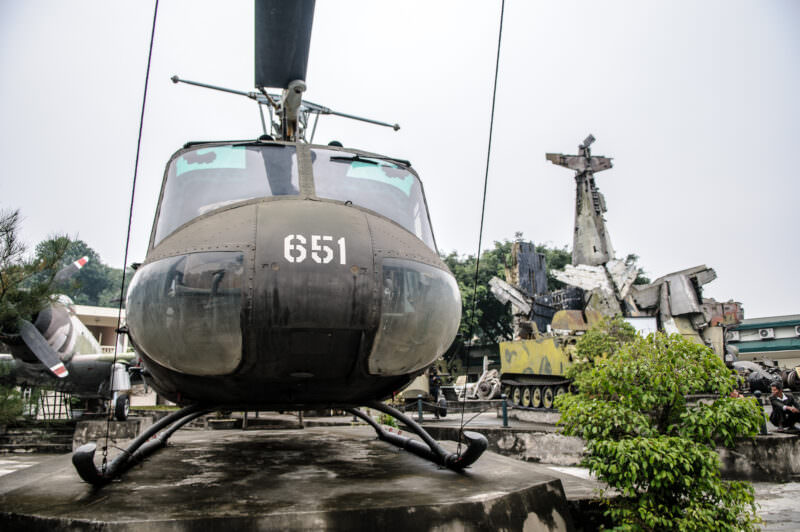
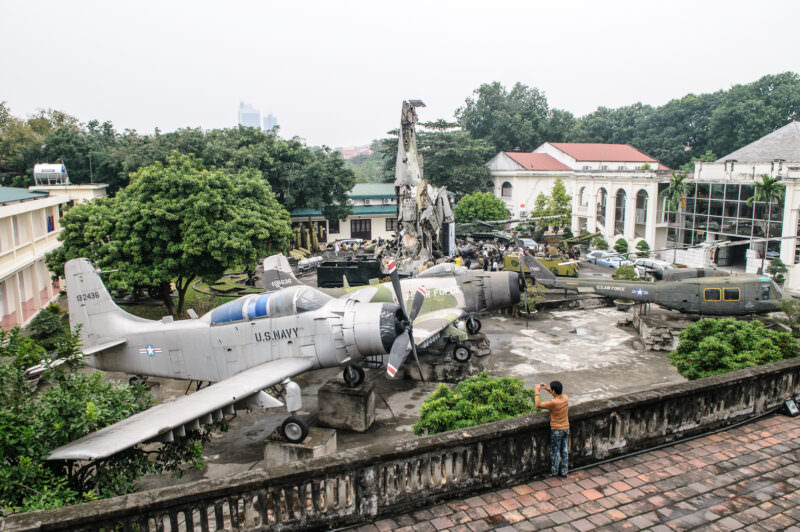
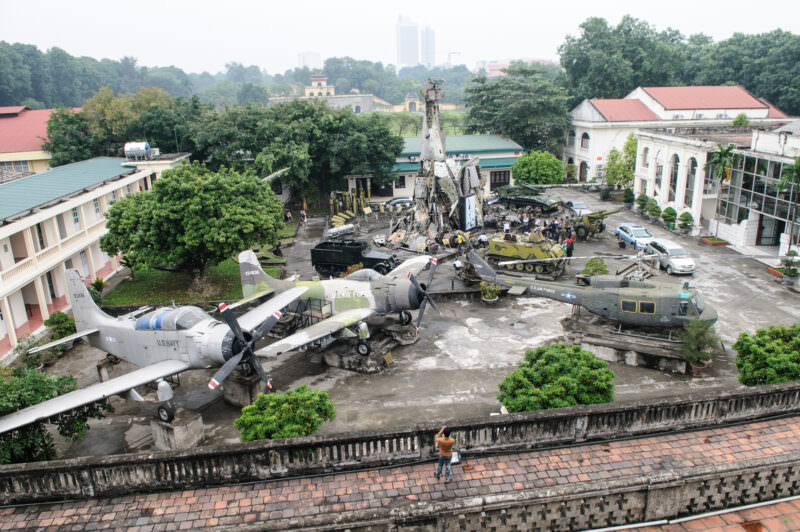
The exhibits inside Hanoi’s Vietnam Military History Museum haven’t been meaningfully updated since the 1950s, mold and all — but outside, a soaring Flag Tower and a courtyard of captured American tanks, helicopters and a wrecked B-52 bomber make the visit worthwhile. Here’s a look around.
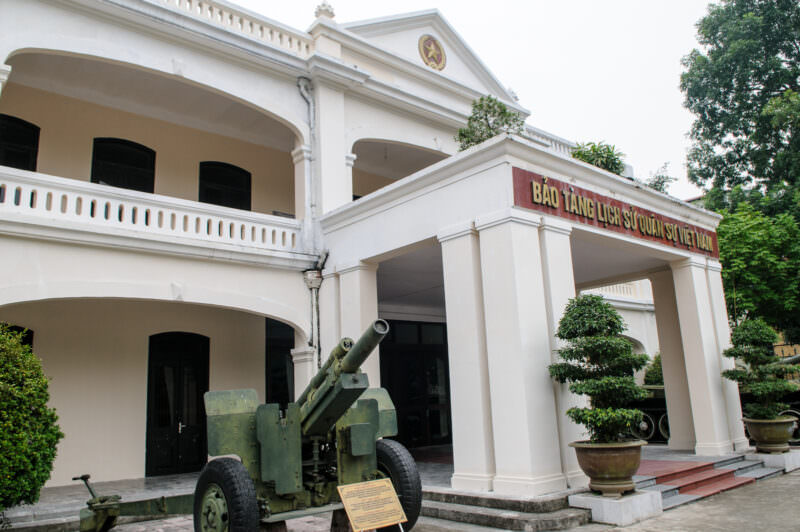
In late 2024, the museum moved to a new purpose-built complex in Hanoi’s Nam Tu Liem District. These photos are from the original location.
Perhaps more than any other country, Vietnam’s self-identity over the last century has been defined by war. First, it was ejecting the French colonials. Then a brief repulsion of the imperial Japanese. Then the Americans.
As tragic and destructive as that history of war is, it is also both important and rich. But the Vietnam Military History Museum doesn’t do it justice.
It was set up in 1956, just two years after the French were defeated in dramatic fashion at Dien Bien Phu, a few years before Hanoi’s Museum of the Vietnamese Revolution opened nearby. And it has all the hallmarks of a 1950s museum designed by a bureaucratic committee of a cash-strapped government. It has none of the provocative flair of the War Remnants Museum in Ho Chi Minh City.
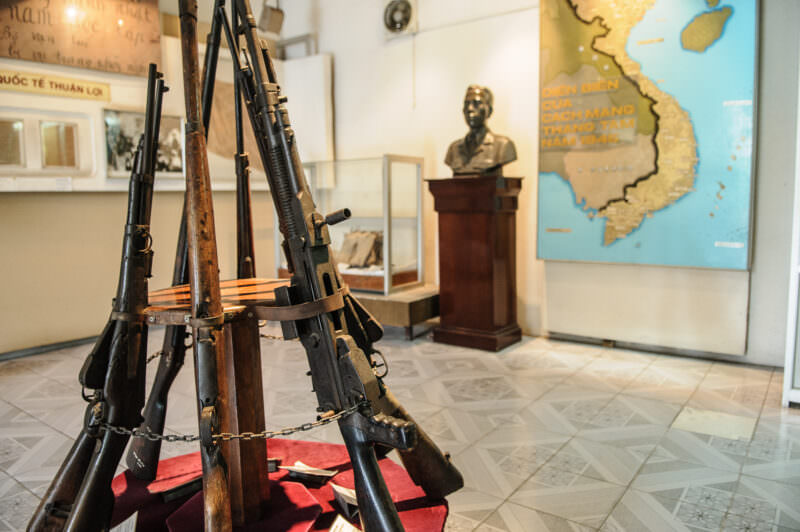
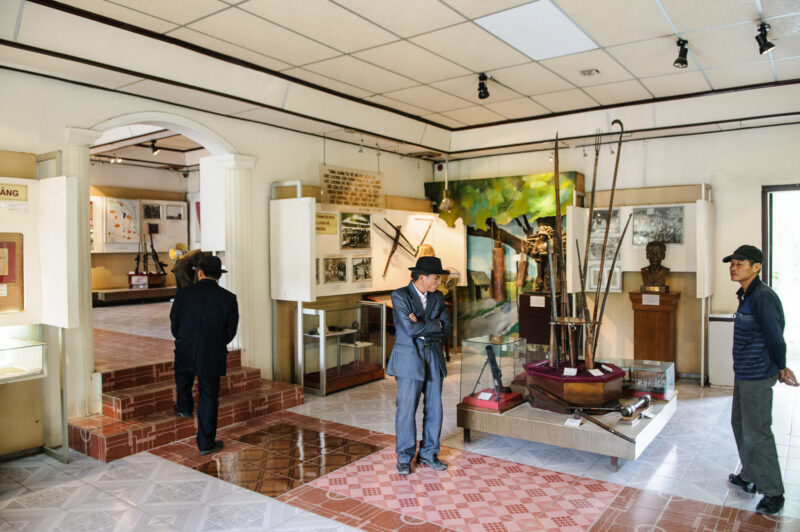
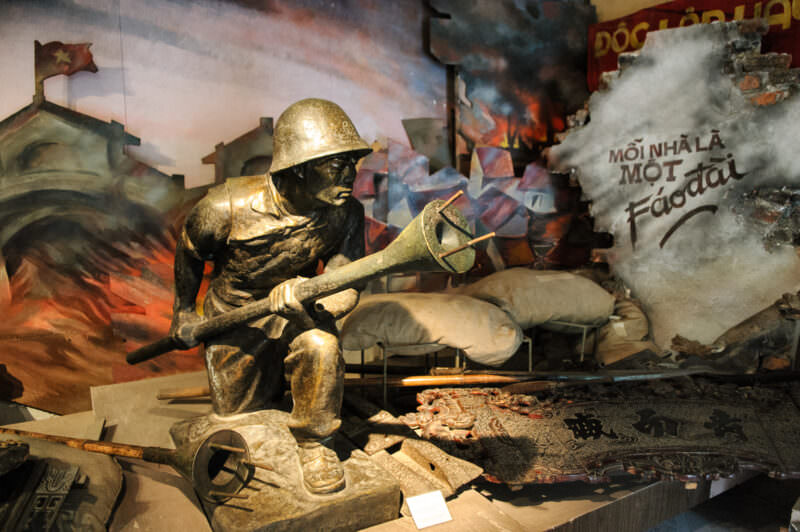
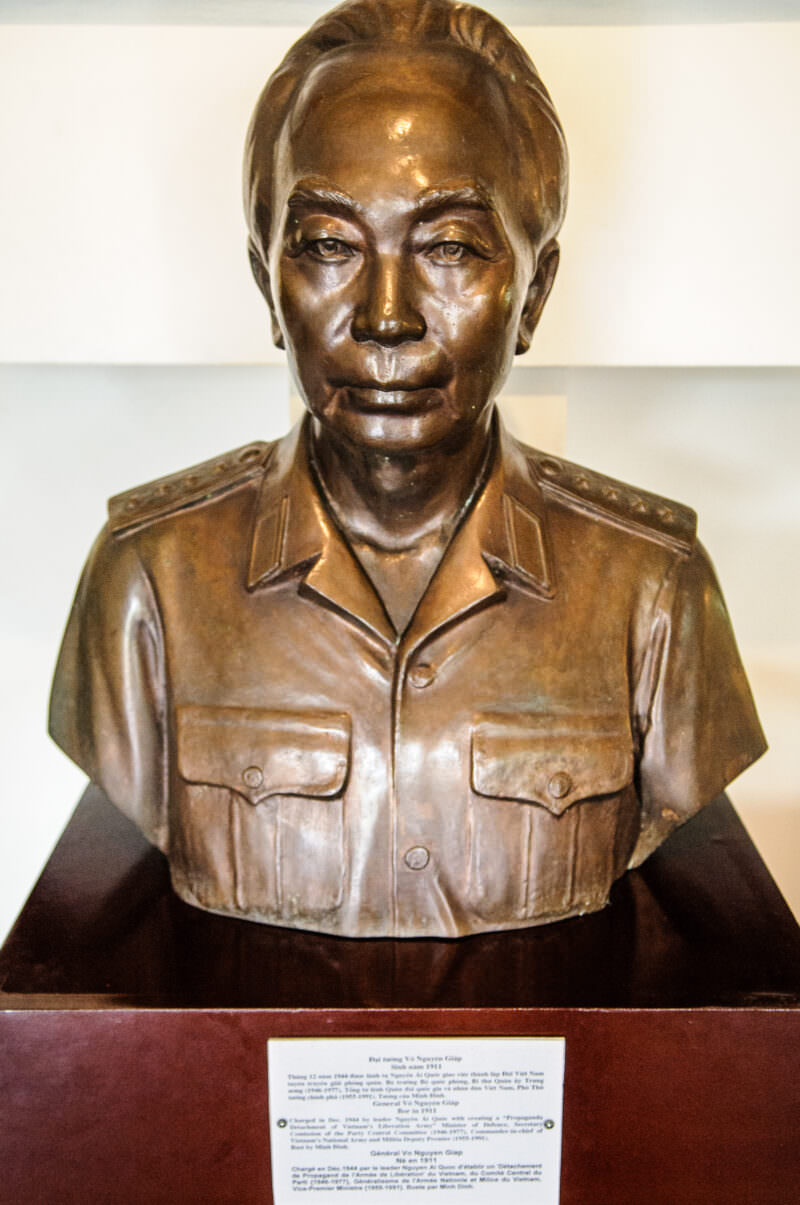
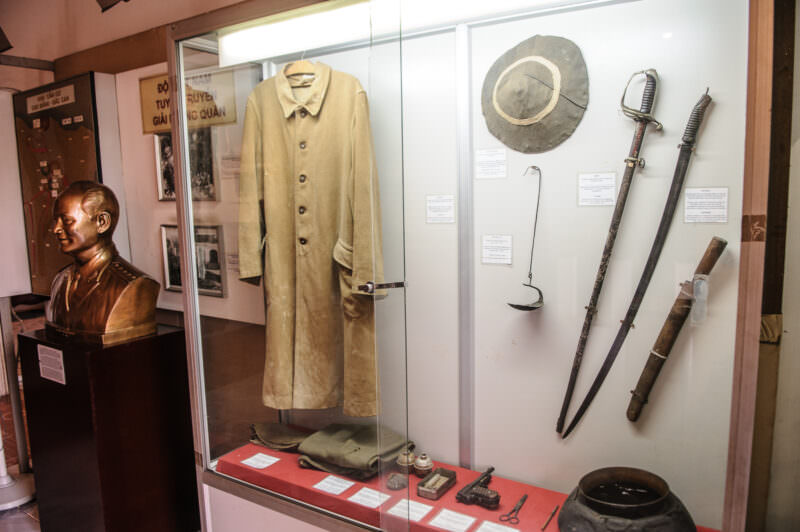
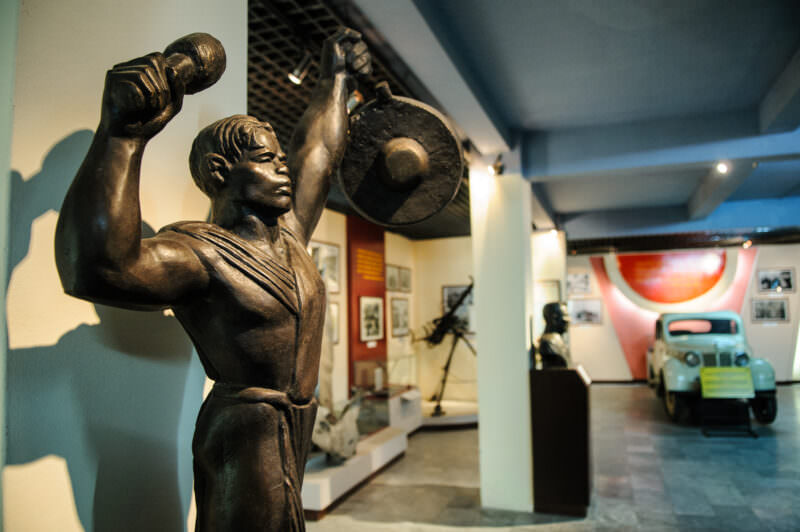
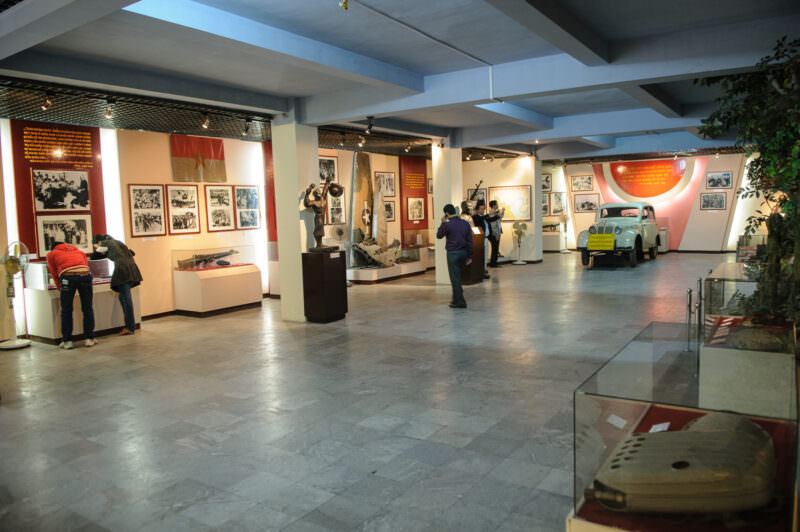
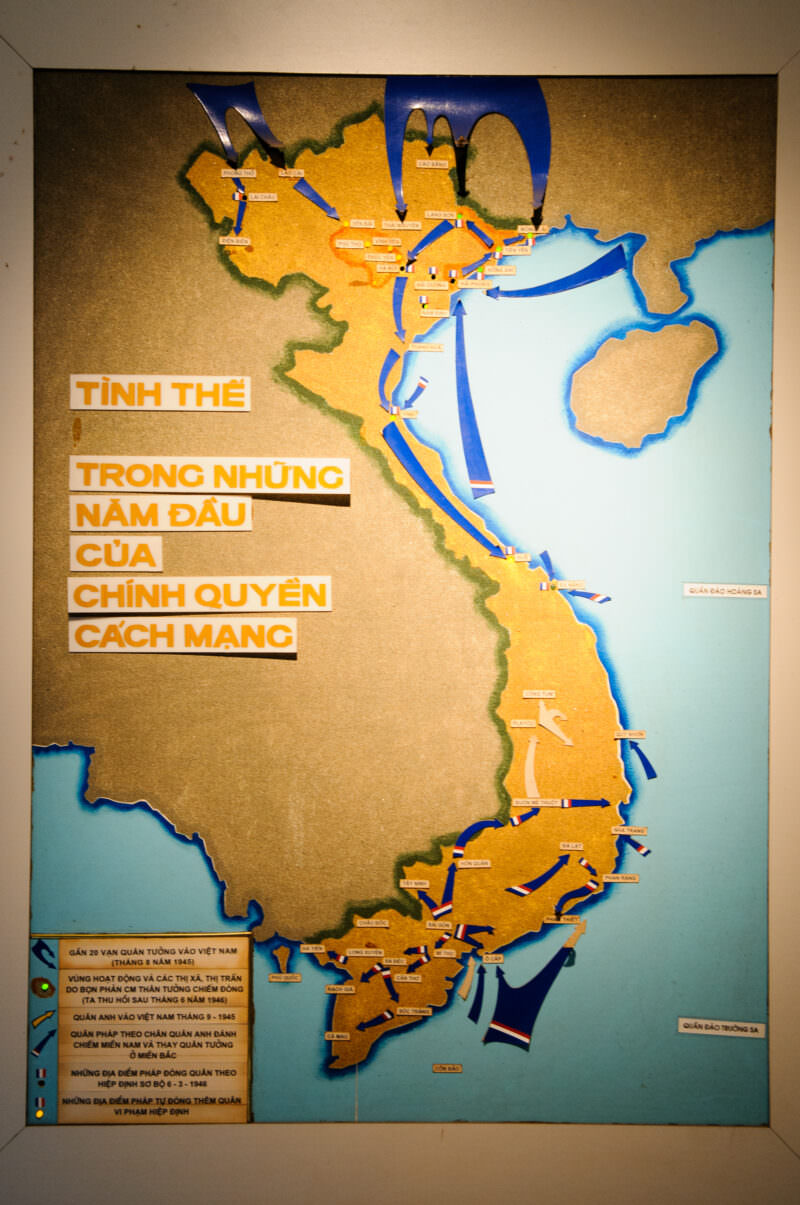
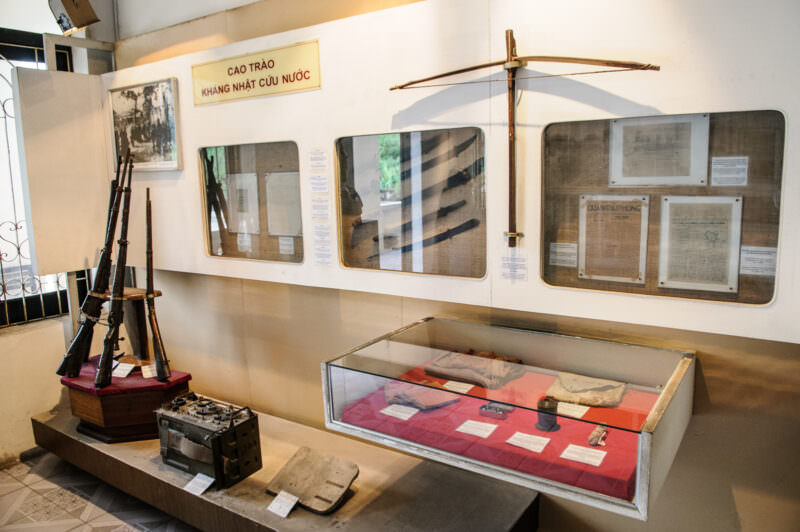
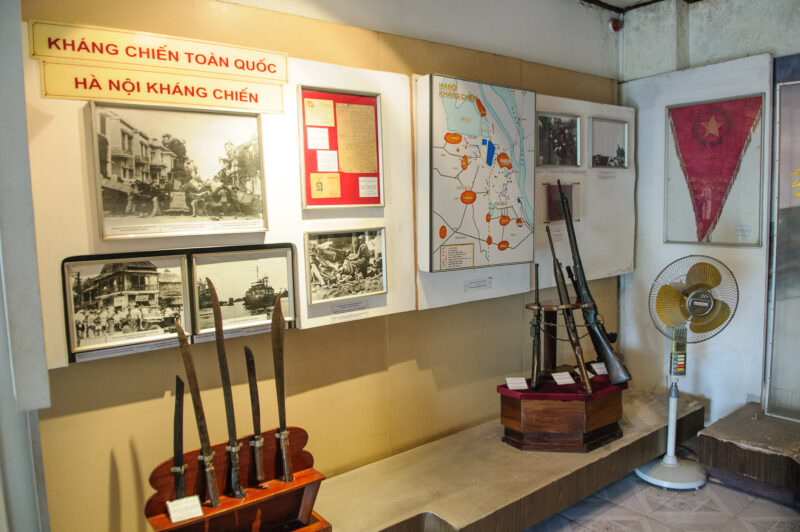
The exhibits in the main building don’t seem to have been updated since the 1950s. Most are focused on the First Indochinese War, glorifying the brilliance of leaders such as General Giap and the sacrifices of Vietnamese patriots in driving the French out of Vietnam. One or two exhibit walls focus on the war against the Japanese towards the end of World War II. Old metal floor fans provide some air circulation. The walls and ceiling are caked in mold. Artifacts are displayed inside sliding-door glass cabinets. The exhibits are old and stale.
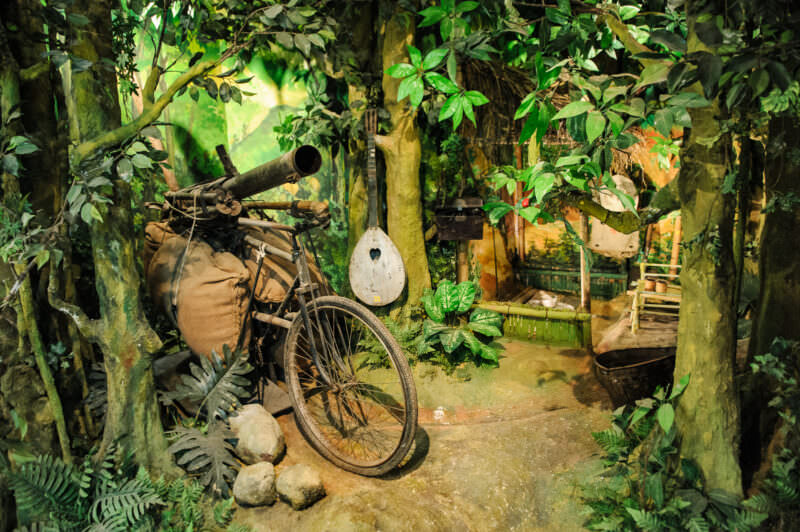
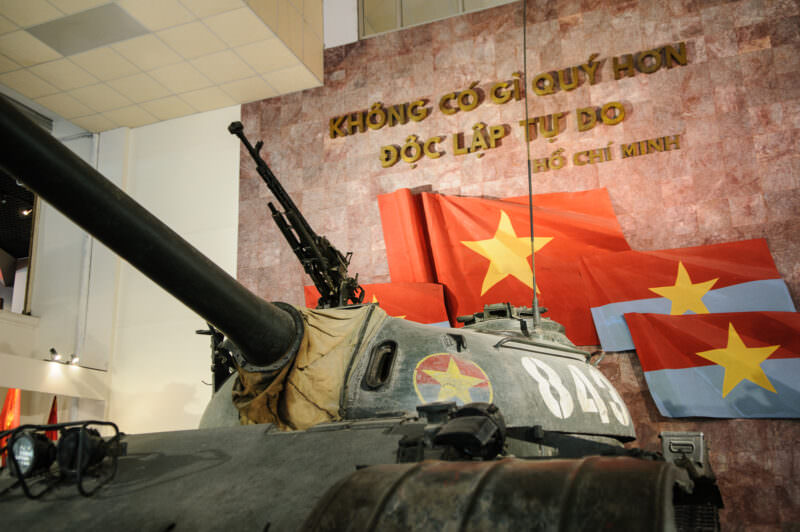
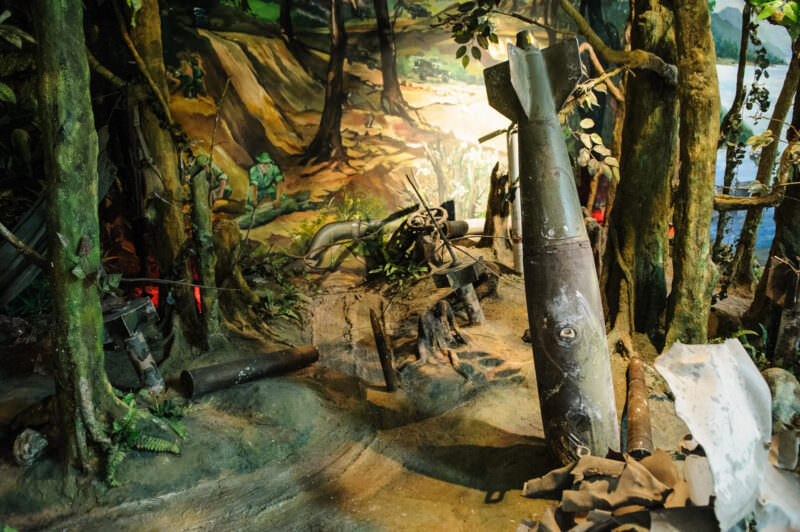
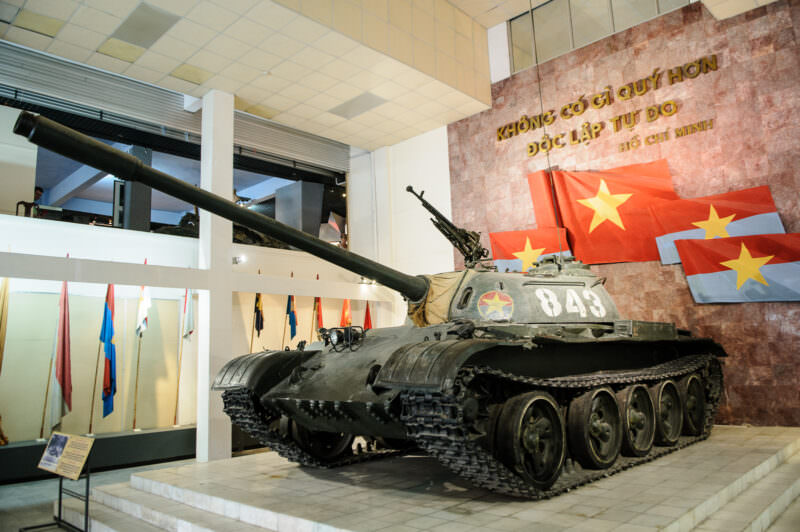
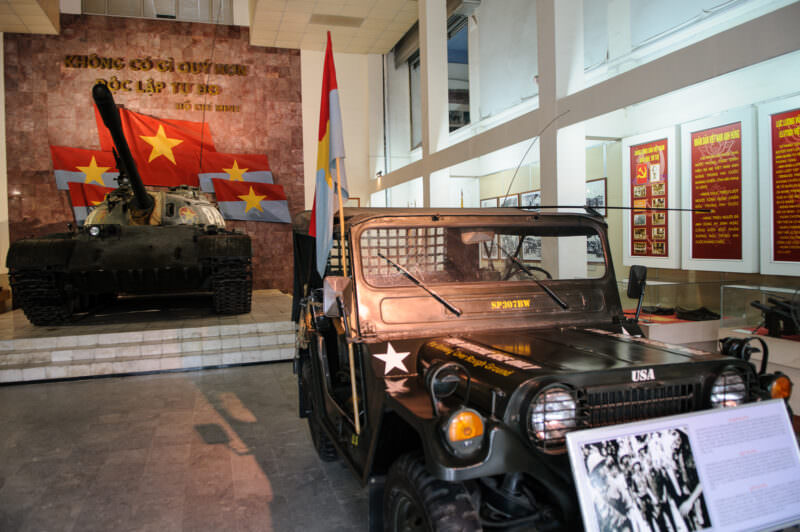
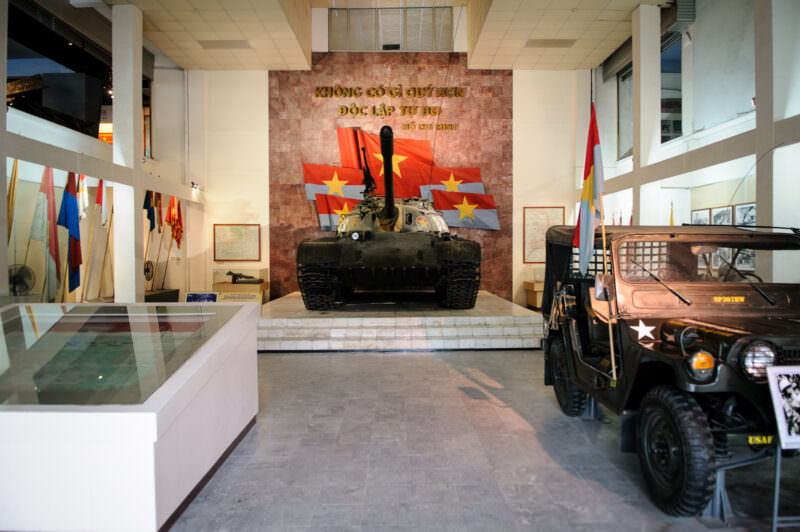
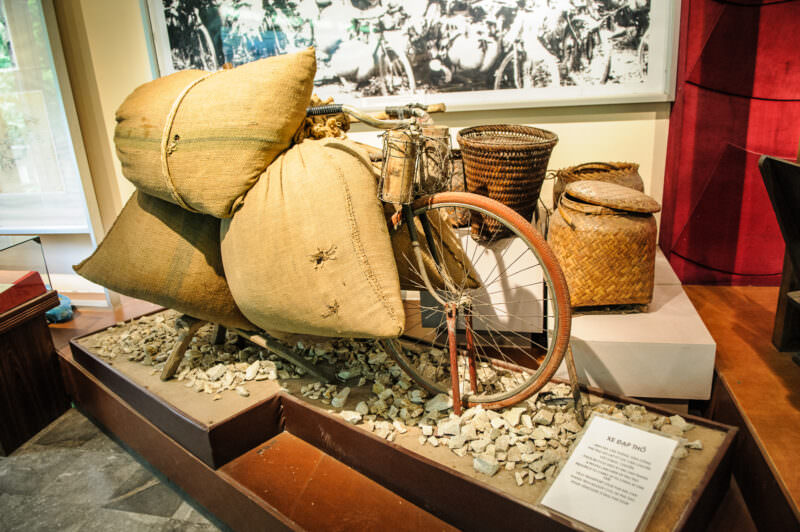
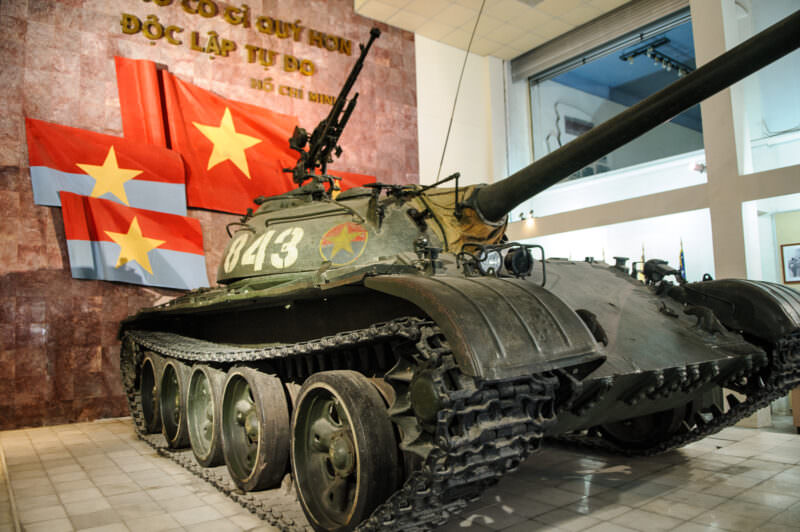
A newer building focuses on the war against the Americans — the American War, as it’s known here, the same conflict covered at Hoa Lo Prison, Hanoi’s former POW camp known as the Hanoi Hilton. There’s a tank, a jeep, a life-size jungle diorama, and various random artifacts.
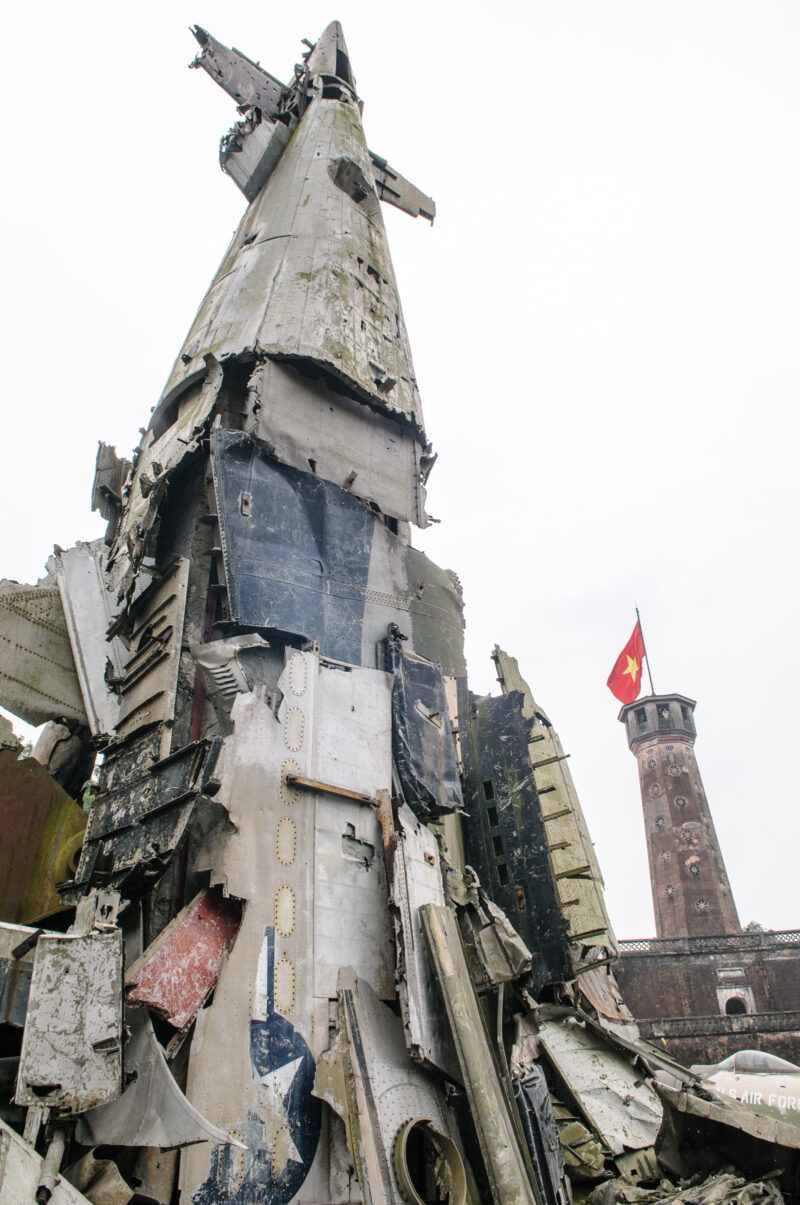
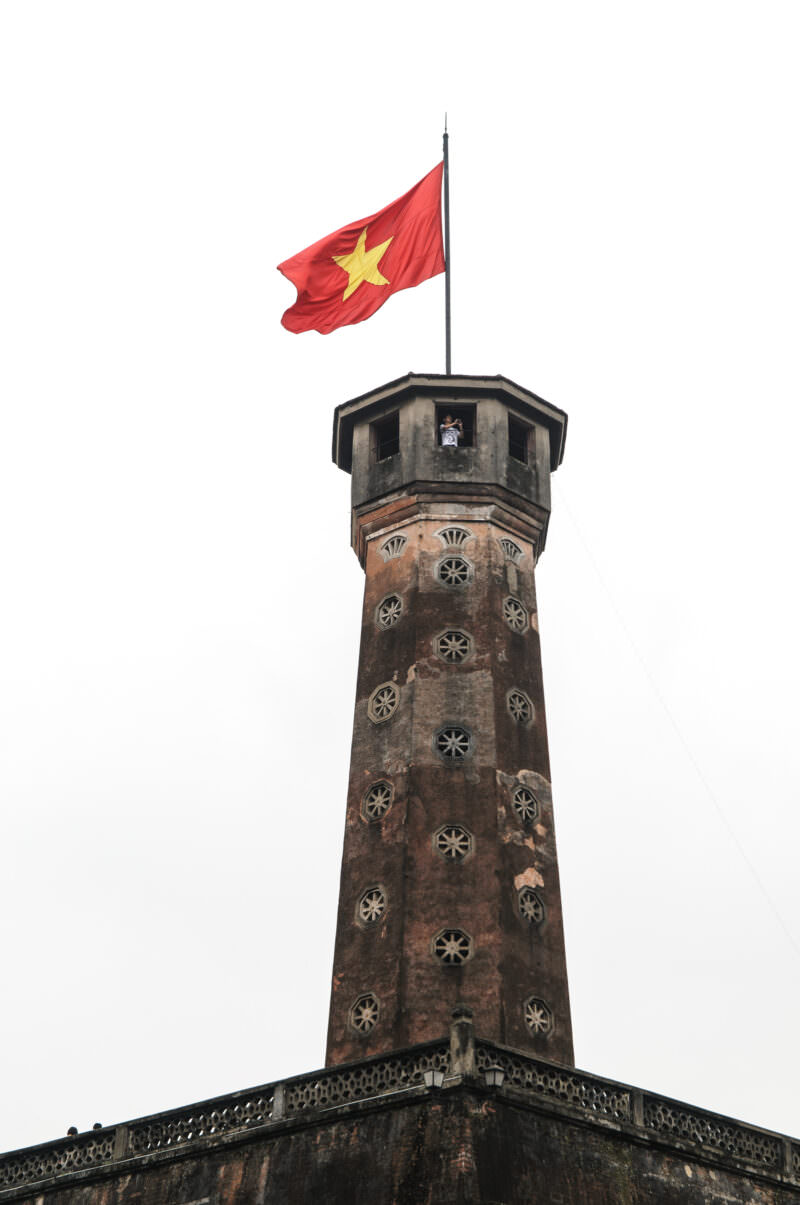
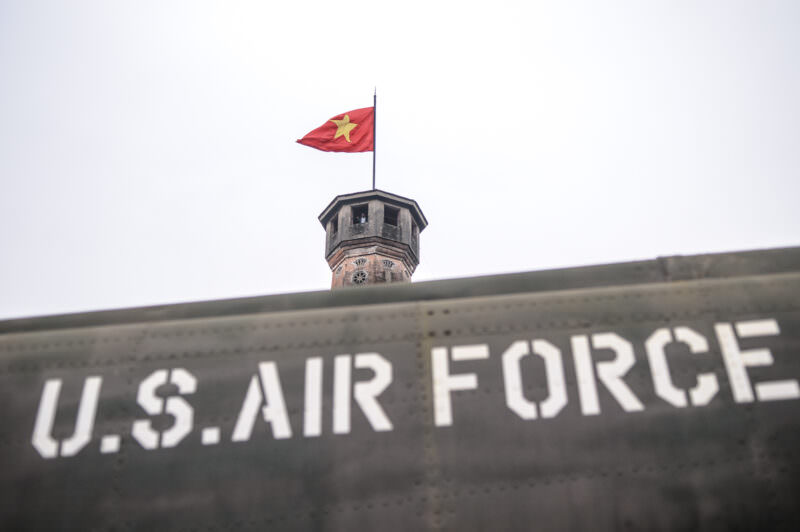
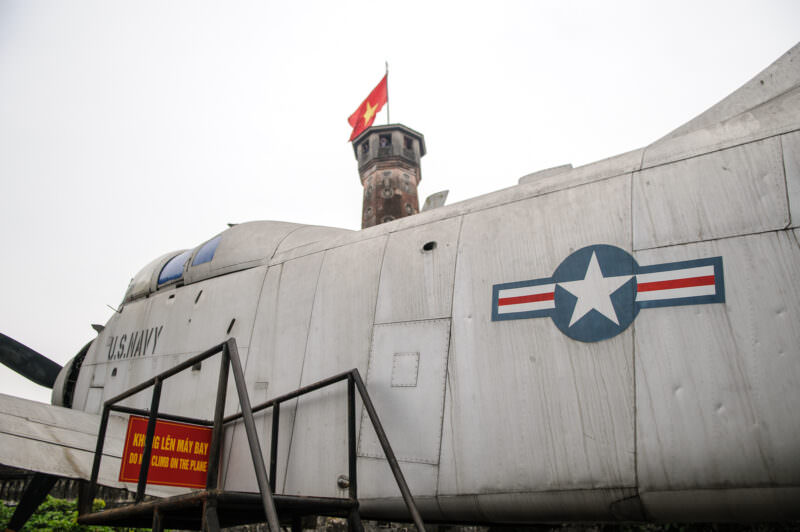
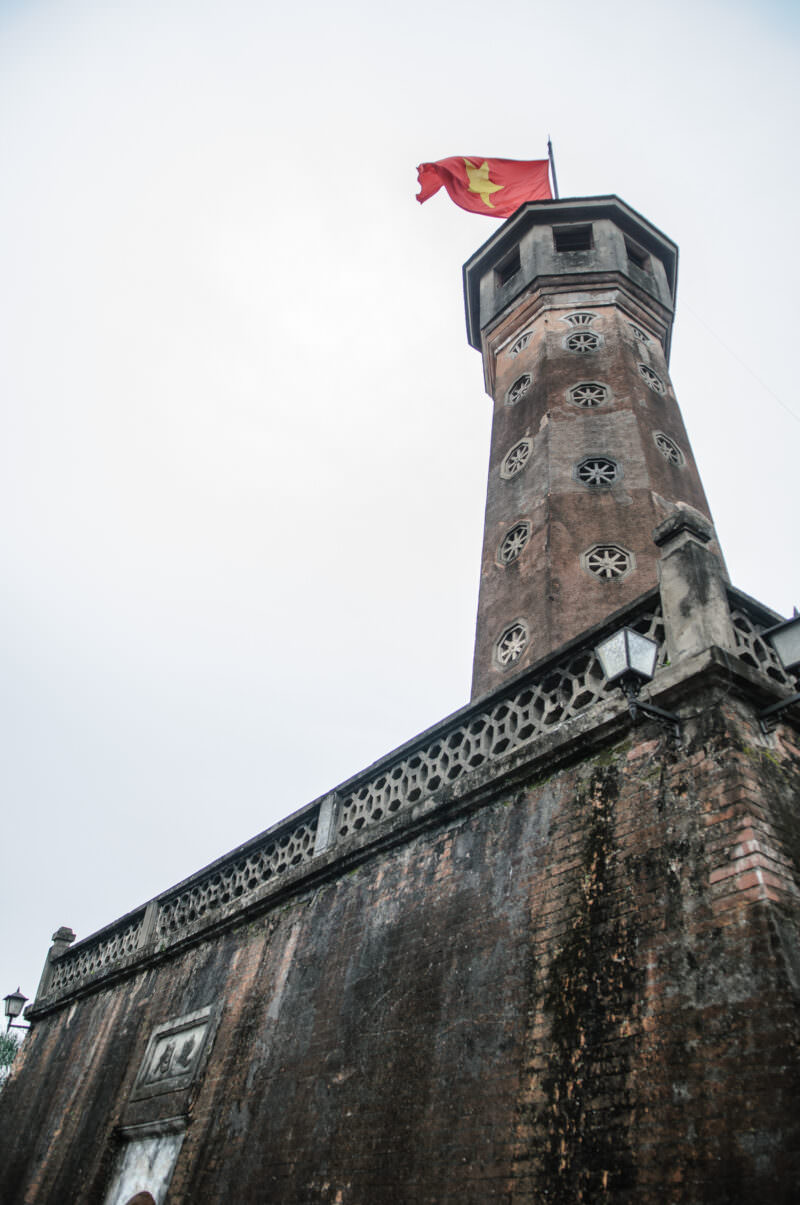
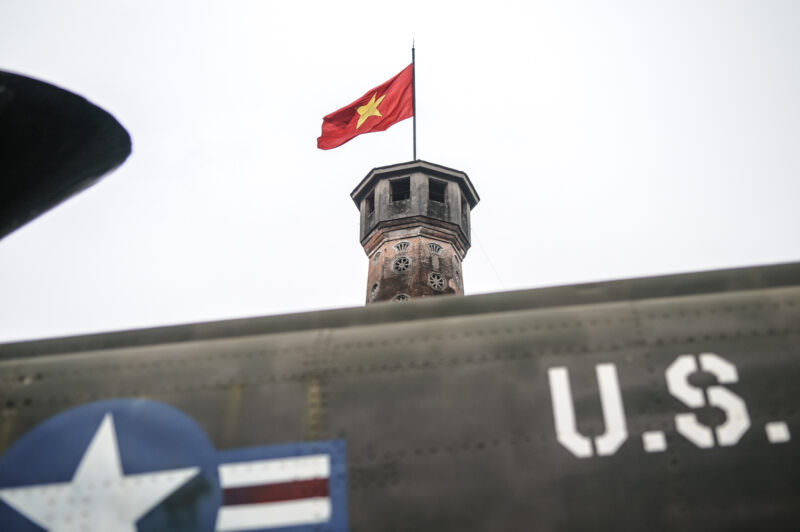
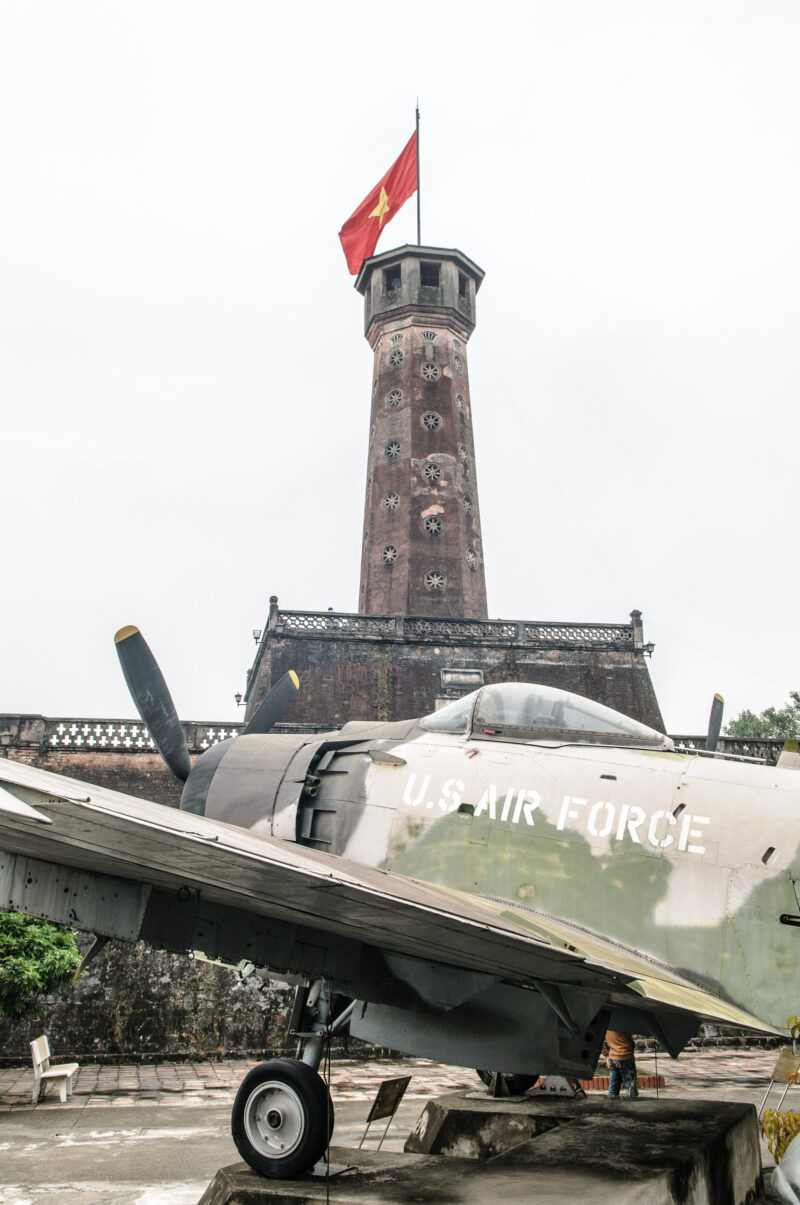
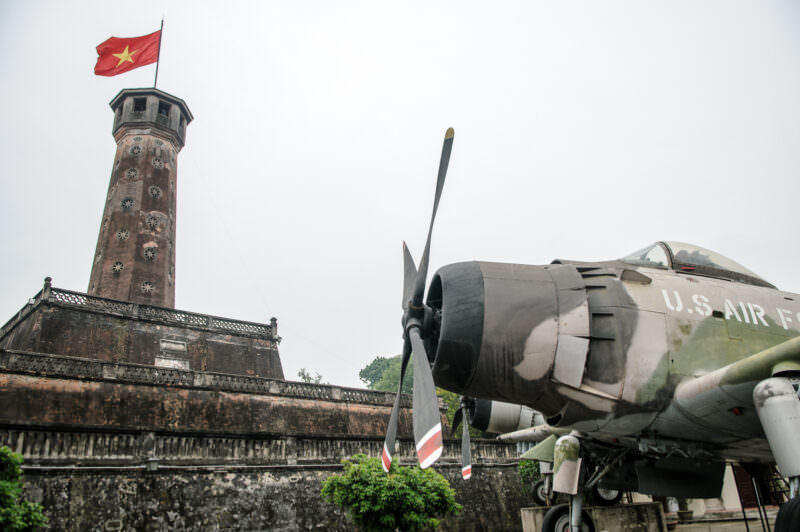
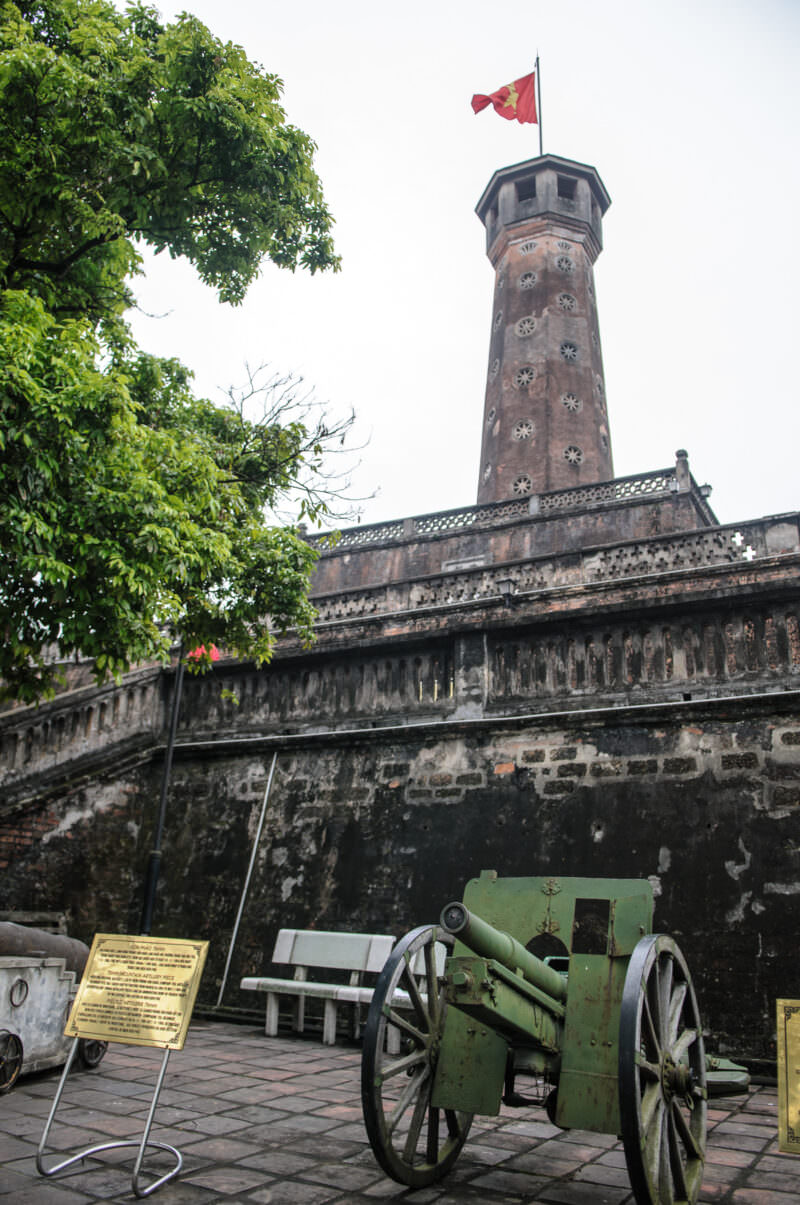
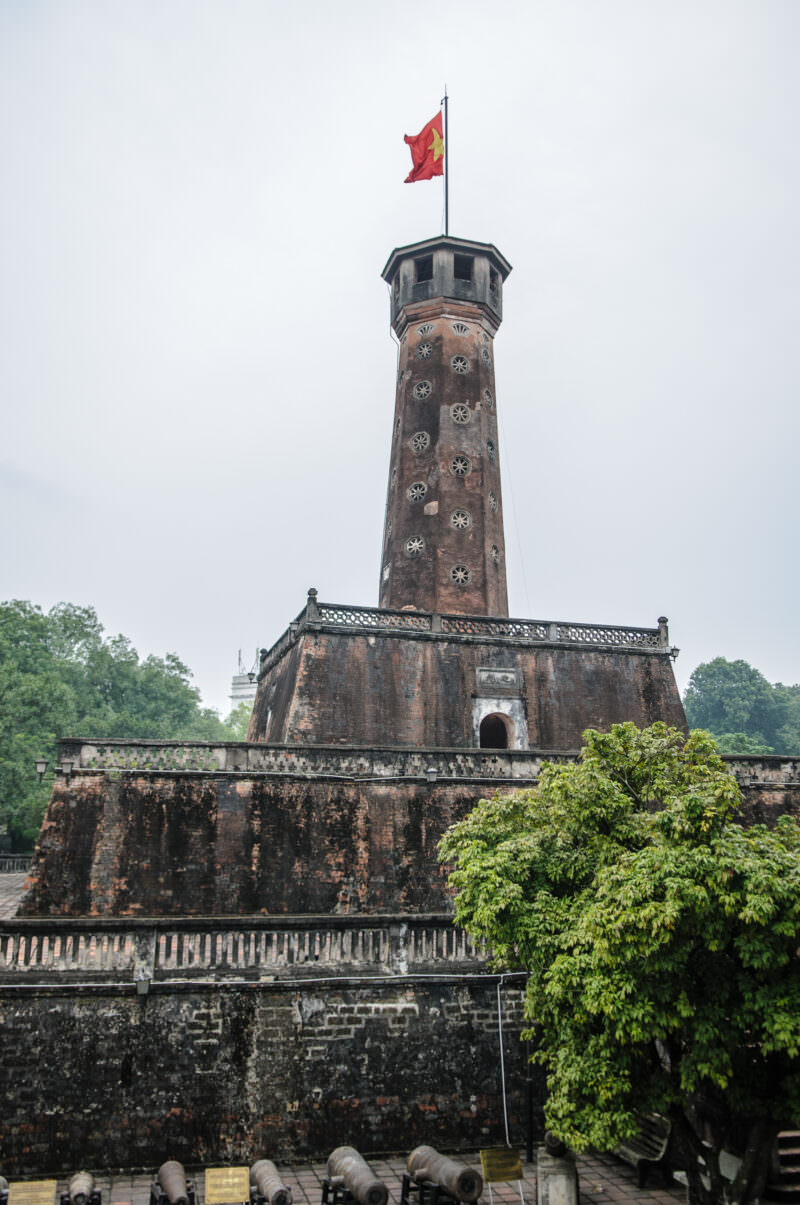
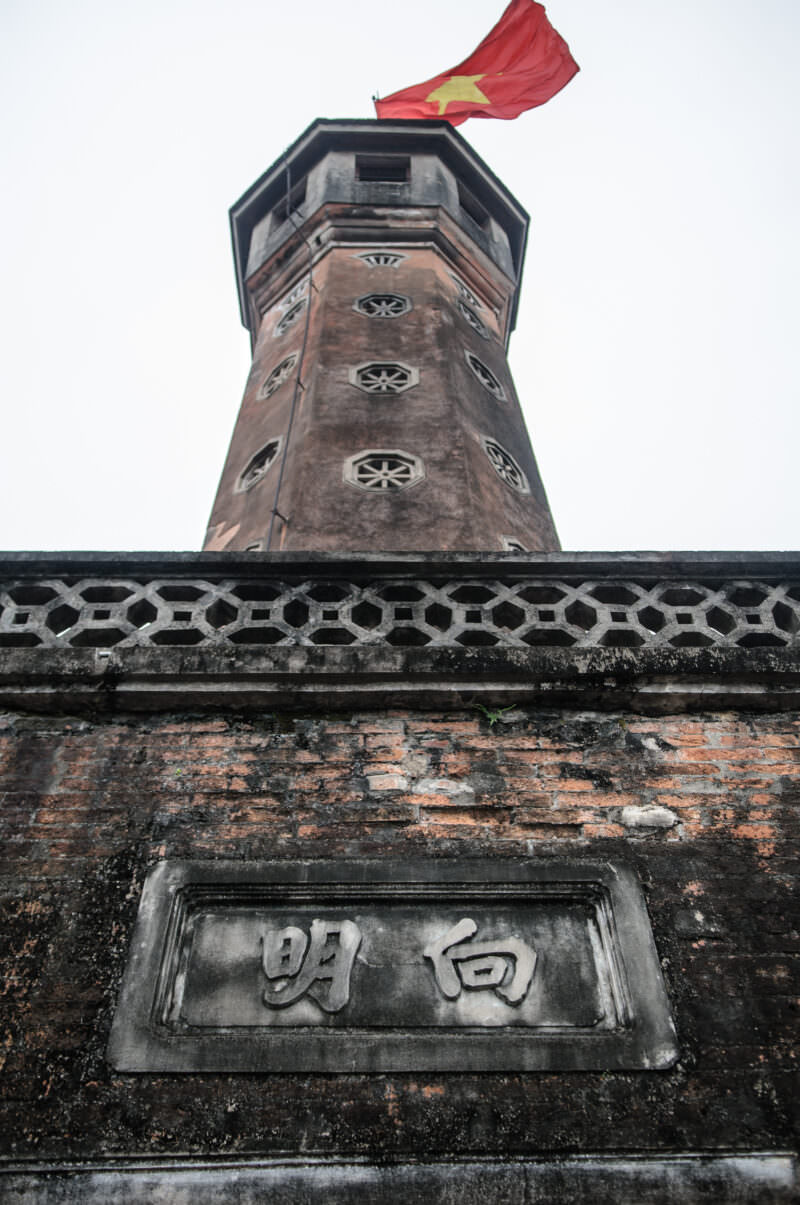
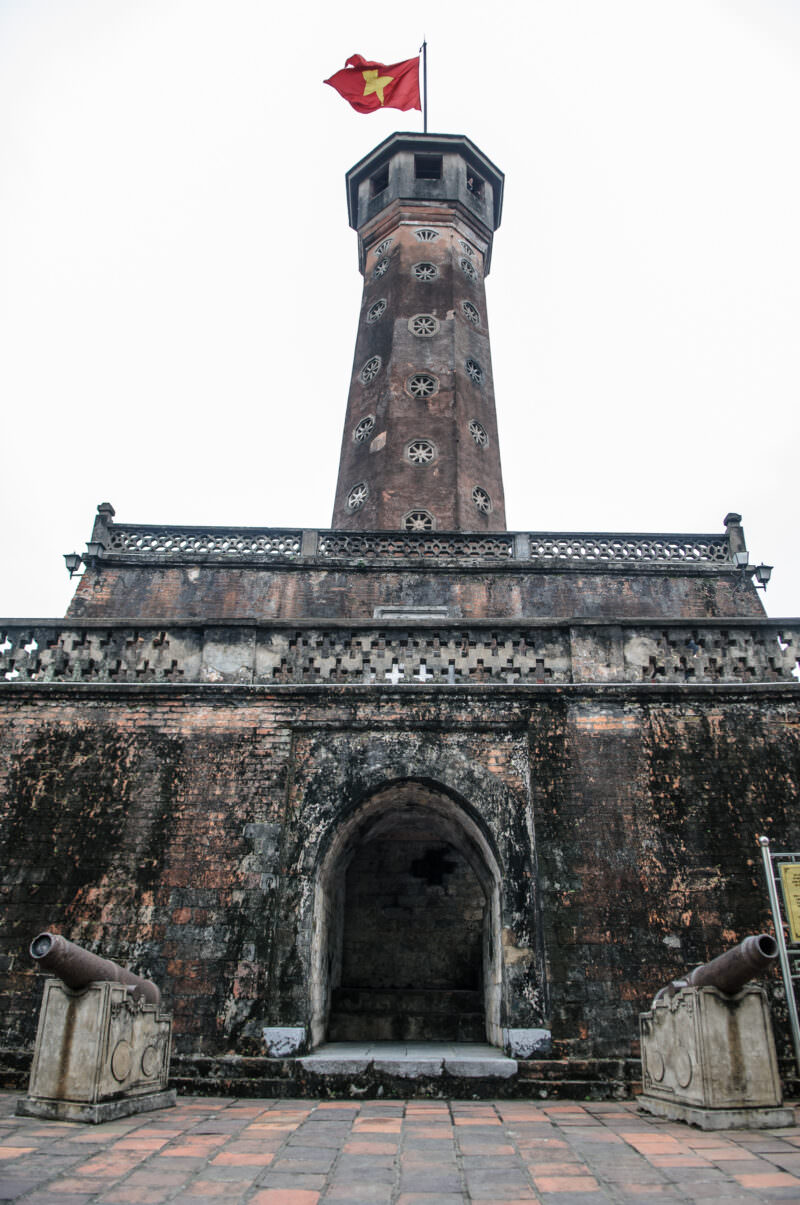
But it’s outside where the two highlights of the museum are. First, there’s the large brick tower — Flag Tower — that stands tall over the surrounding rooftops. Built in 1805, it now serves as a giant nationalist flagpole. A Vietnamese flag has flown at its top day and night since October 1954.
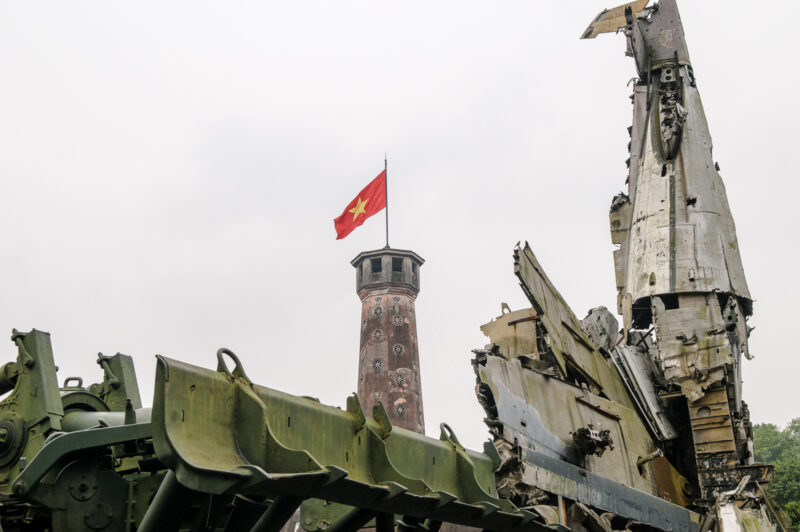
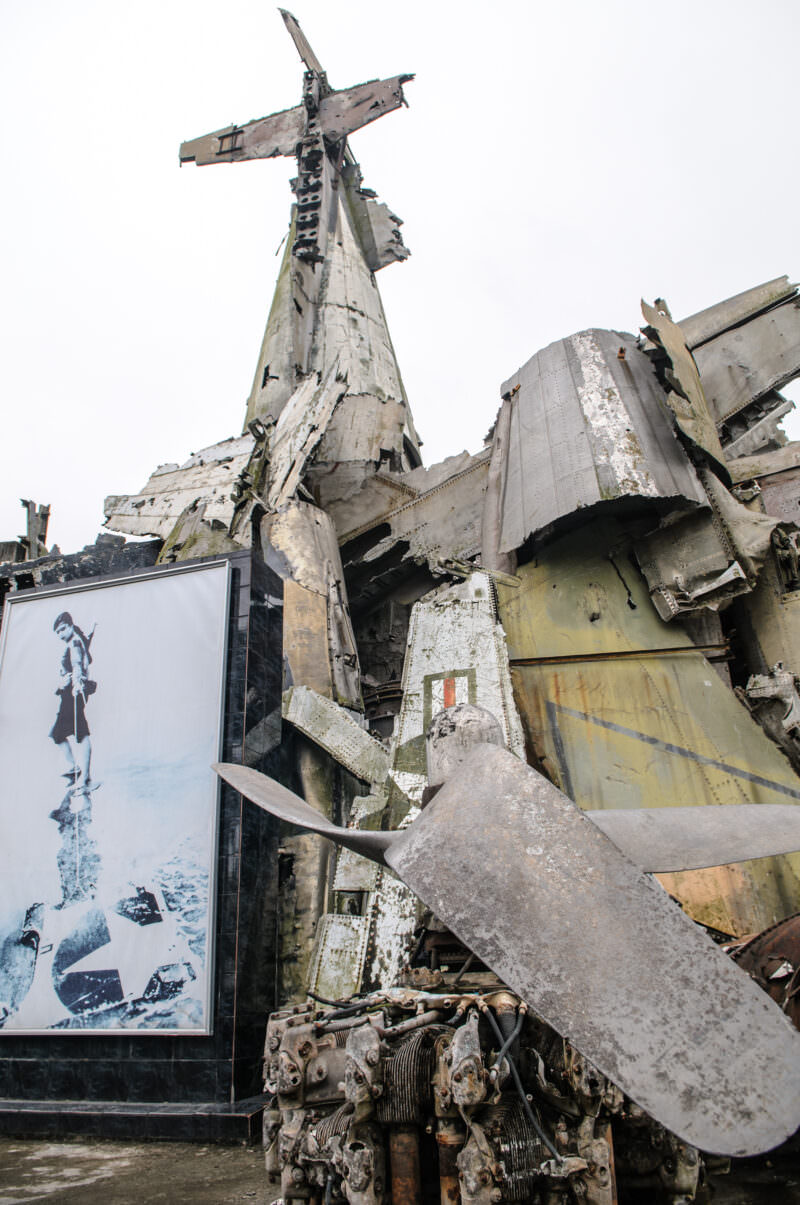
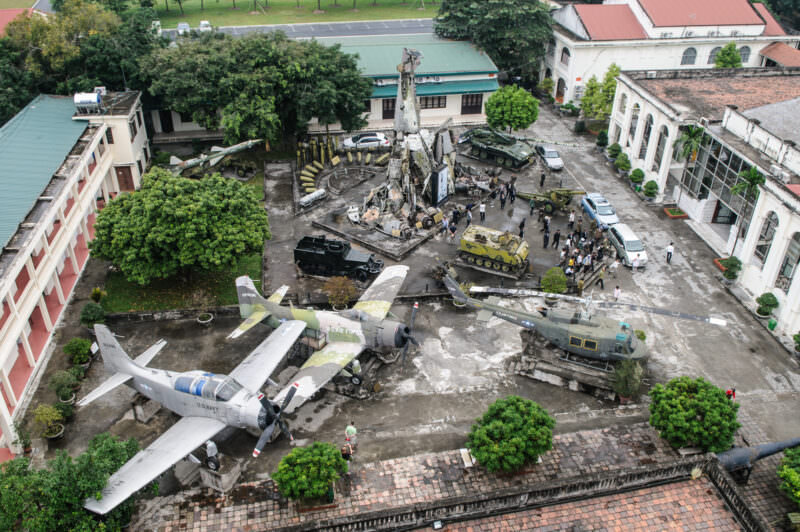
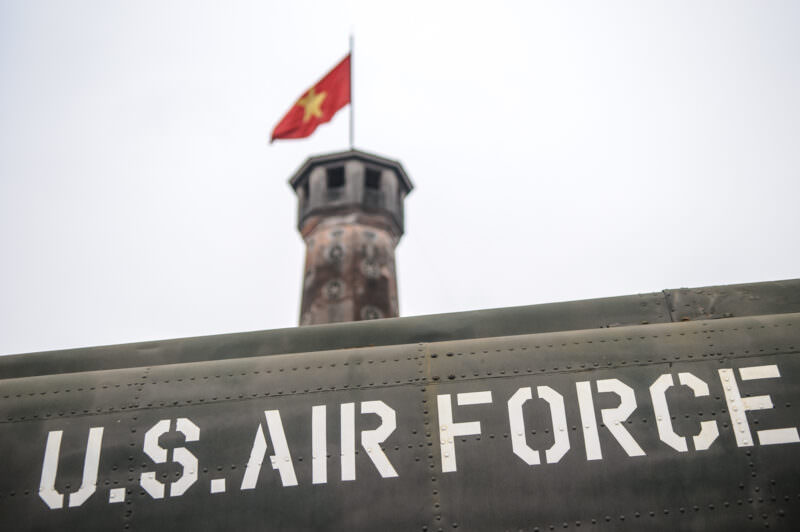
At the tower’s base is a courtyard of large-scale war souvenirs — tanks and planes and helicopters — captured from the Americans. And looking like the makings of a giant bonfire, the wreckage of a B-52 bomber — that symbol of American military superiority — stands on its nose surrounded by the crumpled wreckage of other planes like an F-111 fighter-bomber.
Have Camera Will Travel // Newsletter
Practical field notes, hands-on gear tests.
Photos of the Vietnam Military History Museum
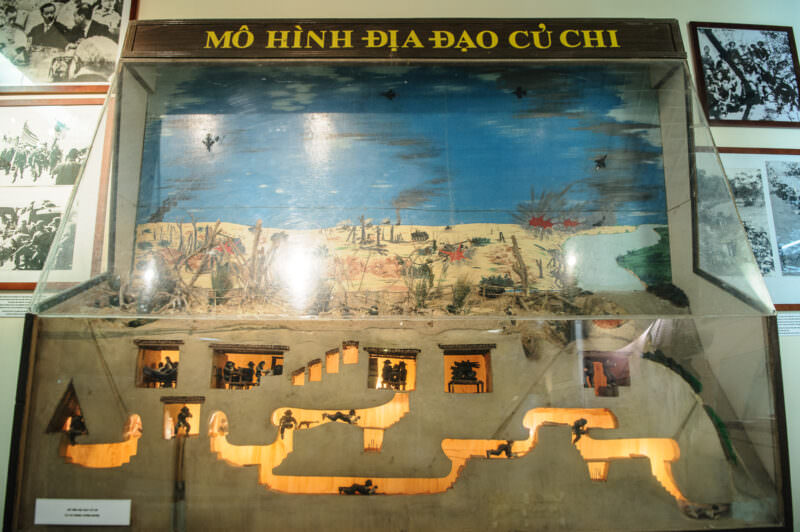
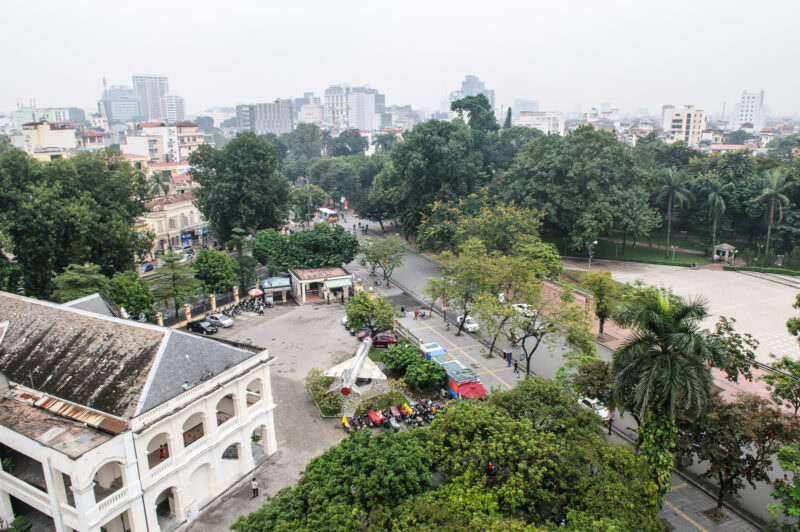
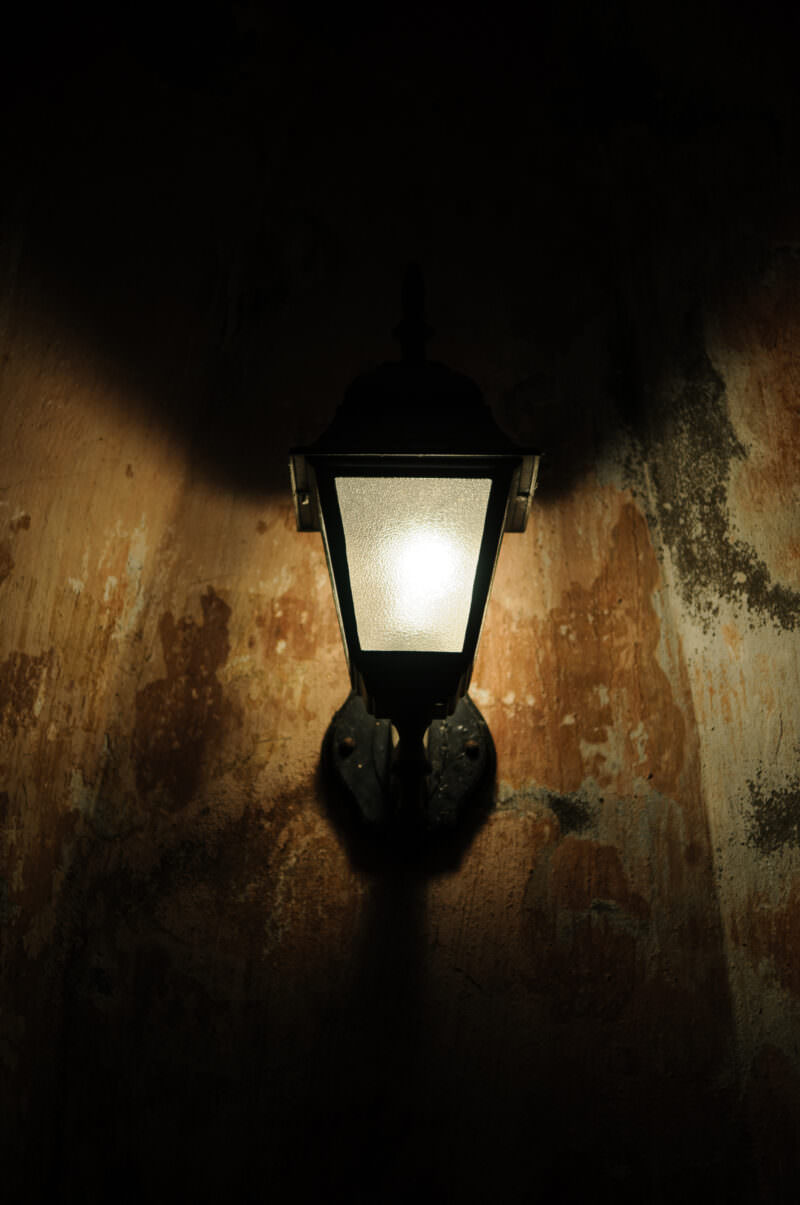
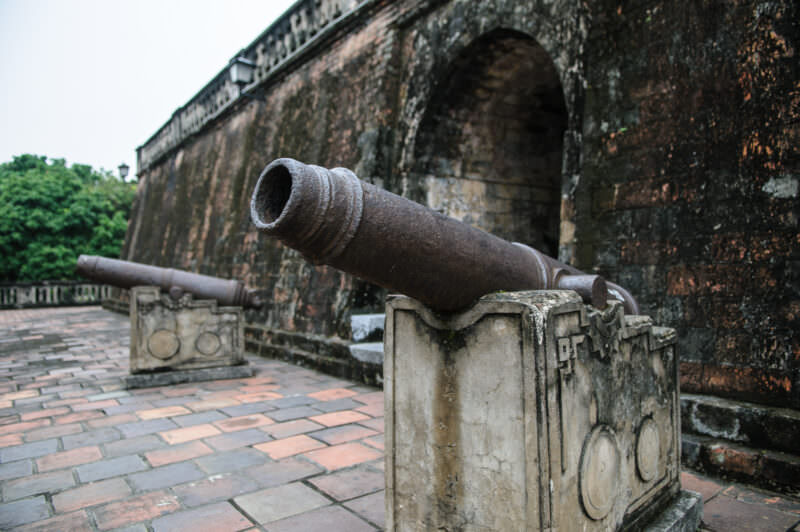
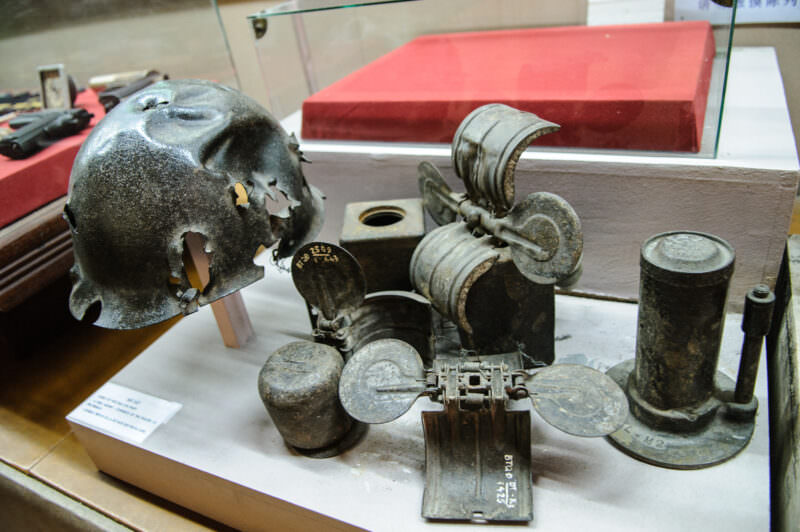
HANOI, Vietnam — A captured Bell UH-1 Iroquois helicopter anchors the outdoor exhibition at the Vietnam Military History Museum. The Huey revolutionized air cavalry tactics and became the defining symbol of American mobility during the conflict. Behind it, a monument constructed from downed B-52 Stratofortress wreckage commemorates the December 1972 Operation Linebacker II, transforming the debris of the strategic bombing campaign into a permanent victory display. Photo by David Coleman / Have Camera Will TravelLicense this image at:DirectlyAlamyHANOI, Vietnam — Chained vintage firearms center an exhibition gallery inside the Vietnam Military History Museum in Ba Đình District. The background map details the 1945 August Revolution, the uprising that allowed the Viet Minh to seize initial political control. During the subsequent 1946 – 1954 First Indochina War, independence fighters relied heavily on captured French colonial armaments to wage their campaign against colonial forces. Photo by David Coleman / Have Camera Will TravelLicense this image at:DirectlyAlamyHANOI, Vietnam — A modified supply bicycle carrying a weapon tube and cargo sacks anchors a jungle diorama at the Vietnam Military History Museum, illustrating the logistics of the Ho Chi Minh Trail. North Vietnamese forces relied on these reinforced “iron horses” to move disassembled artillery and ammunition through dense canopy where American air power could not easily interdict. By adding bamboo steering extensions and strengthening the frames, porters could push loads exceeding 400 pounds (180 kg) along the trail, countering American air superiority with decentralized, low-tech supply chains. Photo by David Coleman / Have Camera Will TravelLicense this image at:DirectlyAlamyHANOI, Vietnam — Visitors examine early firearms and improvised weapons inside a gallery at the Vietnam Military History Museum. The central open-plinth display of modified agricultural tools and rudimentary polearms highlights the Viet Minh’s early reliance on asymmetric warfare. Founded on 17 July 1956 as the Army Museum and opened to the public on 22 December 1959, the Ba Đình District repository emphasizes how local militias utilized forged farming implements before capturing modern French arsenals. Photo by David Coleman / Have Camera Will TravelLicense this image at:DirectlyAlamyHANOI, Vietnam — A captured U.S. Navy A-1 Skyraider anchors an outdoor exhibition of military hardware in the Vietnam Military History Museum courtyard. The central monument of twisted metal rising behind the aircraft is assembled from the wreckage of downed American and French planes. The brick terrace providing this vantage point belongs to the base of the Hanoi Flag Tower, built by the Nguyễn Dynasty in 1805. Photo by David Coleman / Have Camera Will TravelLicense this image at:DirectlyAlamyHANOI, Vietnam — A bronze statue at the Vietnam Military History Museum depicts a Viet Minh soldier wielding an anti-tank lunge mine. The diorama’s painted inscription, “Mỗi nhà là một pháo đài” (“Every house is a fortress”), references the 1946 – 1947 Battle of Hanoi. During this urban conflict that launched the First Indochina War, fighters used these explosive-tipped suicide weapons to disable French armor in barricaded streets. Photo by David Coleman / Have Camera Will TravelLicense this image at:DirectlyAlamyHANOI, Vietnam — Sculptor Minh Dinh’s bronze bust of General Võ Nguyên Giáp is displayed at the Vietnam Military History Museum in Ba Đình District. Wearing the four stars of a full general, Giáp served as the principal commander of the People’s Army of Vietnam. He masterminded the pivotal 1954 siege at Điện Biên Phủ, a victory that effectively ended French colonial rule in Indochina. Photo by David Coleman / Have Camera Will TravelLicense this image at:DirectlyAlamyHANOI, Vietnam — The torn fuselage of a U.S. Air Force B-52 Stratofortress, still bearing the American star roundel, forms a vertical monument on the grounds of the Vietnam Military History Museum. The wreckage was assembled from bombers downed by surface-to-air missiles during Operation Linebacker II in December 1972. The Nguyen Dynasty brick Flag Tower rising behind the debris has flown the national flag continuously since October 1954, and the juxtaposition is deliberate — downed American hardware framed against an enduring symbol of Vietnamese sovereignty. Photo by David Coleman / Have Camera Will TravelLicense this image at:DirectlyAlamyHANOI, Vietnam — A display case at the Vietnam Military History Museum exhibits a Viet Minh overcoat, edged weapons, and field equipment from the First Indochina War. The juxtaposition of a traditional jungle machete with a captured European-style sword reflects the asymmetric origins of the 1946 – 1954 conflict. Before securing Chinese supply lines in 1950, the independence movement relied heavily on improvised gear and seized French colonial armaments to wage its guerrilla campaign. Photo by David Coleman / Have Camera Will TravelLicense this image at:DirectlyAlamyHANOI, Vietnam — An artillery piece stands before the neoclassical portico of the Vietnam Military History Museum in the Ba Dinh District, where the gold star of Vietnam now occupies the building’s pediment. The museum was founded on 17 July 1956 and first opened to the public on 22 December 1959, the fifteenth anniversary of the People’s Army of Vietnam — not, as sometimes stated, three years after Dien Bien Phu. The French colonial-era military precinct at 28A Dien Bien Phu Street housed the collection for nearly seven decades until the institution relocated to a purpose-built facility in Nam Tu Liem District, which opened officially on 1 November 2024. Photo by David Coleman / Have Camera Will TravelLicense this image at:DirectlyAlamyHANOI, Vietnam — A cutaway diorama at the Vietnam Military History Museum, labeled “Mo Hinh Dia Dao Cu Chi,” reconstructs the multi-level Cu Chi tunnel network in miniature. Illuminated chambers show hand-dug living quarters, command posts, and passageways carved into laterite clay southwest of Saigon. The roughly 125-mile (200 km) system let Viet Cong fighters shelter from American bombing and helped stage major operations, including the 1968 Tet Offensive. Photo by David Coleman / Have Camera Will TravelLicense this image at:DirectlyAlamyHANOI, Vietnam — Soviet-built T-54B tank number 843 anchors an exhibition at the Vietnam Military History Museum. The painted turret numbers identify the specific vehicle commanded by Bui Quang Than that breached the side gate of Saigon’s Independence Palace at around 11:00 on 30 April 1975, marking the fall of South Vietnam. The gold wall inscription — “Nothing is more precious than independence and freedom” — is a Ho Chi Minh declaration used to mobilize North Vietnamese forces throughout the war, and the pairing of text and tank encapsulates the museum’s framing of the conflict. Photo by David Coleman / Have Camera Will TravelLicense this image at:DirectlyAlamyHANOI, Vietnam — The national flag flies from the octagonal brick shaft of the Hanoi Flag Tower. The Nguyen Dynasty constructed the roughly 110-foot (33.5 m) structure in 1805 as an observation post for the original Hanoi Citadel, and it is now recognized as a national monument and a component of the UNESCO World Heritage property Central Sector of the Imperial Citadel of Thang Long — Hanoi. The mast has flown the flag continuously since 10 October 1954, the day Vietnamese forces liberated the capital from French control. Photo by David Coleman / Have Camera Will TravelLicense this image at:DirectlyAlamyHANOI, Vietnam — Torn aircraft wreckage frames the Hanoi Flag Tower on the grounds of the Vietnam Military History Museum. The mangled aluminum, compiled from downed U.S. planes, is displayed as a victory monument to North Vietnam’s air defense campaigns. Rising behind the debris, the roughly 110-foot (33.5 m) Nguyen Dynasty brick tower has flown the national flag continuously since Vietnamese forces liberated the capital in October 1954, and its pairing with the wreckage below makes the composition one of the museum’s most deliberate symbols of national endurance. Photo by David Coleman / Have Camera Will TravelLicense this image at:DirectlyAlamyHANOI, Vietnam — A bronze statue titled “Beating Gongs” anchors an exhibit space inside the Vietnam Military History Museum. The figure’s muscular, heroic posture exemplifies the socialist realism style adopted by North Vietnam to project wartime strength and collective resolve. By depicting a traditional instrument of the Central Highlands, the artwork served as a visual call to arms that emphasized the mobilization of ethnic minority communities in the national resistance. Photo by David Coleman / Have Camera Will TravelLicense this image at:DirectlyAlamyHANOI, Vietnam — A life-size diorama at the Vietnam Military History Museum integrates physical aerial ordnance with painted backdrops to simulate jungle logistics during the conflict Vietnamese sources call the American War. The prominent unexploded general-purpose bomb at the scene’s center highlights a crucial tactical adaptation by North Vietnamese forces. PAVN and Viet Cong troops frequently salvaged dud munitions along supply routes, harvesting the high explosives to manufacture improvised mines and booby traps that countered American firepower with low-cost, decentralized means. Photo by David Coleman / Have Camera Will TravelLicense this image at:DirectlyAlamyHANOI, Vietnam — A captured United States Air Force aircraft fuselage stands at the base of the Hanoi Flag Tower at the Vietnam Military History Museum. The Nguyen Dynasty built the roughly 108-foot (33 m) brick tower in 1805 as an observation post for the Hanoi Citadel, and it was one of the few citadel structures to survive French colonial dismantling. Its mast has flown the national flag continuously since October 1954, and the deliberate arrangement of downed American hardware at its foot frames the site as a monument to successive military victories. Photo by David Coleman / Have Camera Will TravelLicense this image at:DirectlyAlamyHANOI, Vietnam — Visitors examine United States aircraft wreckage, a vintage vehicle, and encased weaponry inside the Vietnam Military History Museum. The severed tail section bearing the American military star insignia is among the captured hardware the museum has displayed since opening to the public on 22 December 1959. Founded on 17 July 1956 at 28A Dien Bien Phu Street in the Ba Dinh District, the institution holds a collection exceeding 150,000 artifacts, including four items designated National Treasures. Photo by David Coleman / Have Camera Will TravelLicense this image at:DirectlyAlamyHANOI, Vietnam — A captured U.S. Navy aircraft sits on outdoor display at the Vietnam Military History Museum. The fuselage, still bearing American military roundels, is exhibited as a war trophy from the Vietnam War. It rests beneath the Hanoi Flag Tower, a Nguyễn Dynasty structure dating to 1805 that survived both French colonial demolition and 20th-century bombing campaigns to become a nationally protected monument. Photo by David Coleman / Have Camera Will TravelLicense this image at:DirectlyAlamyHANOI, Vietnam — Soviet-built T-54B tank number 843 stands on display inside the Vietnam Military History Museum. The painted turret numbers identify the specific armored vehicle commanded by Bui Quang Than that breached the side gate of Saigon’s Independence Palace at around 11:00 on 30 April 1975, after which Than climbed out and raised the flag on the palace roof. Vietnam recognized the tank as a National Treasure in the first batch of designations on 1 October 2012, and it is displayed beneath Ho Chi Minh’s maxim declaring independence and freedom as the nation’s highest values. Photo by David Coleman / Have Camera Will TravelLicense this image at:DirectlyAlamyHANOI, Vietnam — An elevated view from the Hanoi Flag Tower overlooks the Vietnam Military History Museum courtyard and surrounding Ba Đình District. A Soviet-built MiG-21 interceptor parked outside arched French colonial galleries highlights the institution’s focus on 20th-century conflicts. One of the museum’s four National Treasures is MiG-21 No. 4324, whose rotating roster of pilots downed 14 U.S. aircraft in 1967, making it one of the most celebrated fighters of the war. Photo by David Coleman / Have Camera Will TravelLicense this image at:DirectlyAlamyHANOI, Vietnam — A captured U.S. M151 jeep sits beside Soviet-built T-54B tank No. 843 inside the Vietnam Military History Museum, beneath Ho Chi Minh’s declaration “Nothing is more precious than independence and freedom.” Tank 843 breached the side gate of Saigon’s Independence Palace around 11:00 on 30 April 1975, after which its commander, Bui Quang Than, raised the flag on the palace roof. Vietnam designated the tank a National Treasure on 1 October 2012. Photo by David Coleman / Have Camera Will TravelLicense this image at:DirectlyAlamyHANOI, Vietnam — The Hanoi Flag Tower rises from its tiered brick base within the Vietnam Military History Museum complex. The Nguyễn Dynasty built the octagonal shaft in 1805 as an observation post for the Imperial Citadel of Thăng Long. Standing approximately 110 feet (33 m), the tower survived late-19th-century demolitions because French colonial forces repurposed it for military communications, and it has flown the national flag continuously since the city’s liberation on October 10, 1954. Photo by David Coleman / Have Camera Will TravelLicense this image at:DirectlyAlamyHANOI, Vietnam — A Soviet-designed tank and a captured United States military jeep occupy a gallery at the Vietnam Military History Museum, beneath a wall inscription displaying Ho Chi Minh’s declaration, “Nothing is more precious than independence and freedom.” The museum was founded on 17 July 1956 and opened to the public on 22 December 1959, the fifteenth anniversary of the People’s Army of Vietnam. The exhibit pairs the two vehicles as complementary symbols — Soviet materiel supplied to the North and American equipment seized from the South — to illustrate the asymmetric alliances that defined the conflict. Photo by David Coleman / Have Camera Will TravelLicense this image at:DirectlyAlamyHANOI, Vietnam — The Hanoi Flag Tower rises behind the fuselage of a captured American military aircraft at the Vietnam Military History Museum. The Nguyen Dynasty built the roughly 108-foot (33 m) masonry observation post in 1805 for the Hanoi Citadel, and it is now recognized as a national monument and part of the UNESCO World Heritage property Central Sector of the Imperial Citadel of Thang Long — Hanoi. Spared during late-19th-century French demolition and untouched by 20th-century bombing campaigns, the octagonal structure has flown the national flag continuously since Vietnamese forces liberated the capital in October 1954, lending the salvaged American hardware arranged at its base the character of a permanent victory display. Photo by David Coleman / Have Camera Will TravelLicense this image at:DirectlyAlamyHANOI, Vietnam — A U.S. Air Force Douglas A-1 Skyraider sits on display in front of the Hanoi Flag Tower at the Vietnam Military History Museum. The Nguyen Dynasty built the brick observation post in 1805 for the Hanoi Citadel; it stands roughly 108 feet (33 m) and is now recognized as a national monument and a component of the UNESCO World Heritage property Central Sector of the Imperial Citadel of Thang Long — Hanoi. The propeller-driven Skyraider, a World War II-era design, remained valuable throughout the jet-age Vietnam War for its long loiter time, which made it especially suited to close air support and search-and-rescue missions. Photo by David Coleman / Have Camera Will TravelLicense this image at:DirectlyAlamyHANOI, Vietnam — A radial engine and twisted fuselage form a composite wreckage monument at the Vietnam Military History Museum. The installation incorporates debris from U.S. Air Force B-52 Stratofortresses downed during Operation Linebacker II in December 1972. North Vietnamese air defense units utilized Soviet-supplied SA-2 surface-to-air missiles to intercept the high-altitude heavy bombers over the capital. Photo by David Coleman / Have Camera Will TravelLicense this image at:DirectlyAlamyHANOI, Vietnam — A modified military supply bicycle loaded with burlap provision sacks is displayed at the Vietnam Military History Museum. North Vietnamese forces utilized these reinforced pack bicycles along the Ho Chi Minh Trail, with bamboo extensions tied to the handlebars allowing individual porters to walk alongside and push cargo loads exceeding 660 pounds (300 kg). This unmotorized logistics network moved massive supply volumes through dense jungle while evading American aerial reconnaissance. Photo by David Coleman / Have Camera Will TravelLicense this image at:DirectlyAlamyHANOI, Vietnam — A captured U.S. Air Force Douglas A-1 Skyraider sits on display at the Vietnam Military History Museum beneath the Hanoi Flag Tower. The aircraft’s prominent radial engine identifies it as a World War II-era piston design that American forces retained during a jet-age conflict for its superior loiter time and heavy payload capacity during close air support missions. Photo by David Coleman / Have Camera Will TravelLicense this image at:DirectlyAlamyHANOI, Vietnam — A tactical map at the Vietnam Military History Museum illustrates troop movements during the early First Indochina War. The sweeping arrows bearing French tricolor flags trace the post-WWII return of colonial forces seeking to reclaim the territory. This campaign sparked a nine-year conflict that culminated in the decisive May 1954 French defeat at Điện Biên Phủ, after which the museum was founded on 17 July 1956 and opened to the public on 22 December 1959. Photo by David Coleman / Have Camera Will TravelLicense this image at:DirectlyAlamyHANOI, Vietnam — A 75mm mountain artillery piece sits below the Hanoi Flag Tower at the Vietnam Military History Museum. The Nguyễn Dynasty built the octagonal brick tower in 1805; it survived the French demolition of the Hanoi Citadel by serving as a colonial observation post. The lightweight howitzer is one of the easily disassembled weapons the Viet Minh hauled by hand up steep terrain to bombard French positions at Điện Biên Phủ in 1954. Photo by David Coleman / Have Camera Will TravelLicense this image at:DirectlyAlamyHANOI, Vietnam — Soviet-built T-54B tank No. 843 stands beneath a bank of revolutionary flags at the Vietnam Military History Museum, its tactical number identifying it as the tank that ended the Vietnam War. Commanded by Bui Quang Than, it rammed the side gate of Saigon’s Independence Palace around 11:00 on 30 April 1975, after which Than raised the flag on the palace roof. It was named a National Treasure in Vietnam’s first designation batch on 1 October 2012. Photo by David Coleman / Have Camera Will TravelLicense this image at:DirectlyAlamyHANOI, Vietnam — A wall-mounted lantern illuminates the weathered interior masonry of the Hanoi Flag Tower at the Vietnam Military History Museum. The exposed brickwork dates to 1805, when the Nguyễn Dynasty constructed the tower as part of the Imperial Citadel of Thăng Long. The structure is recognized as a national monument and a component of the UNESCO World Heritage property Central Sector of the Imperial Citadel of Thăng Long — Hanoi, one of the few elements of the Nguyễn-era citadel to survive French colonial demolition. Photo by David Coleman / Have Camera Will TravelLicense this image at:DirectlyAlamyHANOI, Vietnam — The Hanoi Flag Tower rises approximately 110 feet (33 m) above historic cannons at the Vietnam Military History Museum. Built by the Nguyễn Dynasty in 1805 as part of the Imperial Citadel of Thăng Long, the octagonal brick structure survived the French destruction of the surrounding fortress because colonial forces utilized it as a military observation post. Recognized as a national monument in 1989 and a component of the UNESCO World Heritage property Central Sector of the Imperial Citadel of Thăng Long — Hanoi, it has flown the national flag continuously since Viet Minh forces liberated the city on October 10, 1954. Photo by David Coleman / Have Camera Will TravelLicense this image at:DirectlyAlamyHANOI, Vietnam — An elevated view from the Hanoi Flag Tower overlooks war-era hardware in the Vietnam Military History Museum courtyard. The central monument is assembled from the wreckage of downed French and American aircraft. This scrap-metal sculpture serves as a triumphal centerpiece, deliberately contrasting with intact captured trophies like the adjacent Bell UH-1 Huey helicopter — the primary workhorse of American air mobility during the Vietnam War. Photo by David Coleman / Have Camera Will TravelLicense this image at:DirectlyAlamyHANOI, Vietnam — The riveted fuselage of a salvaged U.S. Air Force aircraft sits framed against the Hanoi Flag Tower at the Vietnam Military History Museum. Built in 1805 under the Nguyen Dynasty as an observation post for the Hanoi Citadel, the roughly 108-foot (33 m) brick tower survived both French colonial demolition campaigns and American bombing and has flown the national flag continuously since October 1954. The 1956-founded museum aggregates captured American military hardware from the 1955 – 1975 conflict, and the tower provides a deliberate backdrop that casts the downed aircraft as trophies of national endurance. Photo by David Coleman / Have Camera Will TravelLicense this image at:DirectlyAlamyHANOI, Vietnam — Captured U.S. military aircraft and armored vehicles fill the Vietnam Military History Museum courtyard, viewed from the Hanoi Flag Tower. The exhibition contrasts intact trophies — including a UH-1 helicopter and piston-engine A-1 Skyraiders — with a central tower constructed from the wreckage of downed American bombers. This scrap-metal monument physically manifests the official state narrative of the conflict, emphasizing the defeat of advanced American airpower. Photo by David Coleman / Have Camera Will TravelLicense this image at:DirectlyAlamyHANOI, Vietnam — The octagonal Hanoi Flag Tower rises approximately 110 feet (33 m) above its brick base at the Vietnam Military History Museum. The characters marking this southern entrance read “Hướng Minh” (Facing the Light), an original detail from the structure’s 1805 Nguyễn Dynasty construction. Because French colonial forces repurposed the tower as an observation post, it survived the surrounding citadel’s destruction and has flown the national flag continuously since the city’s liberation on October 10, 1954. Photo by David Coleman / Have Camera Will TravelLicense this image at:DirectlyAlamyHANOI, Vietnam — Rifles, a traditional crossbow, and period documents fill a World War II exhibit at the Vietnam Military History Museum. The juxtaposition of factory-made firearms and a wooden bow reflects the asymmetric reality of the early Viet Minh. These irregular forces relied heavily on locally sourced, primitive arms to resist the French and Japanese occupation of French Indochina from 1940 to 1945. Photo by David Coleman / Have Camera Will TravelLicense this image at:DirectlyAlamyHANOI, Vietnam — Rusted cast-iron cannons rest on carved stone mounts at the base of the Hanoi Flag Tower. The Nguyễn Dynasty built the octagonal brick structure in 1805 as an observation post for the Imperial Citadel of Thăng Long. The tower survived the late-19th-century French dismantling of the broader fortress and eventually anchored the grounds of the museum founded on 17 July 1956. Photo by David Coleman / Have Camera Will TravelLicense this image at:DirectlyAlamyHANOI, Vietnam — The Hanoi Flag Tower rises approximately 110 feet (33 m) from its massive brick base within the Vietnam Military History Museum complex. Constructed by the Nguyễn Dynasty in 1805 as part of the Imperial Citadel of Thăng Long, the octagonal structure is a nationally protected relic and a component of the UNESCO World Heritage property Central Sector of the Imperial Citadel of Thăng Long — Hanoi. It escaped late-19th-century French demolition because colonial forces repurposed its commanding height as a military observation post. Photo by David Coleman / Have Camera Will TravelLicense this image at:DirectlyAlamyHANOI, Vietnam — A display case at the Vietnam Military History Museum exhibits a shrapnel-torn French steel helmet alongside rusted anti-personnel ordnance. The visible placard frames the punctured armor as evidence of the failure of colonial forces during the First Indochina War. This conflict culminated in the decisive 1954 Battle of Điện Biên Phủ, ending nearly a century of French rule and partitioning the country. Photo by David Coleman / Have Camera Will TravelLicense this image at:DirectlyAlamyHANOI, Vietnam — The Vietnam Military History Museum displays tactical maps, archival photographs, and Viet Minh weaponry from the First Indochina War. The exhibit’s map and crude swords document the December 1946 Battle of Hanoi, which launched the nationwide resistance against French colonial rule. Armed with rudimentary blades and antique rifles, Viet Minh fighters held the capital’s streets for weeks, buying time for their leadership to retreat to mountain strongholds. Photo by David Coleman / Have Camera Will TravelLicense this image at:DirectlyAlamy
What To Know Before You Go
Enjoyed this article? Personalize your search results.
I'm a freelance travel photographer based in Washington DC. Seven continents, up mountains, underwater, and a bunch of places in between. My images have appeared in numerous publications, and you can check out some of my gear reviews and tips here. More »