INWA, Myanmar — The historic Bagaya Monastery, also known as Bagaya Kyaung, showcases exquisite Burmese architectural style with its intricate wood carvings. Constructed entirely of teak, it has fared much better from the region’s earthquakes than its stone neighbors.
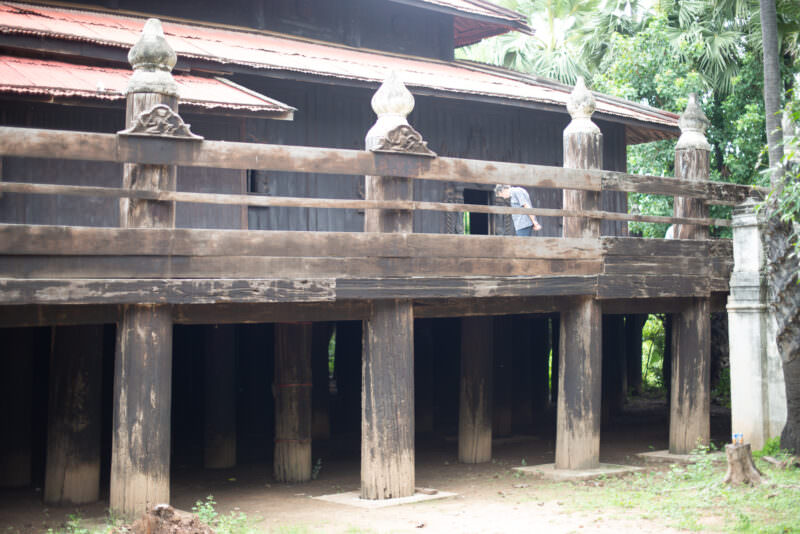
It’s drafty and dark, and it feels like you’re walking around the deck of a ship. And there’s a good reason for that. The pagoda is made entirely of teak, a timber long prized in shipbuilding and boatbuilding. It’s held up by 267 massive posts of teak, the largest of which is 60 feet high and 9 feet in circumference. The floors and walls are also made of teak. Making this today would be prohibitively expensive, even if you could still find solid teak trunks like this anymore.
The history of the Bagaya Monastery (Bagaya Kyaung) is a bit hazy, and sources often contradict each other. The standing building dates to 1834, during the reign of King Bagyidaw, and sits on the site of an earlier monastery established in the late 18th century under King Hsinbyushin (r. 1763 – 1776). That earlier structure, along with much of the surrounding capital, was destroyed in the great fire of 15 April 1821.1 In 1991, the Mandalay Archaeology Department refurbished the building, added some stone steps, and made it suitable for continued use.2
As with so many words and names in Burmese, it’s transliterated in different ways into English. You might also see it written as Bargaya.
And adding to the confusion is that there’s another Bagaya Kyaung about 10 kilometers away in Amarapura, which also has intricate teak woodcarving.
This was once a bustling royal capital. Or, rather, several capitals, with the region serving several Burmese kingdoms. Now, it’s mostly rural, with what were once opulent stone pagodas and palaces destroyed by earthquakes and now overgrown.
The palace grounds are now mostly gone, but besides being surrounded by rice paddies now, Bagaya Monastery is well-worn but still in working condition, albeit sparsely inhabited. Being constructed of wood was a curse when it came to fire, but it has proved a virtue for surviving earthquakes like the one of 23 March 1839 — sometimes called the Ava or Inwa earthquake, estimated at magnitude 7.9 – 8.3 — that destroyed nearly all of the royal palace nearby, leaving only part of the famous leaning watchtower.3
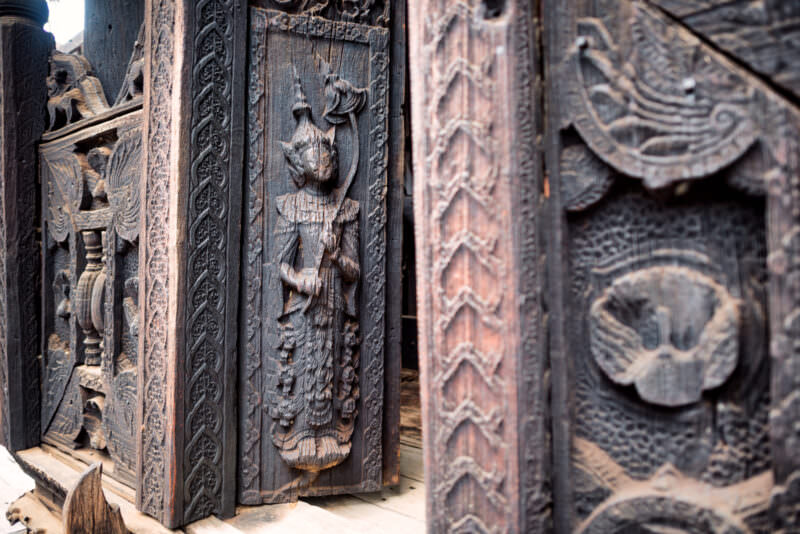
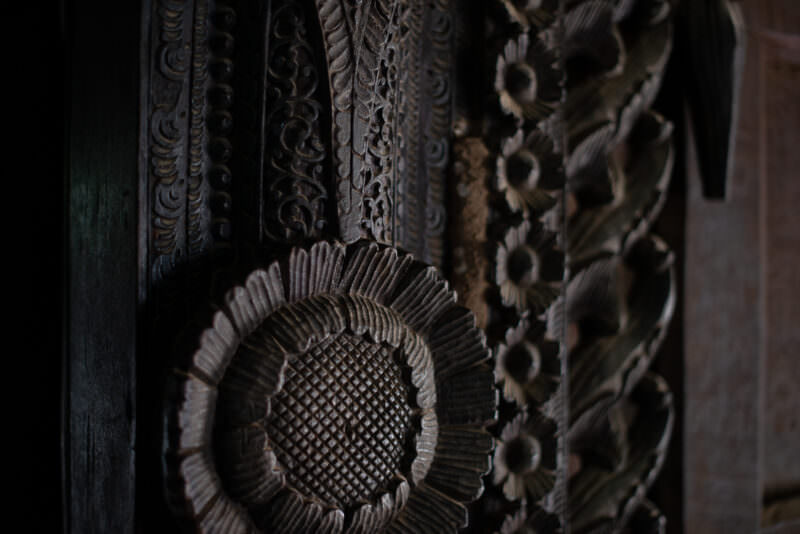
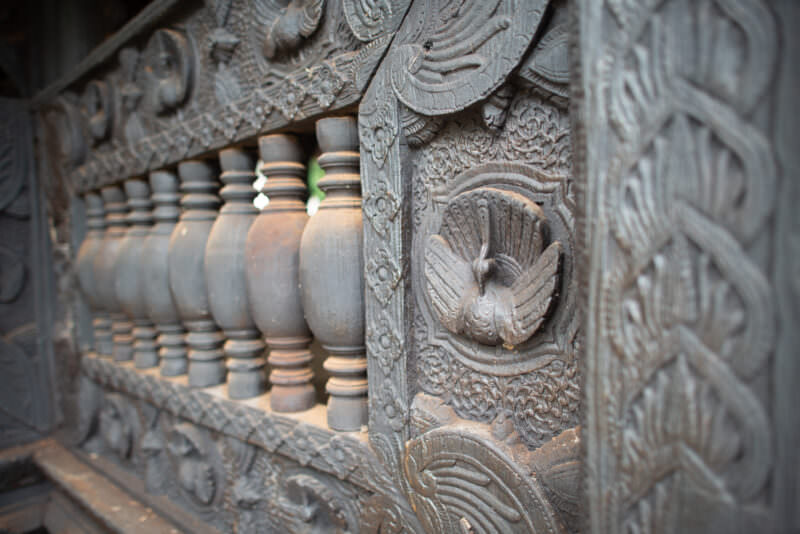
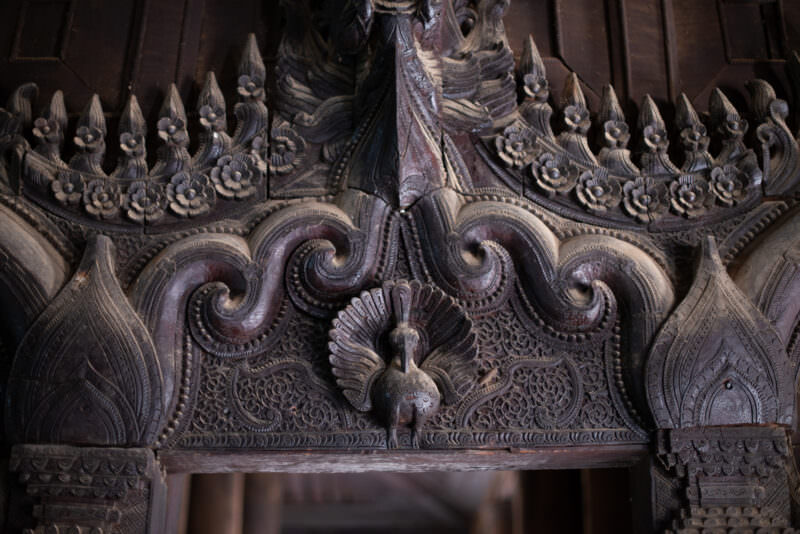
Intricately carved wood inside and out are its main decorations, and if you have any appreciation for wood carving, you’ll find this extremely impressive. Wood carving is deeply embedded into the Theravada school of Buddhism, and its practitioners were highly respected.4 Throughout the monastery you’ll see recurring motifs, including peacocks — the emblem of the Konbaung dynasty — alongside lotus flowers and other floral patterns.5
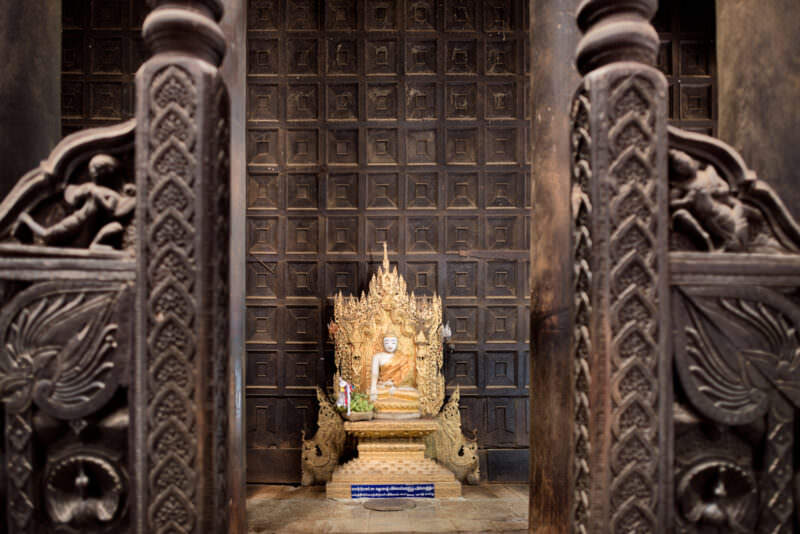
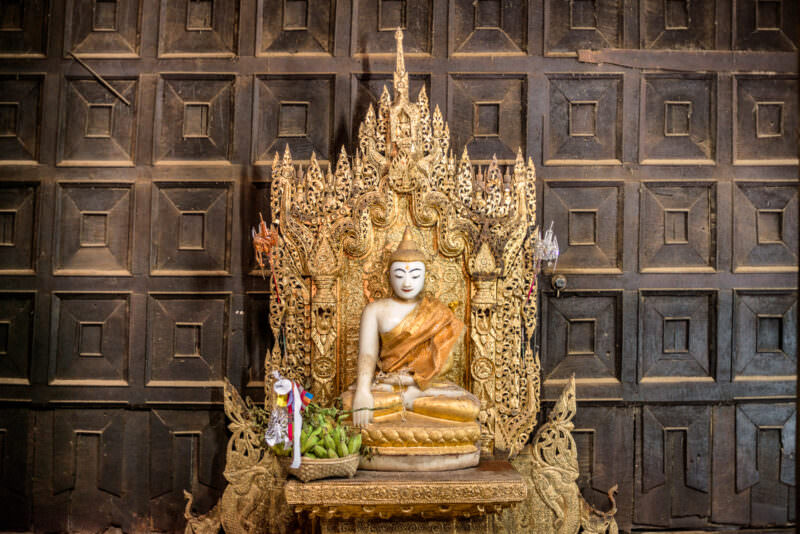
The main shrine, on the other hand, is unusually modest. Here, it’s the walls and columns and doors that speak to the care and skill of the builders.
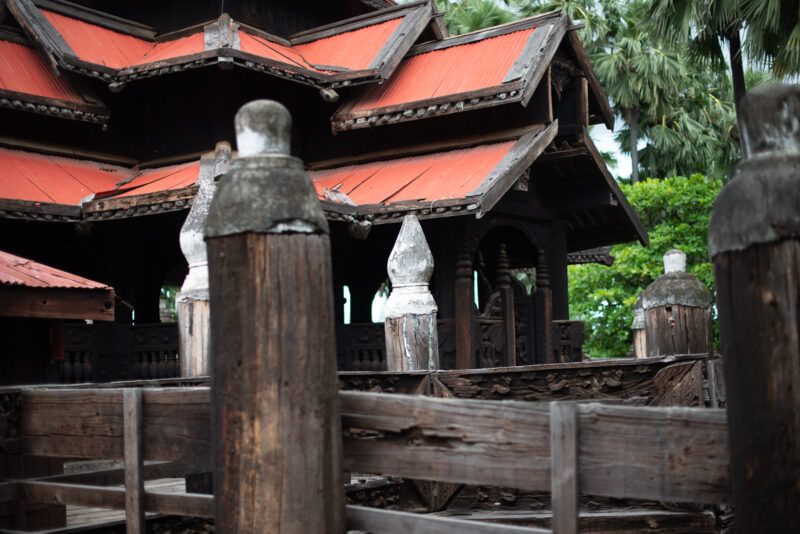
The main wooden structure remains in place. In 1991, it was refurbished by the Mandalay Archaeology Department, adding some stone steps and structure to help bolster it. They presumably also added the red corrugated roofing.6
Photos of Bagaya Monastery / Bagaya Kyaung
This is one of my favorite pagodas I visited in Myanmar. I love the detailed teak woodwork. But it’s a little off the beaten track. Here are some of my photos from there.
Have Camera Will Travel // Newsletter
Practical field notes, hands-on gear tests.
INWA, Myanmar — A weathered masonry staircase leads to the raised platform of Bagaya Monastery, topped by a traditional multi-tiered roof. Built in 1834 during the reign of King Bagyidaw of the Konbaung dynasty, the structure rests on 267 massive teak pillars joined primarily with mortise-and-tenon joinery rather than metal fasteners. The monastery stands on the site of an earlier monastic establishment destroyed in a great fire on 15 April 1821. Its wooden frame is renowned for its ability to flex and withstand earthquakes, including the devastating 1839 earthquake that destroyed much of the royal palace nearby. License this image at:DirectlyAlamyPhoto by David Coleman / Have Camera Will Travel
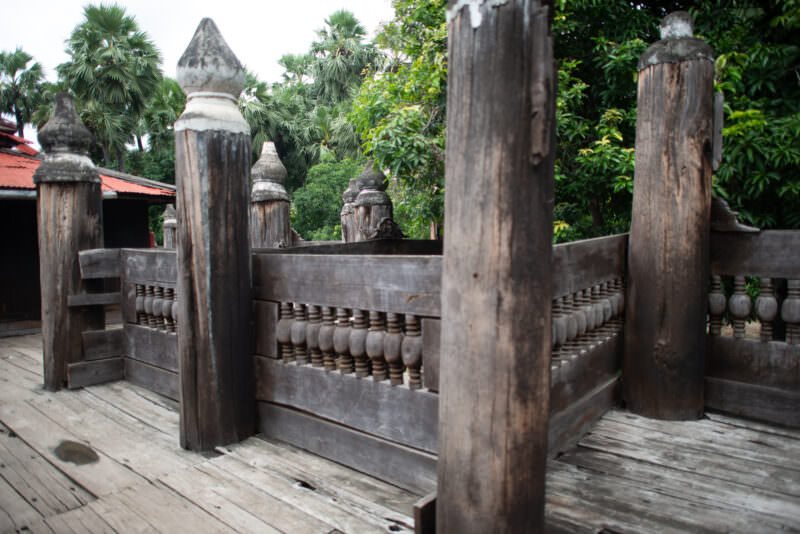
INWA, Myanmar — Massive teak pillars elevate the exterior deck of Bagaya Monastery, an active Buddhist educational center dating to 1763. The complex rests on 267 of these giant posts, assembled entirely without metal fasteners using traditional mortise-and-tenon joinery. This flexible, interlocking construction style derives directly from regional shipbuilding methods, providing the structural resilience needed to survive centuries of earthquakes. License this image at:DirectlyAlamyPhoto by David Coleman / Have Camera Will Travel
INWA, Myanmar — Celestial figures and floral motifs are carved into the weathered teak panels of Bagaya Monastery. The standing structure was built in 1834 during the reign of King Bagyidaw of the Konbaung dynasty, on the site of an earlier monastery destroyed in an 1821 fire. The building relies primarily on traditional mortise-and-tenon joinery rather than metal fasteners. This surviving Konbaung-era craftsmanship reflects the architectural wealth of Inwa, the former royal capital of multiple Burmese kingdoms. License this image at:DirectlyAlamyPhoto by David Coleman / Have Camera Will Travel
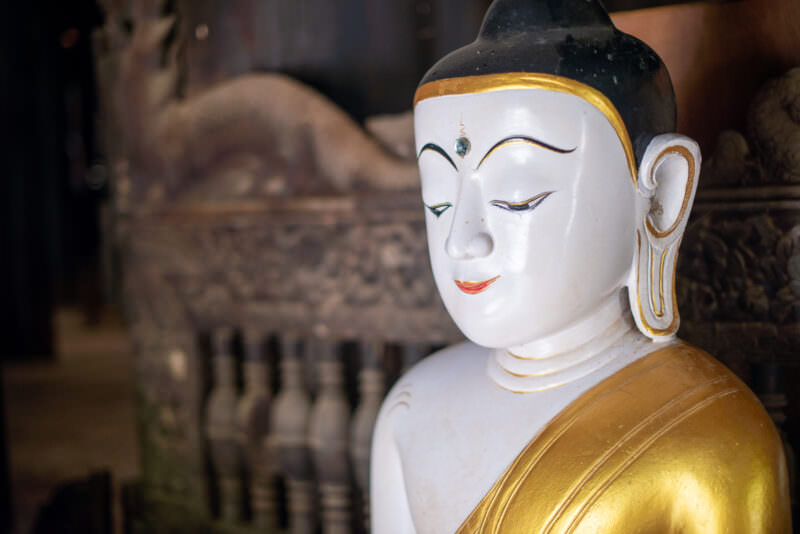
INWA, Myanmar — A white and gold Buddha statue sits before intricately carved woodwork and turned spindles inside Bagaya Monastery. The dark teak background exemplifies the traditional craftsmanship of the complex, constructed between 1763 and 1776 during King Hsinbyushin’s reign. The surviving structure reflects the architectural heritage of Inwa’s four-century tenure as the Burmese royal capital. License this image at:DirectlyAlamyPhoto by David Coleman / Have Camera Will Travel
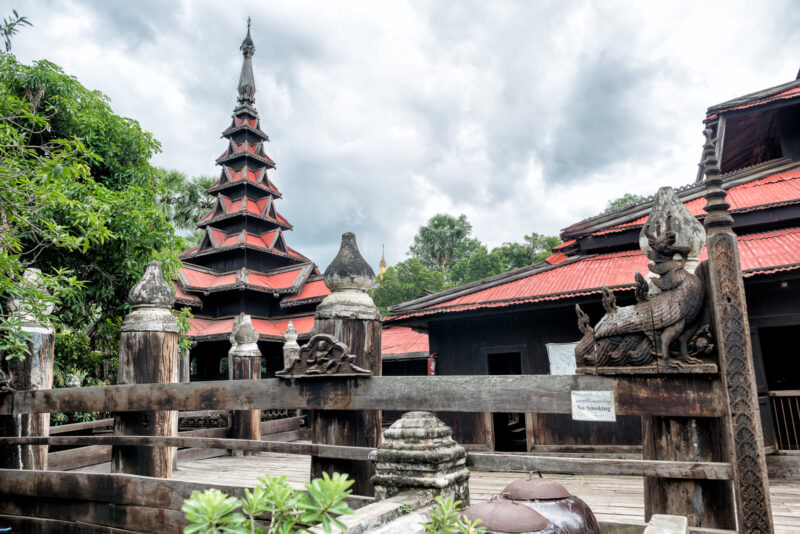
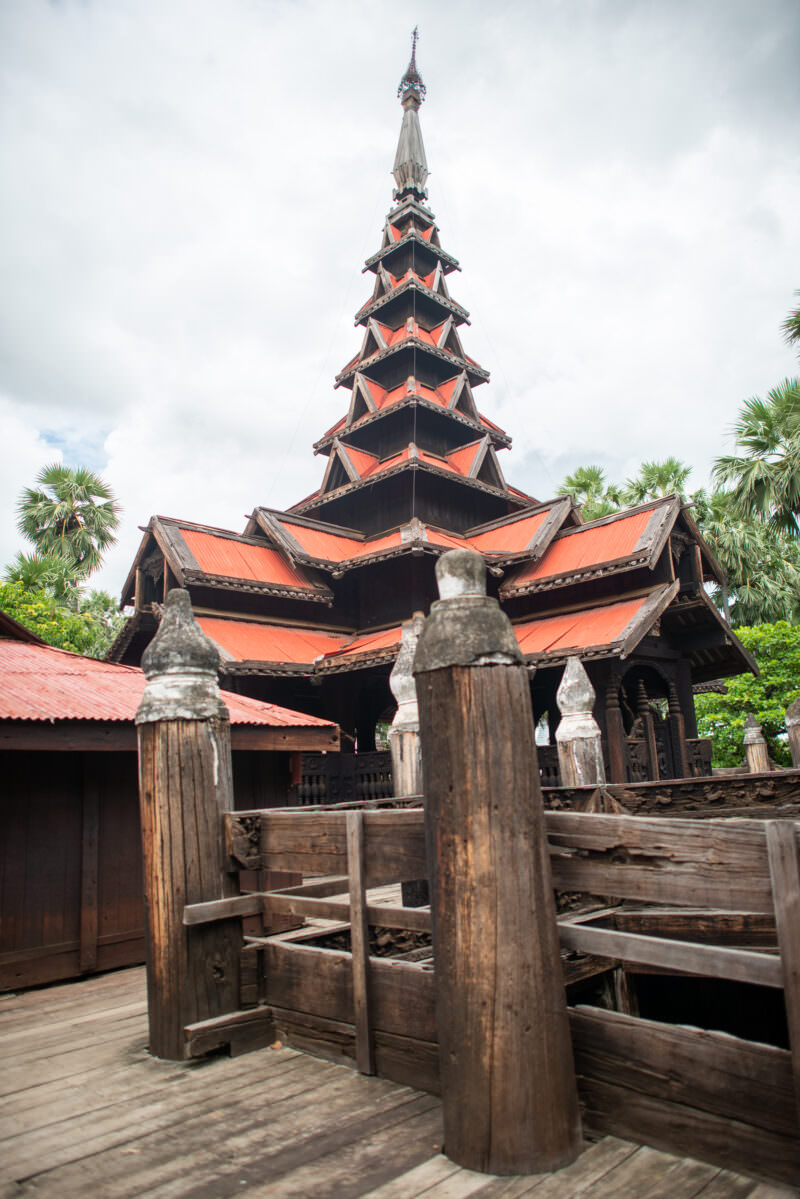
INWA, Myanmar — The multi-tiered spire of Bagaya Monastery rises above its carved teak compound in the former royal capital. Built in 1834 during the reign of King Bagyidaw of the Konbaung Dynasty, the structure stands on the site of an earlier monastery destroyed in the fire of 1821. The complex was assembled primarily using traditional mortise-and-tenon joinery, a flexible wooden framework that The the massive structure to absorb and withstand the region’s frequent earthquakes, including the devastating 1839 earthquake that destroyed much of the surrounding royal capital. License this image at:DirectlyAlamyPhoto by David Coleman / Have Camera Will Travel
INWA, Myanmar — Deeply relieved sunflower motifs are carved into the dark teak of Bagaya Monastery. The elaborate floral detailing exemplifies traditional Burmese wooden architecture from King Hsinbyushin’s reign between 1763 and 1776. Preserved in the former royal capital, the active Buddhist education center reflects the artistic craftsmanship of the 18th-century kingdom. License this image at:DirectlyAlamyPhoto by David Coleman / Have Camera Will Travel
INWA, Myanmar — Weathered teak posts line the elevated walkway of Bagaya Monastery in the ancient royal capital. The complex rests on 267 of these massive pillars, assembled using traditional mortise-and-tenon joinery without metal fasteners. While the site dates to the 1760s Konbaung Dynasty, the visible carved woodwork stems from a major reconstruction following an 1821 fire during King Bagyidaw’s reign. License this image at:DirectlyAlamyPhoto by David Coleman / Have Camera Will Travel
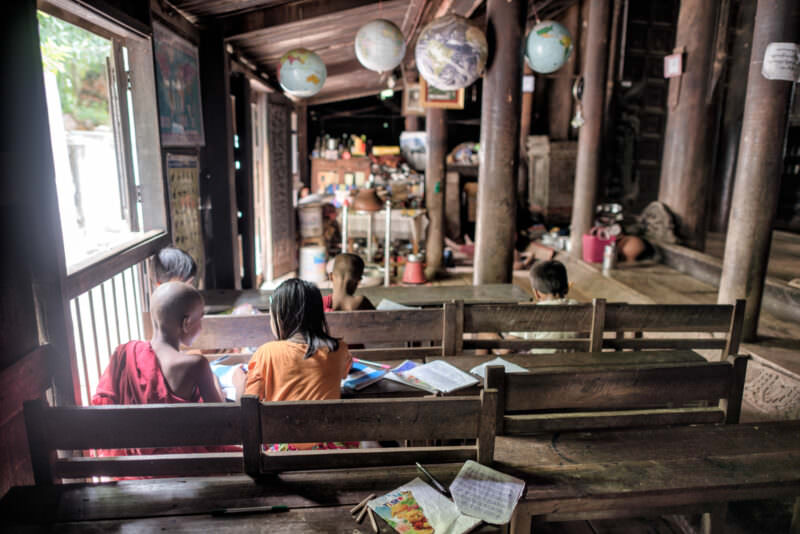
INWA, Myanmar — A novice monk and lay children study at wooden desks inside Bagaya Monastery. The 267 massive teak pillars supporting the structure are among the defining features of this Konbaung Dynasty building, constructed in 1834 during the reign of King Bagyidaw on the site of an earlier monastery destroyed in the fire of 1821. Situated in the former royal capital of Inwa, the monastery continues its historic dual mandate of religious practice and community education. License this image at:DirectlyAlamyPhoto by David Coleman / Have Camera Will Travel
INWA, Myanmar — A carved peacock motif anchors an intricate teak balustrade at Bagaya Monastery. The peacock served as the royal emblem of the Konbaung dynasty, and the standing structure was built in 1834 during the reign of King Bagyidaw, on the site of an earlier monastery destroyed by fire in 1821. Assembled using traditional mortise-and-tenon joinery, the complex functioned as a center for Buddhist scholarship in the former royal capital of Inwa. License this image at:DirectlyAlamyPhoto by David Coleman / Have Camera Will Travel
INWA, Myanmar — Intricately carved teak pillars frame the main Buddha shrine inside Bagaya Monastery. Built in 1834 during the reign of King Bagyidaw of the Konbaung Dynasty, the structure rises on a network of 267 massive teak columns joined primarily through traditional mortise-and-tenon joinery. The monastery stands on the site of an earlier monastic establishment destroyed in a great fire on 15 April 1821. It remains an active center for Buddhist education. License this image at:DirectlyAlamyPhoto by David Coleman / Have Camera Will Travel
INWA, Myanmar — Massive teak posts frame the wooden deck of Bagaya Monastery, a 19th-century Buddhist complex in the former royal capital of Inwa. The standing structure was built in 1834 under King Bagyidaw of the Konbaung Dynasty, on the site of an earlier monastery destroyed by fire in 1821. It rests on 267 giant teak pillars and was constructed primarily using traditional mortise-and-tenon joinery, giving the wooden frame the flexibility to withstand regional earthquakes, The building survived the catastrophic 1839 Ava earthquake that destroyed much of the surrounding royal capital. License this image at:DirectlyAlamyPhoto by David Coleman / Have Camera Will Travel
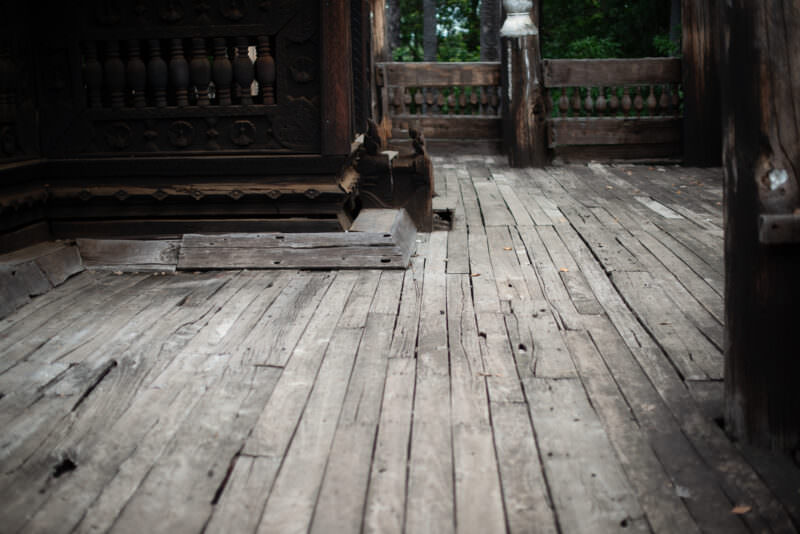
INWA, Myanmar — Weathered planks and carved baseboards form the exterior deck of Bagaya Monastery, a Konbaung Dynasty Buddhist temple. The visible peg holes highlight the structure’s traditional mortise-and-tenon joinery, which secures the entire teak complex without metal fasteners. The massive pillar on the right is one of 267 giant teak posts supporting the active monastery in Burma’s former royal capital. License this image at:DirectlyAlamyPhoto by David Coleman / Have Camera Will Travel
INWA, Myanmar — The multi-tiered teak stupa of Bagaya Monastery rises above a heavy timber walkway in the ancient royal capital. The massive, weathered pillars in the foreground are among 267 giant teak posts supporting the structure, which was built in 1834 during the reign of King Bagyidaw on the site of an earlier monastery destroyed in the fire of 1821. The complex relies primarily on mortise-and-tenon joinery rather than metal fasteners, a construction method that The the wooden frame to flex and resist earthquakes such as the major 1839 tremor that devastated the royal capital nearby. License this image at:DirectlyAlamyPhoto by David Coleman / Have Camera Will Travel
INWA, Myanmar — A deeply carved peacock motif decorates a teak archway inside Bagaya Monastery. Constructed between 1763 and 1776 during the reign of King Hsinbyushin, the complex represents the architectural peak of the Konbaung Dynasty. The prominent peacock served as the official emblem of Burmese royalty, reflecting the active monastery’s origins within the former royal capital. License this image at:DirectlyAlamyPhoto by David Coleman / Have Camera Will Travel
INWA, Myanmar — An ornate gilded throne frames a seated Buddha against the dark paneled walls of Bagaya Monastery. The geometric backdrop showcases the site’s 18th-century teak construction, completed between 1763 and 1776 under King Hsinbyushin. Konbaung Dynasty artisans assembled the entire complex using traditional mortise-and-tenon joinery, relying on precise woodworking rather than metal fasteners to secure the massive structure. License this image at:DirectlyAlamyPhoto by David Coleman / Have Camera Will Travel
I'm a freelance travel photographer based in Washington DC. Seven continents, up mountains, underwater, and a bunch of places in between. My images have appeared in numerous publications, and you can check out some of my gear reviews and tips here. More »