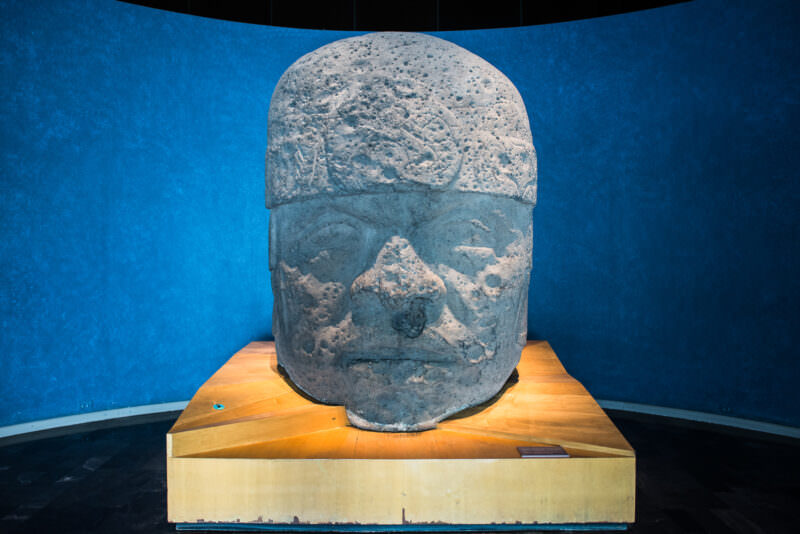
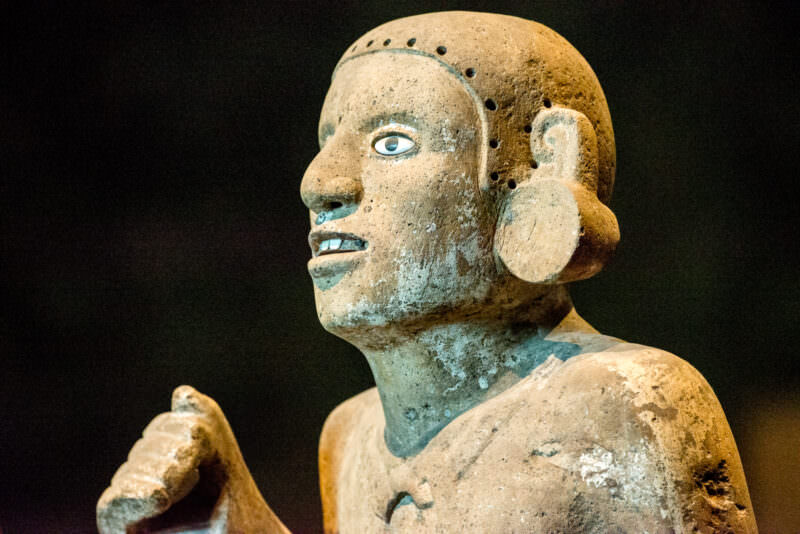
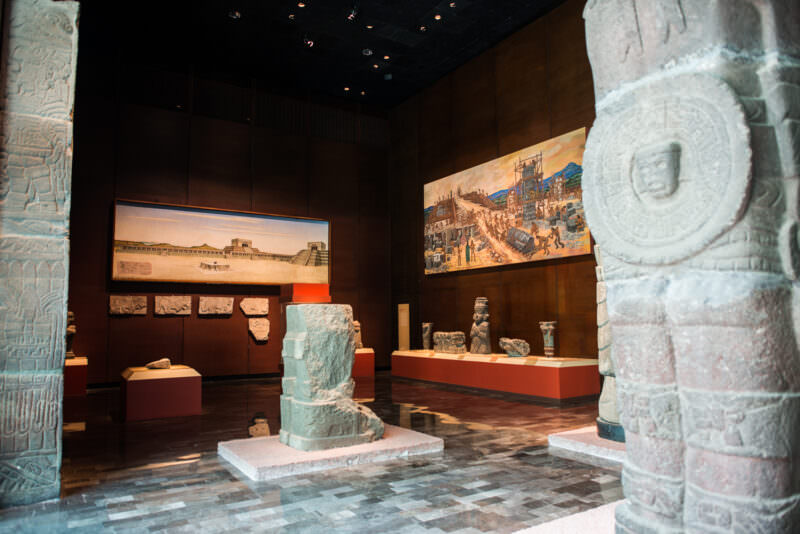
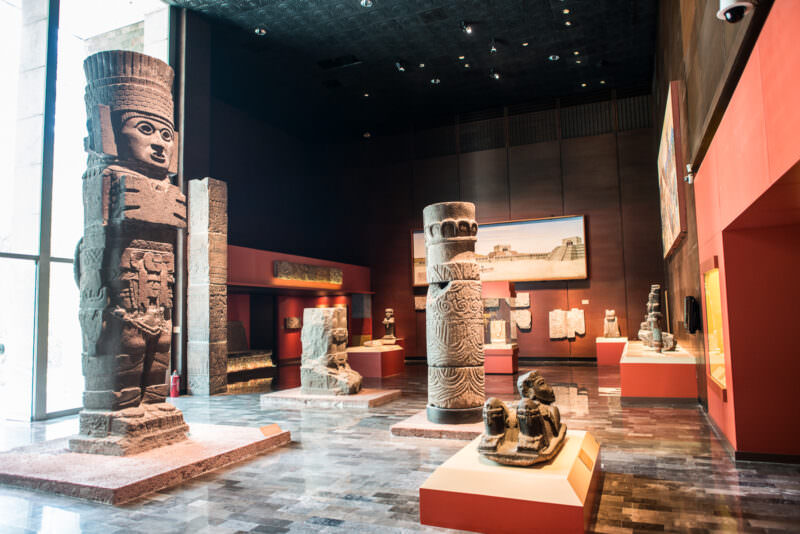
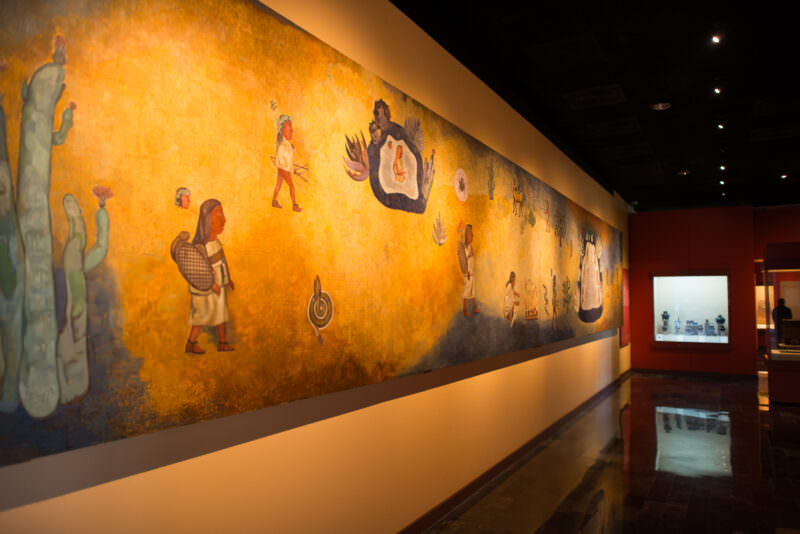
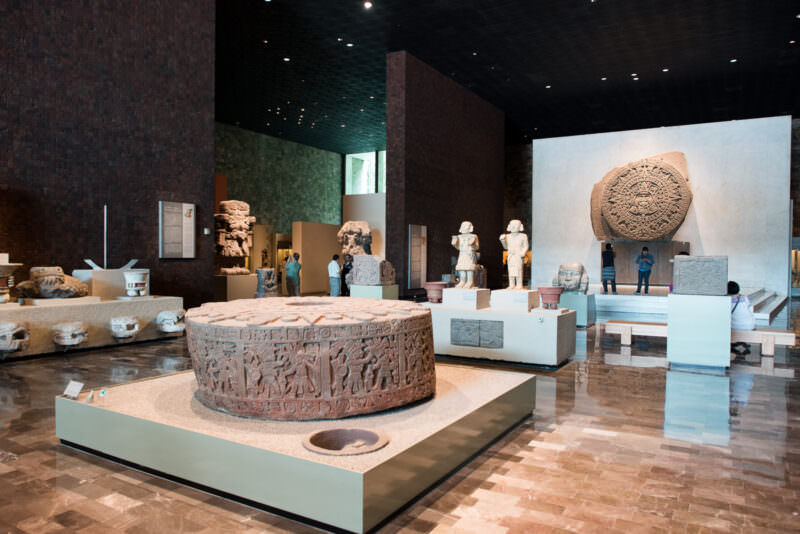
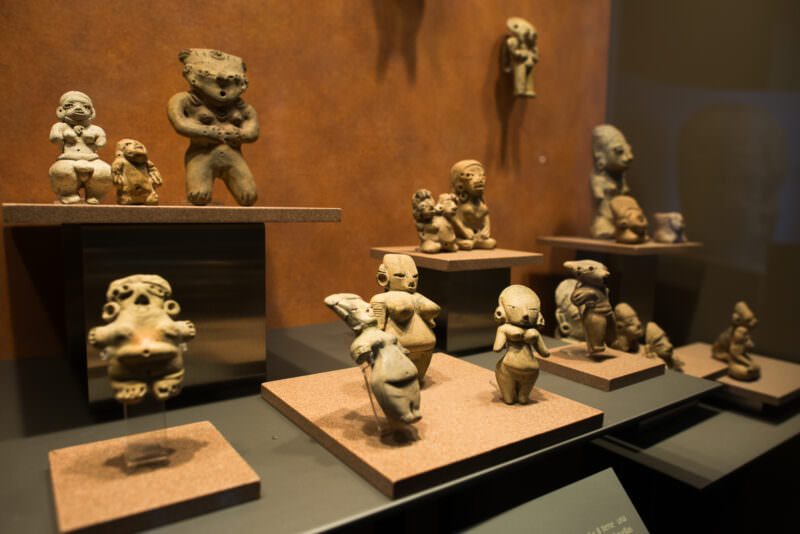
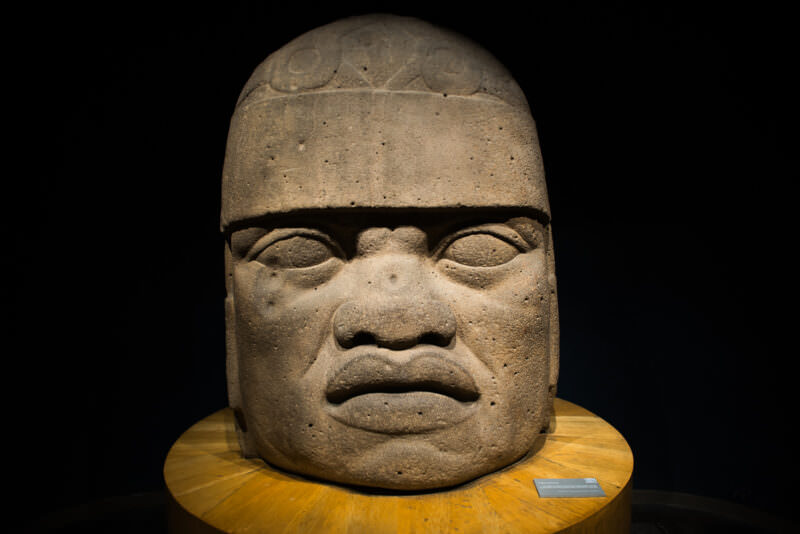
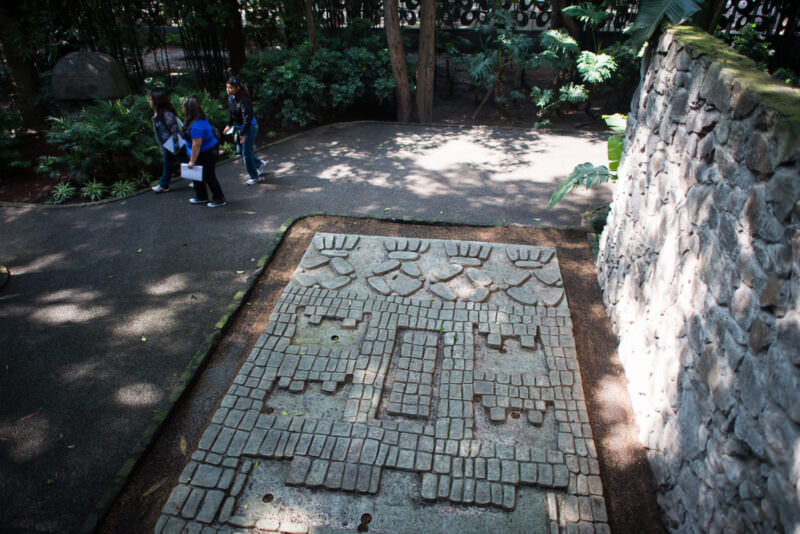
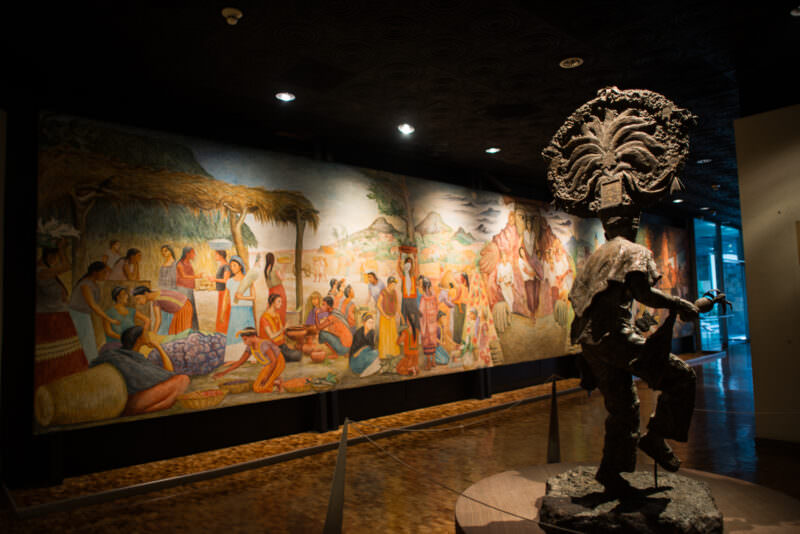
MEXICO CITY, Mexico — Mexico City’s impressive National Museum of Anthropology showcases the region’s endlessly rich and diverse pre-Columbian cultural heritage.
And it’s easy to see why. It has a vast array of exhibits related to Mesoamerica’s cultural history. And it is a region with an exceptionally rich cultural history.
It’s not just about Aztecs and Maya, although there’s an abundance of artifacts from each.
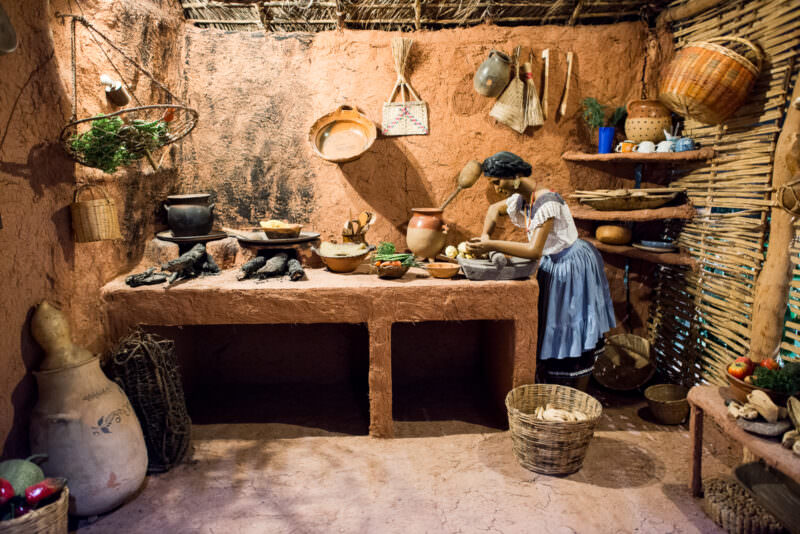
But there’s much more than that. There are exhibits on the temples of Teotihuacan as well as everyday life in villages in Mexico’s diverse regions.
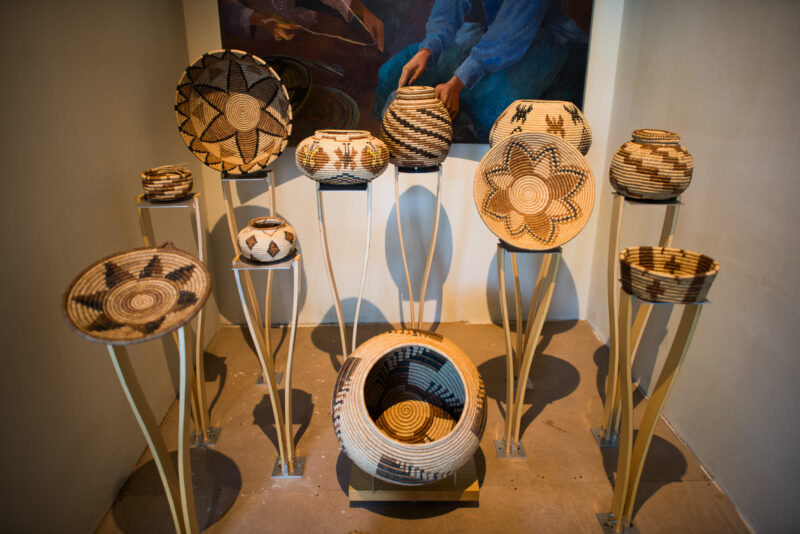
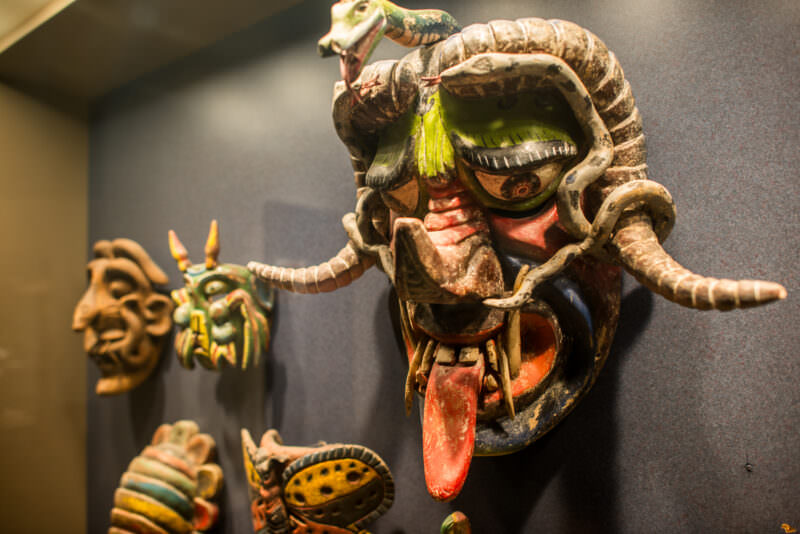
And while the emphasis is squarely on the region’s pre-Columbian history, there are also sections that focus on how cultural heritage as survived in regional areas today.
Have Camera Will Travel // Newsletter
Practical field notes, hands-on gear tests.
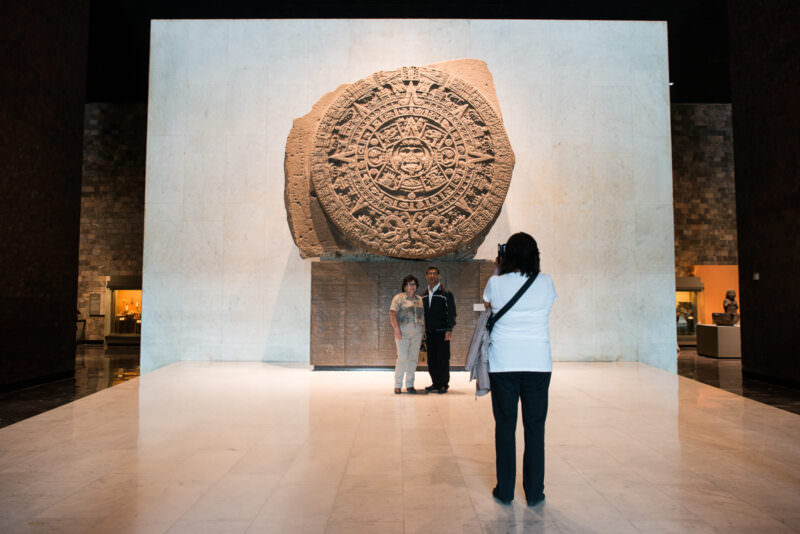
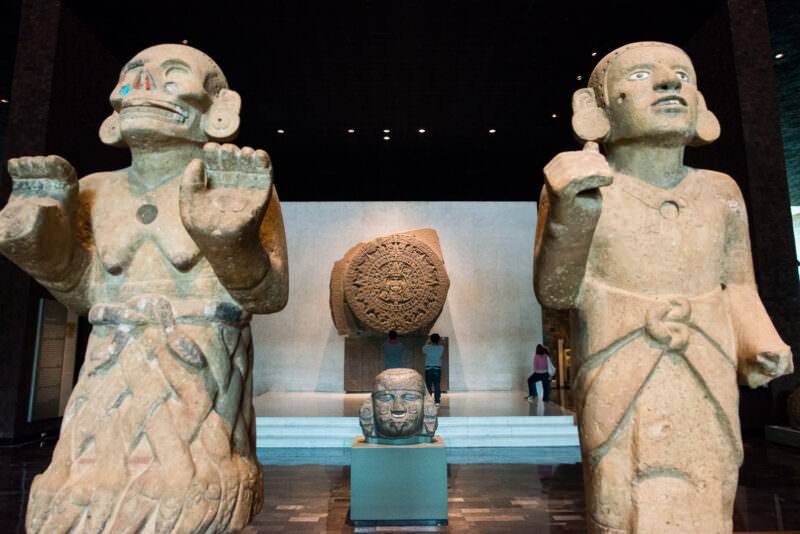
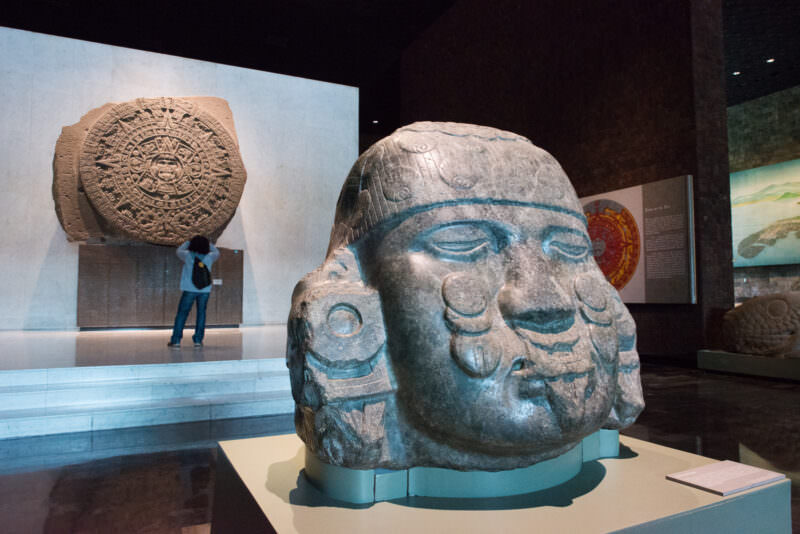
And then, of course, there are the famous highlights like the imposing and much-misinterpreted Stone of the Sun, which was long known as the Aztec Calendar but is now believed to be what is known as a temalacatl, a stage for sacrificial gladiatorial fights.
What it might lack in the latest whizz-bang museum innovations, the National Museum of Anthropology more than makes up for with fascinating artifacts. It all makes for an incredibly impressive museum that surely ranks among the world’s best — a place where it’s very easy to spend several hours wandering through the various diverse exhibits.
Photos of Mexico’s National Museum of Anthropology
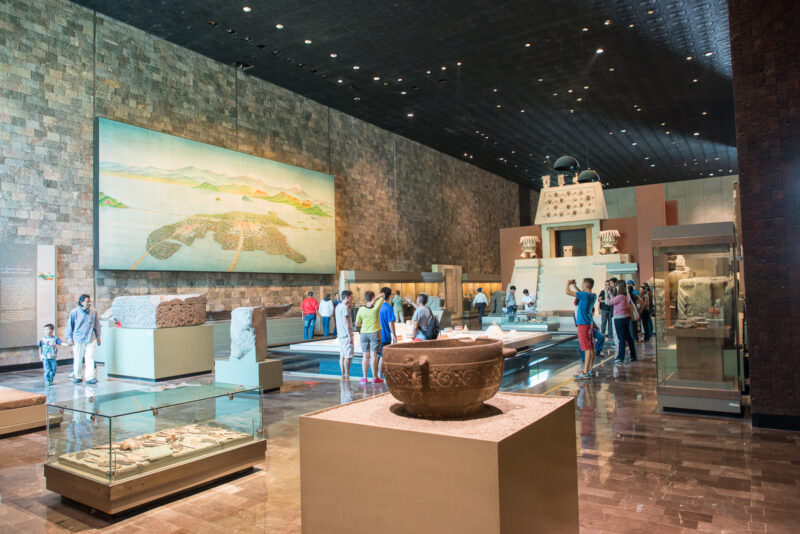
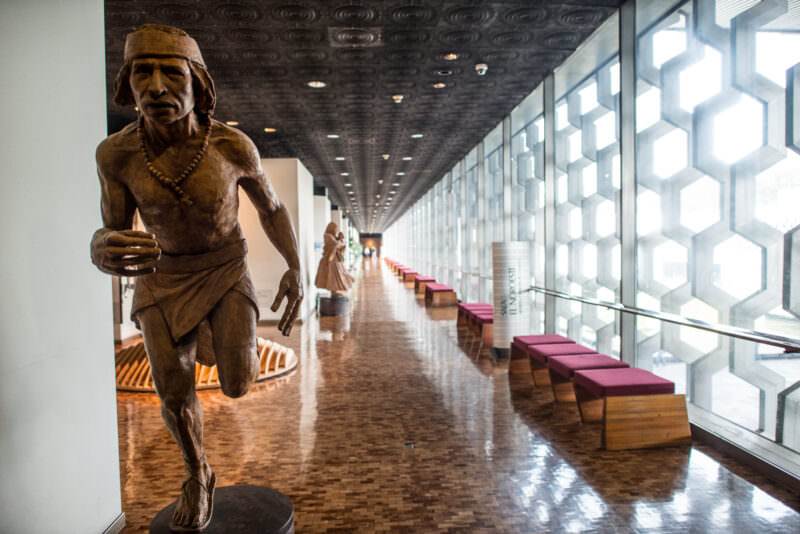
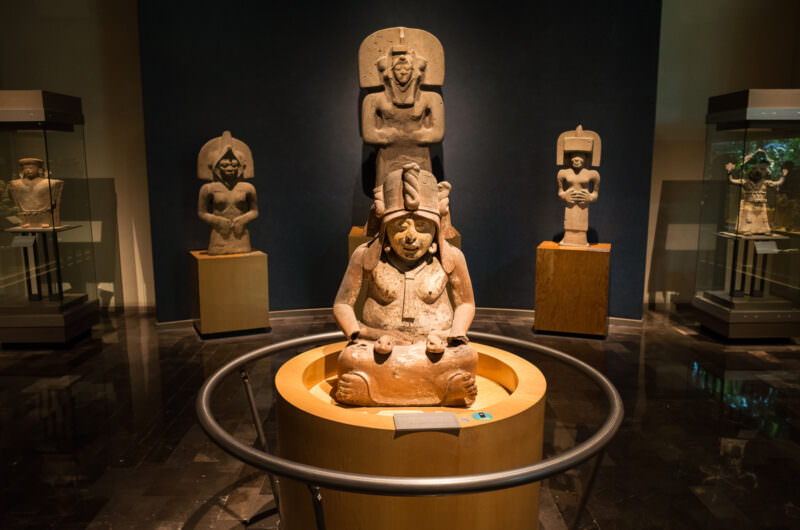
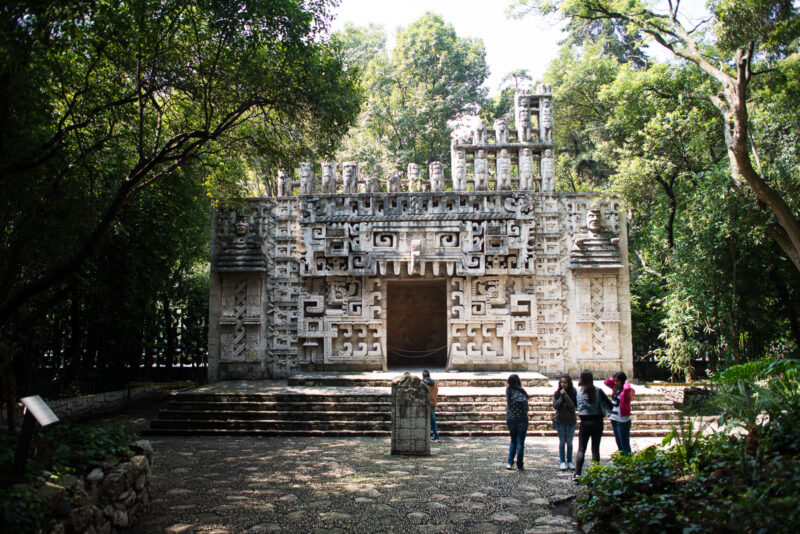
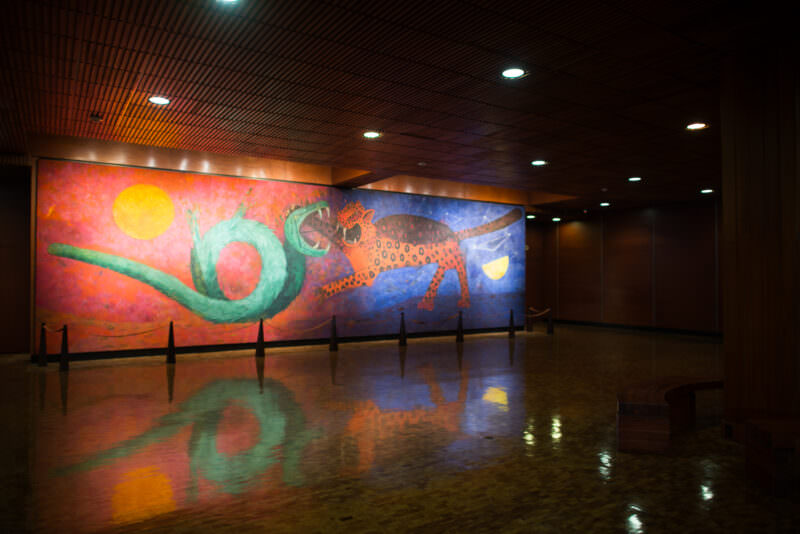
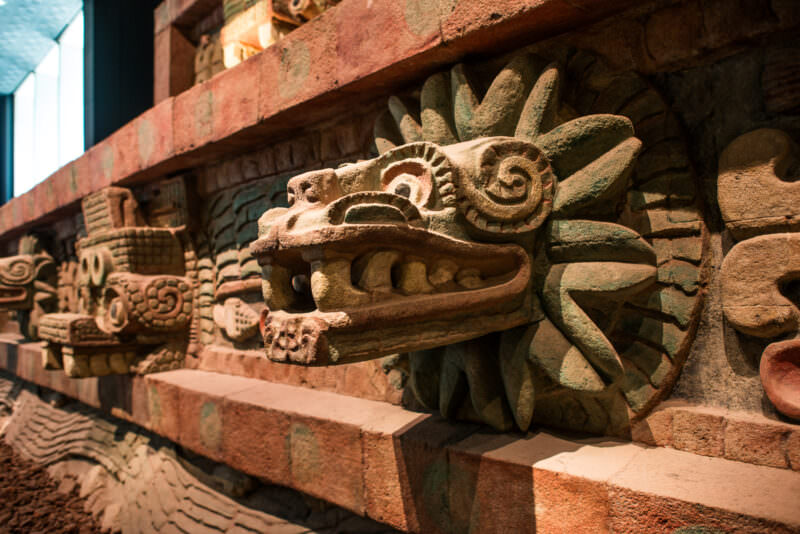
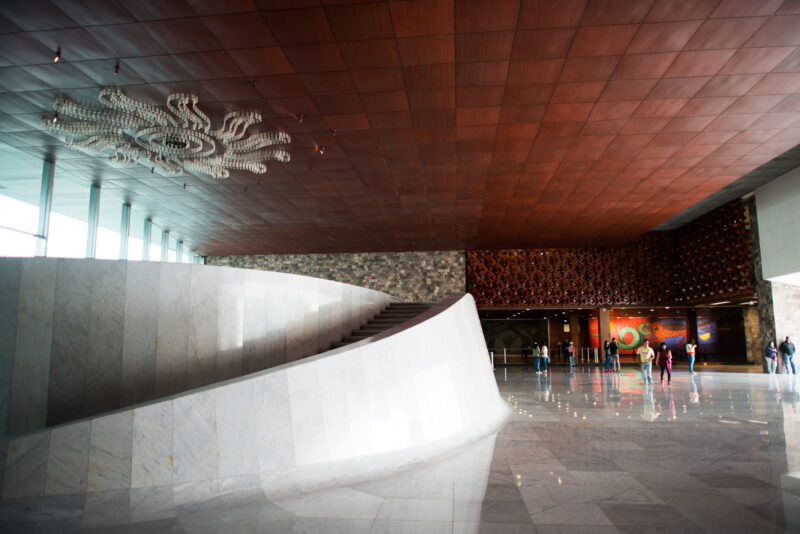
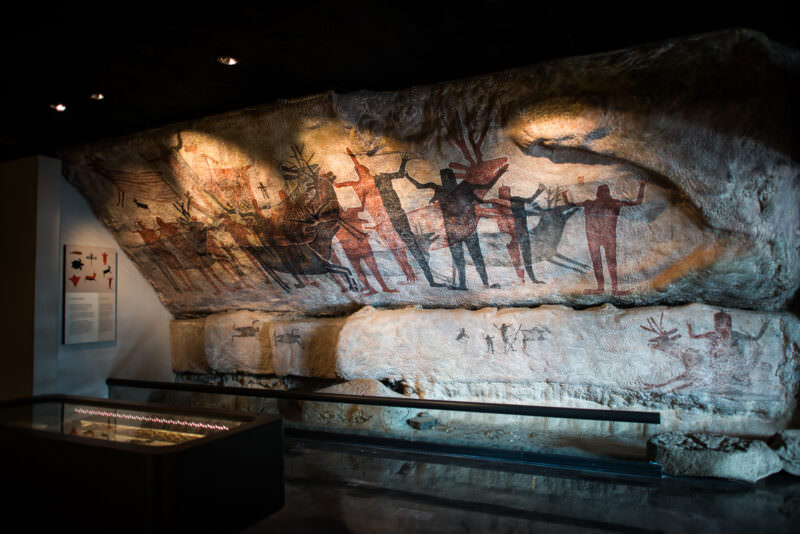
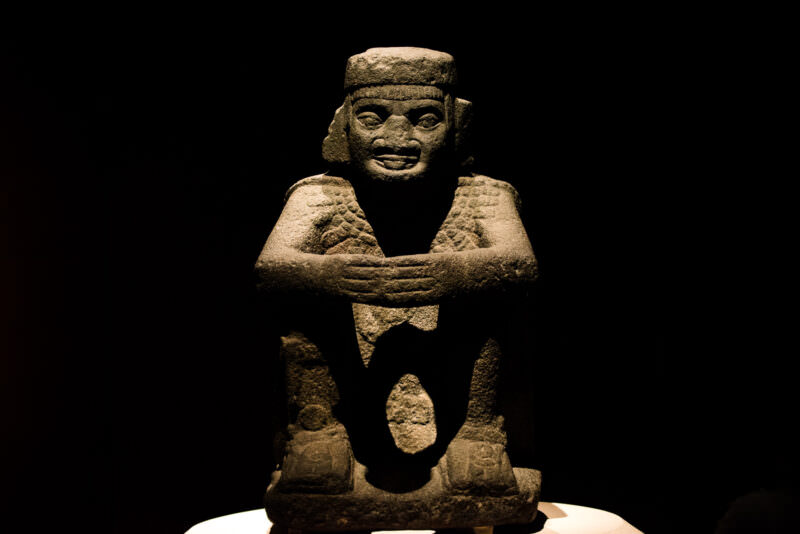
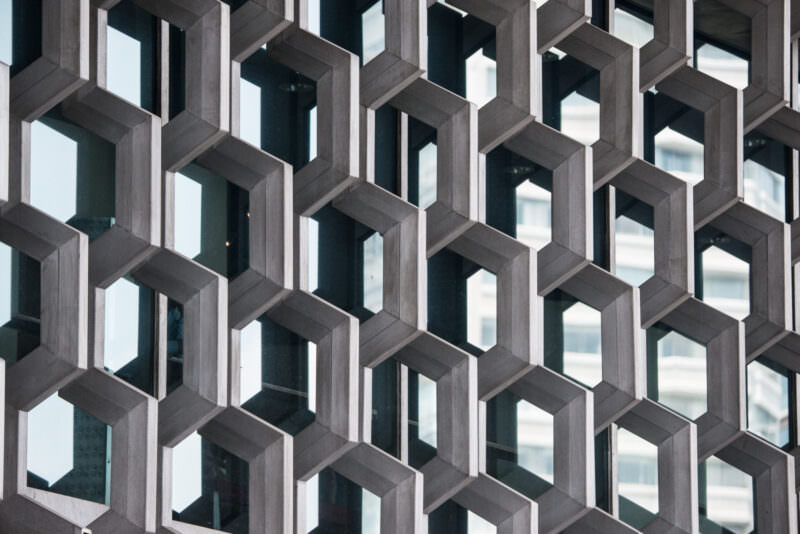
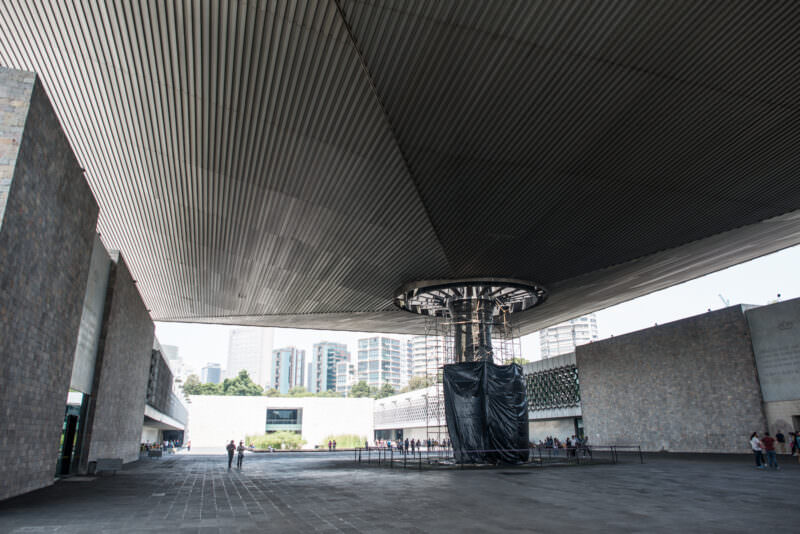
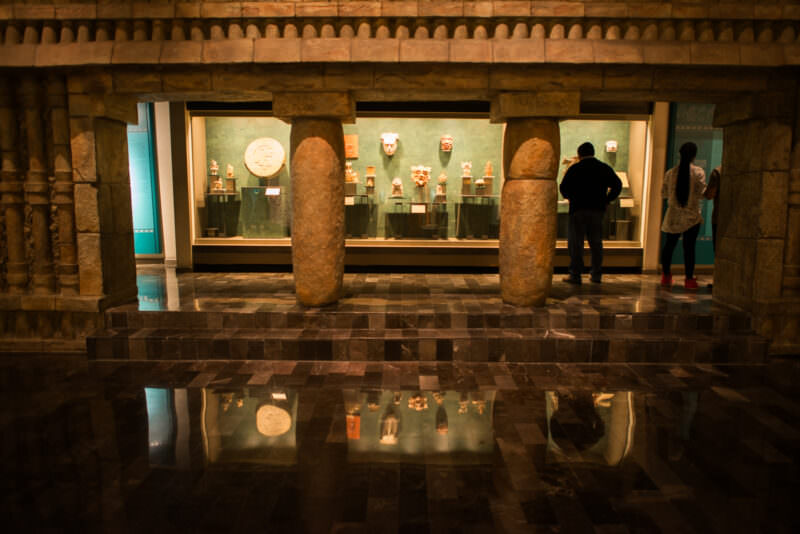
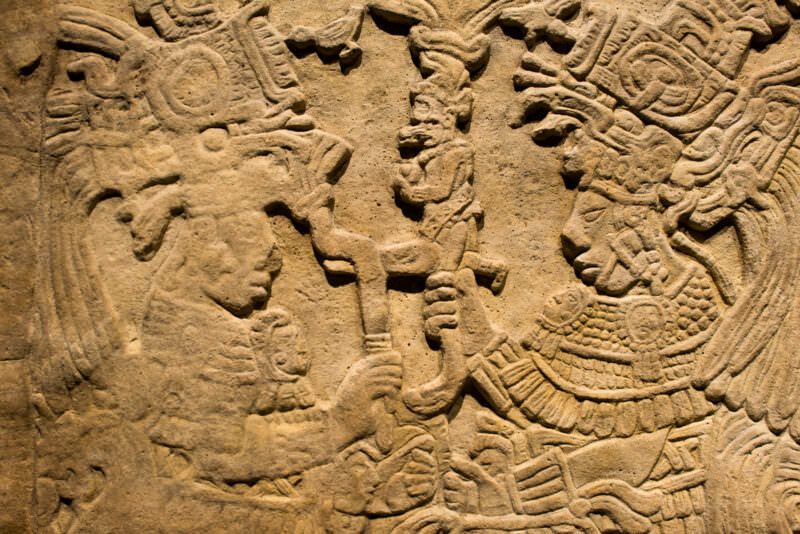
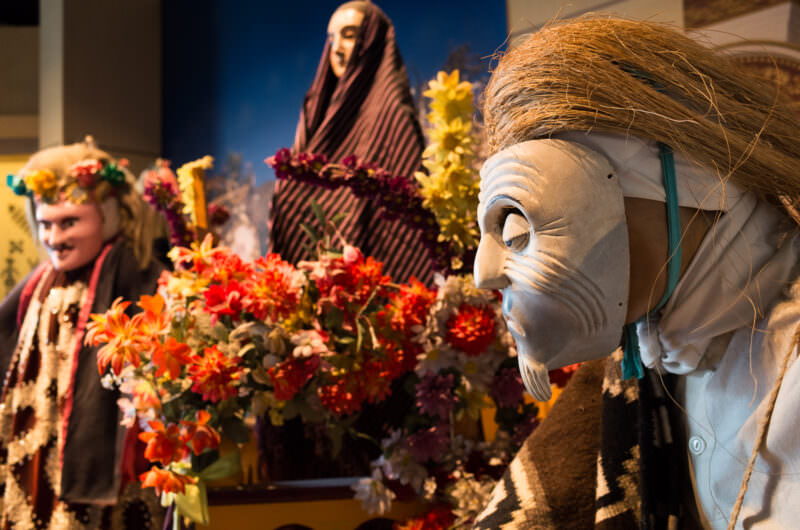
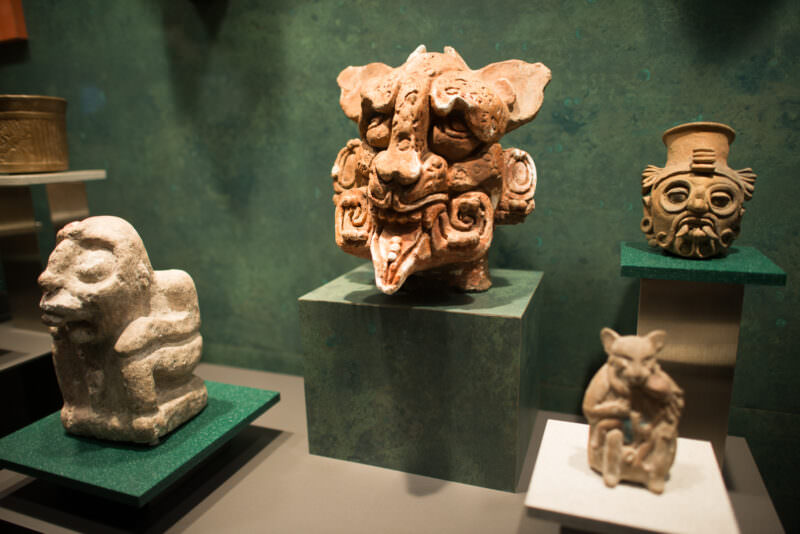
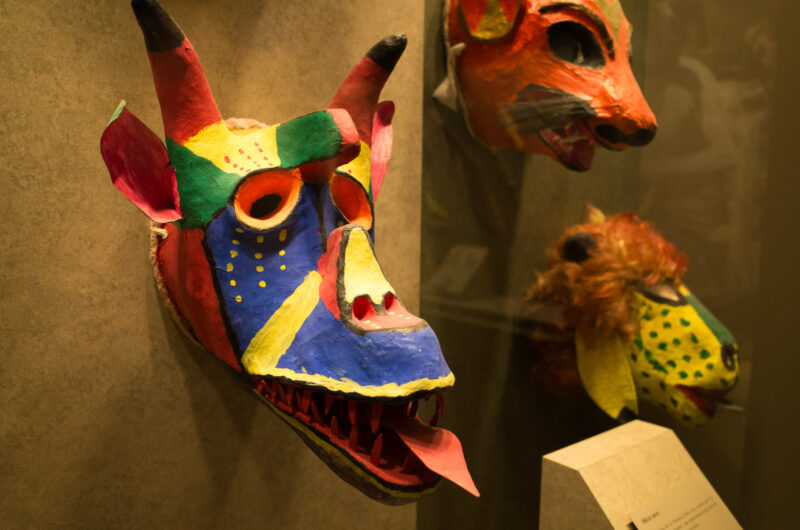
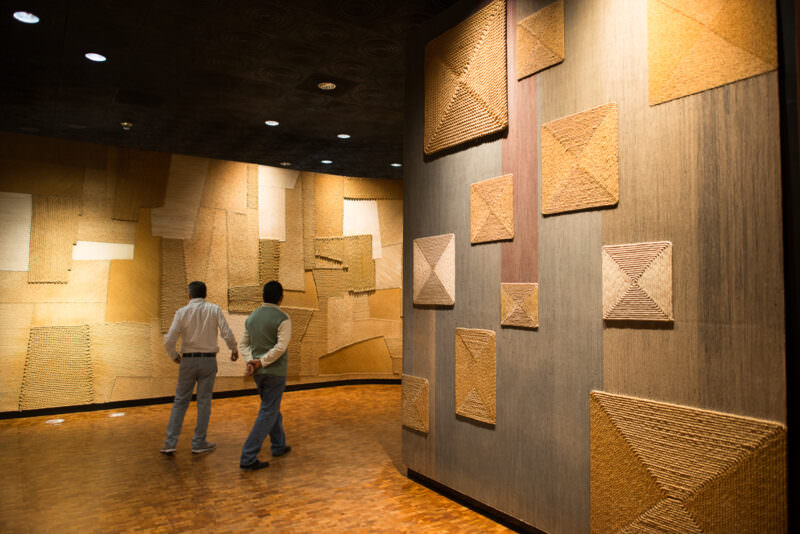
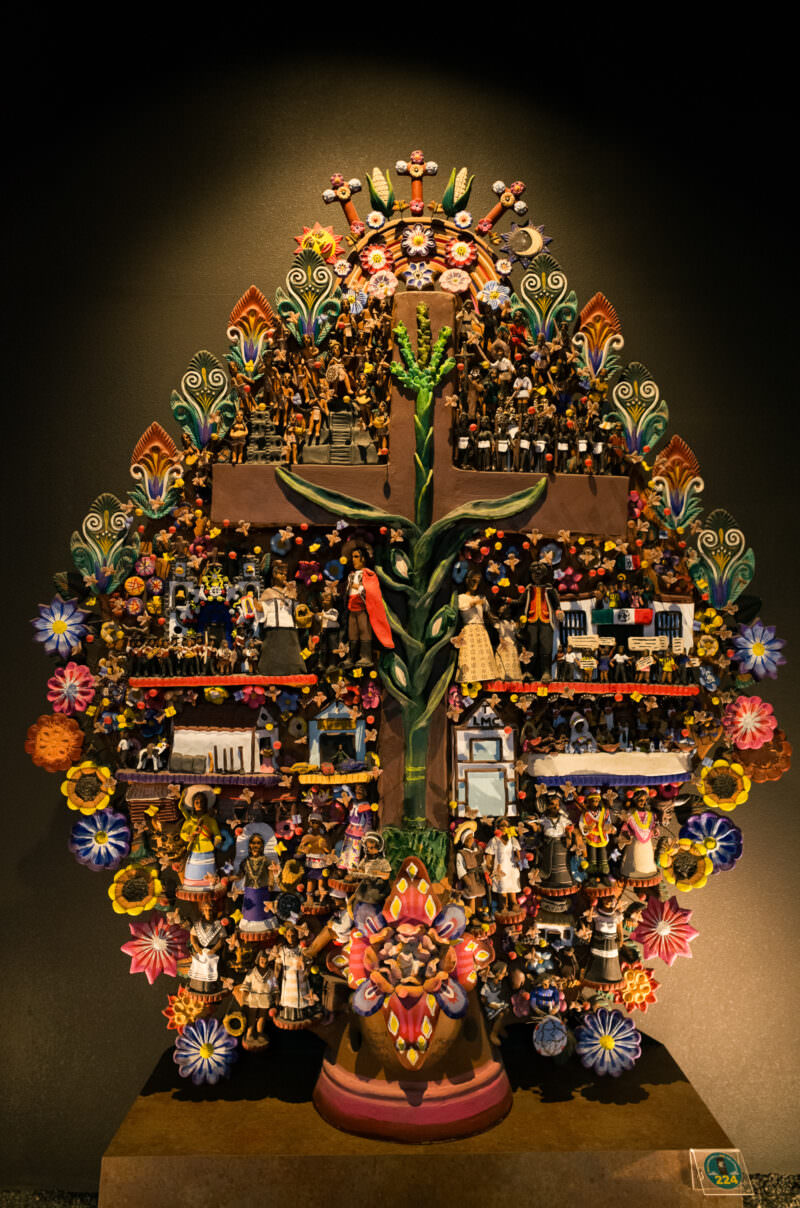
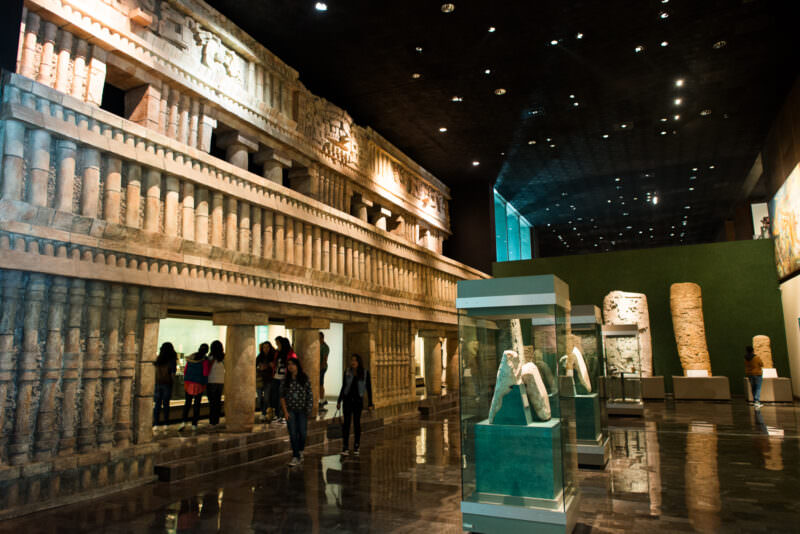
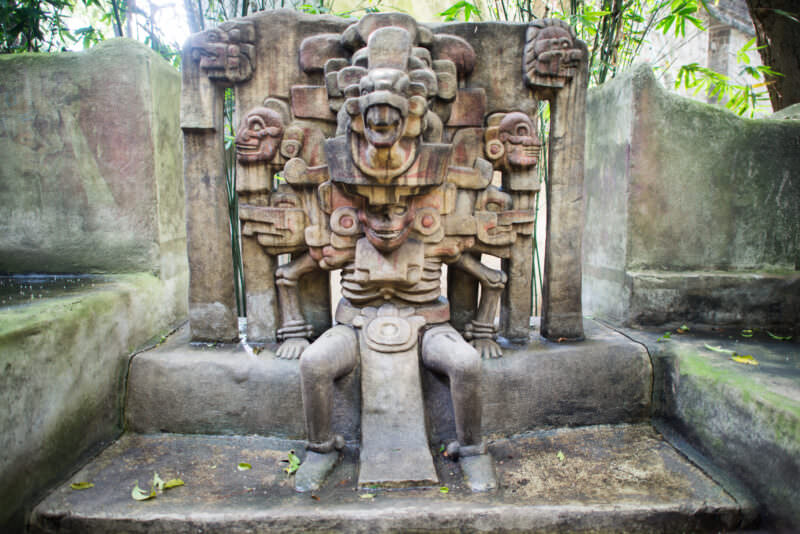
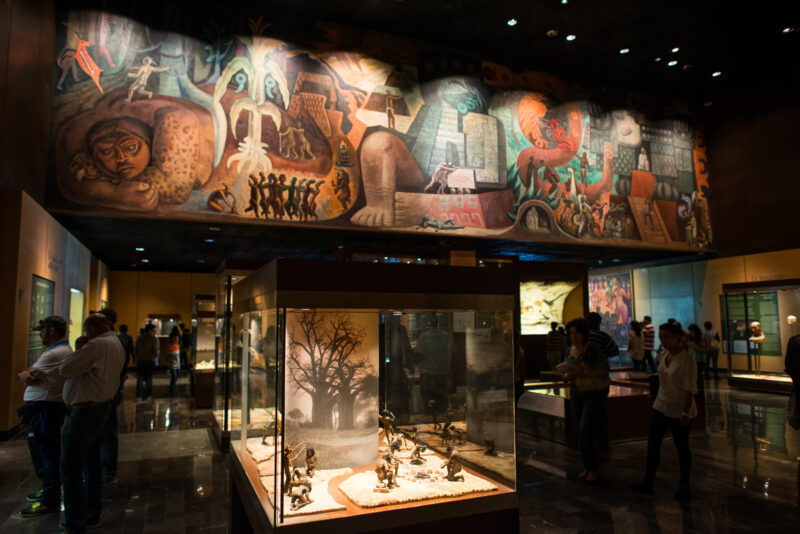
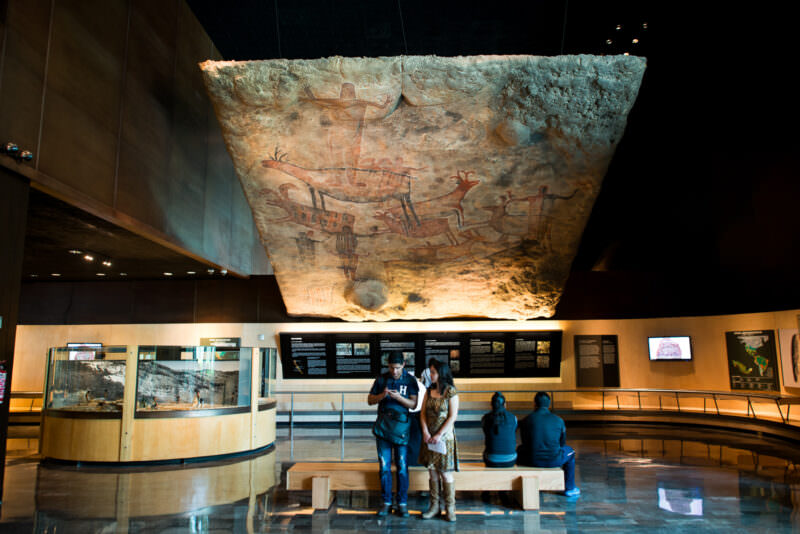
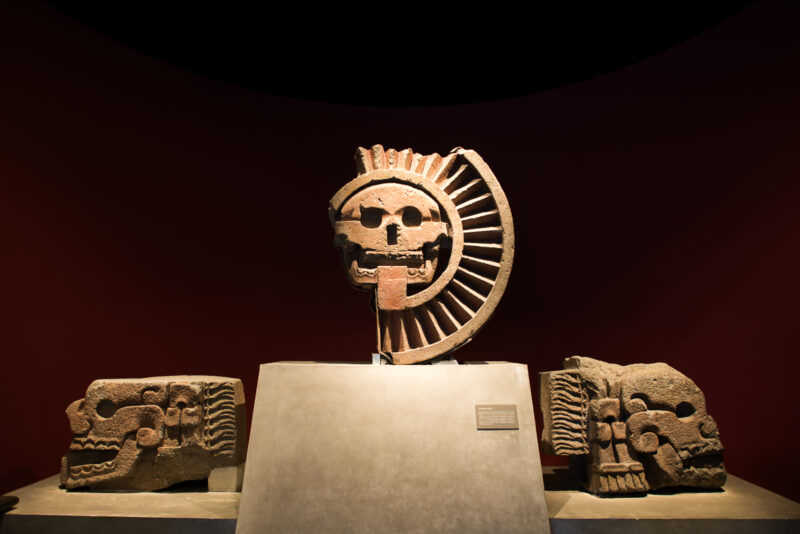
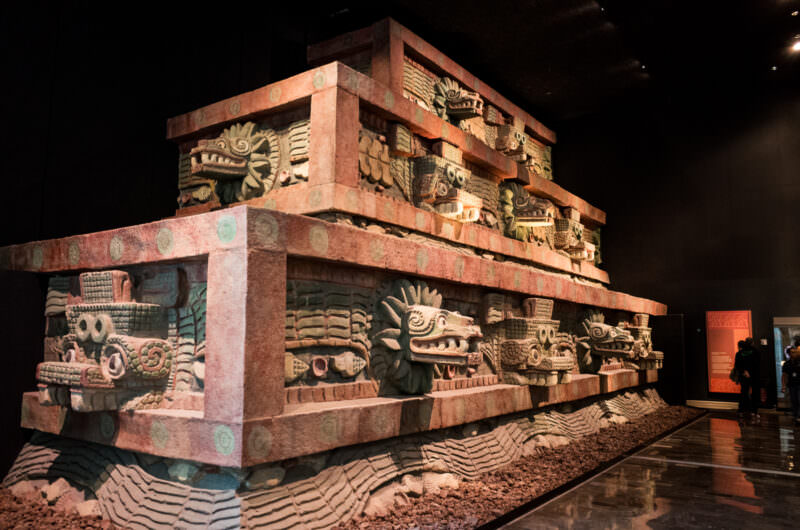
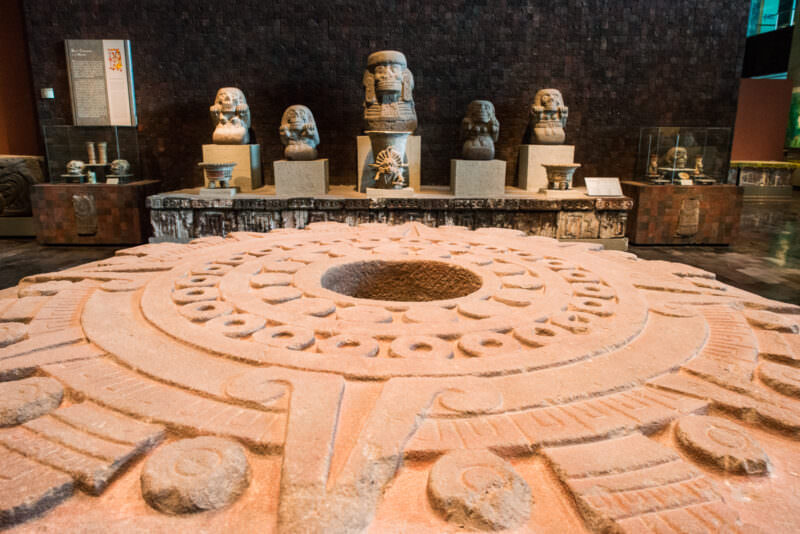
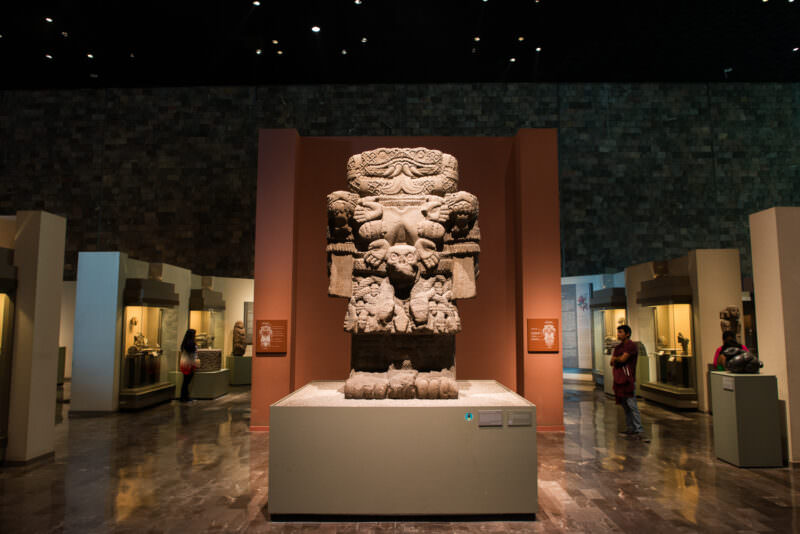
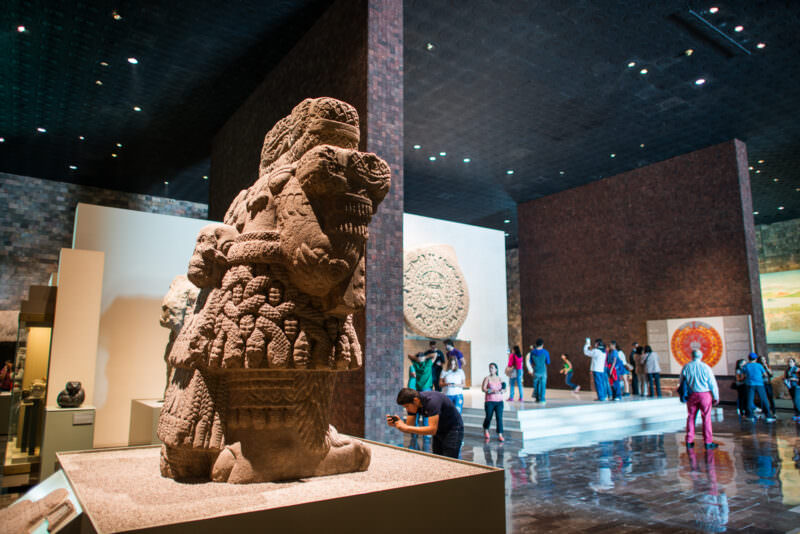
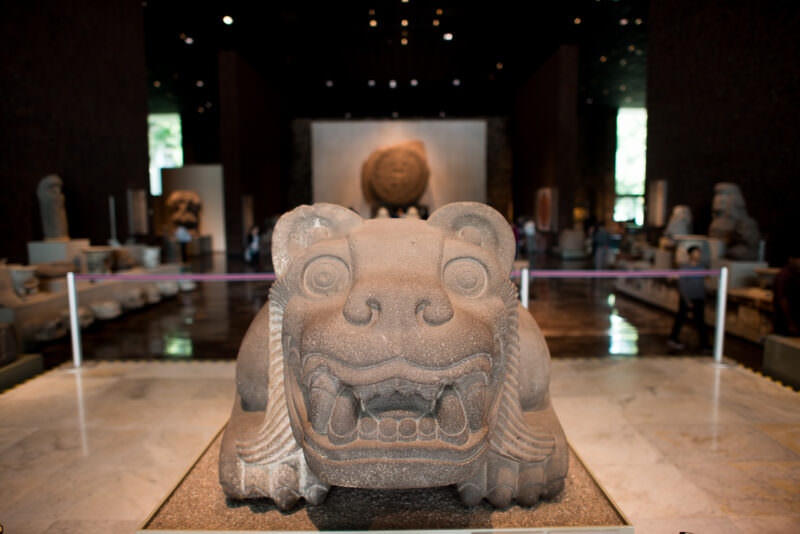
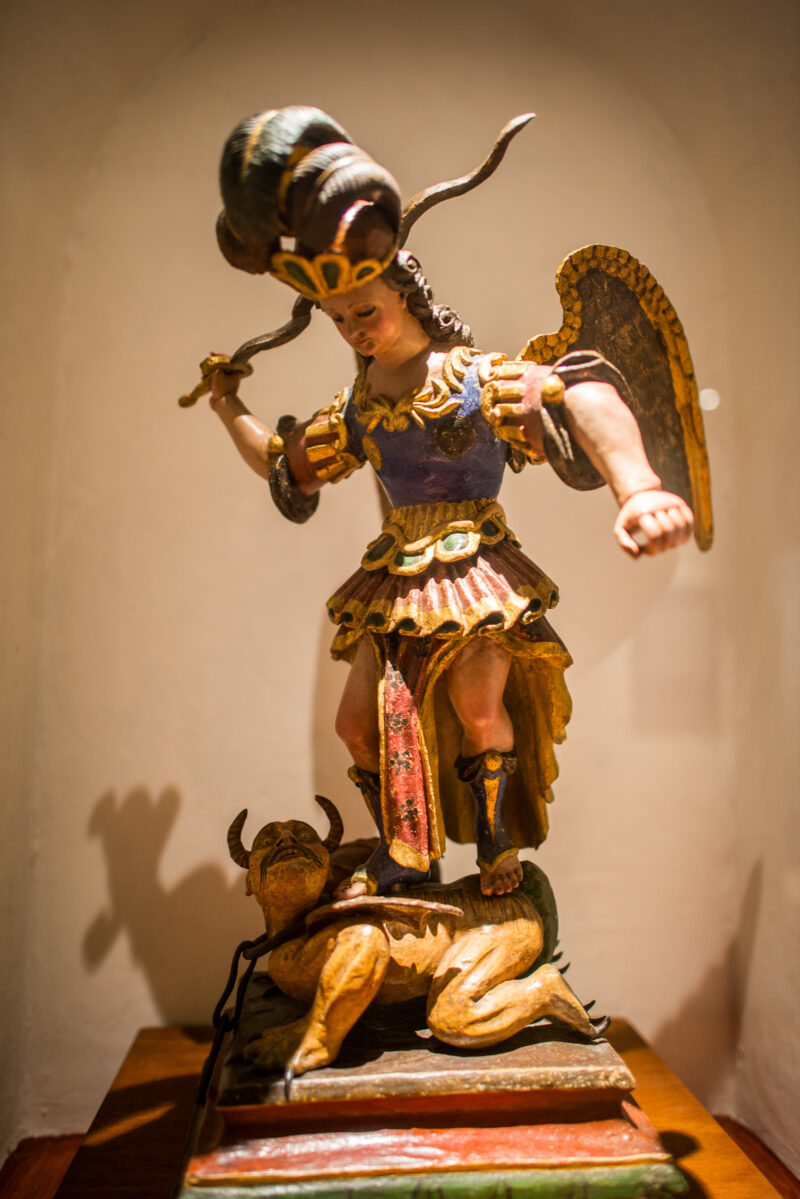
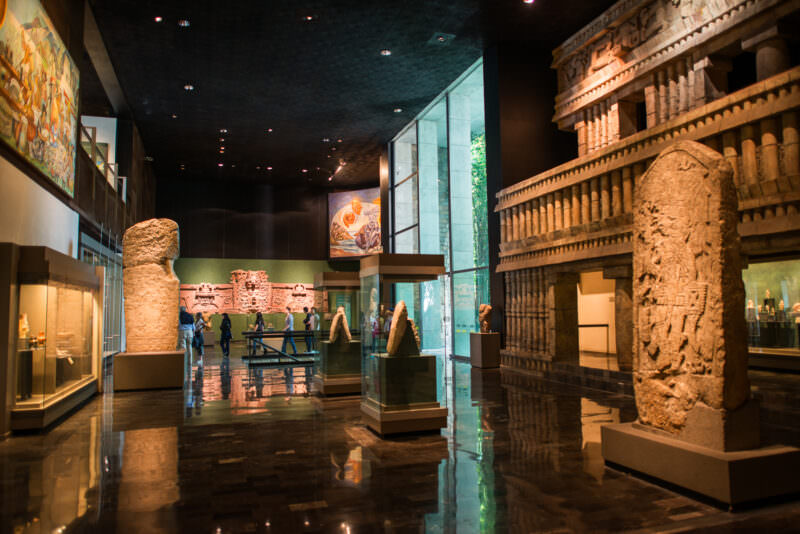
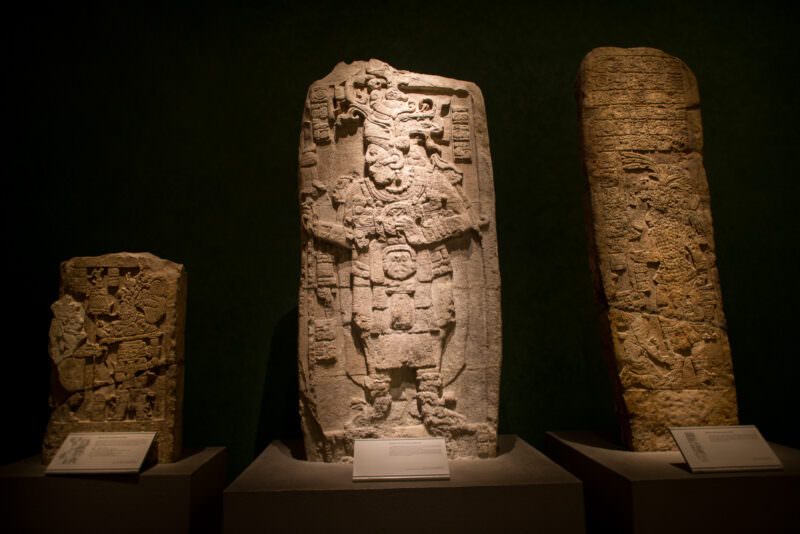
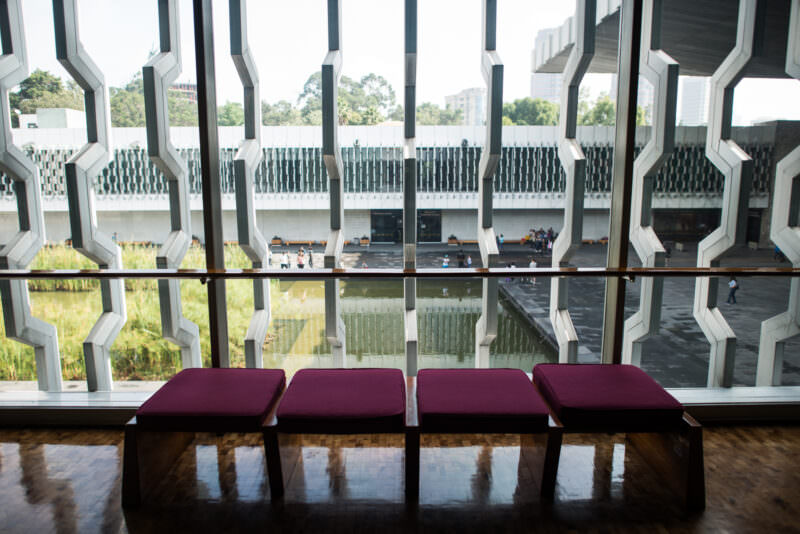
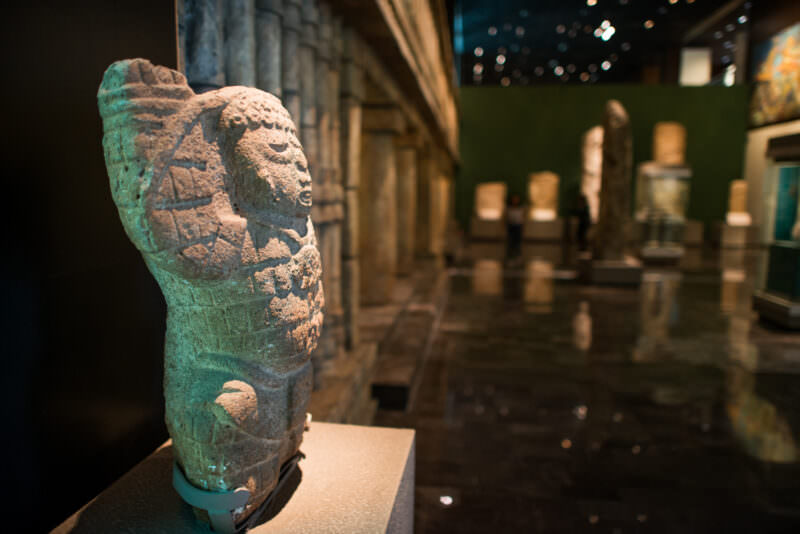
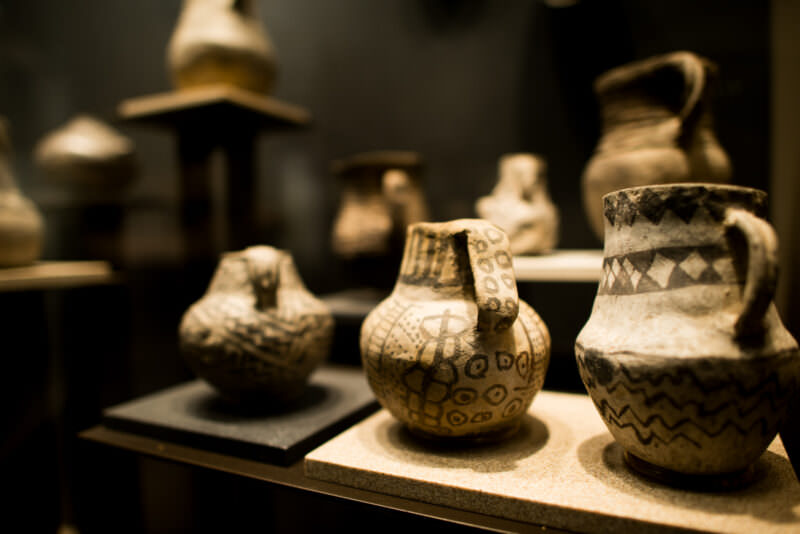
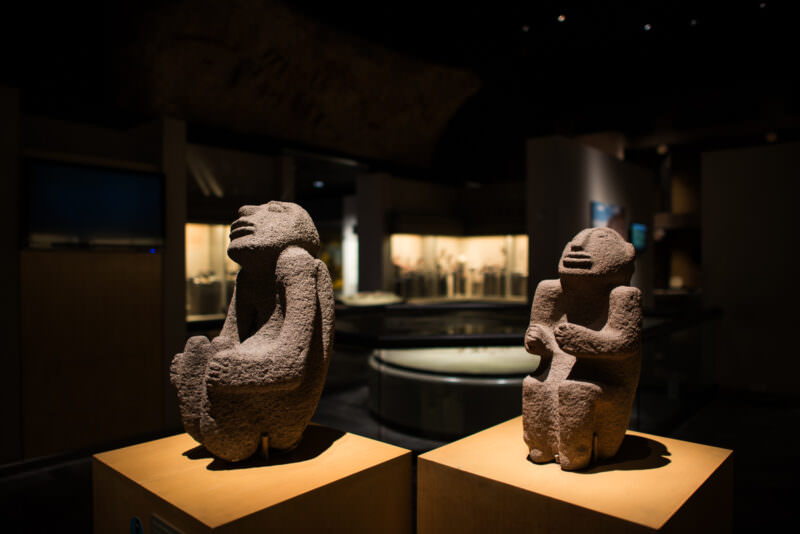
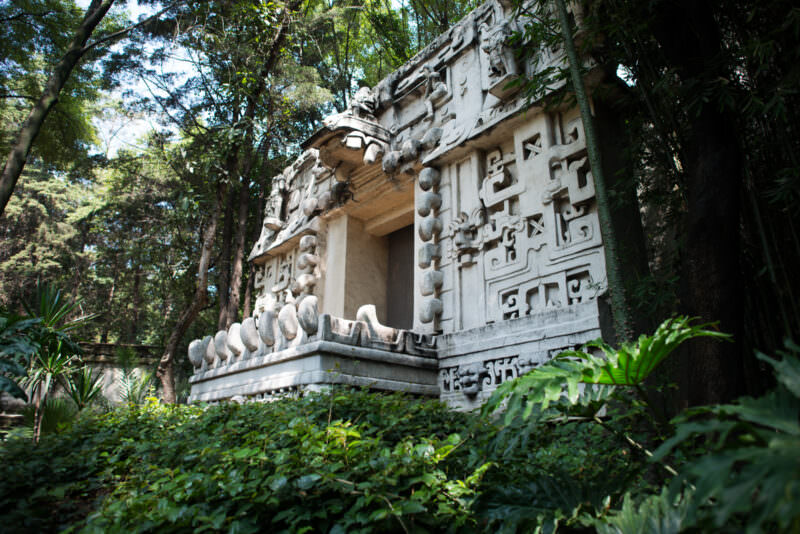
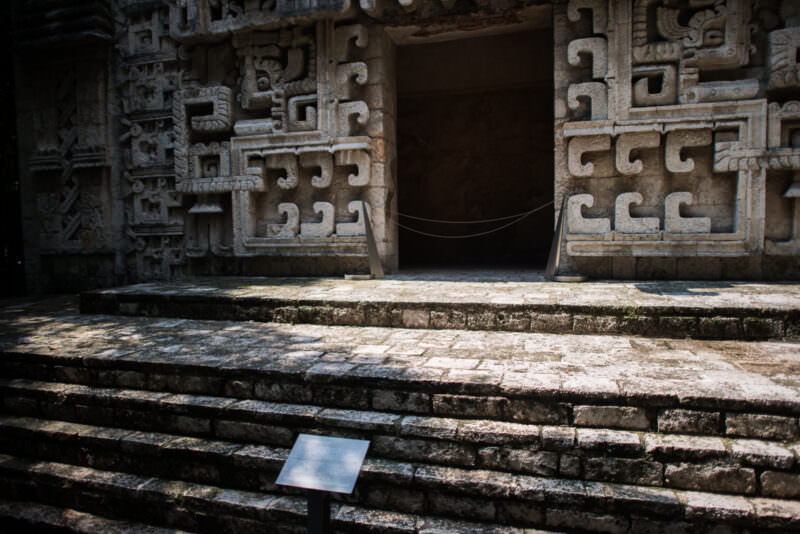
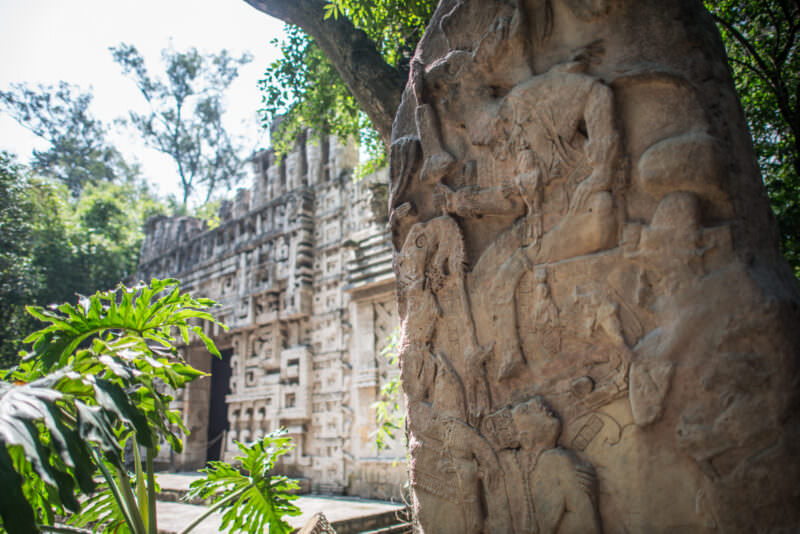
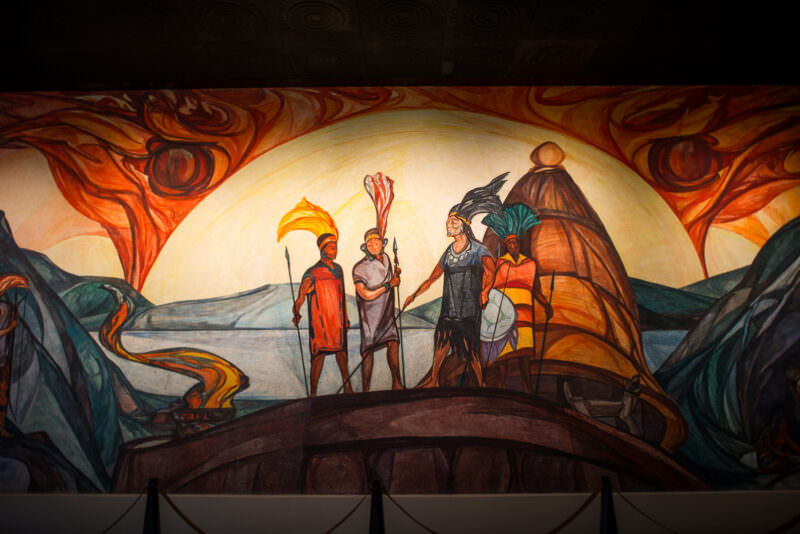
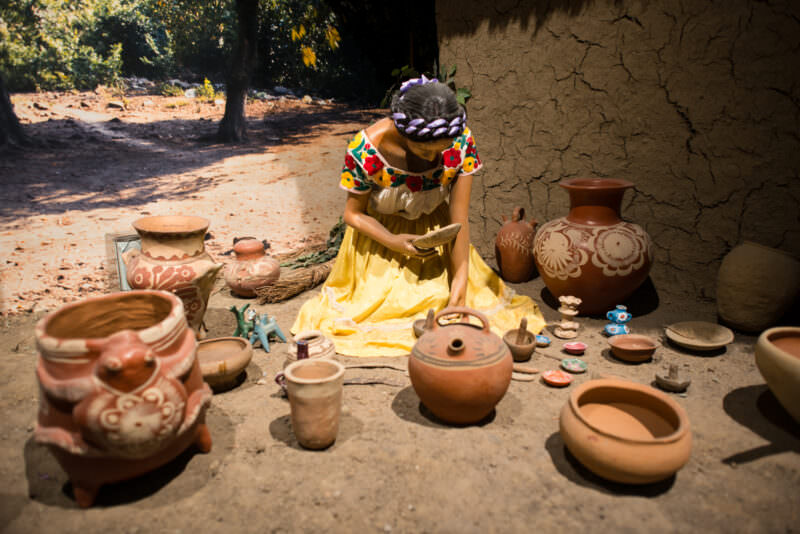
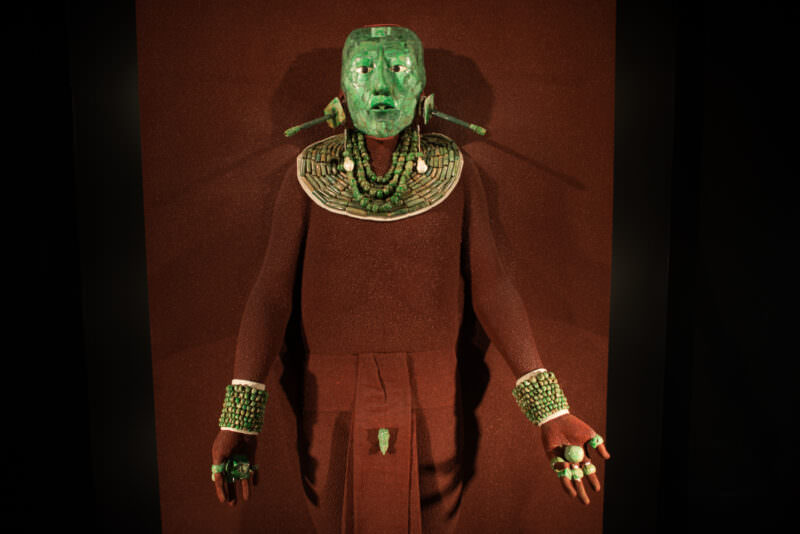
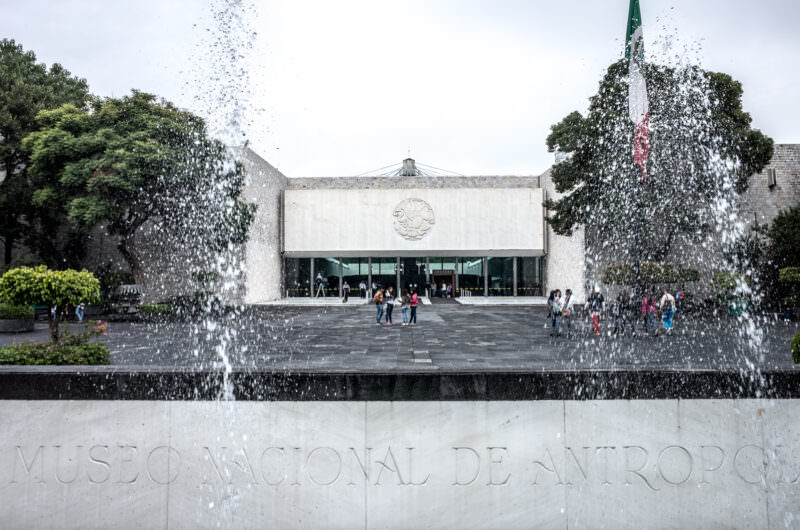
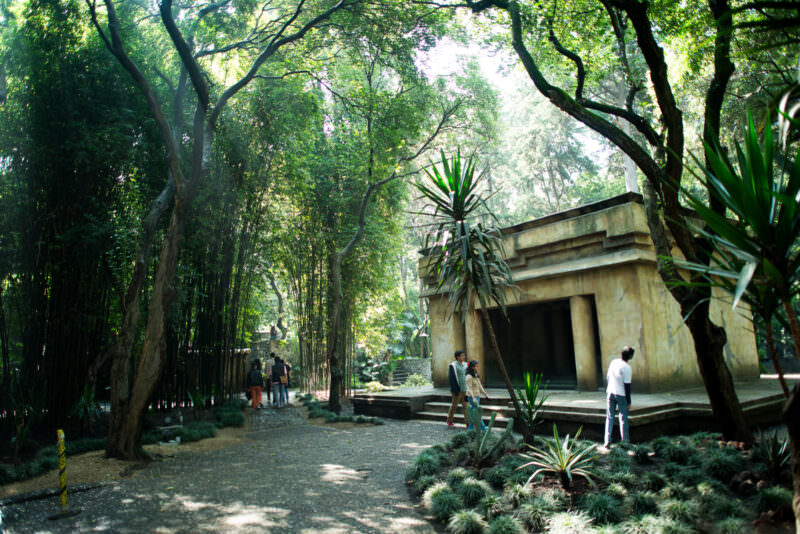
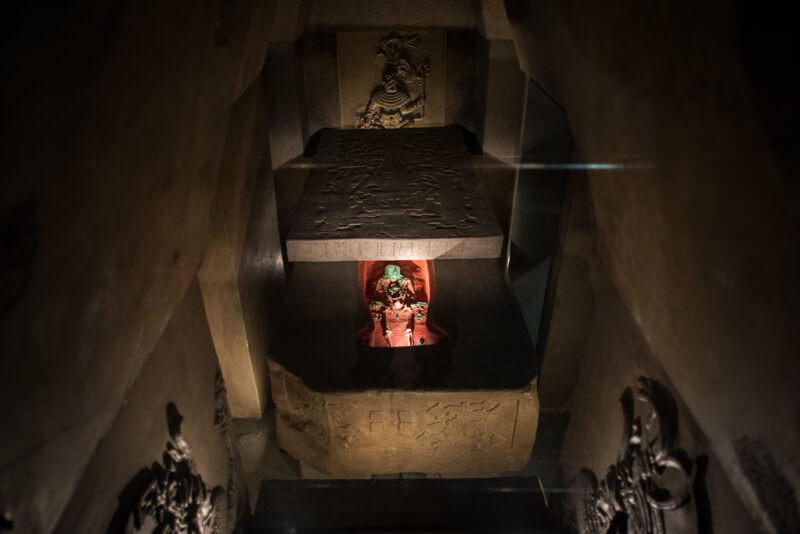
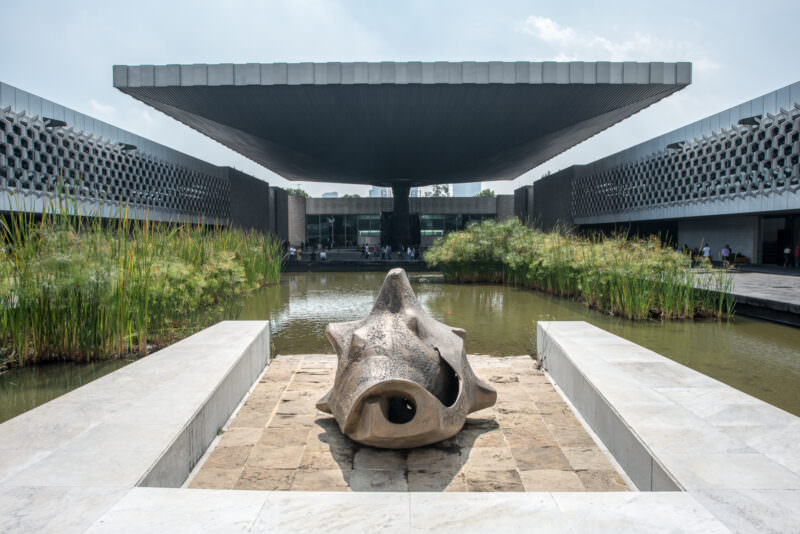
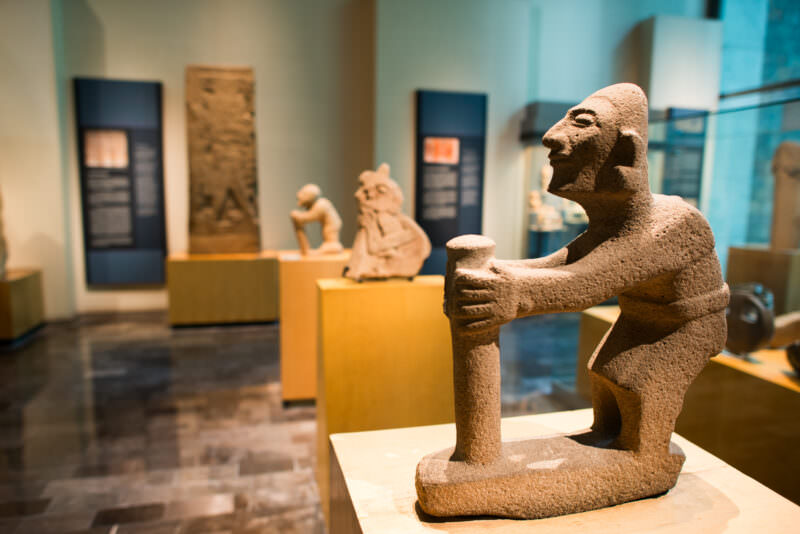
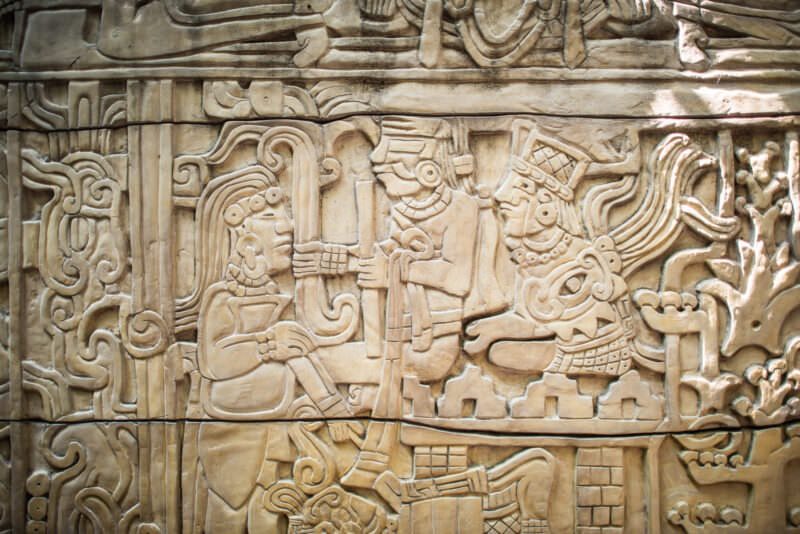
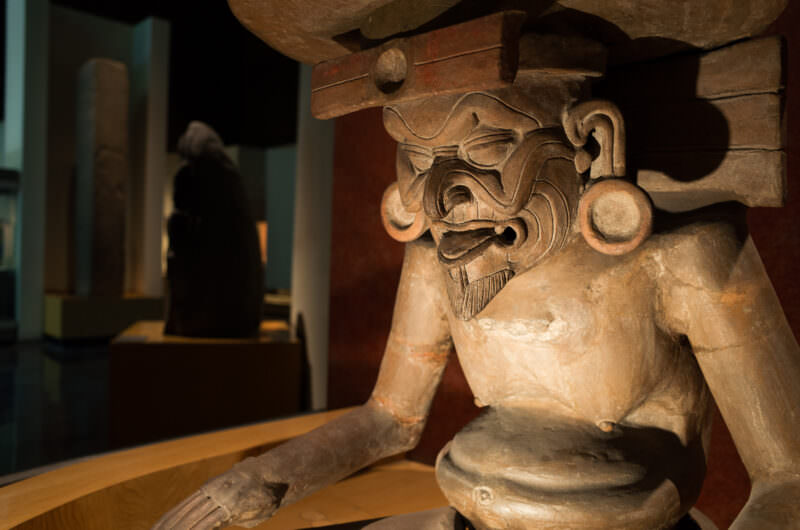
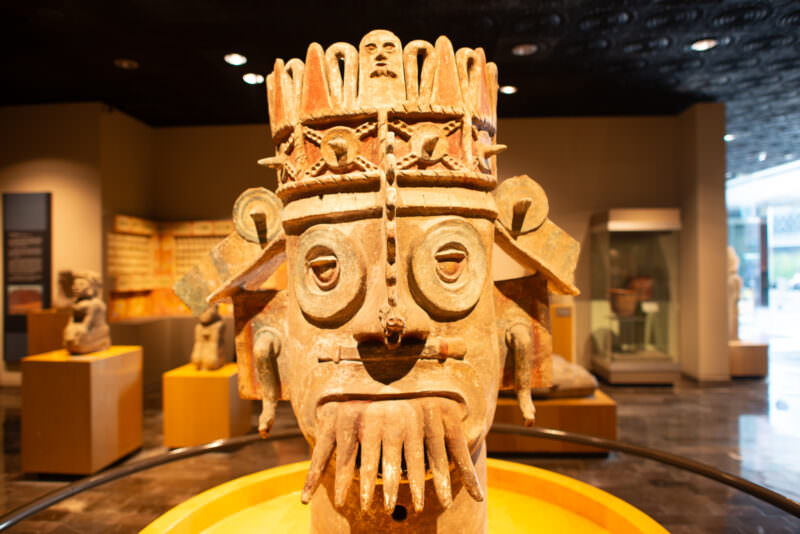
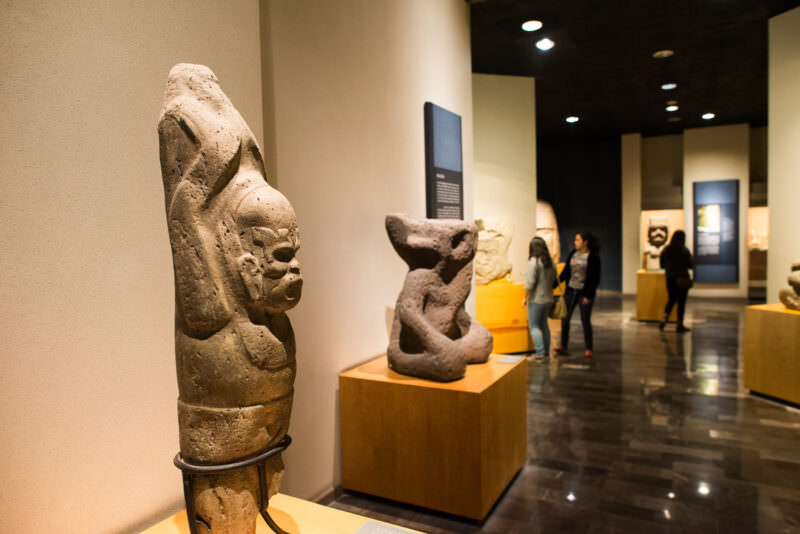
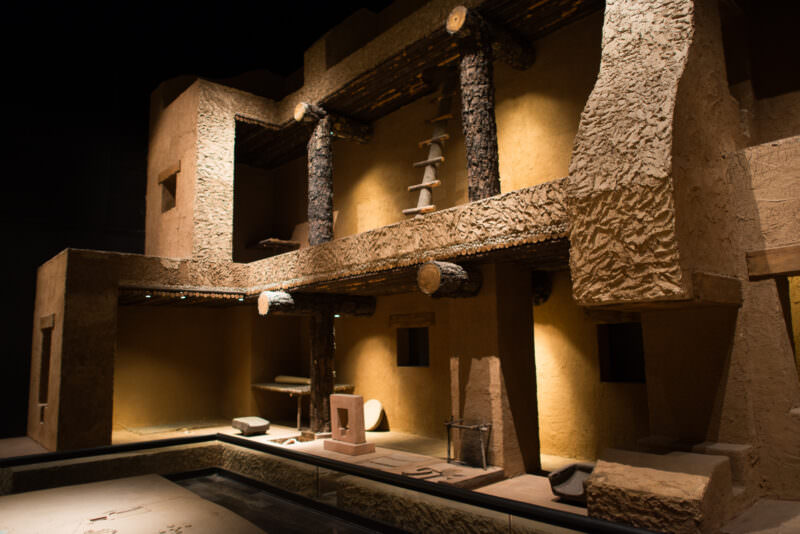
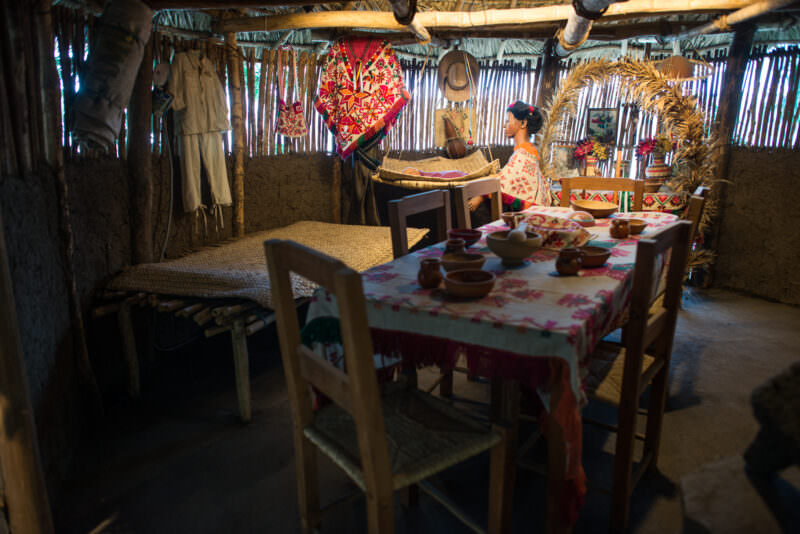
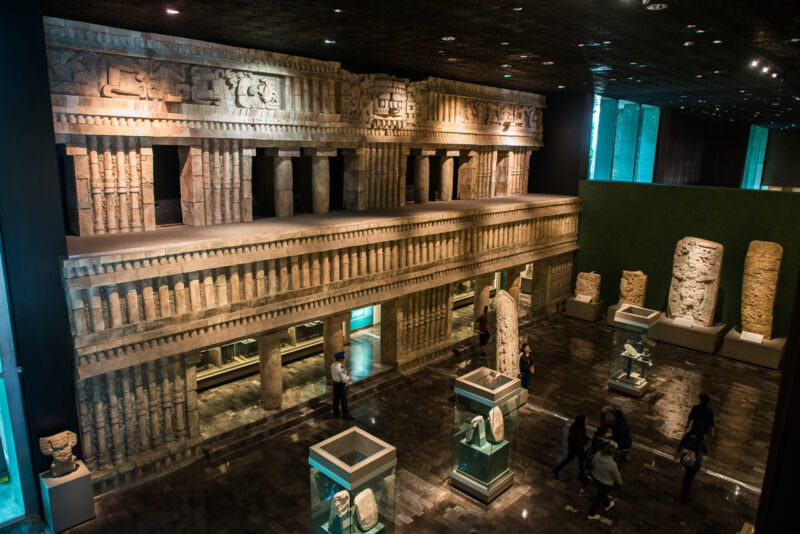
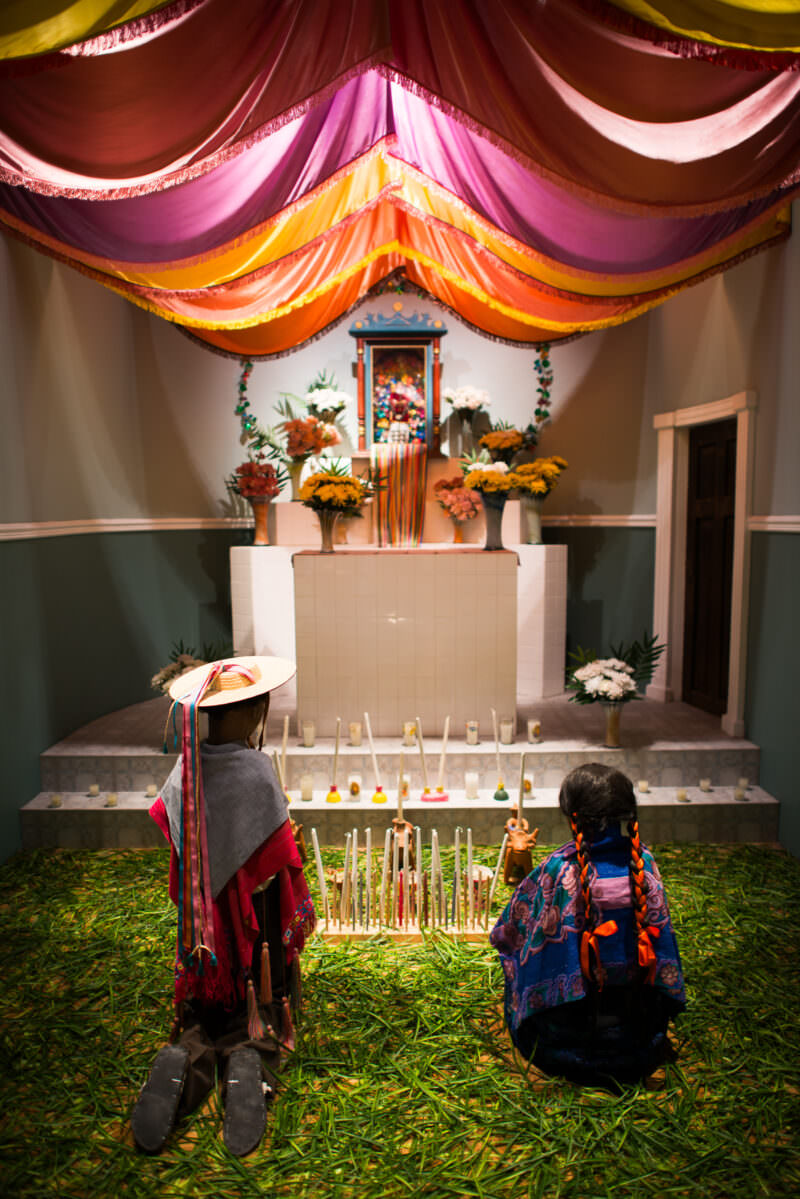
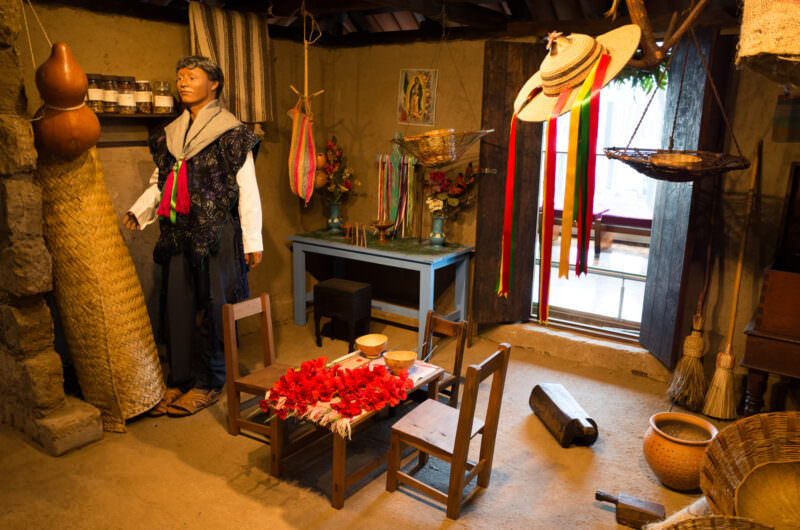
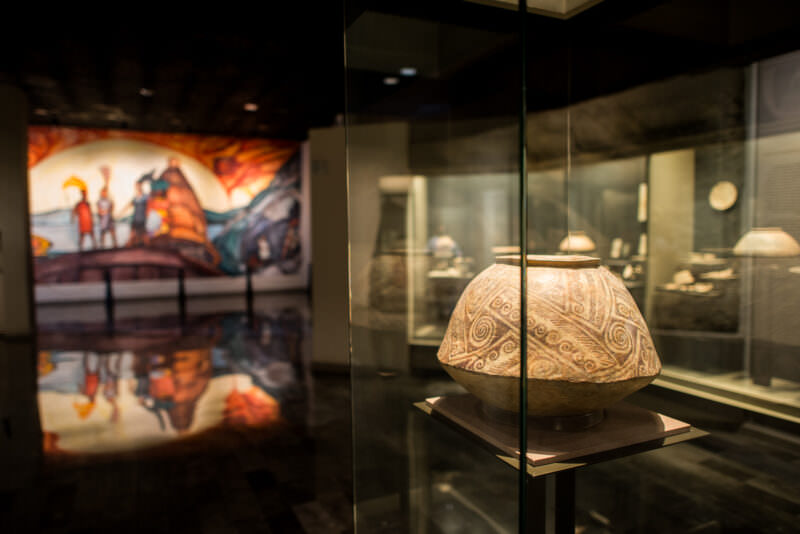
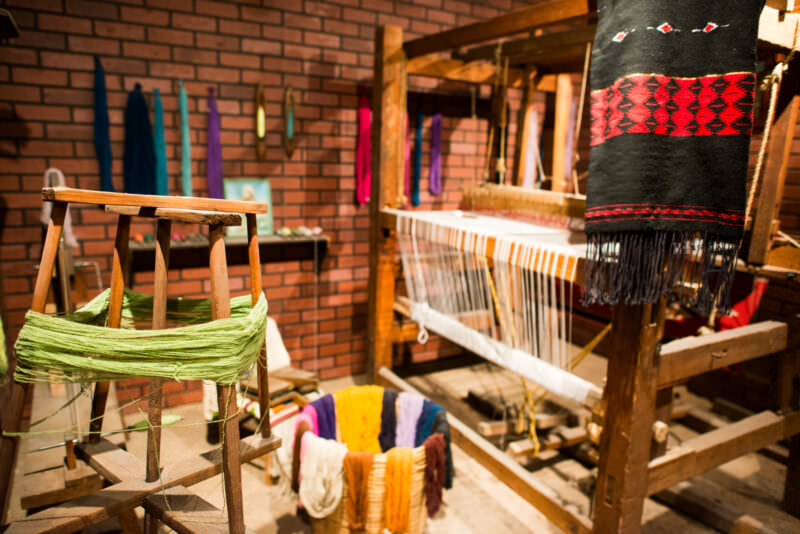
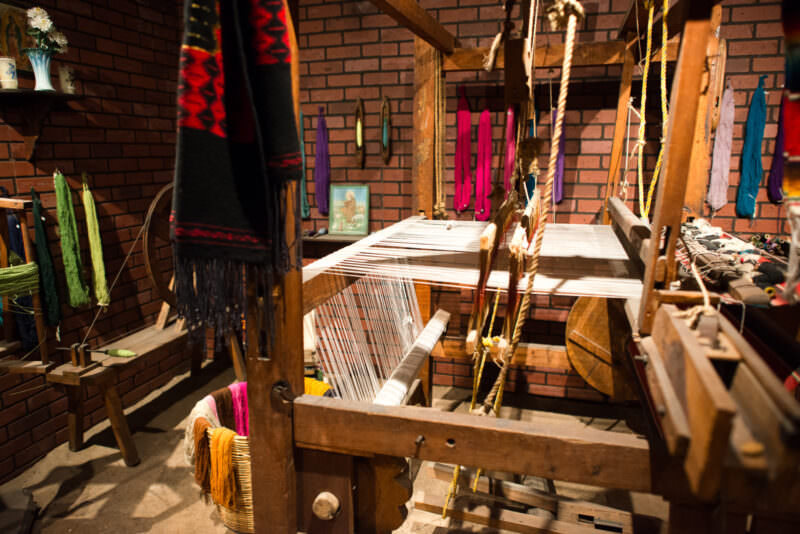
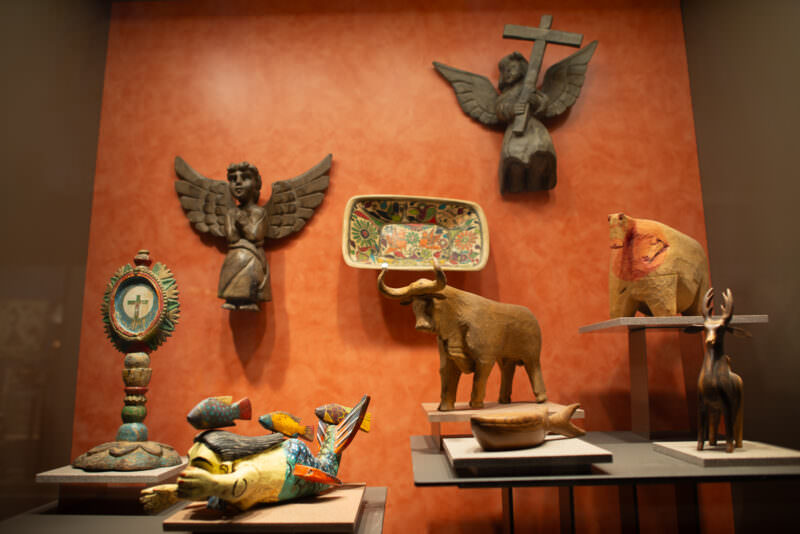
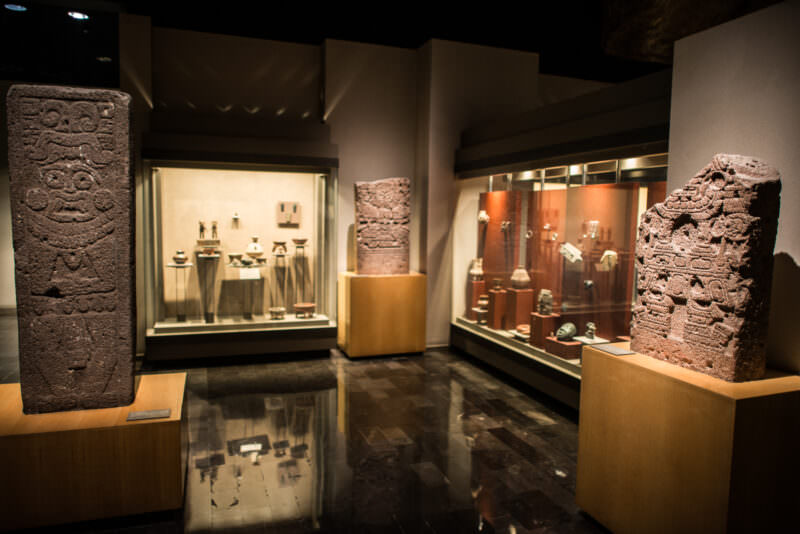
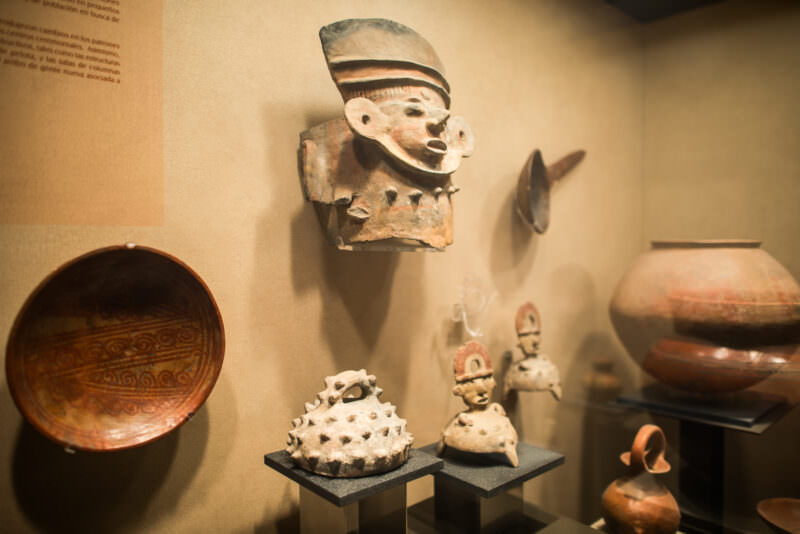
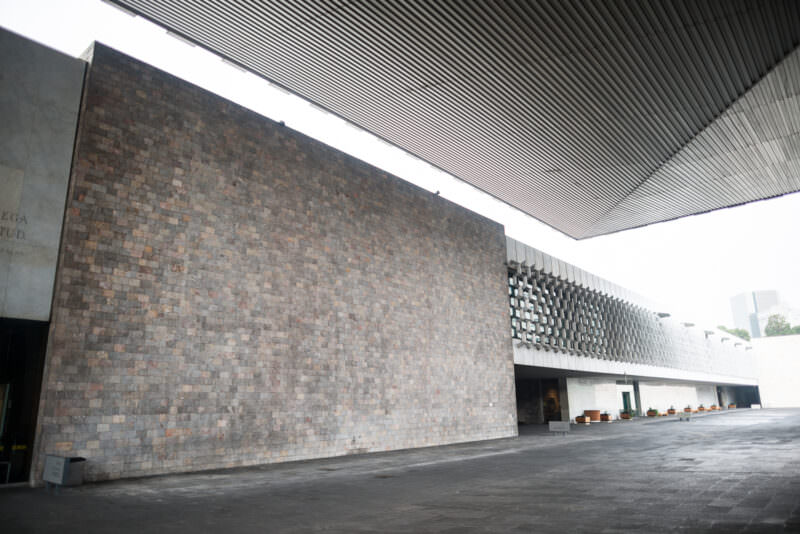
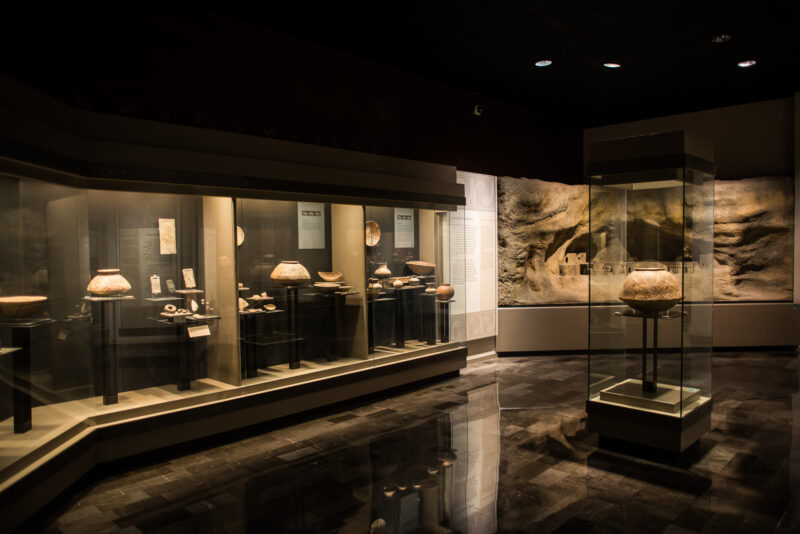
MEXICO CITY, Mexico — Elevated view across the central courtyard of the Museo Nacional de Antropología (MNA), with el paraguas — a 4,467.5 m² (48,100 sq ft) cantilevered canopy on a single bronze-clad column — hovering over visitors and a reflecting pool planted with papyrus. Architect Pedro Ramírez Vázquez referenced the Maya Quadrangle of the Nuns at Uxmal in the courtyard’s proportions, grounding a modernist building in the very civilizations it houses. Photo by David Coleman / Have Camera Will TravelLicense this image at:DirectlyAlamyMEXICO CITY, Mexico — Visitors pose for photographs beneath the Piedra del Sol (Sun Stone) in the Mexica Hall of the Museo Nacional de Antropología — a basalt monolith 3.58 m (11.7 ft) in diameter and weighing approximately 24 tons, carved in 1479 under the ruler Axayácatl. Unearthed in the Plaza Mayor in 1790 and long misidentified as an Aztec calendar, it is now understood as a cosmological monument depicting the face of Tonatiuh and the myth of the five suns. Photo by David Coleman / Have Camera Will TravelLicense this image at:DirectlyAlamyMEXICO CITY, Mexico — Visitors move through the Mexica hall of the Museo Nacional de Antropología past a mural reconstruction of Tenochtitlan as an island city and a carved stone cuauhxicalli vessel in the foreground, with a model of the Great Temple visible at right. The tezontle — the dark-red volcanic stone that clads the hall’s walls — is the same material used to build Tenochtitlan itself, a deliberate choice by architect Pedro Ramírez Vázquez to immerse visitors in the physical fabric of the Mexica world. Photo by David Coleman / Have Camera Will TravelLicense this image at:DirectlyAlamyMEXICO CITY, Mexico — A bronze figure of a running man strides into the upper floor corridor of the Museo Nacional de Antropología, where the geometric aluminum celosía — a honeycomb lattice screen by sculptor Manuel Felguérez — filters the afternoon light along the hall leading to the Sala El Noroeste. Felguérez’s screen echoes the stone-mosaic ornament of Puuc-style Maya architecture, fusing modernist form with pre-Columbian surface pattern across the entire upper facade. Photo by David Coleman / Have Camera Will TravelLicense this image at:DirectlyAlamyMEXICO CITY, Mexico — A seated ceramic female deity figure, richly adorned with a tall headdress, anchors the center of a sculpture gallery in the Museo Nacional de Antropología (National Museum of Anthropology), with several standing stone figures arranged behind it. The mix of ceramic and stone deity sculptures visible here reflects the museum’s ground-floor layout, which moves visitors through halls organized by culture — Preclassic through Mexica — an arrangement architect Pedro Ramírez Vázquez modeled spatially on the Maya Quadrangle of the Nuns at Uxmal. Photo by David Coleman / Have Camera Will TravelLicense this image at:DirectlyAlamyMEXICO CITY, Mexico — An Olmec colossal head in volcanic basalt sits against a deep-blue curved wall in the Gulf of Mexico hall of the Museo Nacional de Antropología (National Museum of Anthropology). The basalt for heads like this was quarried at the Sierra de los Tuxtlas and transported tens of miles without wheeled vehicles or draft animals — a logistical feat that itself signals the political power of the rulers these portraits commemorate. Photo by David Coleman / Have Camera Will TravelLicense this image at:DirectlyAlamyMEXICO CITY, Mexico — Two colossal Mexica stone figures flank the Piedra del Sol (Sun Stone) in the Mexica Hall of the Museo Nacional de Antropología, with a severed deity head on a plinth between them. The Sun Stone — 3.58 m across and weighing roughly 24 tons — was carved in 1479 under ruler Axayácatl and encodes the Mexica myth of the five cosmic ages around the face of Tonatiuh; the dark-red tezontle walls behind it are the same volcanic stone that built Tenochtitlan itself. Photo by David Coleman / Have Camera Will TravelLicense this image at:DirectlyAlamyMEXICO CITY, Mexico — Visitors gather before a full-scale outdoor replica of a Maya palace facade in the garden of the Museo Nacional de Antropología, its surface blanketed in Puuc-style geometric mosaic stonework and crowned by a row of small human figures along the roof crest. The Puuc tradition, centered at Uxmal in the Yucatan hills, reached its peak between roughly 800 and 1000 CE; architect Pedro Ramírez Vázquez’s courtyard plan for the museum itself references the proportions of Uxmal’s Cuadrángulo de las Monjas (“Nuns’ Quadrangle”). Photo by David Coleman / Have Camera Will TravelLicense this image at:DirectlyAlamyMEXICO CITY, Mexico — Rufino Tamayo’s monumental mural Dualidad fills the entrance hall of the Museo Nacional de Antropología, its vivid red and blue fields split between a coiled green serpent under the sun and a spotted jaguar under the moon. The pairing encodes the Mesoamerican cosmic opposition of day and night — Quetzalcóatl versus Tezcatlipoca — rendered in Tamayo’s characteristically raw, earthy palette rather than the didactic realism of the great muralist tradition he worked against. Photo by David Coleman / Have Camera Will TravelLicense this image at:DirectlyAlamyMEXICO CITY, Mexico — A close-up of the feathered-serpent facade of the Temple of Quetzalcoatl replica in the Teotihuacan hall of the Museo Nacional de Antropología reveals the projecting serpent heads in sharp detail, their spiral eye-rings and feather collars painted in muted ochre and green. The feathered serpent motif links Teotihuacan to the later Toltec and Mexica traditions that adopted Quetzalcoatl as a central deity — evidence that Teotihuacan’s iconographic legacy outlived the city itself by nearly a millennium. Photo by David Coleman / Have Camera Will TravelLicense this image at:DirectlyAlamyMEXICO CITY, Mexico — The grand lobby of the Museo Nacional de Antropología displays Pedro Ramírez Vázquez’s synthesis of modernism and pre-Columbian monumentality: a sweeping marble staircase curves beneath a warm tezontle-clad ceiling, while the far wall carries the geometric aluminium celosía — a lattice of serpent motifs by sculptor Manuel Felguérez echoing Puuc-style ornament. The building won the Gold Medal at the São Paulo International Architecture Biennial in 1965. Photo by David Coleman / Have Camera Will TravelLicense this image at:DirectlyAlamyMEXICO CITY, Mexico — A full-scale reproduction of rock art from the Sierra de San Francisco in Baja California Sur fills the northern Mexico gallery of the Museo Nacional de Antropología. The originals, painted in red, black, white, and yellow pigments by the Cochimí and earlier peoples, depict oversized human figures alongside deer and other animals; the UNESCO World Heritage site spans more than 400 individual painted sites and is considered among the finest concentrations of prehistoric rock art in the Americas. Photo by David Coleman / Have Camera Will TravelLicense this image at:DirectlyAlamyMEXICO CITY, Mexico — A seated stone figure, arms folded across the chest and wearing a flat headdress, displayed against a dark background in the Museo Nacional de Antropología. The crossed-arms posture appears on deities associated with death and the underworld across Mesoamerican traditions, and the flat-banded headdress is a common attribute of Mexica cult figures from the Late Postclassic period (1200 – 1521 CE). Photo by David Coleman / Have Camera Will TravelLicense this image at:DirectlyAlamyMEXICO CITY, Mexico — A polychrome ceramic figure on display in the Museo Nacional de Antropología, its upward gaze, inlaid shell or pyrite eyes, large circular ear spool, and traces of blue-green pigment characteristic of Mesoamerican ritual figurines. The surviving paint — a blue associated with sacrifice and divinity across multiple Mesoamerican traditions — is among the most fragile evidence curators work to preserve in climate-controlled gallery conditions. Photo by David Coleman / Have Camera Will TravelLicense this image at:DirectlyAlamyMEXICO CITY, Mexico — Close-up of the aluminium celosía (lattice screen) wrapping the upper floor of the Museo Nacional de Antropología, its interlocking hexagonal geometry designed by sculptor Manuel Felguérez to echo the stone-mosaic ornament of Puuc-style Maya architecture. Pedro Ramírez Vázquez built the screen to filter light and ventilate the ethnography galleries while visually anchoring the 1964 building to a pre-Columbian vocabulary without direct imitation. Photo by David Coleman / Have Camera Will TravelLicense this image at:DirectlyAlamyMEXICO CITY, Mexico — Beneath el paraguas at the Museo Nacional de Antropología, scaffolding surrounds the central column while conservation work proceeds on the hammered bronze reliefs by brothers José and Tomás Chávez Morado — a program titled Imagen de México depicting eagles, jaguars, and faces of the indigenous and European worlds. The canopy itself, covering 4,467.5 m² (48,100 sq ft), is tensioned by cables to the surrounding blocks and remains among the largest cable-suspended roofs ever built. Photo by David Coleman / Have Camera Will TravelLicense this image at:DirectlyAlamyMEXICO CITY, Mexico — Two visitors examine a backlit display case of small Maya ceramics and masks framed by cylindrical stone columns in the Sala Maya of the Museo Nacional de Antropología, their reflections pooling on the polished marble floor. The Sala Maya hall’s stone facing and column details reproduce Puuc-style architectural ornament from sites such as Uxmal — a design principle carried through the whole museum, where architect Pedro Ramírez Vázquez used pre-Columbian spatial precedents to frame the very objects they echo. Photo by David Coleman / Have Camera Will TravelLicense this image at:DirectlyAlamyMEXICO CITY, Mexico — A close-up of a Classic Maya limestone relief panel in the Sala Maya of the Museo Nacional de Antropología shows elaborately costumed figures interacting amid scrollwork, with a small standing figure presiding between two larger profile heads. Reliefs of this type — attributed to the Chiapas region and dated roughly to 600 – 800 CE — served as architectural facing panels on elite structures, combining portraiture with ritual narrative in a format legible to courtly audiences rather than the general public. Photo by David Coleman / Have Camera Will TravelLicense this image at:DirectlyAlamyMEXICO CITY, Mexico — Masked and costumed figures surrounded by paper flowers are staged in an ethnography diorama at the Museo Nacional de Antropología, evoking a Día de Muertos or carnival festival scene. The white mask in the foreground — pale, wrinkled, with European features — represents the stock character known as the “old man” (el viejo) found in ritual dances across Mexico’s indigenous communities, where masked performers invert social hierarchies and satirize colonial authority through exaggerated caricature. Photo by David Coleman / Have Camera Will TravelLicense this image at:DirectlyAlamyMEXICO CITY, Mexico — A group of pre-Columbian ceramic figures occupies a display case in the Museo Nacional de Antropología, dominated by a vivid terracotta deity head with fanged open mouth and elaborate headdress elements suggesting a rain or jaguar deity. Across Mesoamerican cultures, hollow ceramic effigies like these served as funerary offerings, ritual vessels, and incense burners — and their stylistic variety is one of the main tools archaeologists use to trace trade networks and cultural contact between distant regions. Photo by David Coleman / Have Camera Will TravelLicense this image at:DirectlyAlamyMEXICO CITY, Mexico — Brightly painted animal masks, including a horned devil and a fox, are displayed in the ethnography halls of the Museo Nacional de Antropología. In Mexican ceremonial dance traditions, animal masks function as vehicles of transformation: the wearer temporarily becomes the creature’s spirit, a concept rooted in the pre-Columbian nagual — the belief that humans share a spiritual bond with an animal counterpart — later layered with Christian devil and trickster imagery after the colonial encounter. Photo by David Coleman / Have Camera Will TravelLicense this image at:DirectlyAlamyMEXICO CITY, Mexico — Wall-mounted woven textile panels fill two curving gallery walls in the ethnography section of the Museo Nacional de Antropología, where the upper floor is dedicated entirely to living indigenous cultures rather than ancient ones. The display underscores the museum’s founding premise: that the pre-Columbian past and present-day indigenous communities are a single continuous story, not two separate subjects — a curatorial argument that shaped the building’s two-level layout when architect Pedro Ramírez Vázquez designed it for the 1964 opening. Photo by David Coleman / Have Camera Will TravelLicense this image at:DirectlyAlamyMEXICO CITY, Mexico — An Árbol de la Vida (Tree of Life) ceramic sculpture, densely populated with miniature figures, flowers, a central cross, and a corn stalk, is displayed in the ethnography galleries of the Museo Nacional de Antropología. The form originated in Metepec, State of Mexico, where potters fused the pre-Columbian world tree concept with the Christian cross after the Spanish colonial encounter — the corn plant rising through the cross’s center signals that synthesis literally: the Mesoamerican staff of life threaded through a European symbol of salvation. Photo by David Coleman / Have Camera Will TravelLicense this image at:DirectlyAlamyMEXICO CITY, Mexico — Visitors move through the Sala Maya (Maya Gallery) at the Museo Nacional de Antropología (National Museum of Anthropology), Chapultepec, past a monumental full-scale reconstruction of a Maya palace facade, its two tiers of cylindrical colonnettes and carved friezes modeled on the Puuc-style palaces of Uxmal and Uxmal-region sites. The hall also contains Maya stelae and sculptural fragments displayed alongside; Pakal’s actual tomb at Palenque is closed to visitors, making the museum’s reconstruction of the funerary crypt one of the few places the public can experience that burial chamber. Photo by David Coleman / Have Camera Will TravelLicense this image at:DirectlyAlamyMEXICO CITY, Mexico — A stone deity sculpture, labeled in the museum’s title metadata as Dios de la Muerte (God of Death), sits in the outdoor garden of the Museo Nacional de Antropología (National Museum of Anthropology) in Chapultepec, flanked by smaller skull-like faces and surrounded by tropical bamboo. In Mesoamerican cosmology death was not an ending but a passage through Mictlan, the nine-layered underworld, and funerary sculpture of this type was placed to ease that transition rather than to mourn it. Photo by David Coleman / Have Camera Will TravelLicense this image at:DirectlyAlamyMEXICO CITY, Mexico — A sweeping mural depicting the arc of pre-Columbian civilization spans the upper wall of an introductory hall at the Museo Nacional de Antropología, opened in 1964 under architect Pedro Ramírez Vázquez. The building’s integration of large-scale painted and sculptural programs — by artists including the brothers José and Tomás Chávez Morado — was deliberate: each hall was conceived as a total environment in which art, architecture, and artifacts reinforced a single cultural narrative. Photo by David Coleman / Have Camera Will TravelLicense this image at:DirectlyAlamyMEXICO CITY, Mexico — A large-scale rock art replica dominates the north hall of the Museo Nacional de Antropología, suspended overhead so visitors view it from below as it would appear on a cave ceiling. The painted deer, human figures, and abstract forms reproduce a style found in Baja California’s Sierra de San Francisco, a UNESCO World Heritage site whose actual paintings are reachable only by multi-day mule trek — making this reproduction one of the few practical ways to see them at scale. Photo by David Coleman / Have Camera Will TravelLicense this image at:DirectlyAlamyMEXICO CITY, Mexico — A stone skull set within a radiating solar disk — a form associated with Mictlantecuhtli, the Mexica lord of the dead — occupies center stage in the Mexica hall of the Museo Nacional de Antropología, flanked by two carved skull relief panels. In Mexica cosmology death and the sun were inseparable: the sun required sacrificial blood to complete its daily journey, and Mictlantecuhtli governed the nine-level underworld through which the sun passed each night before rising again. Photo by David Coleman / Have Camera Will TravelLicense this image at:DirectlyAlamyMEXICO CITY, Mexico — A large-scale polychrome replica of the Temple of Quetzalcoatl at Teotihuacan fills the Teotihuacan hall of the Museo Nacional de Antropología, its facades crowded with feathered-serpent and rain-deity heads projecting from talud-tablero terraces. The alternating serpent heads on the original temple — dated to the Early Classic period, roughly 200 CE — sparked decades of debate over whether they represent Quetzalcoatl and Tlaloc or a single deity; the model restores the original polychrome pigments now lost from the stone. Photo by David Coleman / Have Camera Will TravelLicense this image at:DirectlyAlamyMEXICO CITY, Mexico — Framed between two carved stone columns, the Teotihuacan hall of the Museo Nacional de Antropología displays stone artifacts and reconstruction murals — including a panoramic cityscape of Teotihuacan at its height and a scene of monument construction — on the far walls. The reconstruction paintings illustrate why Teotihuacan, at its Early Classic peak, may have housed 125,000 people, making it one of the largest cities on earth at the time — a scale the museum’s spatial staging is explicitly designed to convey. Photo by David Coleman / Have Camera Will TravelLicense this image at:DirectlyAlamyMEXICO CITY, Mexico — A full warrior figure — likely a Toltec-style atlantean column — and decorated cylindrical pillars dominate the Teotihuacan hall of the Museo Nacional de Antropología, Bosque de Chapultepec. Teotihuacan, which flourished roughly 100 – 650 CE about 30 miles (48 km) northeast of Mexico City, is the source of the museum’s most imposing stone monoliths; the atlantean warrior type originates at Tula, the Toltec capital, but the two cities shared iconographic traditions that later Mexica rulers claimed as their own heritage. Photo by David Coleman / Have Camera Will TravelLicense this image at:DirectlyAlamyMEXICO CITY, Mexico — A large mural spans the wall of a ground-floor gallery in the Museo Nacional de Antropología, Bosque de Chapultepec, depicting indigenous figures carrying goods, tools, and a shield against an ochre and blue ground. The Museo Nacional de Antropología, inaugurated 17 September 1964 under architect Pedro Ramírez Vázquez, integrated murals, sculpture, and architecture as a unified program — a deliberate echo of the Mexican muralist tradition applied to a national history museum. Photo by David Coleman / Have Camera Will TravelLicense this image at:DirectlyAlamyMEXICO CITY, Mexico — The Mexica hall of the Museo Nacional de Antropología places the Piedra del Sol (Sun Stone) on the rear wall as the room’s monumental focal point, with a large cylindrical sacrificial stone — its lateral face carved with processional figures — displayed on the floor in the foreground. The Sun Stone, a basalt monolith approximately 3.58 meters (11.7 feet) in diameter weighing roughly 24 tons, was carved in 1479 under the ruler Axayácatl and lay buried beneath the Plaza Mayor for nearly three centuries before its rediscovery in 1790. Photo by David Coleman / Have Camera Will TravelLicense this image at:DirectlyAlamyMEXICO CITY, Mexico — The carved upper face of a large circular stone altar dominates the foreground of the Mexica hall at the Museo Nacional de Antropología, its hollow central depression — characteristic of a cuauhxicalli — ringed by elaborate relief bands, with a row of deity busts arranged on a sculpted platform behind it. The dark-red tezontle volcanic stone cladding the rear wall is the same material used in Tenochtitlan’s architecture, a deliberate link Ramírez Vázquez built into the hall’s fabric when the museum opened in 1964. Photo by David Coleman / Have Camera Will TravelLicense this image at:DirectlyAlamyMEXICO CITY, Mexico — The monumental Coatlicue basalt statue commands the center of the Mexica hall at the Museo Nacional de Antropología, her severed-serpent-head collar, skull belt, and clawed hands encoding the Aztec theology of earth, death, and regeneration in a single figure roughly 2.5 meters (8 feet) tall. Unearthed beneath the Plaza Mayor in 1790 alongside the Piedra del Sol, she so unsettled colonial and early republican authorities that she was reburied multiple times — scholars debated whether displaying her would rekindle indigenous religious devotion. Photo by David Coleman / Have Camera Will TravelLicense this image at:DirectlyAlamyMEXICO CITY, Mexico — Visitors crowd the Mexica hall of the Museo Nacional de Antropología as Coatlicue, the Aztec earth goddess, rises in the foreground and the Piedra del Sol occupies its place of honor on the rear wall. Coatlicue — “she of the serpent skirt” — was unearthed in the Plaza Mayor in 1790 alongside the Sun Stone; colonial authorities, alarmed by its power over Indigenous worshippers, reburied it twice before it was permanently displayed. Photo by David Coleman / Have Camera Will TravelLicense this image at:DirectlyAlamyMEXICO CITY, Mexico — A Mexica jaguar cuauhxicalli (ceremonial vessel) dominates the foreground of the Mexica hall at the Museo Nacional de Antropología (MNA), with the Piedra del Sol visible on its mount in the background. Cuauhxicalli — “eagle vessel” in Nahuatl — were carved to receive the hearts and blood offered to sustain the sun, and the jaguar form identified the offering with the nocturnal warrior-deity that guarded the underworld. Photo by David Coleman / Have Camera Will TravelLicense this image at:DirectlyAlamyMEXICO CITY, Mexico — A visitor studies the Piedra del Sol (Sun Stone) on the wall of the Mexica Hall at the Museo Nacional de Antropología while a colossal carved stone head dominates the foreground. The Sun Stone’s central relief shows Tonatiuh flanked by the clawed hands gripping human hearts — a detail that confirms scholars now read the monument as a ritual solar cosmogram, not a functioning calendar, despite its popular name. Photo by David Coleman / Have Camera Will TravelLicense this image at:DirectlyAlamyMEXICO CITY, Mexico — A polychrome wood sculpture of the Archangel Michael — armored, winged, and trampling a horned demon underfoot — displayed in the Museo Nacional de Antropología’s ethnography galleries exemplifies the estofado technique brought by Spanish craftsmen to New Spain, in which gold leaf is applied beneath paint that is then incised to reveal glinting patterns. The subject of Michael vanquishing Satan was among the most exported images of colonial evangelization, reproduced in workshops across New Spain to dramatize Christian victory for newly converted indigenous communities. Photo by David Coleman / Have Camera Will TravelLicense this image at:DirectlyAlamyMEXICO CITY, Mexico — The Sala Maya of the Museo Nacional de Antropología opens into a vast hall combining free-standing stelae, a reconstructed temple facade with Puuc-style colonnettes, large murals, and a glass wall looking onto a garden — the layered display strategy architect Pedro Ramírez Vázquez designed to let monumental objects read at architectural scale. At the far right stands a reproduction of a section of Uxmal or Palenque facade, the same Puuc spatial grammar that Ramírez Vázquez referenced in the museum’s own courtyard proportions. Photo by David Coleman / Have Camera Will TravelLicense this image at:DirectlyAlamyMEXICO CITY, Mexico — Three carved limestone Maya stelae stand in the Sala Maya of the Museo Nacional de Antropología, the central figure depicting a richly costumed ruler flanked by glyphic columns recording dynastic history. Maya stelae functioned as public propaganda monuments: each recorded a ruler’s accession, military victories, and ritual acts through a combination of portrait relief and hieroglyphic text — a stone record designed to fix political legitimacy in perpetuity. Photo by David Coleman / Have Camera Will TravelLicense this image at:DirectlyAlamyMEXICO CITY, Mexico — Geometric aluminium celosía screens on the upper floor of the Museo Nacional de Antropología frame a view across the central courtyard toward the opposing gallery wing and its reflecting pool. The serpent-motif lattice, designed by sculptor Manuel Felguérez, echoes Puuc-style stone ornament — a deliberate echo of pre-Columbian surface decoration built into the fabric of a modernist building inaugurated in 1964. Photo by David Coleman / Have Camera Will TravelLicense this image at:DirectlyAlamyMEXICO CITY, Mexico — A stone figure with raised arm stands in the ground-floor galleries of the Museo Nacional de Antropología (National Museum of Anthropology), Mexico’s most visited museum, housed in a building designed by Pedro Ramírez Vázquez and opened in 1964. The dark-red walls of the Mexica hall visible in the background are clad in tezontle, the volcanic stone Aztec builders used for Tenochtitlan’s own architecture — a deliberate material echo built into the museum’s design. Photo by David Coleman / Have Camera Will TravelLicense this image at:DirectlyAlamyMEXICO CITY, Mexico — Painted and incised pre-Columbian ceramic vessels line a display case in the Museo Nacional de Antropología (MNA) in Chapultepec. Mesoamerican potters worked without a true potter’s wheel, building forms by coiling, molding, and hand-shaping, then firing in open hearths — a technology that nevertheless produced vessels precise enough to serve as standardized trade goods across cultures separated by hundreds of miles. Photo by David Coleman / Have Camera Will TravelLicense this image at:DirectlyAlamyMEXICO CITY, Mexico — Two rough-hewn stone figures — schematic, wide-shouldered, arms folded across the chest — occupy the foreground of an archaeology gallery at the Museo Nacional de Antropología (MNA), Mexico’s most visited museum. This simplified human form, sometimes called a “chac mool precursor” type, appears across multiple Preclassic cultures and marks the earliest phase of monumental figure carving in Mesoamerica, before the anatomical refinement that defines later Teotihuacan or Mexica work. Photo by David Coleman / Have Camera Will TravelLicense this image at:DirectlyAlamyMEXICO CITY, Mexico — A full-scale replica of a structure from Ek’ Balam (also known as Ek Balam), a Late Classic Maya site in Yucatan, stands amid tropical vegetation in the Museo Nacional de Antropología’s outdoor garden, its facade composed of stacked rounded sculptural masks and bold relief — a style strikingly different from the flat geometric mosaics of nearby Puuc-tradition replicas on the same grounds. Ek’ Balam’s Acropolis contains some of the best-preserved stucco reliefs in the Maya world, including a winged figure widely interpreted as a seraph-like deity or deified ruler. Photo by David Coleman / Have Camera Will TravelLicense this image at:DirectlyAlamyMEXICO CITY, Mexico — Stone steps lead to the ornate doorway of a full-scale Maya architectural replica in the garden of the Museo Nacional de Antropología, its facade packed with interlocking hook-and-scroll mosaic carvings characteristic of the Chenes or Puuc tradition of the northern Yucatan lowlands. This mosaic technique — assembling thousands of individually carved limestone veneer pieces into geometric friezes — defined the Terminal Classic elaboration of Maya palace and temple facades, distinguishing Yucatan’s lowland cities from the painted-stucco tradition of the southern lowlands. Photo by David Coleman / Have Camera Will TravelLicense this image at:DirectlyAlamyMEXICO CITY, Mexico — In the outdoor garden of the Museo Nacional de Antropología, a carved stone stela or architectural fragment bearing figural Maya relief stands in the foreground as a full-scale replica of a Puuc-style Maya palace facade rises through the trees behind it. The Puuc mosaic style — dense geometric stonework laid over a rubble core — is characteristic of sites such as Uxmal and Kabah in the Yucatan hills, where lime-rich geology provided the thin veneer slabs the technique demands. Photo by David Coleman / Have Camera Will TravelLicense this image at:DirectlyAlamyMEXICO CITY, Mexico — A mural in the Museo Nacional de Antropología depicts armed warriors with feathered headdresses and spears beneath swirling flames and a luminous arch of sky, rendered in the bold figurative style the museum commissioned for its 1964 opening. The warrior imagery belongs to the museum’s broader program of glorifying pre-Hispanic identity through monumental art — the same ideological project that Octavio Paz, in Posdata (1970), attacked as transforming the museum into a “temple” of state-sponsored Mexicanidad. Photo by David Coleman / Have Camera Will TravelLicense this image at:DirectlyAlamyMEXICO CITY, Mexico — A life-size diorama in the ethnography galleries of the Museo Nacional de Antropología shows a woman in traditional dress finishing ceramic vessels by hand beside an adobe wall, representing the pottery tradition of Chililico, Hidalgo. The technique visible — smoothing unfired clay without a wheel, using only a flat stone — is a pre-Columbian hand-building method still practiced in Hidalgo communities, and the varied vessels around her span everyday cooking ware, ritual zoomorphic forms, and painted decorative pieces. Photo by David Coleman / Have Camera Will TravelLicense this image at:DirectlyAlamyMEXICO CITY, Mexico — Pakal the Great’s jade burial assemblage, reconstructed as it was found in his sarcophagus at Palenque’s Temple of the Inscriptions, fills a display case in the Museo Nacional de Antropología’s Maya hall: a mosaic funerary mask of more than 300 jade pieces, a broad jade collar, wrist cuffs, finger rings, and a carved jade figure at the waist. Jade carried the color of maize and water in Maya cosmology, making it the supreme mortuary material for a ruler interred as the Maize God descending into the underworld. Photo by David Coleman / Have Camera Will TravelLicense this image at:DirectlyAlamyMEXICO CITY, Mexico — Visitors approach the marble-inscribed entrance of the Museo Nacional de Antropología as water cascades from el paraguas, the single bronze-clad column that carries a 4,467.5 m² cantilevered canopy over the central courtyard. Architect Pedro Ramírez Vázquez completed the building in just 19 months; the column’s hammered bronze reliefs, by brothers José and Tomás Chávez Morado, depict eagles, jaguars, and the merged indigenous and European faces of mestizaje. Photo by David Coleman / Have Camera Will TravelLicense this image at:DirectlyAlamyMEXICO CITY, Mexico — Visitors explore the wooded garden of the Museo Nacional de Antropología, where a full-scale reconstruction of a Maya temple structure rises among bamboo groves and agave plantings. The outdoor garden was designed as an extension of the museum’s regional architecture program, giving three-dimensional form to building types represented only by relief models and photographs inside the galleries. Photo by David Coleman / Have Camera Will TravelLicense this image at:DirectlyAlamyMEXICO CITY, Mexico — The Museo Nacional de Antropología’s Maya hall presents a full reconstruction of the funerary crypt of K’inich Janaab’ Pakal, looking down from the stairway entrance to the sarcophagus — its massive carved lid partially raised to reveal the jade-adorned burial figure beneath. Archaeologist Alberto Ruz Lhuillier revealed the actual tomb at Palenque’s Temple of the Inscriptions in 1952, after four seasons of clearing a rubble-filled staircase; the actual crypt at Palenque is now closed to visitors, making this reconstruction one of the few ways to experience its scale. Photo by David Coleman / Have Camera Will TravelLicense this image at:DirectlyAlamyMEXICO CITY, Mexico — El paraguas (“the umbrella”), the 4,467.5 m² (48,083 sq ft) cantilevered canopy of the Museo Nacional de Antropología (National Museum of Anthropology) designed by Pedro Ramírez Vázquez, rises over the central courtyard as seen from the Paseo de la Reforma approach, with a bronze sculptural form in the foreground and papyrus-lined reflecting pools flanking the axis. The canopy hangs from a single bronze-clad column — its relief by brothers José and Tomás Chávez Morado depicts the dual forces of Mesoamerican cosmology — and water falls from the canopy’s rim as a continuous curtain fountain, among the most distinctive architectural gestures of mid-century Latin American modernism. Photo by David Coleman / Have Camera Will TravelLicense this image at:DirectlyAlamyMEXICO CITY, Mexico — A granular-stone figure of a kneeling or crouching man gripping a vessel dominates the foreground of a gallery hall at the Museo Nacional de Antropología (National Museum of Anthropology), Chapultepec, with additional figurative sculptures receding into the softly lit room behind. The rough-hewn volcanic stone and compact, frontal posture are characteristic of West Mexican funerary sculpture, a tradition that produced ceramic and stone figures deposited in shaft tombs rather than displayed in temples, distinguishing the western cultures from the monumental programs of Teotihuacan or the Mexica. Photo by David Coleman / Have Camera Will TravelLicense this image at:DirectlyAlamyMEXICO CITY, Mexico — A large carved relief panel in the Museo Nacional de Antropología (National Museum of Anthropology), Chapultepec, shows Maya figures in a ritual or court scene, with feathered headdresses, scrollwork, and glyphic borders typical of Classic-period Maya relief carving. The sculptural vocabulary — elongated seated lords, staff-bearers, and serpentine borders — closely parallels the narrative programs at Palenque and Yaxchilán, where rulers staged bloodletting and accession rites in stone for dynastic legitimacy. Photo by David Coleman / Have Camera Will TravelLicense this image at:DirectlyAlamyMEXICO CITY, Mexico — A ceramic Huehuetéotl sculpture — the aged, toothless fire god supporting a brazier on his head — is displayed in the Museo Nacional de Antropología (National Museum of Anthropology), Chapultepec. Huehuetéotl is among Mesoamerica’s oldest attested deities, worshipped at Teotihuacan centuries before the Mexica adopted him, making him a rare theological thread connecting civilizations across the pre-Columbian sequence. Photo by David Coleman / Have Camera Will TravelLicense this image at:DirectlyAlamyMEXICO CITY, Mexico — A large polychrome ceramic sculpture of a deity head — its goggle eyes, fanged mouth, and elaborate headdress bearing a small skull — occupies the center of a gallery in the Museo Nacional de Antropología (National Museum of Anthropology). The goggle-eyed iconography is one of the most persistent visual conventions in Mesoamerican art, appearing from Teotihuacan storm-deity imagery through Zapotec Cocijo to Tláloc, and scholars debate whether these depictions reflect a single pan-Mesoamerican deity or parallel regional traditions converging on the same rain-and-water symbolism. Photo by David Coleman / Have Camera Will TravelLicense this image at:DirectlyAlamyMEXICO CITY, Mexico — Visitors examine stone sculptures in a gallery of the Museo Nacional de Antropología (National Museum of Anthropology), where a tall carved figure in the foreground and a compact seated figure on a pedestal anchor the display. The museum’s ground-floor archaeology halls are organized by culture and region — Preclassic, Teotihuacan, Toltec, Mexica, Oaxaca, Gulf, Maya — a sequencing that Octavio Paz famously criticized in 1970 for privileging the Mexica above earlier and contemporaneous Mesoamerican civilizations. Photo by David Coleman / Have Camera Will TravelLicense this image at:DirectlyAlamyMEXICO CITY, Mexico — A life-size adobe reconstruction of a Paquimé (also known as Casas Grandes) multi-story dwelling is displayed in the northern Mexico hall of the Museo Nacional de Antropología. Paquimé, a UNESCO World Heritage site in present-day Chihuahua, peaked roughly between 1200 and 1450 CE as a hub linking the farming cultures of Mesoamerica to the pueblo societies of the American Southwest, its residents trading turquoise, copper bells, and scarlet macaws across that entire corridor. Photo by David Coleman / Have Camera Will TravelLicense this image at:DirectlyAlamyMEXICO CITY, Mexico — A display case in the Museo Nacional de Antropología (National Museum of Anthropology) holds a group of small pre-Columbian ceramic figurines, most depicting female forms with exaggerated proportions, characteristic of Preclassic-period ritual objects found across Mesoamerica. Such figurines — handmade in the centuries before fired-clay mold technology spread — are among archaeologists’ primary evidence for early domestic religious practice and social structure in ancient Mexican villages. Photo by David Coleman / Have Camera Will TravelLicense this image at:DirectlyAlamyMEXICO CITY, Mexico — An Olmec colossal head carved in volcanic basalt is spotlit in the Gulf of Mexico hall of the Museo Nacional de Antropología (National Museum of Anthropology). Of 17 such heads found to date, each carries distinct facial features and headgear emblems that scholars read as portraits of individual Olmec rulers, making them among the earliest monumental royal portraiture in the Americas. Photo by David Coleman / Have Camera Will TravelLicense this image at:DirectlyAlamyMEXICO CITY, Mexico — A stone mosaic floor panel in the outdoor garden of the Museo Nacional de Antropología renders a stylized Mesoamerican mask face in relief, using fitted stone tesserae set into a raised slab beside a rubblework wall. The museum’s garden installations translate motifs from the indoor archaeological collections into outdoor hardscape, framing the pre-Columbian past as something embedded in the landscape rather than locked in display cases. Photo by David Coleman / Have Camera Will TravelLicense this image at:DirectlyAlamyMEXICO CITY, Mexico — A large ethnographic mural depicting an indigenous market scene dominates the Oaxaca hall of the Museo Nacional de Antropología, paired with a bronze sculpture of a figure bearing an elaborate ceremonial headdress. The Oaxaca hall covers both the pre-Columbian Zapotec and Mixtec civilizations and their living descendants — an arrangement that runs through every regional hall in the museum, linking archaeology directly to contemporary indigenous identity. Photo by David Coleman / Have Camera Will TravelLicense this image at:DirectlyAlamyMEXICO CITY, Mexico — A life-size ethnographic diorama in the Museo Nacional de Antropología reconstructs the interior of a rural indigenous dwelling, with a mannequin in embroidered regional dress seated at a table set with clay bowls, a woven sleeping mat against an adobe wall, and textiles and basketry hanging from a bamboo-and-thatch framework. The museum’s upper floor is devoted entirely to the ethnography of present-day indigenous peoples — a deliberate pairing with the ground-floor archaeology halls that architect Pedro Ramírez Vázquez built into the layout so visitors move from ancient civilization to living culture. Photo by David Coleman / Have Camera Will TravelLicense this image at:DirectlyAlamyMEXICO CITY, Mexico — The Sala Maya at the Museo Nacional de Antropología displays a full-scale reproduction of the carved facade of the Palace of Palenque, rising two stories above a floor of Maya stelae and relief panels. The Maya hall also reconstructs the funerary crypt that archaeologist Alberto Ruz Lhuillier revealed in 1952 beneath Palenque’s Temple of the Inscriptions — Pakal’s actual tomb remains closed to visitors, making this one of the few places the crypt can be experienced. Photo by David Coleman / Have Camera Will TravelLicense this image at:DirectlyAlamyMEXICO CITY, Mexico — Two mannequins in traditional indigenous dress kneel before a flower-decked church altar on a bed of fresh grass in an ethnographic diorama at the Museo Nacional de Antropología, reconstructing a Totonac or similar Gulf-Coast community’s saint’s-day fiesta patronal. The grass-strewn floor, massed candles, and petate-woven offerings laid before the stepped altar reflect the cargo system of communal religious obligation — a rotating cycle of ritual sponsorship that has organized indigenous Catholic community life in Mexico since the colonial period. Photo by David Coleman / Have Camera Will TravelLicense this image at:DirectlyAlamyMEXICO CITY, Mexico — An ethnographic diorama in the Museo Nacional de Antropología depicts a male figure in a traditional serape and morral alongside a home altar bearing an image of the Virgin of Guadalupe, candles, and red flowers — the combination of Catholic devotion and indigenous ceremonial practice that defines folk religiosity across highland Mexico. The co-presence of a Guadalupe image with pre-contact ritual elements illustrates the syncretism that emerged after the 1531 apparition narrative fused Marian devotion with the site of the Nahua goddess Tonantzin’s shrine at Tepeyac. Photo by David Coleman / Have Camera Will TravelLicense this image at:DirectlyAlamyMEXICO CITY, Mexico — Seri (Comcaac) coiled baskets and vessels from Sonora’s Gulf of California coast are displayed on individual stands in the Museo Nacional de Antropología’s ethnography galleries, with a painting of a weaver visible behind them. The Seri weave using torote (elephant tree, Bursera microphylla) and limberbush (Jatropha cuneata) splints in geometric patterns that encode clan identity, a practice that nearly vanished in the mid-20th century and has since been revived as a primary source of community income on Tiburón Island and the Sonoran coast. Photo by David Coleman / Have Camera Will TravelLicense this image at:DirectlyAlamyMEXICO CITY, Mexico — A large incised ceramic vessel stands in a glass case in the Museo Nacional de Antropología, with a vivid mural backdrop depicting Mesoamerican life in the gallery behind. In Mesoamerica, elaborately decorated vessels of this scale typically served ritual or elite functions — placed in burials or used in feasting ceremonies — making their surface iconography as much a statement of rank and belief as a mark of craft. Photo by David Coleman / Have Camera Will TravelLicense this image at:DirectlyAlamyMEXICO CITY, Mexico — Painted wood ceremonial masks displayed in the ethnography galleries of the Museo Nacional de Antropología include a dominant serpent-entwined devil mask with protruding tongue — a type central to the Dance of the Devils (Danza de los Diablos) and related syncretic festivals still performed across Guerrero, Oaxaca, and Michoacán. Such masks blend Catholic imagery of Satan with pre-Columbian serpent symbolism, a fusion that took root in colonial-era evangelization dances and has been practiced continuously since at least the 17th century. Photo by David Coleman / Have Camera Will TravelLicense this image at:DirectlyAlamyMEXICO CITY, Mexico — A Guerrero state kitchen diorama in the ethnography galleries of the Museo Nacional de Antropología reconstructs an adobe hearth with a stone metate, clay ollas, and woven baskets, showing a woman mid-preparation in traditional dress. The metate — a flat grinding stone used continuously in Mesoamerica for at least 3,000 years — remains the standard tool for hand-grinding nixtamalized maize in many Guerrero communities today. Photo by David Coleman / Have Camera Will TravelLicense this image at:DirectlyAlamyMEXICO CITY, Mexico — A skein of green wool rests on a warping frame beside a loaded treadle loom in the Museo Nacional de Antropología’s Tlaxcala weaving exhibit, a black-and-red geometric textile draped across the loom’s beam. The diamond and stepped-fret patterns on that textile are among the oldest continuously woven motifs in Mesoamerica, their geometry preserved across centuries because the treadle loom’s rigid heddle system reproduces them with mechanical consistency that the backstrap loom cannot match at scale. Photo by David Coleman / Have Camera Will TravelLicense this image at:DirectlyAlamyMEXICO CITY, Mexico — A treadle loom and skeins of dyed wool fill a reconstructed weaving workshop in the ethnography galleries of the Museo Nacional de Antropología, representing textile traditions of Tlaxcala. The treadle loom — a Spanish colonial introduction — was rapidly adopted by indigenous weavers after the 16th century and combined with pre-Columbian dyeing knowledge (cochineal red, indigo blue) to produce the dense geometric sarapes and serapes for which central Mexican workshops became renowned. Photo by David Coleman / Have Camera Will TravelLicense this image at:DirectlyAlamyMEXICO CITY, Mexico — Carved wooden angels, animal figures, a painted ceramic tray, and a monstrance are grouped in an ethnography display at the Museo Nacional de Antropología, illustrating the syncretism that followed Spanish evangelization after the 16th century. Indigenous artisans across Mexico adopted Catholic iconography — angels, crosses, saints — while continuing to carve in local woods with pre-Hispanic compositional conventions, producing a hybrid folk tradition that INAH now documents as living cultural patrimony. Photo by David Coleman / Have Camera Will TravelLicense this image at:DirectlyAlamyMEXICO CITY, Mexico — Carved dark-red volcanic stone stelae flank display cases of smaller ceramics and ornaments in one of the Museo Nacional de Antropología’s ground-floor archaeology halls. The deep reddish-brown stone is tezontle — the same porous volcanic material used in the walls of Tenochtitlan and, deliberately, in the museum’s own Mexica hall — chosen here both for its regional authenticity and as a visual cue linking the displayed objects to the world that made them. Photo by David Coleman / Have Camera Will TravelLicense this image at:DirectlyAlamyMEXICO CITY, Mexico — A ceramic effigy head mounted high on the wall anchors a mixed display of vessels, figurines, and a painted bowl in one of the Museo Nacional de Antropología’s regional halls. The wall panel text (partially visible) references changes to ceremonial centers — ballcourts and column halls — signaling that this is likely the North or West Mexico gallery, where ceramic traditions reflect sustained exchange with cultures of the American Southwest. Photo by David Coleman / Have Camera Will TravelLicense this image at:DirectlyAlamyMEXICO CITY, Mexico — The stone-clad exterior wall and aluminium celosía of the Museo Nacional de Antropología, seen from the inner courtyard, illustrate Pedro Ramírez Vázquez’s “architecture of service”: rough volcanic stone for Mesoamerican weight and permanence, paired with a geometric lattice — by sculptor Manuel Felguérez — whose interlocking serpent pattern echoes Puuc-style ornament from the Yucatán. The open-courtyard layout itself references the proportions of the Cuadrángulo de las Monjas at Uxmal. Photo by David Coleman / Have Camera Will TravelLicense this image at:DirectlyAlamyMEXICO CITY, Mexico — Earthenware vessels from northern Mexico’s pre-Columbian cultures are displayed in glass cases alongside a diorama of a cliff-dwelling settlement in the Museo Nacional de Antropología’s northern cultures hall. The rocky-cliff backdrop visible here places these ceramics in ecological context — the arid sierra canyons where cultures such as the Mogollon and Casas Grandes traditions developed sophisticated ceramic and architectural traditions largely independent of the Mesoamerican heartland. Photo by David Coleman / Have Camera Will TravelLicense this image at:DirectlyAlamy
What to know before you go
This is a large and fascinating museum. Budget several hours to get a proper appreciation for its depth and scope. You can wander around at your own pace, and it can absorb a huge number of visitors before it feels crowded.
Food options are limited. There is a cafe on site, but it’s not the most expansive. A better bet is to head across the street, the Paseo de la Reforma, to the sprawling Bosque de Chapultepec, where you’ll find anything from sit-down cafes to food carts.
You’ll have to check bags. The bag/coat check is on the left-hand side of the main foyer, next to the gift shop.
Map
Enjoyed this article? Personalize your search results.
I'm a freelance travel photographer based in Washington DC. Seven continents, up mountains, underwater, and a bunch of places in between. My images have appeared in numerous publications, and you can check out some of my gear reviews and tips here. More »