Terreiro do Paço: The Palace That Became Lisbon’s Living Room
Locals rarely use its formal name, Praça do Comércio — to them it’s still Terreiro do Paço, Palace Square, after the royal residence that stood here until an earthquake brought it down. From royal yellow to Republican pink and back again, here’s the story behind Lisbon’s grandest square, and what it looks like today.
The royal palace used to stand here. Which is why, rather than its formal name of Praça do Comércio, locals know it as Terreiro do Paço, or Palace Square.
King Manuel I moved the royal residence from Castelo Sao Jorge, the Moorish keep on top of the hill, down here by the waterfront in 1511. The first palace lasted until 1755, when a massive earthquake nearly destroyed Lisbon.
The palace was rebuilt surrounding the square, with its buildings painted royal yellow. In the wake of the 1910 revolution, they were converted to government offices and painted Republican pink. They’re still offices, but they’ve now been reverted back to yellow in homage to their royal history.
The square is framed by the Tagus River on one side, and its landing forms a historically dramatic entrance by water to the city of Lisbon. On the opposite site, the triumphal arch of the Arco da Rua Augusta on the other.
In the middle stands an equestrian statue of King Jose I (Joseph I) (1714-1777), his horse Gentil beneath him.
Have Camera Will Travel // Newsletter
Practical field notes, hands-on gear tests.
Aside from the statue in the middle, it makes for a large open event space for the city’s residents to use as one of the city’s prime communal gathering places. (Rossio Square, not far away, is another space that historically served in that role as well.) It’s where to locals descend en masse to watch Portugal win the Euro Cup or to ring in the New Year. More than an expanse of paving, it’s the heart of the city.
Photos of Lisbon’s Commerce Square
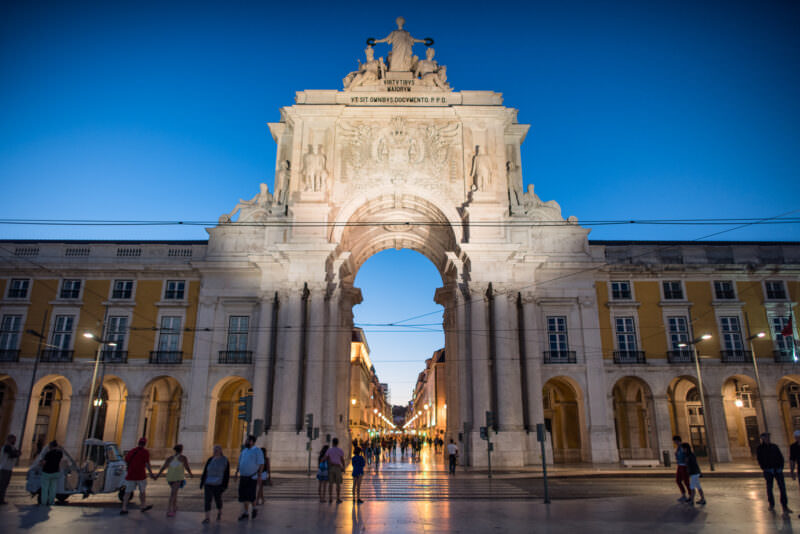
LISBON, Portugal – Arco da Rua Augusta on Praça do Comércio. Known as Commerce Square in English, Praça do Comércio is an historic square in the Pombaline Downtown district of Lisbon, next to the Tagus River. The Arch was built to commemorate the rebuilding of the city after the 1755 earthquake. The sculptures on top of the Arch represent Glory rewarding Valor and Genius. Photo by David Coleman / Have Camera Will TravelLicense this image at:DirectlyAlamy
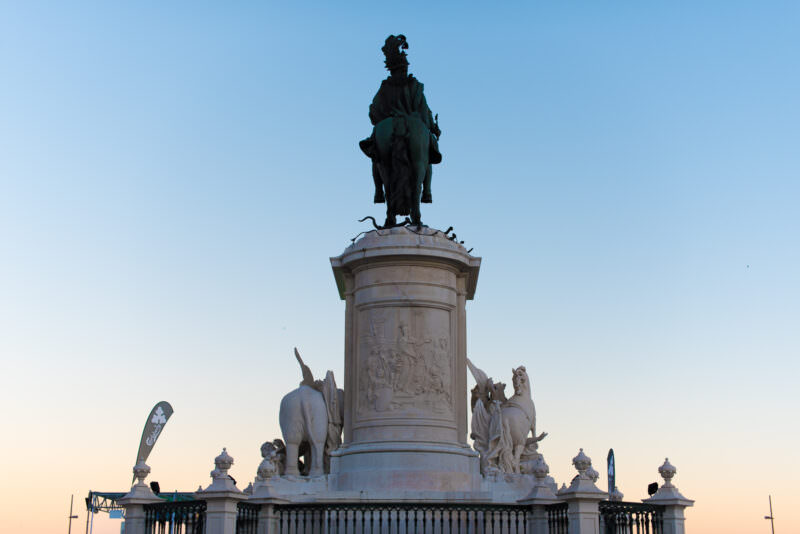
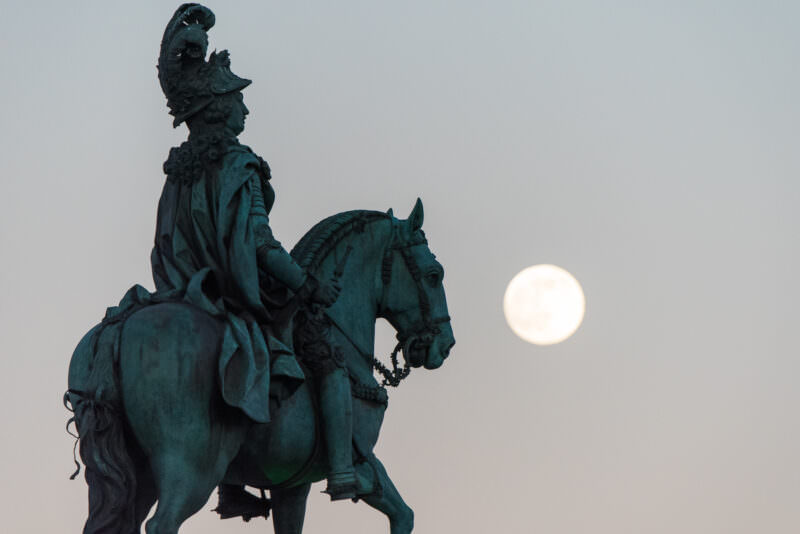
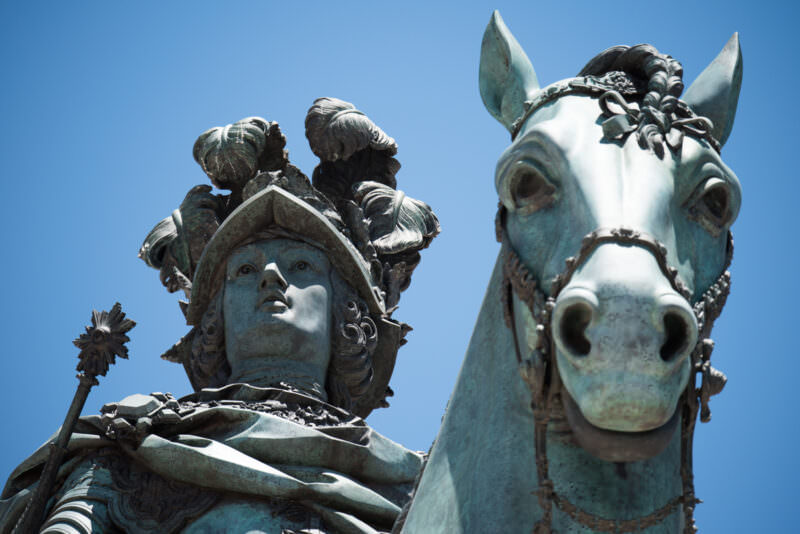
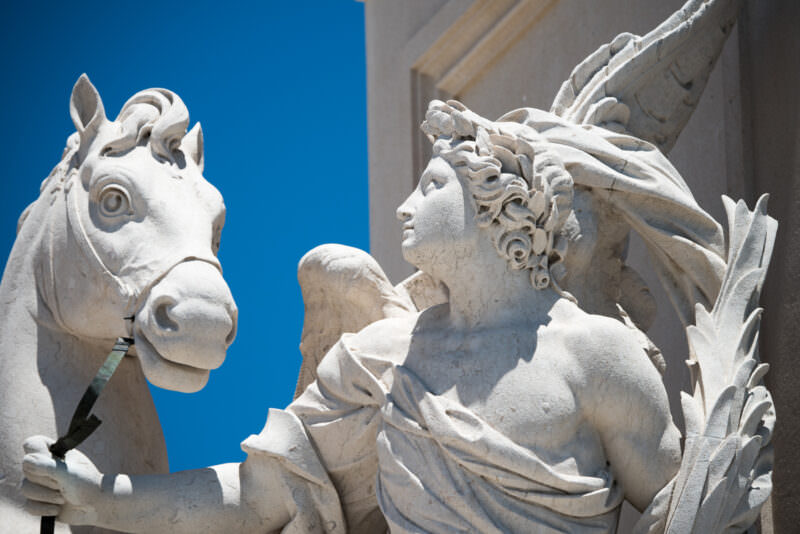
LISBON, Portugal — The bronze equestrian statue of King Joseph I (1714 – 1777), sculpted by Joaquim Machado de Castro and unveiled on 6 June 1775, stands at the center of Praça do Comércio (Commerce Square) in Lisbon’s Pombaline Downtown. The monument — the first monumental royal statue in Lisbon — depicts the king mounted on his horse Gentil and is considered a landmark of Portuguese sculpture. The square opens directly onto the Tagus River, occupying the site of the former Ribeira Palace, the principal royal residence from the early sixteenth century until the earthquake of 1755 destroyed it. Renamed the Praça do Comércio in 1759, it remains the symbolic gateway to the city from the water and one of the most historically resonant public spaces in Portugal. Photo by David Coleman / Have Camera Will TravelLicense this image at:DirectlyAlamy
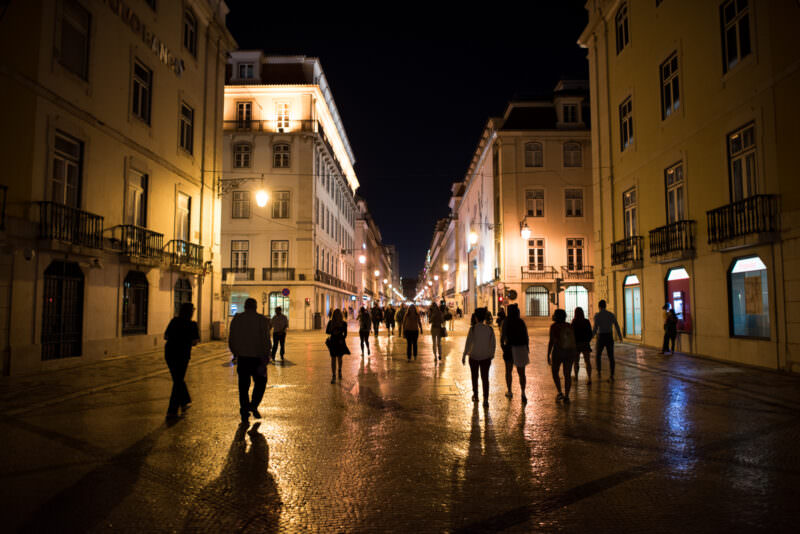
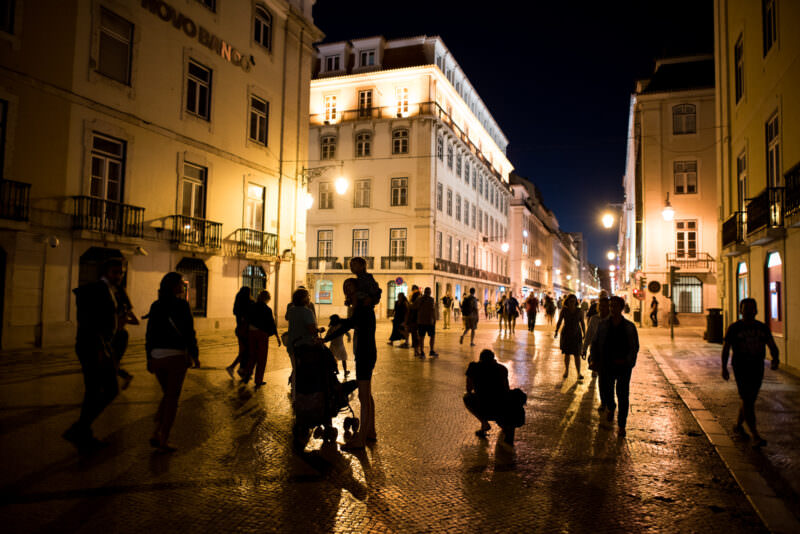
LISBON, Portugal — Rua Augusta, Lisbon’s main pedestrianized thoroughfare in the historic Baixa district, glows under ornate street lamps at night, its cobblestone walkway flanked by Pombaline facades housing shops and cafes. The boulevard runs from the Arco da Rua Augusta at Praça do Comércio on the Tagus waterfront north to Praça de Dom Pedro IV — the Rossio — connecting the two great squares that anchor the Pombaline lower town. Rua Augusta was a central element of the rational grid laid out under the Marquis of Pombal after the 1755 earthquake destroyed the medieval city, and its uniform architecture reflects the disciplined neoclassical aesthetic of that rebuilding. It remains one of Lisbon’s most frequented pedestrian zones, threading through the heart of a planned district that is among the finest surviving examples of Enlightenment-era urban design in Europe. Photo by David Coleman / Have Camera Will TravelLicense this image at:DirectlyAlamy
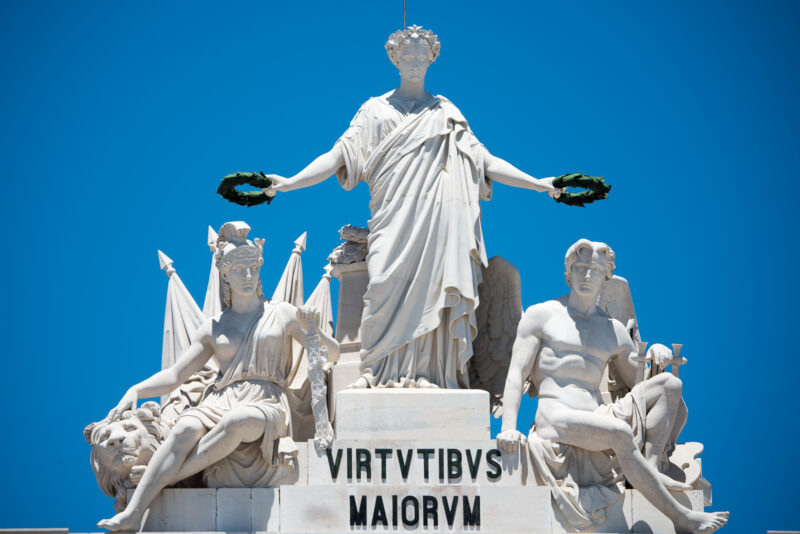
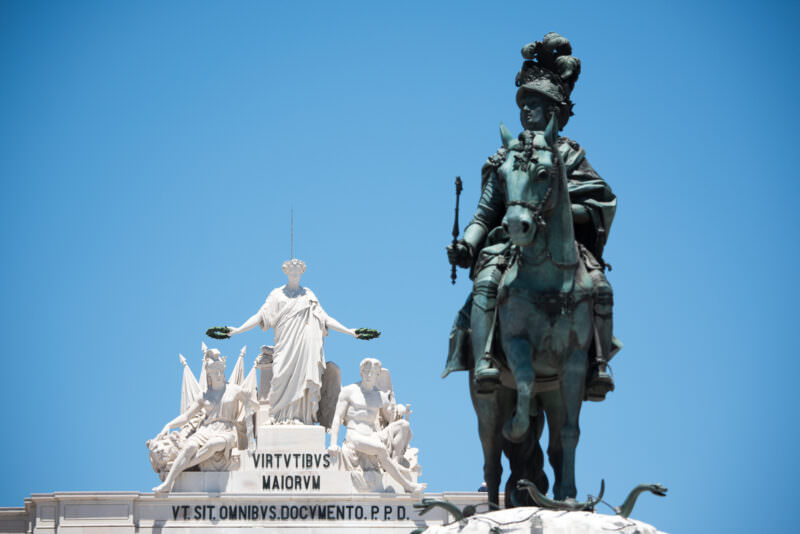
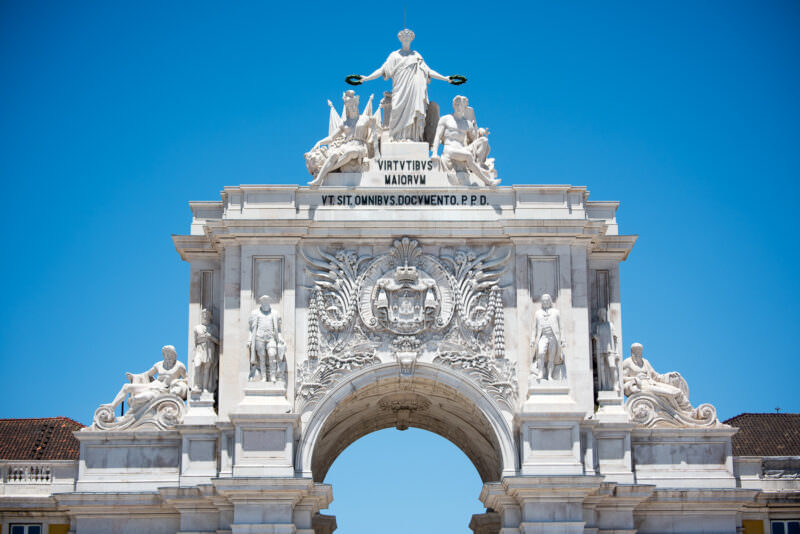
LISBON, Portugal — Allegorical sculptures representing Glory rewarding Valor and Genius crown the Arco da Rua Augusta, a triumphal arch on Praça do Comércio in Lisbon’s Pombaline Downtown. The sculptural group was created by Célestin Anatole Calmels and Vítor Bastos; the arch itself was conceived as part of the original Pombaline reconstruction after the 1755 earthquake but only completed in 1873 under architect Veríssimo José da Costa. The Latin inscription “VIRTVTIBVS MAIORVM” — “To the virtues of the ancestors” — runs across the arch, honoring Portugal’s historical legacy. These figures collectively symbolize Lisbon’s resilience and the cultural rebirth embodied in the Pombaline city. Photo by David Coleman / Have Camera Will TravelLicense this image at:DirectlyAlamy
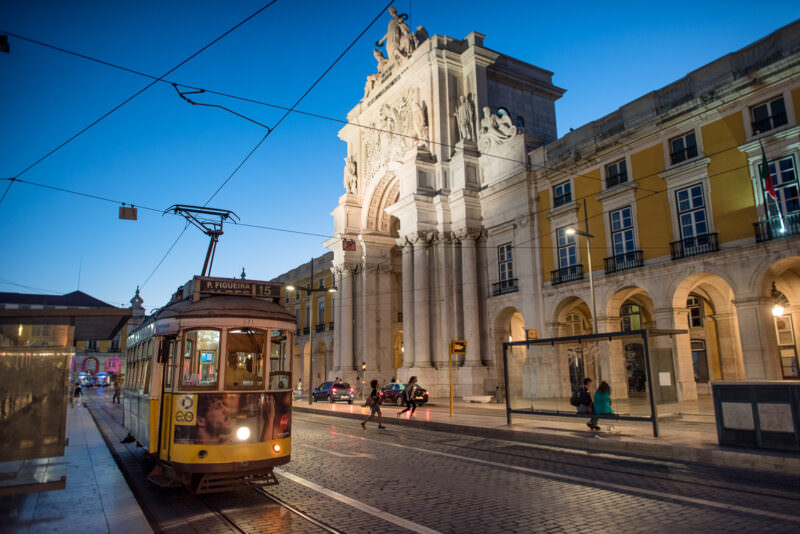
LISBON, Portugal — The Arco da Rua Augusta is illuminated at dusk on Praça do Comércio (Commerce Square), its neoclassical stonework glowing against the evening sky. Completed in 1873 under architect Veríssimo José da Costa, the triumphal arch marks the grand entrance to Rua Augusta, Lisbon’s principal pedestrian thoroughfare, and was conceived as part of the original Pombaline reconstruction after the devastating 1755 earthquake. Atop the arch, a sculptural group by Célestin Anatole Calmels and Vítor Bastos depicts Glory rewarding Valor and Genius, flanked by figures of Portuguese historical figures including Viriathus and Vasco da Gama. The square — known locally as Terreiro do Paço and situated along the Tagus waterfront in the Baixa — is one of the defining public spaces of Lisbon’s Pombaline Downtown. Photo by David Coleman / Have Camera Will TravelLicense this image at:DirectlyAlamy
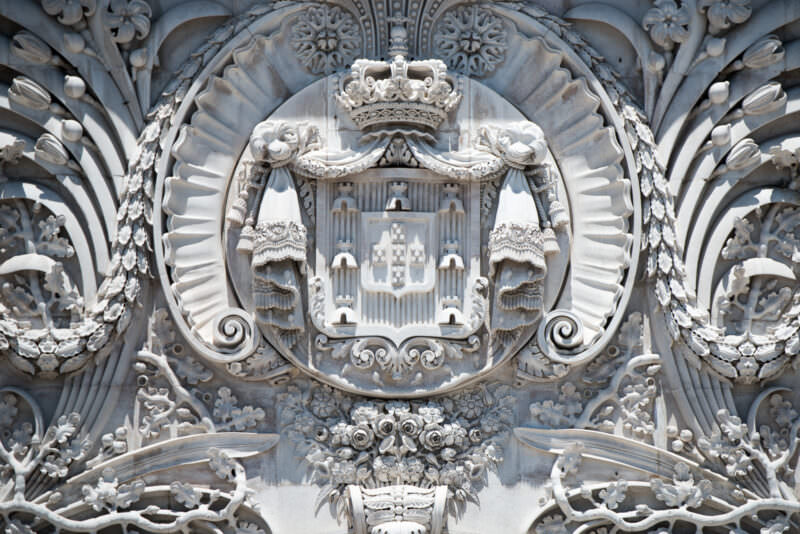
LISBON, Portugal — A carved detail of the Portuguese coat of arms is visible on the Arco da Rua Augusta, a triumphal arch on Praça do Comércio (Commerce Square) in Lisbon’s Pombaline Downtown. The arch was conceived as part of the Pombaline reconstruction of the Baixa following the devastating earthquake of 1 November 1755, though it was only completed in 1873, its later phase carried out under architect Veríssimo José da Costa. The crowning sculptural group — Glory rewarding Valor and Genius, by Célestin Anatole Calmels and Vítor Bastos — presides above historical figures of Portugal, while intricate decorative details like this royal crest articulate the arch’s celebration of national identity and resilience. Photo by David Coleman / Have Camera Will TravelLicense this image at:DirectlyAlamy
LISBON, Portugal — The bronze equestrian statue of King Joseph I, sculpted by Joaquim Machado de Castro and unveiled on 6 June 1775, stands at the center of Praça do Comércio (Commerce Square) in Lisbon’s Pombaline Downtown. Behind it the Arco da Rua Augusta is visible, crowned with allegorical sculpture by Célestin Anatole Calmels and Vítor Bastos representing Glory rewarding Valor and Genius. The monument bears the Latin inscription “VIRTVTIBUS MAIORUM,” meaning “To the virtues of the ancestors.” Situated beside the Tagus River, the square was the ceremonial gateway to Lisbon from the water and was rebuilt on a rational grid after the catastrophic earthquake of 1 November 1755, replacing the former Ribeira Palace on a site renamed Praça do Comércio in 1759. Photo by David Coleman / Have Camera Will TravelLicense this image at:DirectlyAlamy
LISBON, Portugal — Pedestrians move through Rua Augusta at night, the pedestrianized spine of the Baixa that links Praça do Comércio on the Tagus waterfront to the Rossio square. Laid out as part of the rational grid approved in 1756 under the Marquis of Pombal after the 1755 earthquake, the boulevard remains one of the busiest commercial streets in the historic center. Its ornate cast-iron street lamps and uniform Pombaline facades date the plan’s Enlightenment-era design. Photo by David Coleman / Have Camera Will TravelLicense this image at:DirectlyAlamy
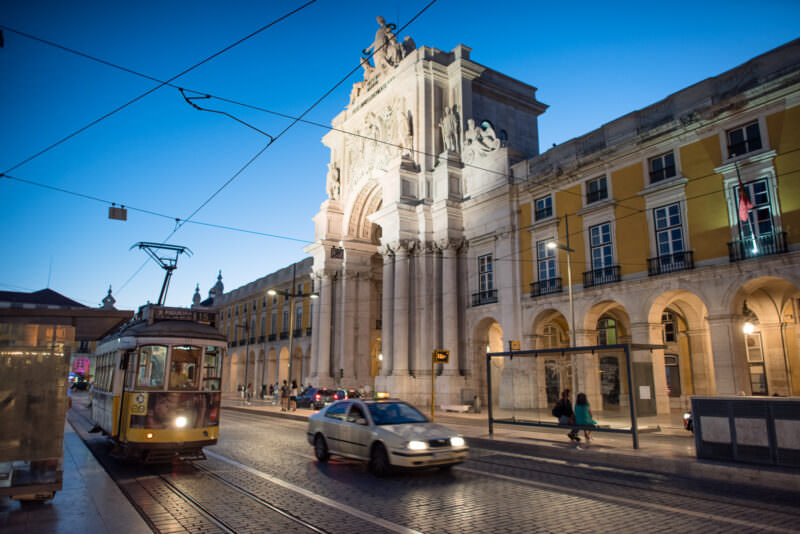
LISBON, Portugal — An iconic yellow tram crosses Praça do Comércio (Commerce Square) at dusk in front of the illuminated Arco da Rua Augusta, one of Lisbon’s most recognizable landmarks. Completed in 1873 under architect Veríssimo José da Costa, the triumphal arch was conceived as part of the Pombaline reconstruction after the catastrophic 1755 earthquake, and its crowning sculptural group by Célestin Anatole Calmels and Vítor Bastos depicts Glory rewarding Valor and Genius. The square fronts the Tagus River and forms the southern anchor of the Pombaline Baixa, one of the great ensembles of Enlightenment-era European urban planning. Lisbon’s historic yellow trams, long a fixture of the city’s hills and thoroughfares, remain both a working transit line and an enduring symbol of the Portuguese capital. Photo by David Coleman / Have Camera Will TravelLicense this image at:DirectlyAlamy
LISBON, Portugal — The bronze equestrian statue of King Joseph I stands at the center of Praça do Comércio (Commerce Square) in Lisbon’s Pombaline Downtown, with a full moon visible behind the monument. Sculpted by Joaquim Machado de Castro and unveiled on 6 June 1775, it depicts the king mounted on his horse Gentil — the first monumental royal statue erected in Lisbon — honoring the monarch in whose reign the city was leveled by the earthquake of 1 November 1755 and rebuilt on a rational grid under the Marquis of Pombal. The top of the Arco da Rua Augusta is visible behind the statue, its crown bearing allegorical sculpture by Célestin Anatole Calmels and Vítor Bastos representing Glory rewarding Valor and Genius. The square fronts the Tagus and occupies the site of the former Ribeira Palace, making it among the most historically layered public spaces in Portugal. Photo by David Coleman / Have Camera Will TravelLicense this image at:DirectlyAlamy
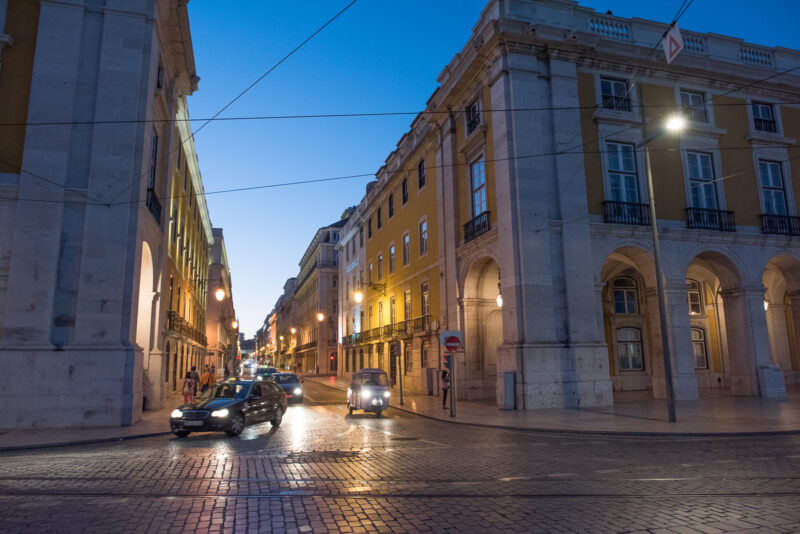
LISBON, Portugal — A quiet sidestreet branches off Praça do Comércio in the Baixa district, its uniform stone facades and wrought-iron balconies typical of the post-earthquake rebuild. The grid was laid out by royal architects Eugénio dos Santos and Carlos Mardel on a plan approved in 1756 after the earthquake of 1 November 1755 destroyed the medieval city. The buildings rest on the anti-seismic timber-cage frame known as the gaiola, an early system of earthquake-resistant urban construction. Photo by David Coleman / Have Camera Will TravelLicense this image at:DirectlyAlamy
LISBON, Portugal — The bronze equestrian statue of King Joseph I, sculpted by Joaquim Machado de Castro, stands at the center of Praça do Comércio (Commerce Square) in Lisbon’s Pombaline Downtown. Unveiled on 6 June 1775 — the king’s birthday — it depicts Joseph I (reigned 1750 – 1777) mounted on his horse Gentil, and was the first monumental royal statue erected in Lisbon. The square was rebuilt after the devastating earthquake of 1 November 1755 on the site of the former Ribeira Palace; Pombal renamed it the Praça do Comércio in 1759, recasting the former royal forecourt as the mercantile and administrative heart of the reconstructed city. Its grand riverside setting along the Tagus made it the symbolic gateway to Lisbon from the water. Photo by David Coleman / Have Camera Will TravelLicense this image at:DirectlyAlamy
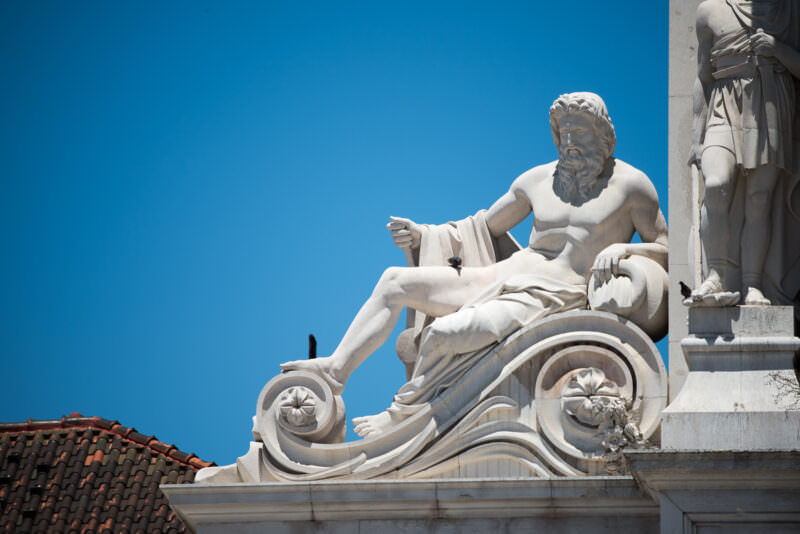
LISBON, Portugal — A detail of the allegorical sculptural group representing Glory rewarding Valor and Genius is seen atop the Arco da Rua Augusta on Praça do Comércio (Commerce Square) in Lisbon’s Pombaline Downtown. The sculptures were created by Célestin Anatole Calmels and Vítor Bastos for the arch, which was conceived as part of the original Pombaline reconstruction after the 1755 earthquake but only completed in 1873, its later phase directed by architect Veríssimo José da Costa. The group specifically symbolizes Lisbon’s resilience and renaissance, its figures presiding over the ceremonial entrance to the Baixa from the riverside square. Photo by David Coleman / Have Camera Will TravelLicense this image at:DirectlyAlamy
LISBON, Portugal — A detail of the allegorical sculptural group representing Glory rewarding Valor and Genius is seen atop the Arco da Rua Augusta on Praça do Comércio (Commerce Square) in Lisbon’s Pombaline Downtown. The sculpture was created by Célestin Anatole Calmels and Vítor Bastos. Conceived as part of the original Pombaline reconstruction scheme after the 1755 earthquake, the arch was only completed in 1873, its later phase carried out under architect Veríssimo José da Costa. The triumphal arch frames the grand entrance to Rua Augusta, Lisbon’s principal pedestrian thoroughfare running north through the heart of the Baixa. Photo by David Coleman / Have Camera Will TravelLicense this image at:DirectlyAlamy
LISBON, Portugal — The Arco da Rua Augusta stands on Praça do Comércio (Commerce Square) in Lisbon’s Pombaline Downtown, adjacent to the Tagus River. Conceived as part of the original Pombaline reconstruction of the Baixa after the devastating 1755 earthquake, the triumphal arch was completed in 1873 under architect Veríssimo José da Costa. Atop it, allegorical sculpture by Célestin Anatole Calmels and Vítor Bastos represents Glory rewarding Valor and Genius, presiding over the ceremonial entrance to Rua Augusta and the heart of the reconstructed lower town. Photo by David Coleman / Have Camera Will TravelLicense this image at:DirectlyAlamy
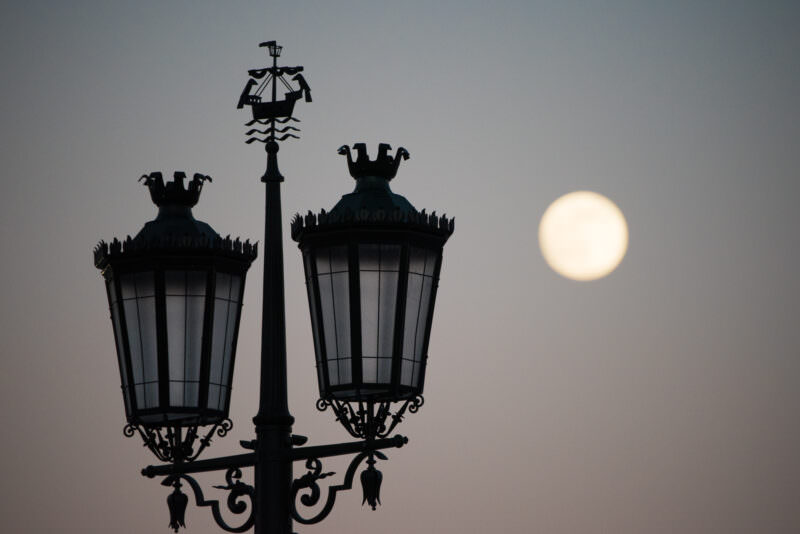
LISBON, Portugal — A street light with a distinctive ship-and-crows finial is silhouetted against a full moon on Praça do Comércio (Commerce Square) in Lisbon’s Pombaline Downtown. The square was rebuilt after the devastating earthquake of 1 November 1755 as the showpiece of the Marquis of Pombal’s rational reconstruction of the lower town, replacing the former Ribeira Palace on a site renamed in 1759 to honor the merchant class and the Junta do Comércio that helped finance the rebuilding. Also known as the Terreiro do Paço (“Palace Yard”), the square fronts the Tagus River and long served as the ceremonial gateway to Lisbon from the water. The Pombaline Baixa of which it forms the southern anchor is one of the earliest and most ambitious examples of systematic earthquake-resistant urban planning in Europe. Photo by David Coleman / Have Camera Will TravelLicense this image at:DirectlyAlamy
LISBON, Portugal — The Arco da Rua Augusta, a monumental triumphal arch on Praça do Comércio (Commerce Square) in Lisbon’s Pombaline Downtown, displays ornate stone sculptures and architectural details across its facade. Conceived as part of the Pombaline reconstruction after the 1755 earthquake, the arch was completed only in 1873 under architect Veríssimo José da Costa. Atop it, a sculptural group by Célestin Anatole Calmels and Vítor Bastos depicts Glory rewarding Valor and Genius, flanked by standing figures of Portuguese historical figures. The arch frames the northern entrance to Rua Augusta, the principal pedestrian thoroughfare of the Baixa, and symbolizes the city’s recovery and renaissance following the disaster. Photo by David Coleman / Have Camera Will TravelLicense this image at:DirectlyAlamy
Map
Enjoyed this article? Personalize your search results.
I'm a freelance travel photographer based in Washington DC. Seven continents, up mountains, underwater, and a bunch of places in between. My images have appeared in numerous publications, and you can check out some of my gear reviews and tips here. More »