SANTIAGO, Chile — Santiago’s Mercado Central is a mecca for fresh seafood. And a series of restaurants in the center of the market serve up delicious market-fresh meals.
Chile has an extraordinarily long coastline. The country is very long and very narrow, and runs along over half of the eastern coastline of South America.
All that coastline, from the tropics to its wintry southern tip, means a staggering variety of seafood is part of Chile’s cuisine.
And not just fish, but a huge variety of shellfish. Oysters, scallops, mussels, razor clams, and a bunch of other types that only have local names.
SANTIAGO, Chile — Pedestrians walk past the ornate entrance of the Mercado Central, a historic marketplace and culinary destination located near the Mapocho River. Established in 1872, the National Historic Monument features neoclassical masonry walls designed by Chilean architect Fermín Vivaceta. The building’s exterior integrates a distinctive cast-iron framework with neoclassical architectural elements, highlighted by a central pediment, intricate archway metalwork, and a domed cupola. Photo by David Coleman / Have Camera Will TravelLicense this image at:DirectlyAlamy
Many of them are for sale in Santiago’s Mercado Central, a mecca for fresh, local seafood. And if you’re not in a position to cook up your own meal, a series of bustling restaurants at the center of the market will cook up delicious market-fresh meals for very reasonable prices.
And it’s all housed in a charming old cast-iron building within an easy walk of the Plaza de Armas. It’s well worth a visit.
Photos of Mercado Central
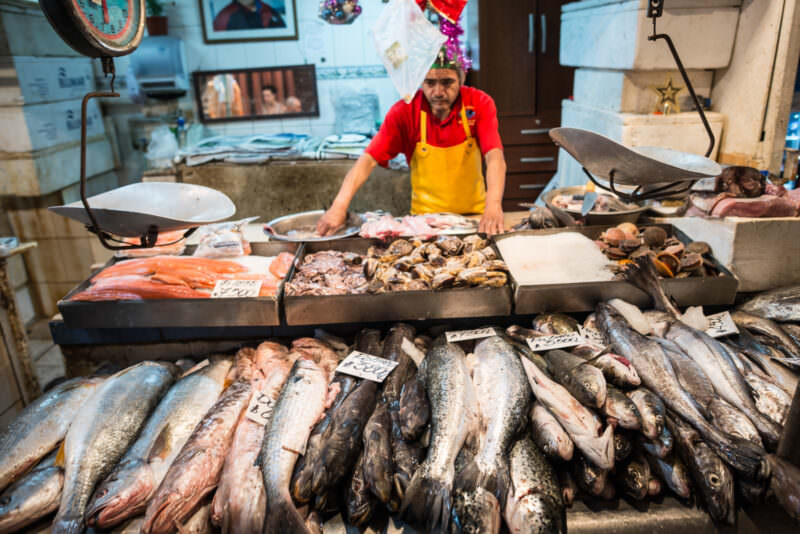
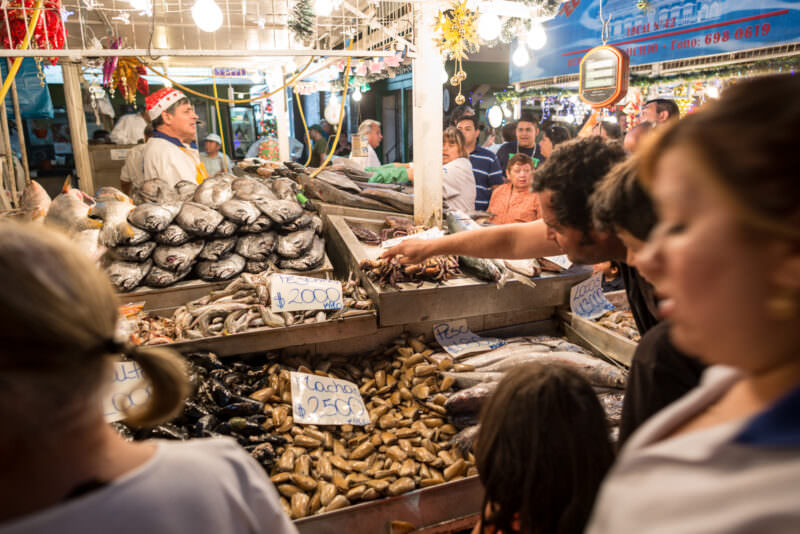
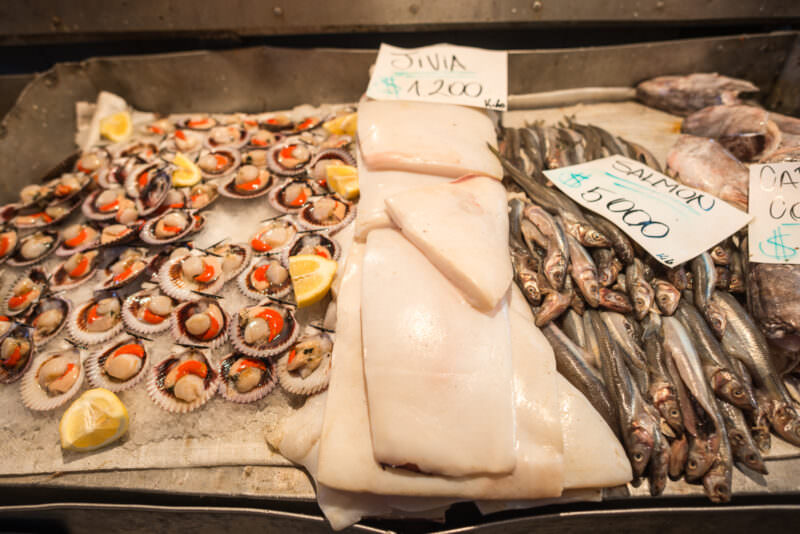
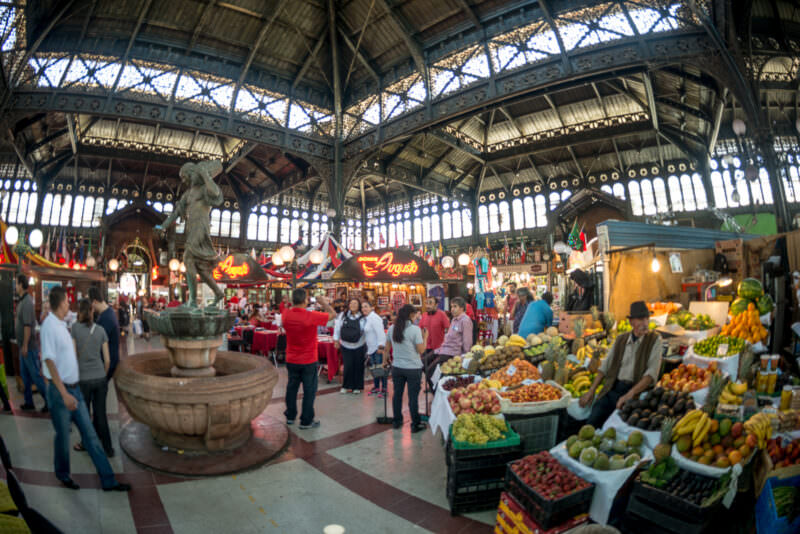
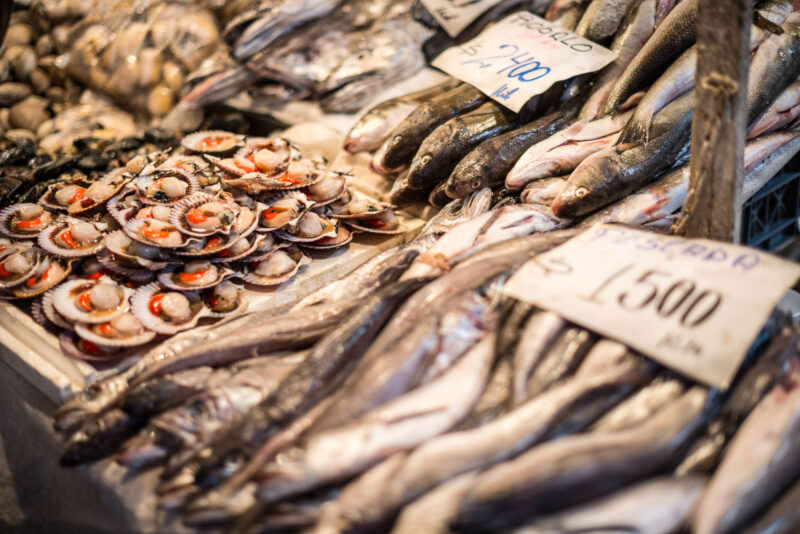
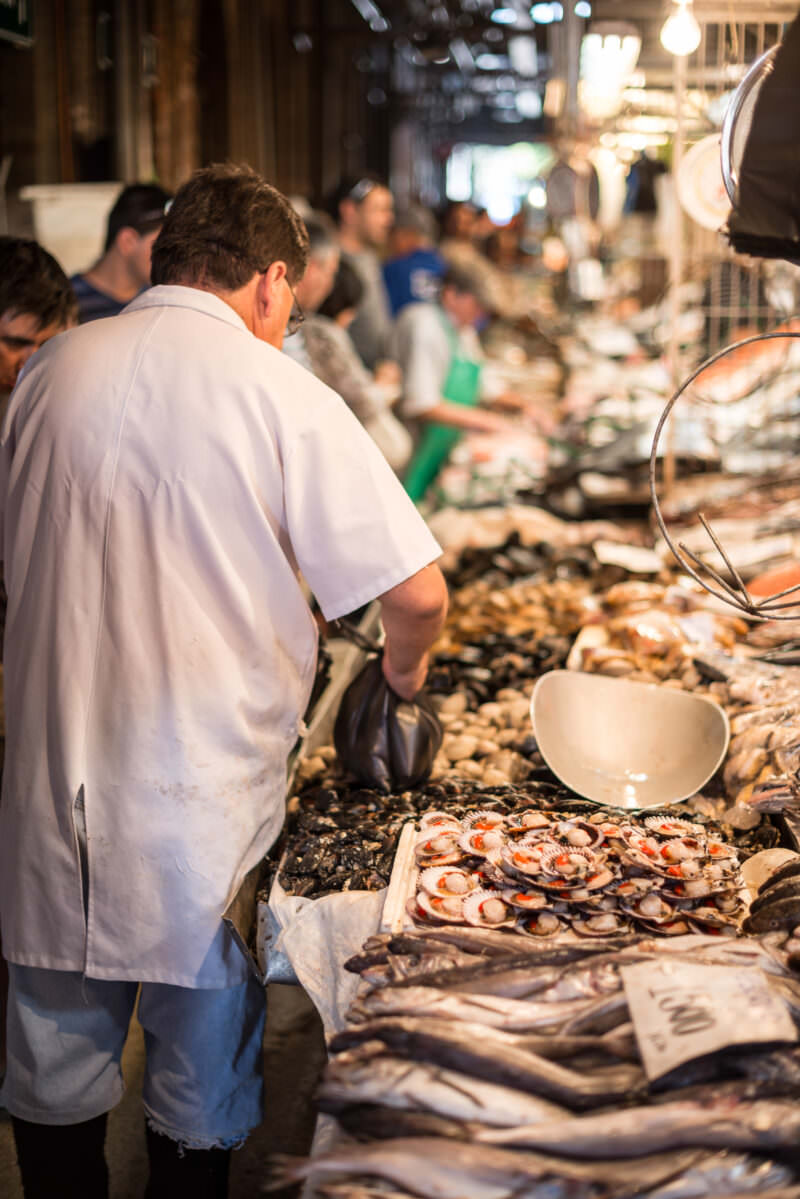
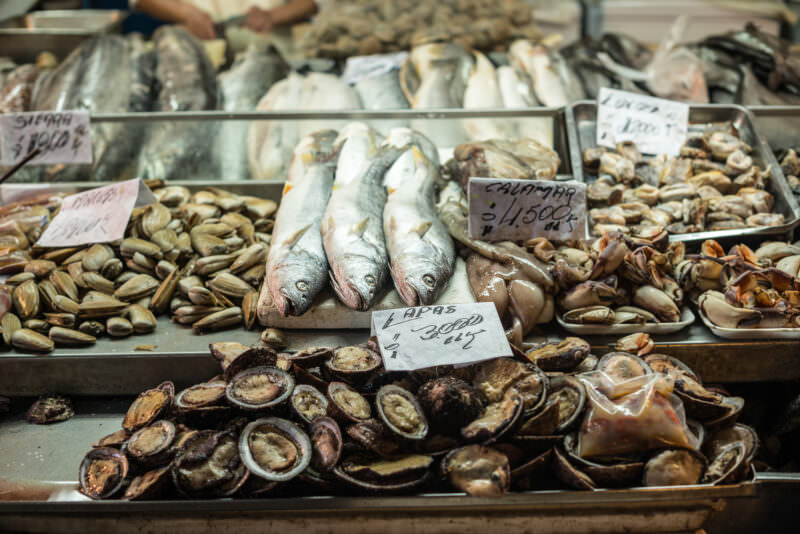
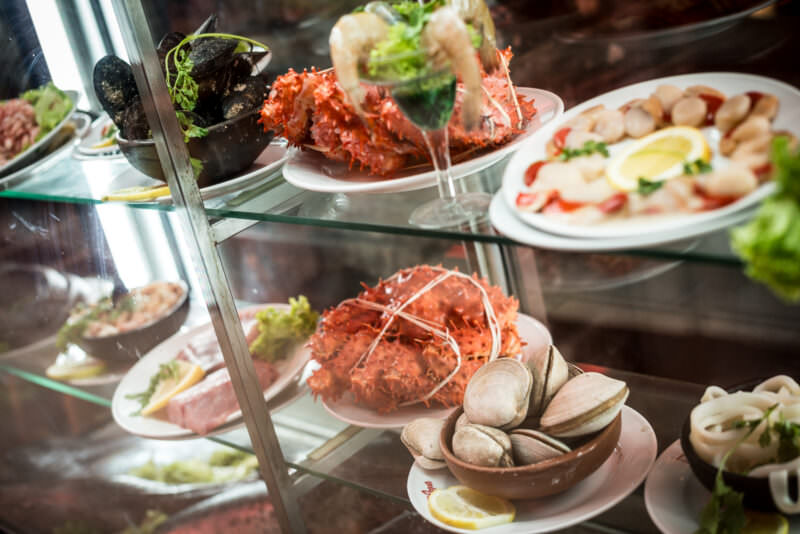
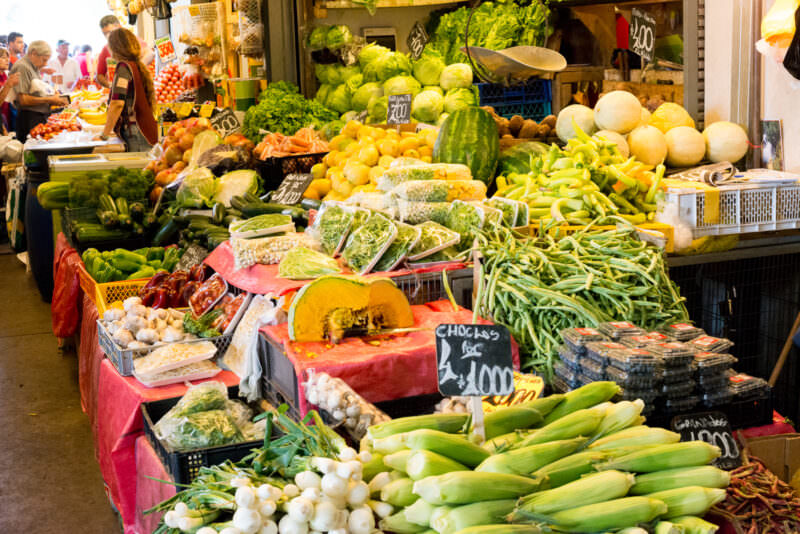
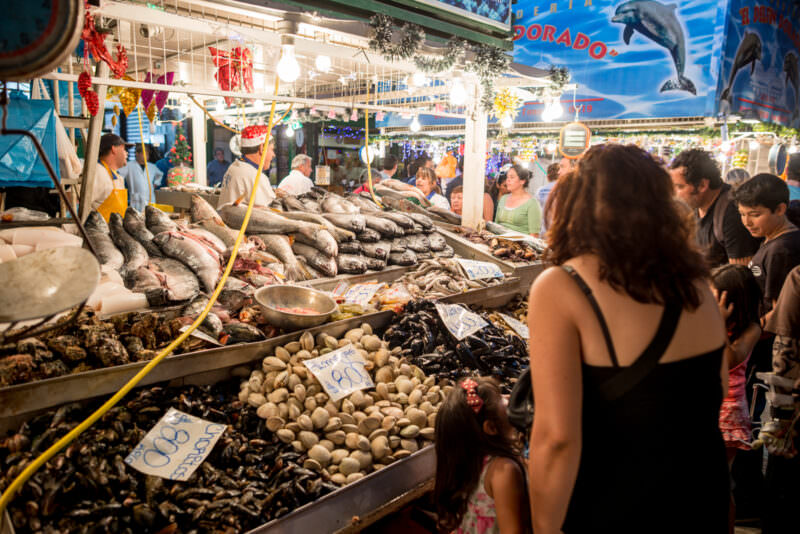
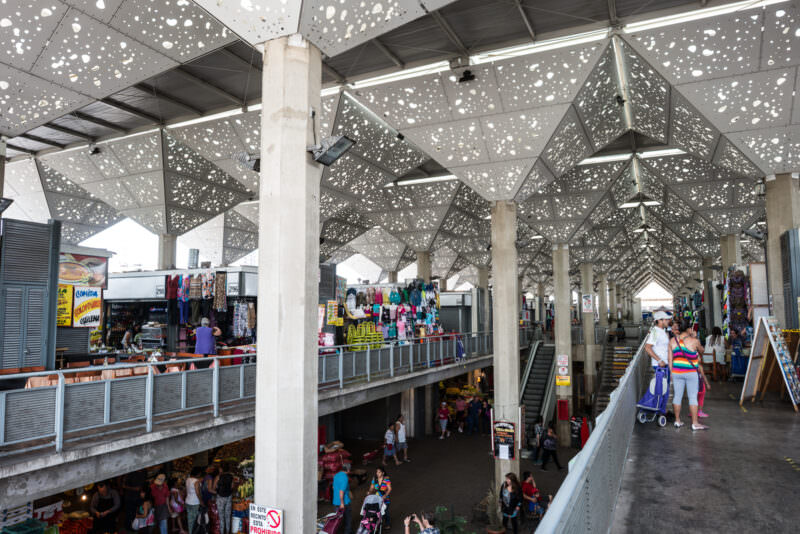
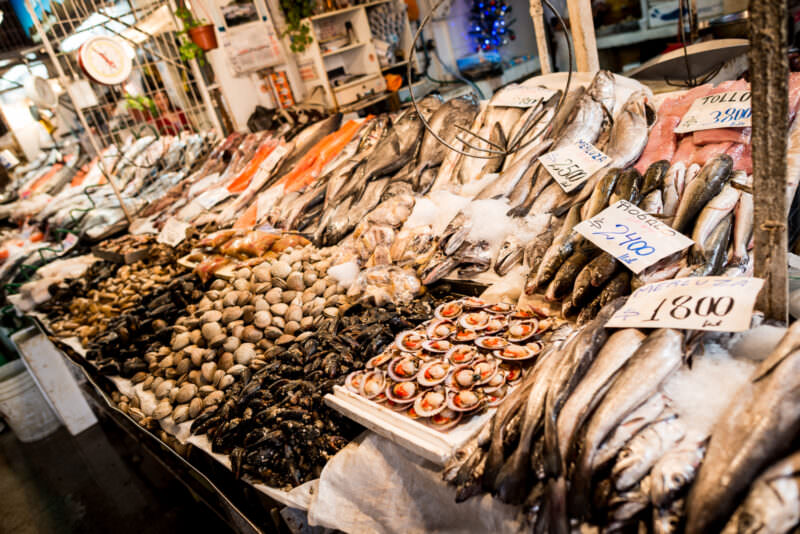
SANTIAGO, Chile — A decorative statue of a woman carrying water stands beneath the ornate cast-iron canopy of the historic Mercado Central. Completed in 1872, the building’s Victorian industrial framework was prefabricated in Glasgow, Scotland, by R. Laidlaw & Sons before being shipped and assembled in South America. Designated a National Monument, the structure exemplifies 19th-century cast-iron architecture, utilizing intricate lattice trusses and star motifs to support the expansive roof over the city’s primary seafood market. Photo by David Coleman / Have Camera Will TravelLicense this image at:DirectlyAlamySANTIAGO, Chile — A vendor in a yellow apron tends to a diverse display of fresh seafood, including whole fish and salmon fillets, beneath hanging mechanical scales at a stall in Mercado Central. Opened in 1872, the market’s distinctive neoclassical cast-iron framework was prefabricated by R. Laidlaw & Sons in Glasgow, Scotland, before being shipped and assembled on site. The historic facility functions as a critical economic node connecting Santiago’s urban consumers with coastal fisheries that harvest high-biodiversity marine life from the cold, nutrient-rich waters of the Humboldt Current. Photo by David Coleman / Have Camera Will TravelLicense this image at:DirectlyAlamySANTIAGO, Chile — Customers inspect fresh fish and shellfish displayed on tiered metal stalls inside Mercado Central, Santiago’s primary seafood hub. The market’s historic cast-iron structure features a central canopy engineered by Edward Woods and neoclassical masonry walls designed by Chilean architect Fermín Vivaceta, completed in 1872, serving as a nineteenth-century architectural backdrop for the city’s daily commerce. Vendors stock an extensive array of marine species harvested from Chile’s 2,600-mile Pacific coastline, a highly productive ecosystem driven by the cold-water Humboldt Current. Handwritten signs display prices in Chilean pesos for specific regional catches, including machas (surf clams) and locos (Chilean abalone, Concholepas concholepas), reflecting the area’s distinct marine biodiversity. Photo by David Coleman / Have Camera Will TravelLicense this image at:DirectlyAlamySANTIAGO, Chile — Fresh scallops on the half shell and thick cuts of jivia are displayed on ice at a vendor’s stall inside the historic Mercado Central. The dense white fillets come from the Humboldt squid (*Dosidicus gigas*), a large predatory cephalopod harvested from the nutrient-rich waters of the Pacific coast. Alongside them, Chilean scallops (*Argopecten purpuratus*) are presented with their vibrant orange roe intact, reflecting traditional culinary preparations maintained since this neoclassical market was established by architect Fermín Vivaceta in 1872. Photo by David Coleman / Have Camera Will TravelLicense this image at:DirectlyAlamySANTIAGO, Chile — Shoppers and diners navigate the bustling interior of the Mercado Central, surrounded by fresh produce stands and seafood restaurants beneath a soaring cast-iron canopy. Completed in 1872, the structure features an elaborate framework of columns and trusses supporting a central glass-paneled roof. This prefabricated metalwork represents a prime example of Victorian-era industrial architecture imported directly from Scotland to South America. Declared a National Historic Monument of Chile in 1984, the building continues its 150-year legacy as a primary hub for regional commerce and gastronomy. Photo by David Coleman / Have Camera Will TravelLicense this image at:DirectlyAlamySANTIAGO, Chile — Fresh scallops and whole fish rest on ice at a vendor stall inside the historic Mercado Central. The prominently displayed scallops, featuring their bright orange coral or roe, are *Argopecten purpuratus*, a species native to the cold, nutrient-rich waters of the Humboldt Current. Handwritten signs advertise local catches like *robalo* (sea bass) and *pescada* (hake), highlighting the diverse marine harvest transported daily from Chile’s 4,000-kilometer Pacific coastline to this 1872 commercial hub. Photo by David Coleman / Have Camera Will TravelLicense this image at:DirectlyAlamySANTIAGO, Chile — A vendor prepares a customer’s order amidst a sprawling display of fresh scallops, mussels, and whole fish at a bustling stall inside Mercado Central. Sourced from the country’s 2,600-mile Pacific coastline, this extensive marine harvest reflects the immense biological diversity supported by the nutrient-rich Humboldt Current. The daily commercial operations take place within a historic structure featuring neoclassical masonry walls designed by Chilean architect Fermin Vivaceta and a central cast-iron canopy engineered by Edward Woods, completed in 1872, representing a vital piece of the city’s nineteenth-century architectural heritage. Photo by David Coleman / Have Camera Will TravelLicense this image at:DirectlyAlamySANTIAGO, Chile — Fresh fish, squid, and various shellfish are arranged with handwritten price tags at a vendor stall inside Mercado Central. The market sources its extensive array of marine life from Chile’s 2,600-mile Pacific coastline, a highly productive ecosystem driven by the cold, nutrient-rich Humboldt Current. Visible catches include native species such as lapas (limpets) and machas (surf clams), benthic invertebrates harvested directly from the rocky intertidal zones and sandy beaches of the South American coast. Established in 1872, the commercial hub functions as Santiago’s primary distribution center for these regional maritime harvests. Photo by David Coleman / Have Camera Will TravelLicense this image at:DirectlyAlamySANTIAGO, Chile — Freshly prepared seafood dishes and raw marine ingredients are displayed in a glass case at a restaurant inside the historic Mercado Central. Prominently featured is the Chilean king crab (*Lithodes santolla*), a commercially vital benthic species harvested from the frigid waters of the Magellanic region and prized for its sweet meat. The display highlights Chile’s extensive coastal biodiversity, presenting endemic bivalves and cephalopods utilized in traditional preparations like mariscal (mixed seafood) within this 1872 National Monument. Photo by David Coleman / Have Camera Will TravelLicense this image at:DirectlyAlamySANTIAGO, Chile — Fresh produce, including corn, squash, and leafy greens, fills vendor stalls at Mercado Tirso de Molina, located in Santiago’s Recoleta commune. The facility serves as a vital distribution node connecting urban consumers with the agricultural output of Chile’s fertile Central Valley. The stalls prominently feature regional dietary staples, including starchy Andean corn (*Zea mays*), locally known as choclo, and dense winter squash (*Cucurbita maxima*), both of which thrive in the Mediterranean climate of the country’s central agricultural zone. Photo by David Coleman / Have Camera Will TravelLicense this image at:DirectlyAlamySANTIAGO, Chile — Customers browse extensive displays of fresh fish and bivalves at brightly lit vendor stalls inside the historic Mercado Central. Sourced from Chile’s 2,600-mile Pacific coastline, this daily marine harvest reflects the immense biodiversity supported by the nutrient-rich Humboldt Current. The bustling commercial activity takes place within a landmark structure featuring neoclassical masonry walls designed by Chilean architect Fermín Vivaceta and a central cast-iron canopy engineered by Edward Woods. Completed in 1872, the market stands as a prominent example of nineteenth-century commercial architecture and remains a vital hub for the capital’s culinary heritage. Photo by David Coleman / Have Camera Will TravelLicense this image at:DirectlyAlamySANTIAGO, Chile — A geometric, perforated canopy shelters the multi-level commercial concourse of the Mercado de Abasto Tirso de Molina in the Recoleta district. The irregularly pierced panels facilitate passive cross-ventilation and filter sunlight, a modern architectural intervention designed to reduce energy loads. This climate control strategy maintains optimal ambient temperatures for the municipal market facility, which forms part of the northern commercial market district near La Vega Central. Photo by David Coleman / Have Camera Will TravelLicense this image at:DirectlyAlamySANTIAGO, Chile — Vendors at Mercado Central display an extensive array of fresh seafood, including whole hake (merluza), dogfish (tollo), and sea bass (róbalo), arranged alongside dense mounds of mussels, clams, and half-shell scallops. This diverse harvest is biologically sustained by the cold, nutrient-rich Humboldt Current flowing along the Chilean coastline, which creates one of the world’s most productive marine ecosystems. The daily trade operates within the market’s historic 1872 neoclassical structure, notable for its central cast-iron canopy that was prefabricated in Glasgow, Scotland, before being shipped to South America. Photo by David Coleman / Have Camera Will TravelLicense this image at:DirectlyAlamy
Where is it?
Enjoyed this article? Personalize your search results.
I'm a freelance travel photographer based in Washington DC. Seven continents, up mountains, underwater, and a bunch of places in between. My images have appeared in numerous publications, and you can check out some of my gear reviews and tips here. More »