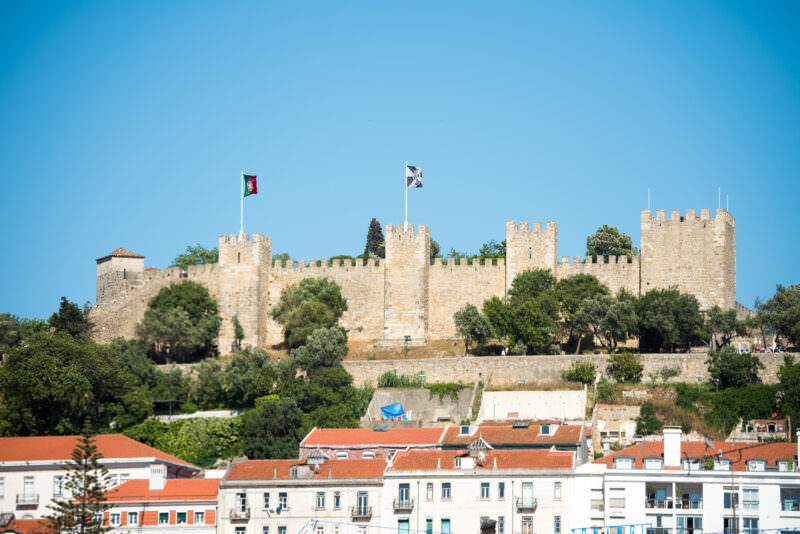
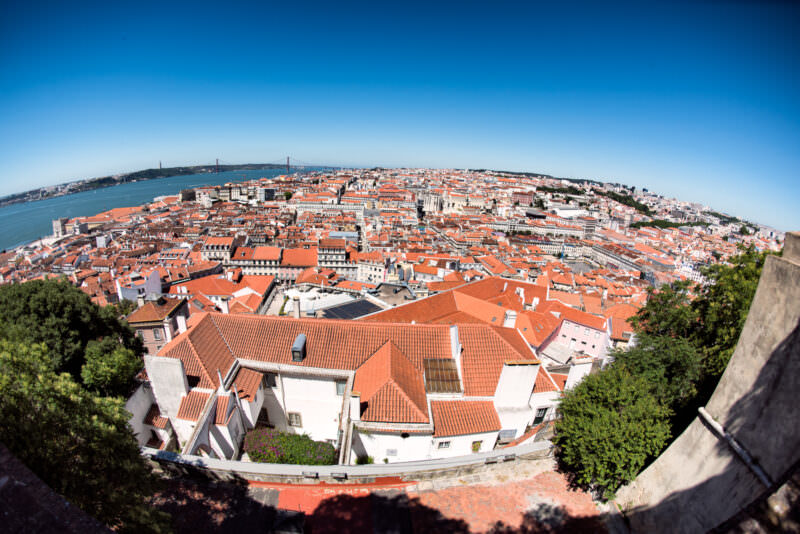
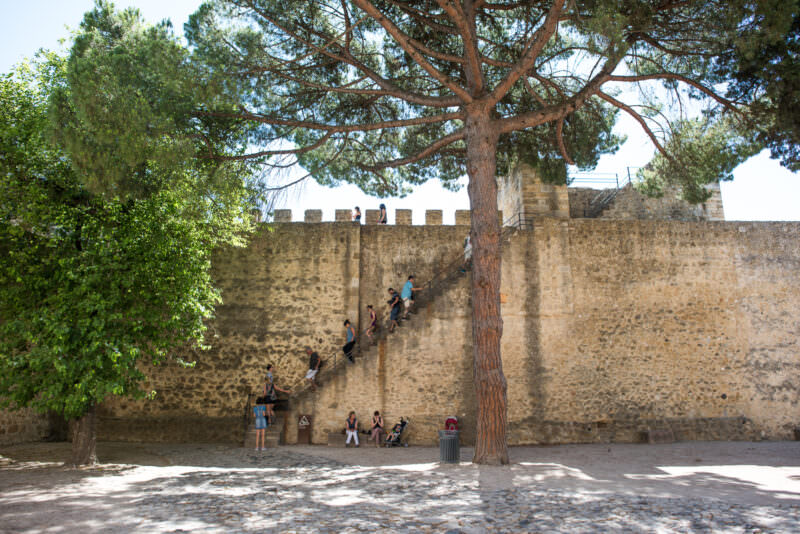
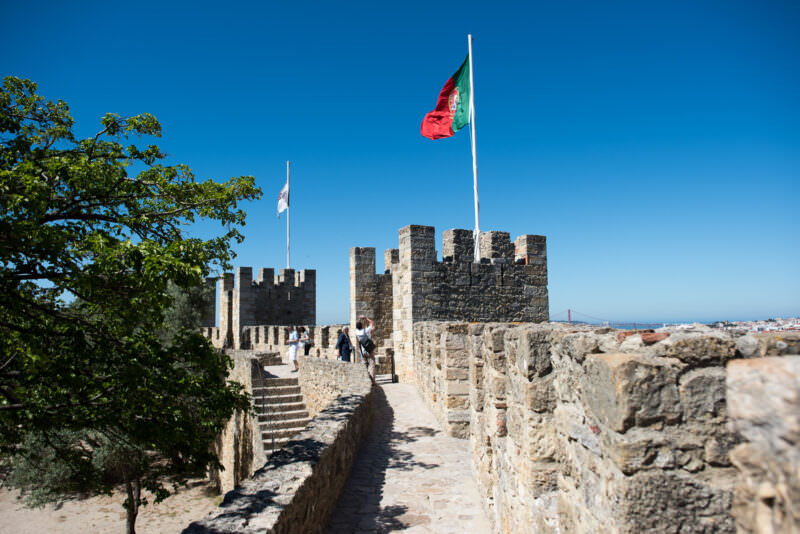
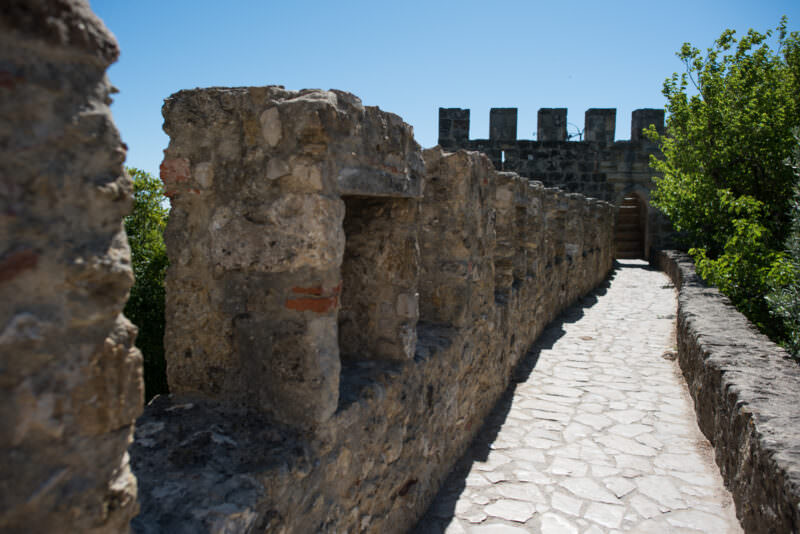
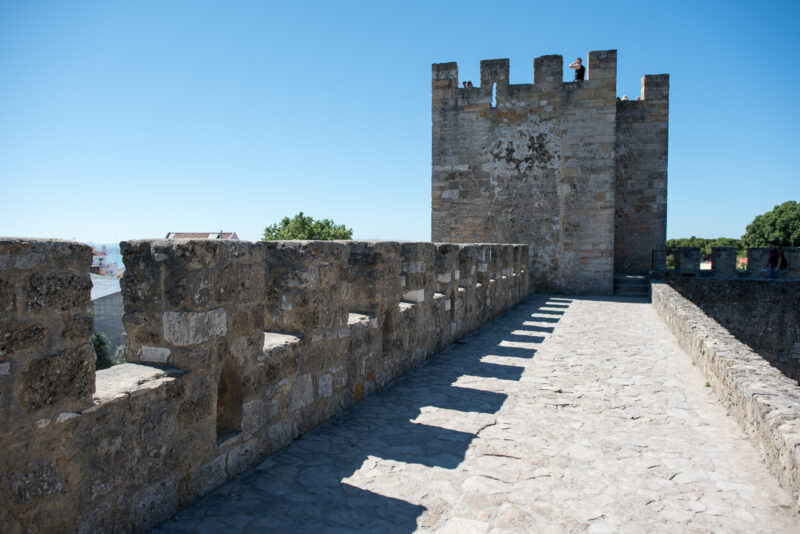
Perched on a hill over central Lisbon, Castelo de São Jorge looks like a castle drawn from imagination, with walls that owe their present form to a 1938–1940 restoration, on fortifications dating back to the 7th century BC. Its uneven, railing-free ramparts open onto sweeping views over the city and the Tagus — here’s a look at what I found on several visits.
Sitting high on a hill overlooking the center of Lisbon, the Moorish Saint George Castle (or Castelo de São Jorge or Saint George Castle) looks exactly how a castle should look, with its imposing ramparts offering spectacular views over the city.
Fortifications have existed on the site for thousands of years — at least back to the 7th century BC — and the current distinctive walls largely date to a 1938–1940 restoration.
It dominates the Lisbon skyline, and from its ramparts, it offers spectacular views out over the city of Lisbon and the Tagus.
Photos of Castelo de São Jorge
Here are some of the photos I’ve taken at Castelo de São Jorge over the course of several visits.
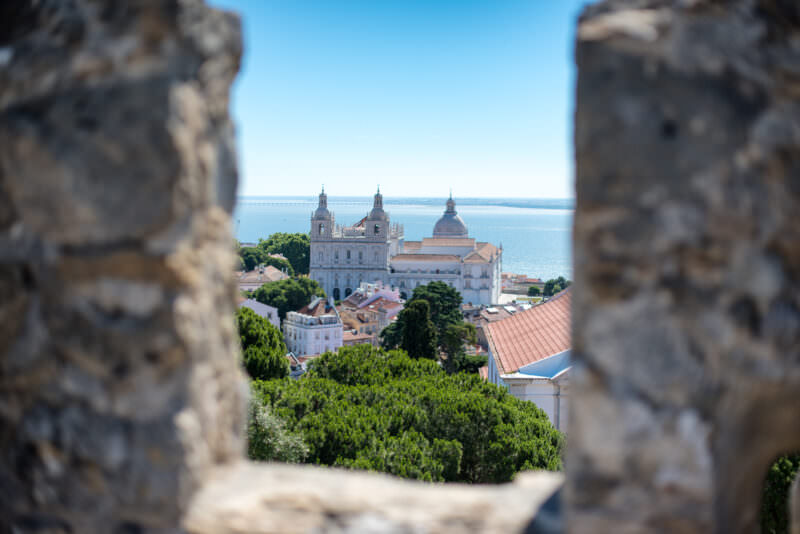
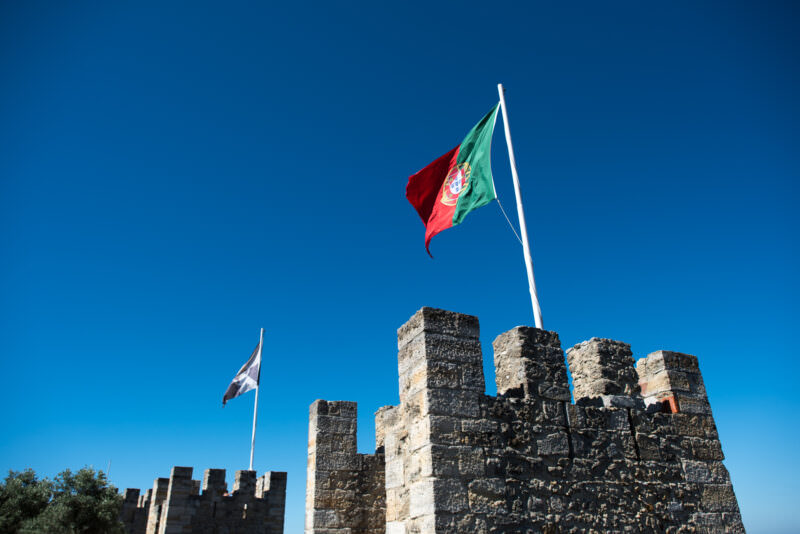
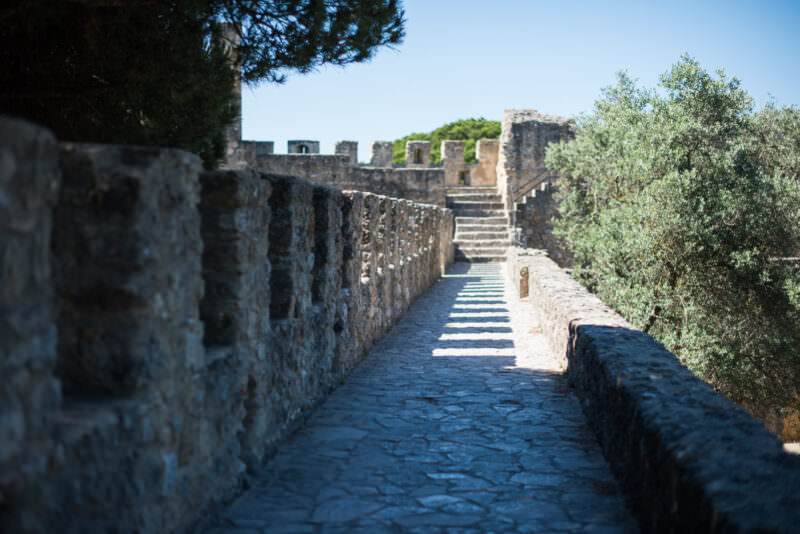
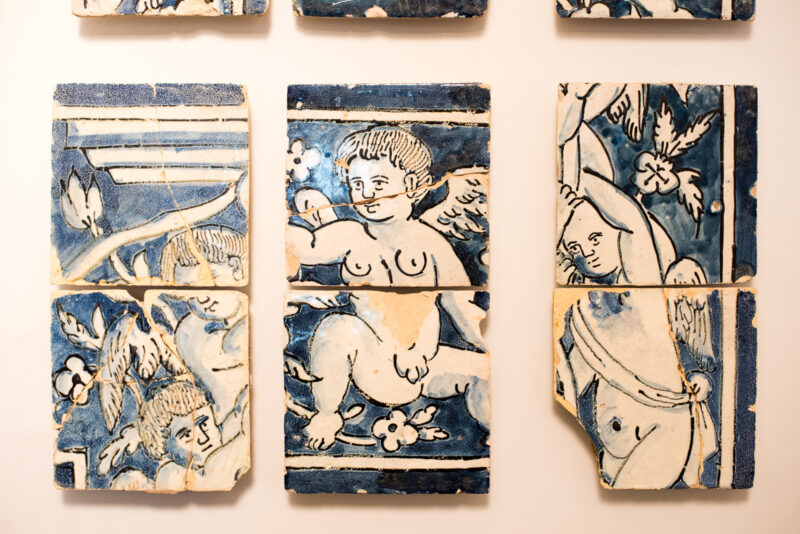
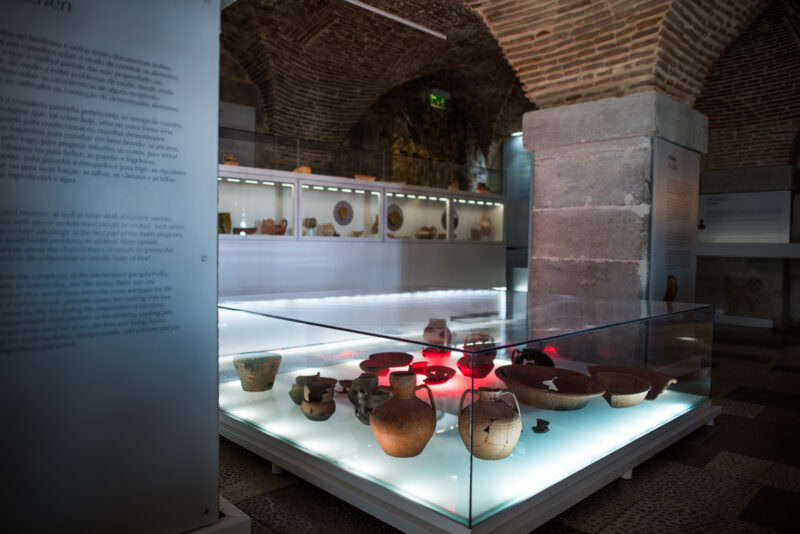
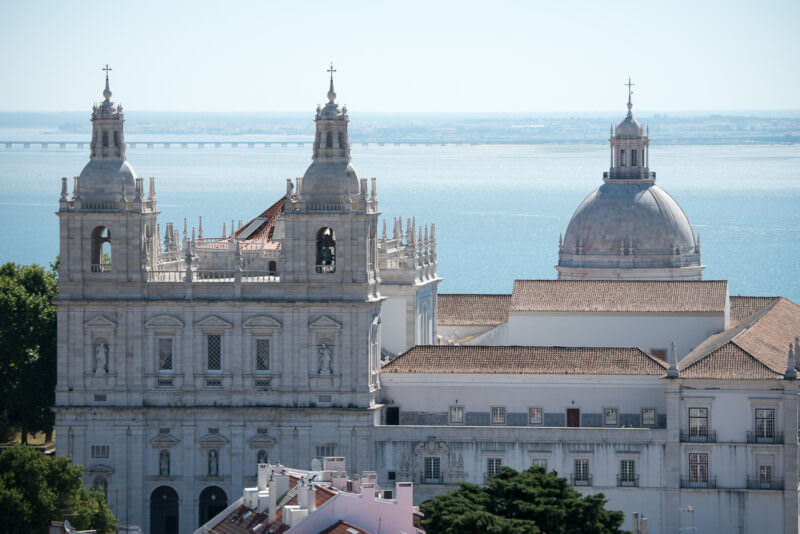
LISBON, Portugal — An antique bronze cannon frames a view from Castelo de São Jorge across the terracotta rooftops of Lisbon’s Baixa district to the Tagus River. Mounted on the hill above Alfama since the Islamic citadel was built in the mid-eleventh century, the fortress overlooks the Tagus, the longest river on the Iberian Peninsula, which meets the Atlantic just downstream at Lisbon’s harbor. Photo by David Coleman / Have Camera Will TravelLicense this image at:DirectlyAlamyLISBON, Portugal — The crenelated walls of Castelo de São Jorge (Saint George’s Castle) crown the highest hill of central Lisbon, above the medieval Alfama district. The site has been fortified since antiquity — the oldest evidence of settlement dates to the 7th century BC — and was successively occupied by Iron Age peoples, Phoenicians, Carthaginians, Romans, Visigoths, and Moors. The castle proper originates in the Moorish alcáçova, the fortified citadel of the city’s Muslim governor, built on the summit in the eleventh and twelfth centuries. In 1147, the first king of Portugal, Afonso Henriques, captured the fortress from the Moors during the Siege of Lisbon with the help of northern European crusaders; when Lisbon became the Portuguese capital in 1255, the castle was transformed into the Royal Palace of the Alcáçova and served as the principal residence of Portuguese kings for some three centuries. It was dedicated to Saint George by King John I in the late fourteenth century, an act that honored the Anglo-Portuguese alliance sealed by the Treaty of Windsor in 1386. The castle was devastated by the Great Lisbon Earthquake of 1755 and restored between 1938 and 1940, giving it the appearance it has today. Photo by David Coleman / Have Camera Will TravelLicense this image at:DirectlyAlamyLISBON, Portugal — A panoramic view from the walls of Castelo de São Jorge looks west over the rooftops of Lisbon to the Tagus River, with the 25 de Abril Bridge spanning the water in the distance and the Sanctuary of Christ the King (Cristo Rei) visible on the south bank at Almada. The castle has held this height above the Alfama district since at least the seventh century BC; Afonso Henriques, the first king of Portugal, took it from the Moors in 1147 during the Siege of Lisbon, and after the city became the Portuguese capital in 1255 it served as the Royal Palace of the Alcáçova for roughly three centuries. The 25 de Abril Bridge, opened in 1966, and the Cristo Rei statue, consecrated in 1959, together give the western panorama from the castle its modern character. Declared a National Monument in 1910 and restored under the Estado Novo between 1938 and 1940, the castle remains the defining landmark of the Lisbon skyline. Photo by David Coleman / Have Camera Will TravelLicense this image at:DirectlyAlamyLISBON, Portugal — The walls of Castelo de São Jorge frame a sweeping panorama over Lisbon’s rooftops and the Tagus River, with the Monastery of São Vicente de Fora prominent in the middle distance and the Ponte Vasco da Gama visible spanning the river on the horizon. The castle crowns the highest hill of central Lisbon, above the Alfama district, and originated as a Moorish citadel in the eleventh and twelfth centuries before becoming Portugal’s royal palace after 1255. The Ponte Vasco da Gama, at roughly 11 miles (17.2 km), is one of the longest bridges in Europe. The view from these ramparts — taking in the city, the broad Tagus estuary, and landmarks spanning many centuries — is among the most celebrated in Lisbon. Photo by David Coleman / Have Camera Will TravelLicense this image at:DirectlyAlamyLISBON, Portugal — The Portuguese national flag and the flag of Lisbon fly above the stone walls of Castelo de São Jorge, the hilltop fortress that has crowned Lisbon’s highest central hill since at least the seventh century BC. The site was fortified in succession by Iron Age peoples, Phoenicians, Carthaginians, Romans, Visigoths, and Moors before Afonso Henriques, the first king of Portugal, captured it in 1147 during the Siege of Lisbon with the help of northern European crusaders. King John I dedicated the castle to Saint George in the late fourteenth century, an act that honoured the patron of knights and of England and sealed the Anglo-Portuguese alliance — reinforced by the Treaty of Windsor (1386) and John I’s marriage to Philippa of Lancaster — giving the fortress the name it bears today. The walls were substantially restored between 1938 and 1940 under the Estado Novo government, with works timed for the Exhibition of the Portuguese World that year, and they have carried essentially this appearance ever since. Castelo de São Jorge was declared a National Monument in 1910 and remains one of Lisbon’s most visited landmarks, offering commanding panoramas over the historic Alfama district and the Tagus River. Photo by David Coleman / Have Camera Will TravelLicense this image at:DirectlyAlamyLISBON, Portugal — A walkway stretches along the stone walls of Castelo de São Jorge above the Alfama district, Lisbon’s oldest neighborhood. The castle traces its origins to the Moorish alcáçova built on this strategic hill in the eleventh and twelfth centuries; following the Portuguese conquest of 1147, it was enlarged into the Royal Palace of the Alcáçova, where the country’s kings resided for roughly three centuries. The walkways and rampart walls seen here largely date from the Estado Novo restoration of 1938 to 1940, which stripped away later accretions and rebuilt the castle as a monument to Portugal’s medieval heritage. The Tower of Ulysses within the walls today houses a camera obscura projecting a live 360-degree image of the city. Photo by David Coleman / Have Camera Will TravelLicense this image at:DirectlyAlamyLISBON, Portugal — The stone walls of Castelo de São Jorge rise above the Alfama district on Lisbon’s highest central hill. The castle originated as the Moorish alcáçova in the eleventh and twelfth centuries and was captured by Afonso Henriques during the Siege of Lisbon in 1147. After Lisbon became the Portuguese capital in 1255, the fortress was transformed into the Royal Palace of the Alcáçova under King Dinis around 1300 and remained the seat of Portugal’s monarchy for some three centuries. The walls seen today reflect both that medieval royal phase and the major restoration carried out under the Estado Novo between 1938 and 1940. Photo by David Coleman / Have Camera Will TravelLicense this image at:DirectlyAlamyLISBON, Portugal — Archaeological azulejos (ceramic tiles) recovered from excavations are displayed at the Castelo de São Jorge museum, among the most visually striking finds from the site’s multi-layered history. Azulejo traditions in Portugal stretch back to the Moorish period, and tiles recovered here reflect the site’s long occupation — from the tenth-century Islamic citadel through the medieval Royal Palace of the Alcáçova, which served as the residence of Portugal’s kings for roughly three centuries after Lisbon became the capital in 1255. Excavations within the walls have uncovered elite Islamic houses of the eleventh and twelfth centuries with walls bearing painted stucco with geometric motifs, as well as a later aristocratic palace decorated with Hispano-Arab and figurative tiles — finds that trace the azulejo tradition deep into the castle’s own fabric. Castelo de São Jorge has been a National Monument since 1910 and remains one of the foremost historical attractions in the Portuguese capital. Photo by David Coleman / Have Camera Will TravelLicense this image at:DirectlyAlamyLISBON, Portugal — Archaeological artifacts — primarily pottery and household items — recovered from excavations on the castle grounds are displayed in the museum inside Castelo de São Jorge. The site preserves remains of successive settlements spanning the Iron Age through the Moorish period and into the medieval royal palace, making its archaeological layer one of the most historically dense in Portugal; the oldest evidence of settlement dates to the seventh century BC, when a community on the height was already in trade contact with Phoenician merchants. After Lisbon became the Portuguese capital in 1255, the Moorish citadel was adapted as the Royal Palace of the Alcáçova, the principal residence of Portugal’s kings for roughly three centuries — among the events staged here were the reception of Vasco da Gama by King Manuel I on his return from India, and an early performance of a work by Gil Vicente, the father of Portuguese theatre. The museum also houses the Olisipónia multimedia exhibition on Lisbon’s history, and the Tower of Ulysses contains a camera obscura that projects a live 360-degree image of the city. Photo by David Coleman / Have Camera Will TravelLicense this image at:DirectlyAlamyLISBON, Portugal — The Monastery of São Vicente de Fora, with its prominent dome and twin bell towers, is seen from the ramparts of Castelo de São Jorge. Built in the Mannerist style and completed in the seventeenth century, the monastery is the burial place of the kings and queens of the House of Braganza and is known for its magnificent azulejo-tiled cloisters. The Ponte 25 de Abril is visible in the background, spanning the Tagus River; opened in 1966 and renamed after the Carnation Revolution of April 25, 1974, the bridge connects Lisbon to Almada on the south bank. Castelo de São Jorge, the Moorish hilltop fortress from which this view is taken, has been a defining feature of the Lisbon skyline since the eleventh and twelfth centuries. Photo by David Coleman / Have Camera Will TravelLicense this image at:DirectlyAlamyLISBON, Portugal — Stone steps rise along the interior walls of Castelo de São Jorge, the hilltop fortress perched above Lisbon’s historic Alfama district. The site was fortified in succession by Iron Age peoples, Phoenicians, Carthaginians, Romans, Visigoths, and Moors before Afonso Henriques, the first king of Portugal, captured it in 1147 during the Siege of Lisbon. The present walls and ramparts owe their appearance to a sweeping restoration carried out between 1938 and 1940, when the Estado Novo government cleared away centuries of later accretions — barracks, prison buildings, and other post-Manueline structures — and rebuilt the fortifications as a symbol of Portugal’s medieval heritage, with the work timed for the Exhibition of the Portuguese World. The castle was declared a National Monument in 1910 and today draws visitors to its walkways, towers, and panoramic views over the city and the Tagus River. Photo by David Coleman / Have Camera Will TravelLicense this image at:DirectlyAlamyLISBON, Portugal — The Portuguese flag flies above the crenelated walls of Castelo de São Jorge, the medieval fortress crowning the hill above the Alfama district. Captured from the Moors in 1147 by Afonso Henriques, the castle later took the name of Saint George under King John I, whose marriage to Philippa of Lancaster sealed the Anglo-Portuguese alliance. Much of the present battlement work dates to a 1938 – 1940 reconstruction rather than the Middle Ages. Photo by David Coleman / Have Camera Will TravelLicense this image at:DirectlyAlamyLISBON, Portugal — The Moorish walls of Castelo de São Jorge rise above Lisbon’s Alfama district, their crenelated battlements a defining feature of the city’s skyline. The castle originated as the alcáçova — the fortified citadel of Lisbon’s Muslim governor — built in the eleventh and twelfth centuries, when the city was known in Arabic as al-Ushbuna. After Afonso Henriques took the fortress in 1147, it became the royal seat of Portugal’s monarchy; King Dinis renovated it extensively around 1300, and King John I dedicated it to Saint George in the late fourteenth century in honor of the Anglo-Portuguese alliance. The walls seen today largely date from the Estado Novo restoration of 1938 to 1940, which reconstructed the ramparts and towers destroyed by the 1755 earthquake. Photo by David Coleman / Have Camera Will TravelLicense this image at:DirectlyAlamyLISBON, Portugal — The walls of Castelo de São Jorge dominate the Alfama hillside, a landmark of medieval military architecture at the heart of Lisbon. The castle traces its origins to the Moorish alcáçova built here in the eleventh and twelfth centuries, and it served as Portugal’s royal palace for roughly three centuries after Afonso Henriques captured it during the Siege of Lisbon in 1147. The walls were devastated by the Great Lisbon Earthquake of November 1, 1755, and rebuilt to their present appearance in the Estado Novo restoration of 1938 to 1940 — timed for the Exhibition of the Portuguese World of 1940, which marked the eighth centenary of Portuguese independence. Within the castle today, an archaeological site preserves layered remains of Iron Age, Moorish, and medieval royal occupation. Photo by David Coleman / Have Camera Will TravelLicense this image at:DirectlyAlamy
What to know before you go
You can walk up to the castle from downtown Lisbon, but be prepared for a steep climb. You can also get one of the tuk-tuks, although not all drivers will be interested in a one-way taxi run.
As you can see from the photos, you can walk up on the ramparts. As you’d expect, the stones are well-worn and can be uneven and slippery, and there aren’t many safety railings, so it’s definitely somewhere to exercise caution, especially with young kids or anyone who isn’t sure-footed.
Tickets are required. The ticket office is right at the entrance. Tickets are single-entry — if you leave and come back, you’ll need a new ticket.
Visits are entirely self-guided, and once you’ve paid for your ticket, you can wander around at your leisure. There’s a small museum that displays some of the artifacts recovered from the various excavations of the site.
There is a nice restaurant (ie. dressy) that uses some of the historic buildings, the Casa do Leão. If the weather’s nice, there are tables outside with a spectacular view over the city. Reservations are recommended.
Have Camera Will Travel // Newsletter
Practical field notes, hands-on gear tests.
In the warmer months, there are mobile wine carts along the main walkway where you can buy a glass of wine and drink it while enjoying the wonderful view of the city.
Portugal
Enjoyed this article? Personalize your search results.
I'm a freelance travel photographer based in Washington DC. Seven continents, up mountains, underwater, and a bunch of places in between. My images have appeared in numerous publications, and you can check out some of my gear reviews and tips here. More »