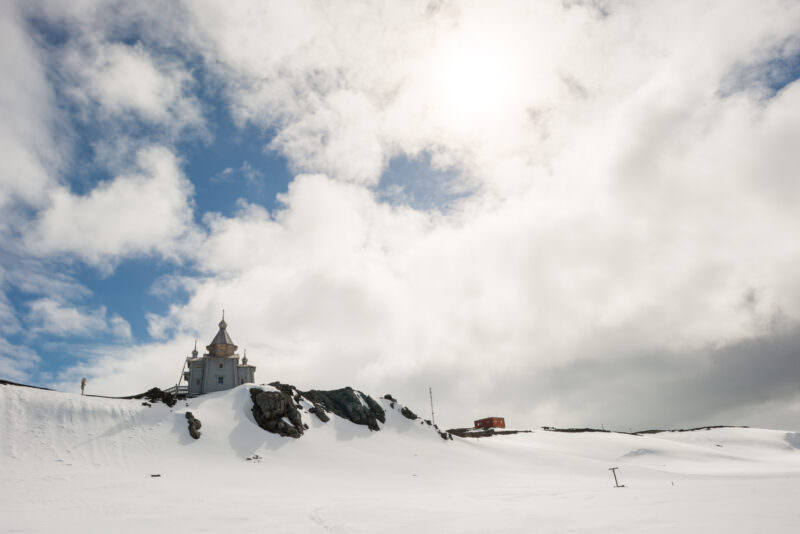
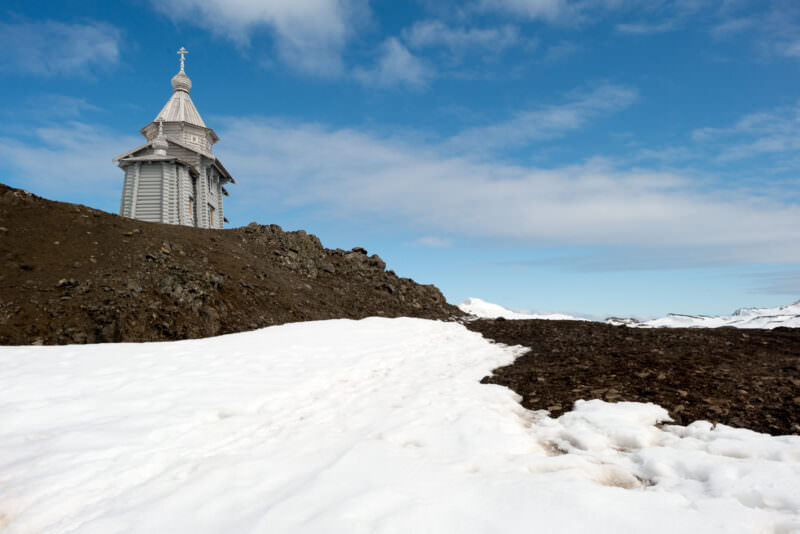
Trinity Church is not the only church in Antarctica, but it may well be the most elaborate.
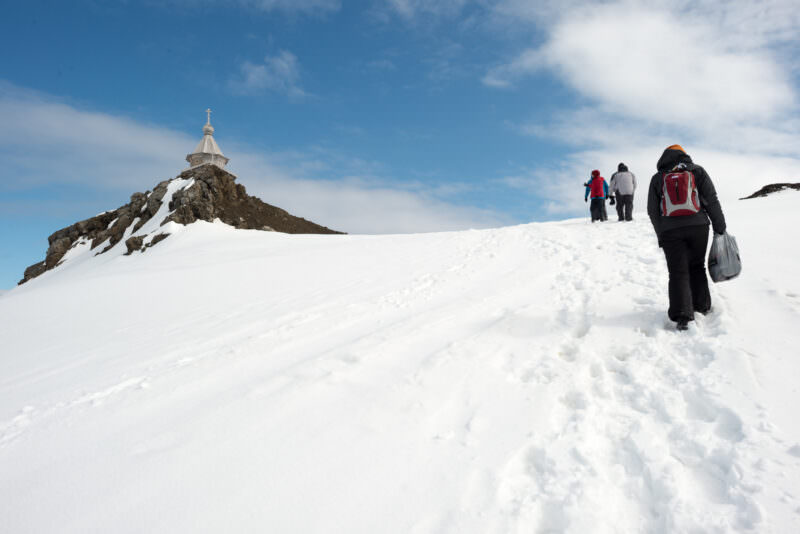
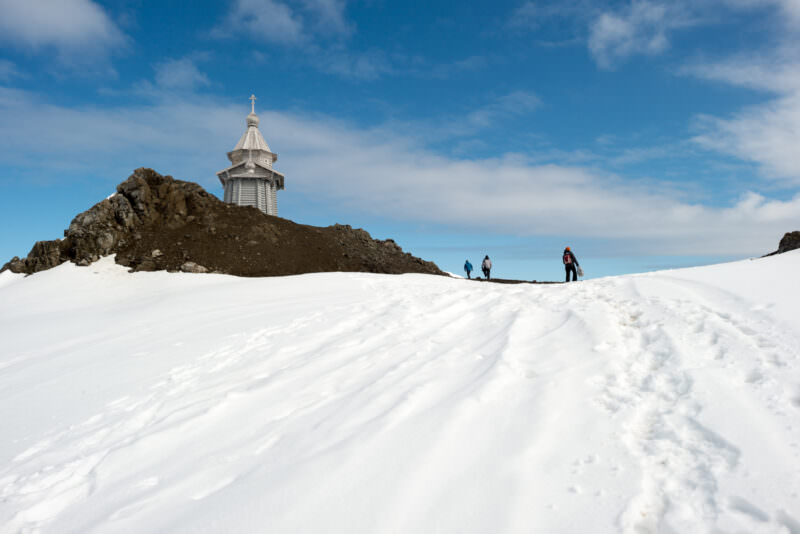
And it’s quite the hike to get there. It’s not that it’s far. And the hill isn’t big. But the only way up there is to trudge through the deep snow.
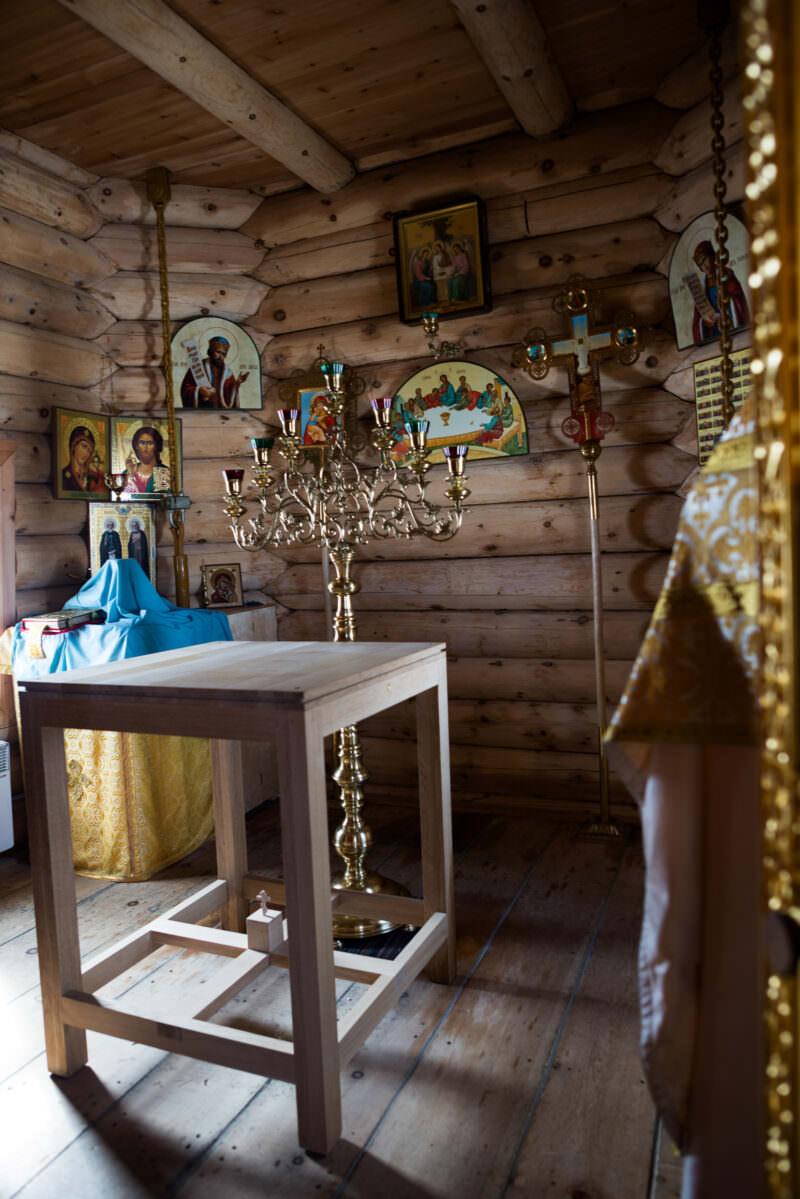
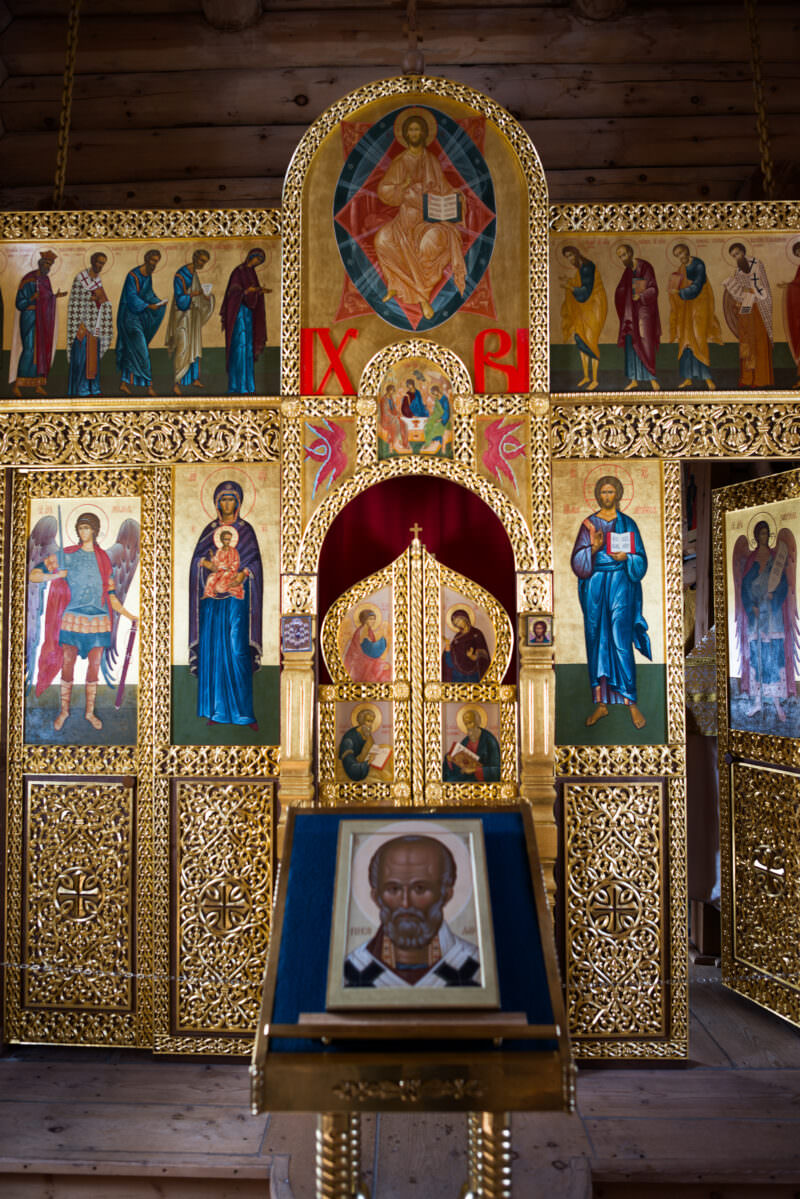
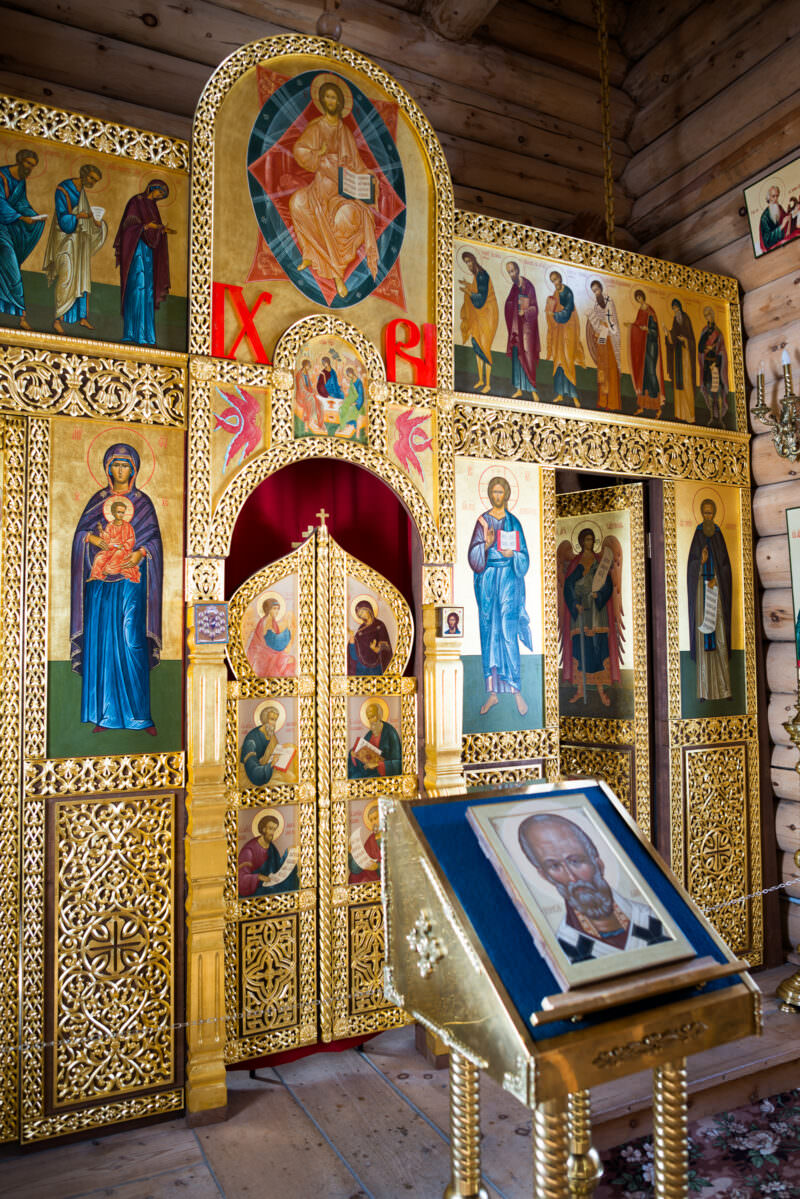
And while it looks unusual enough for this location from the outside — most of the buildings in this part of the world have that distinctly utilitarian look of glorified shipping containers, after all — I’m genuinely surprised when I step inside.
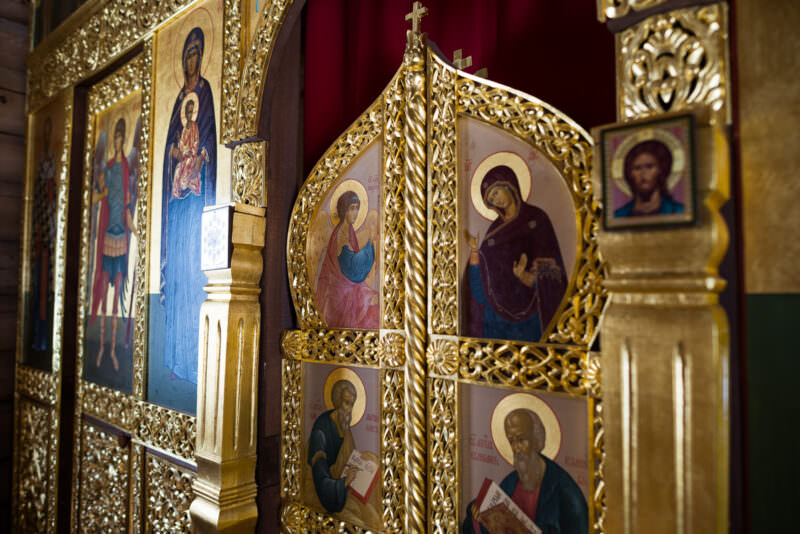
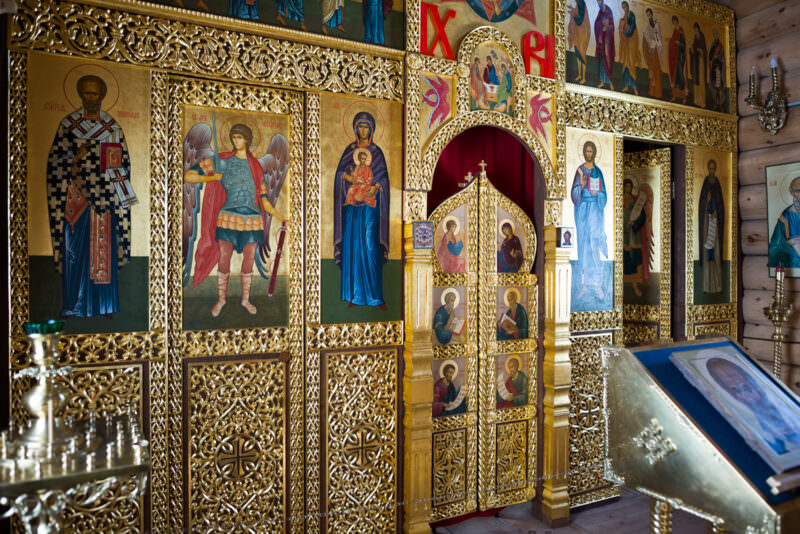
Featuring ornate iconostasis that you might expect to find in Russia but is oddly out of character with all the other boxy, utilitarian, prefabricated buildings on an Antarctic scientific research base, it’s a Russian Orthodox church — the southernmost permanently-staffed Eastern Orthodox church in the world — on Russia’s Bellingshausen Station on King George Island in the South Shetland Islands.1 It’s located on a rocky outcrop separate from but overlooking a cluster of research bases.
Have Camera Will Travel // Newsletter
Practical field notes, hands-on gear tests.
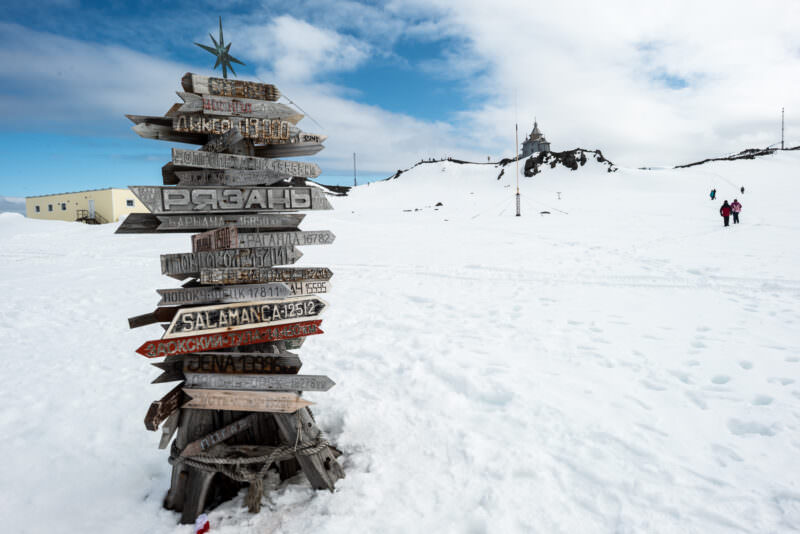
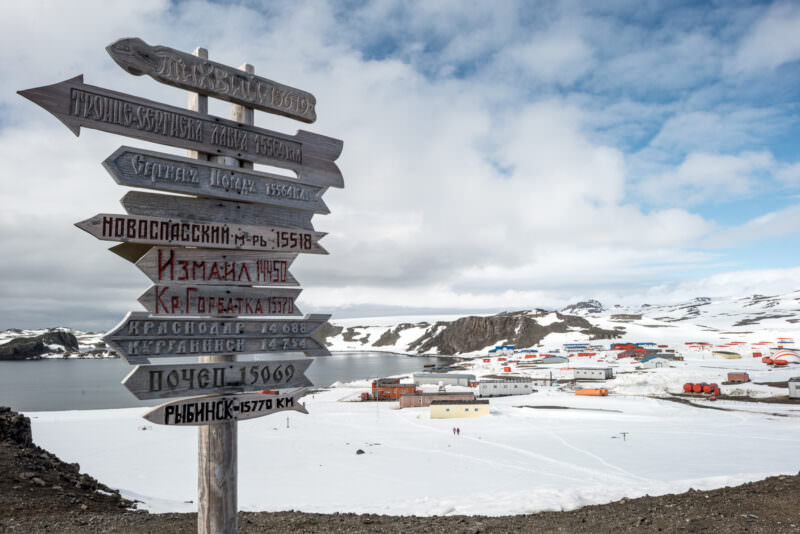
KING GEORGE ISLAND, Antarctica — Wooden signposts at Bellingshausen Station point toward Russian cities with their distances, while Trinity Church rises on the hill behind them. The signs name destinations including Novospassky Monastery, Izmail, Krasnodar, and Rybinsk — the last rendered as “Rybinok” on the sign — underlining the distances separating the station’s personnel from home. Bellingshausen was established on 22 February 1968 on King George Island’s Fildes Peninsula, roughly 660 feet (200 m) from Chile’s Base Presidente Eduardo Frei Montalva. Trinity Church (Khram Svyatoy Troitsy), consecrated on 15 February 2004, is the southernmost permanently-staffed Eastern Orthodox church in the world; it is served year-round by hieromonks of the Trinity – Sergius Lavra, who hold services for the Russian and broader international community across the island’s cluster of national stations. Photo by David Coleman / Have Camera Will TravelLicense this image at:DirectlyAlamy
Amongst hard-core Antarcticans, King George Island is regarded as a bit of a beach holiday. It’s outside the Antarctic Circle (but within the Antarctic Treaty Zone) and right on the northern edge of the winter sea ice shelf. While it still gets plenty cold and windy, especially in winter, it’s generally not as harsh or as iced-in as some of the higher latitudes.
But even in these conditions, just getting to the church itself takes a bit of effort. There’s no protected tunnel access here or even nicely plowed paths — you have to walk up the hill, trudging through the deep snow. That can’t be a lot of fun in the depth of winter.
As you can imagine, building a church — or building anything, for that matter — in Antarctica is a bit more complicated than your run-of-the-mill construction. You can’t just duck down the road to the local building supplies place to pick up the wood or chop down some nearby trees. And you have to be prepared to work in whatever windows of good weather present themselves.
KING GEORGE ISLAND, Antarctica — The iconostasis of Trinity Church at Bellingshausen Station presents its gilded tiers of sacred imagery in the complete silence of the Antarctic interior. The carved wooden iconostasis was made by craftsmen from Dmitrov, near Moscow, under artist Valery Grishanov; the church itself was constructed from Siberian larch and Altai cedar in the village of Kyzyl-Ozek on Lake Teletskoye in the Altai Republic of southern Siberia, shipped via the Baltic port of Kaliningrad aboard the R/V Akademik Sergey Vavilov, and consecrated on 15 February 2004 as the southernmost permanently-staffed Eastern Orthodox church in the world. Roughly 49 feet (15 m) tall and seating about 30 worshippers, it is served year-round by hieromonks of the Trinity – Sergius Lavra on annual rotations matching those of the scientific personnel. The church’s link to the Lavra — one of the most venerated monasteries in Russian Orthodoxy — is fundamental to its identity and governance. Photo by David Coleman / Have Camera Will TravelLicense this image at:DirectlyAlamy
The story of the construction of Trinity Church started sometime in the 1990s when discussions about building an Orthodox church in Antarctica started gaining momentum. By 2000 a plan was in place.
The new church was intended to have two objectives: firstly, to serve as a tribute to those who had played a role in exploring Antarctica, especially Russians Fabian von Bellingshausen, his deputy, Mikhail Lazarev, and Russians who had died in the region; and, secondly, to provide a place of worship for residents of any of the nearby research bases.
The church was designed and built of Siberian larch in the lower courses and Altai cedar above in the village of Kyzyl-Ozek on Lake Teletskoye in the Altai Republic of southern Siberia in 2002–03. Once completed, it was dismantled, loaded onto trucks, and driven to the Polish port of Kaliningrad and put aboard the Academician Serge Vavilov for the trip south to King George Island.
Once in the Antarctic, the church was reassembled on a rocky hill above Bellingshausen Station by a team of about eight in roughly 50 to 60 days during 2003–04. Metal chains were installed inside the structure to anchor it against polar winds that have been recorded gusting above 63 miles per hour (100 km/h).
The church was consecrated on 15 February 2004 by Bishop Feognost (Theognost) of Sergiev Posad, abbot of the Trinity–Sergius Lavra. They, along with a group of other clerics, pilgrims, and sponsors, traveled to King George Island for the occasion. As the divine liturgy was underway, the clouds parted briefly to allow the sun to shine directly on the church. Some of those present took it as a fortuitous “little miracle.” And for the first time in history, church bells rang out in Antarctica.
The church is served year-round by one or two hieromonks (monk-priests) of the Trinity–Sergius Lavra who rotate annually, and the church can seat about 30.
If you’d like to visit the Trinity Church but Antarctica is a bit too far away, there’s apparently a full-size replica in Valday, Russia. Which might still be cold to get to, but maybe not quite so cold.
Photos of Trinity Church
KING GEORGE ISLAND, Antarctica — Visitors climb a steep, snowy hill toward Trinity Church, the Russian Orthodox church that stands above Bellingshausen Station on King George Island’s Fildes Peninsula. The church was built from Siberian larch and Altai cedar by craftsmen in the village of Kyzyl-Ozek on Lake Teletskoye in the Altai Republic of southern Siberia, then dismantled, shipped south aboard the R/V Akademik Sergey Vavilov via Kaliningrad, and reassembled in Antarctica — with metal chains installed inside the structure to anchor it against polar winds that have been recorded gusting above 63 miles per hour (100 km/h). Standing roughly 49 feet (15 m) tall, it was consecrated on 15 February 2004 and is recognized as the southernmost permanently-staffed Eastern Orthodox church in the world. It is served year-round by rotating hieromonks of the Trinity – Sergius Lavra, who conduct services in Russian and Spanish for the multinational research community on the island. Photo by David Coleman / Have Camera Will TravelLicense this image at:DirectlyAlamyKING GEORGE ISLAND, Antarctica — The warm timber interior of Trinity Church at Bellingshausen Station reveals the craftsmanship of the Altai log-builders who constructed it from Siberian larch in the lower courses and Altai cedar above, with aspen shingles on the cupolas, all sourced from forests around Lake Teletskoye near Kyzyl-Ozek in the Altai Republic of southern Siberia before it was dismantled and shipped to Antarctica. Consecrated on 15 February 2004, the church stands roughly 49 feet (15 m) tall on a rocky hill above the Russian station and is recognized as the southernmost permanently-staffed Eastern Orthodox church in the world. Metal chains fixed inside the walls anchor the structure against polar winds recorded gusting above 63 miles per hour (100 km/h) at the station. The interior’s traditional Russian Orthodox design — timber ceilings, icon-lined walls, and a gilded iconostasis carved by masters from Dmitrov near Moscow — was intended to give the rotating polar personnel a sense of, in the words associated with the church, “a little island of native land.” Photo by David Coleman / Have Camera Will TravelLicense this image at:DirectlyAlamyKING GEORGE ISLAND, Antarctica — Trinity Church stands on a rocky hill above Bellingshausen Station on King George Island’s Fildes Peninsula, its log walls, onion dome, and gilded cross immediately identifying it as a transplant of the traditional Russian Orthodox church form. The building was crafted from Siberian larch in the lower courses and Altai cedar above in the village of Kyzyl-Ozek on Lake Teletskoye in the Altai Republic of southern Siberia, shipped south via Kaliningrad aboard the R/V Akademik Sergey Vavilov, and consecrated on 15 February 2004; at roughly 49 feet (15 m) tall it is the southernmost permanently-staffed Eastern Orthodox church in the world. The church’s most prominent visitor arrived on 17 February 2016, when Patriarch Kirill of Moscow celebrated a thanksgiving service here — the first time any head of the Russian Orthodox Church had set foot on the Antarctic continent. Photo by David Coleman / Have Camera Will TravelLicense this image at:DirectlyAlamyKING GEORGE ISLAND, Antarctica — A close view of the iconostasis at Trinity Church, the Russian Orthodox church at Bellingshausen Station on King George Island, shows the painted icons and gilded woodwork that define the devotional heart of the building. The iconostasis was carved by craftsmen from Dmitrov, near Moscow, under artist Valery Grishanov; the church was built from Siberian larch and Altai cedar in the village of Kyzyl-Ozek on Lake Teletskoye in the Altai Republic of southern Siberia and reassembled on a rocky hill above the Russian station before being consecrated on 15 February 2004 as the southernmost permanently-staffed Eastern Orthodox church in the world. Its year-round priests — hieromonks of the Trinity – Sergius Lavra — hold services in both Russian and Spanish, reflecting the multinational character of King George Island’s research community. In January 2007 the church hosted the first Orthodox wedding in Antarctica, between a Russian woman and a Chilean man who had converted to Orthodoxy. Photo by David Coleman / Have Camera Will TravelLicense this image at:DirectlyAlamyKING GEORGE ISLAND, Antarctica — Wooden signposts at Bellingshausen Station point toward distant cities and their respective distances, with Trinity Church visible on the rocky hill behind them. Established on 22 February 1968 on King George Island’s Fildes Peninsula, Bellingshausen is Russia’s principal Antarctic research station and sits roughly 660 feet (200 m) from Chile’s Base Presidente Eduardo Frei Montalva. Trinity Church — formally the Church of the Holy Trinity (Khram Svyatoy Troitsy) — was built from Siberian larch and Altai cedar in the village of Kyzyl-Ozek on Lake Teletskoye in the Altai Republic of southern Siberia, shipped to Antarctica aboard the R/V Akademik Sergey Vavilov via the Baltic port of Kaliningrad, and consecrated on 15 February 2004; it is the southernmost permanently-staffed Eastern Orthodox church in the world. The church is served year-round by rotating hieromonks of the Trinity – Sergius Lavra, who hold services in both Russian and Spanish to serve the diverse international community on the island. Photo by David Coleman / Have Camera Will TravelLicense this image at:DirectlyAlamyKING GEORGE ISLAND, Antarctica — Painted icons arranged across the gilded iconostasis of Trinity Church glow within the intimate interior of the building at Bellingshausen Station on King George Island. The iconostasis was carved by craftsmen from Dmitrov, near Moscow, under artist Valery Grishanov; the church itself was built from Siberian larch and Altai cedar in the village of Kyzyl-Ozek on Lake Teletskoye in the Altai Republic of southern Siberia and reassembled on a rocky Antarctic hill before being consecrated on 15 February 2004. With a capacity of roughly 30 worshippers, it is served year-round by rotating hieromonks of the Trinity – Sergius Lavra, who pray among other duties for the Russian and Soviet polar explorers who have died in Antarctic service — a list of roughly 64 to 100 names kept sealed in the altar. The church also marks a historic high point: on 17 February 2016, Patriarch Kirill of Moscow celebrated a service here, the first visit to Antarctica by any head of the Russian Orthodox Church. Photo by David Coleman / Have Camera Will TravelLicense this image at:DirectlyAlamyKING GEORGE ISLAND, Antarctica — The onion-domed spire of Trinity Church rises above the Fildes Peninsula as an aircraft approaches the Teniente Rodolfo Marsh Martín aerodrome on King George Island. Built from Siberian larch and Altai cedar in the village of Kyzyl-Ozek on Lake Teletskoye in the Altai Republic of southern Siberia and reassembled on a rocky hill above Bellingshausen Station, the church stands roughly 49 feet (15 m) tall and was consecrated on 15 February 2004 as the southernmost permanently-staffed Eastern Orthodox church in the world. The aerodrome is one of the very few permanent-runway airfields in Antarctica, serving as the primary air gateway between the continent and Punta Arenas in southern Chile. The juxtaposition of the traditional Russian timber church and the arriving aircraft captures the unusual convergence of the ancient and the logistical at this remote outpost. Photo by David Coleman / Have Camera Will TravelLicense this image at:DirectlyAlamyKING GEORGE ISLAND, Antarctica — Trinity Church, the Russian Orthodox church beside Bellingshausen Station, occupies a rocky hill on King George Island’s Fildes Peninsula. Built from Siberian larch and Altai cedar in the village of Kyzyl-Ozek on Lake Teletskoye in the Altai Republic of southern Siberia and shipped to Antarctica aboard the R/V Akademik Sergey Vavilov via Kaliningrad, the building was consecrated on 15 February 2004 and stands as the southernmost permanently-staffed Eastern Orthodox church in the world. At roughly 49 feet (15 m) tall with a capacity of about 30 worshippers, it was designed to serve as, in the words associated with it, “a little island of native land” for the Russian polar personnel who serve long isolated tours at the station. The church’s first recorded wedding — between a Russian woman and a Chilean man who had converted to Orthodoxy — was celebrated here in January 2007, reflecting the broader international life of this unusually populous Antarctic island. Photo by David Coleman / Have Camera Will TravelLicense this image at:DirectlyAlamyKING GEORGE ISLAND, Antarctica — The ornate iconostasis of Trinity Church fills the sanctuary with gilded tiers of painted icons at Bellingshausen Station on King George Island. This screen of sacred images was carved by craftsmen from Dmitrov, near Moscow, under artist Valery Grishanov, and was made to accompany the timber church that Altai builders constructed from Siberian larch and cedar in the village of Kyzyl-Ozek on Lake Teletskoye and shipped to Antarctica for consecration on 15 February 2004. As the southernmost permanently-staffed Eastern Orthodox church in the world, Trinity Church is served year-round by hieromonks of the Trinity – Sergius Lavra, who conduct services in Russian and Spanish for the diverse international community resident on the island. On 17 February 2016, Patriarch Kirill of Moscow celebrated a thanksgiving service here, becoming the first head of the Russian Orthodox Church to set foot on the Antarctic continent. Photo by David Coleman / Have Camera Will TravelLicense this image at:DirectlyAlamyKING GEORGE ISLAND, Antarctica — Trinity Church stands on a rocky hill above Bellingshausen Station on King George Island, its traditional Russian silhouette — onion dome, gilded cross, log walls — a striking counterpoint to the Antarctic landscape below. Built from Siberian larch in the lower courses and Altai cedar above, with aspen shingles cladding the cupolas, the structure was raised in the village of Kyzyl-Ozek on Lake Teletskoye in the Altai Republic, dismantled, shipped via Kaliningrad aboard the R/V Akademik Sergey Vavilov, and reassembled in Antarctica with internal metal chains to resist the polar winds. Consecrated on 15 February 2004, it is approximately 49 feet (15 m) tall and is the southernmost permanently-staffed Eastern Orthodox church in the world. Rotating hieromonks of the Trinity – Sergius Lavra serve it year-round, praying among other duties for the roughly 64 to 100 Russian and Soviet polar explorers who have died in Antarctic service — a list kept sealed in the altar. Photo by David Coleman / Have Camera Will TravelLicense this image at:DirectlyAlamyKING GEORGE ISLAND, Antarctica — A wooden signpost at Bellingshausen Station displays distances to Russian cities — including Rybinsk at 9,799 miles (15,770 km) and Krasnodar at 9,127 miles (14,688 km) — with Bellingshausen Station and Base Presidente Eduardo Frei Montalva spread across the Fildes Peninsula below. The two facilities sit roughly 660 feet (200 m) apart and together form the operational core of one of Antarctica’s most internationally active research clusters, anchored by the nearby Teniente Rodolfo Marsh Martín aerodrome. The signpost is a common sight at polar stations, where pointing homeward serves as both a landmark for visitors and a reminder of how far the personnel have traveled. Trinity Church, the southernmost permanently-staffed Eastern Orthodox church in the world, is also visible on the hillside above the Russian base. Photo by David Coleman / Have Camera Will TravelLicense this image at:DirectlyAlamyKING GEORGE ISLAND, Antarctica — An Eastern Orthodox crucifix is displayed within the interior of Trinity Church at Bellingshausen Station, King George Island, its blue and gold surroundings reflecting the traditional decorative language of Russian Orthodox sacred space. The church was built from Siberian larch and Altai cedar in the village of Kyzyl-Ozek on Lake Teletskoye in the Altai Republic of southern Siberia, with a carved wooden iconostasis crafted separately by masters from Dmitrov, near Moscow, under artist Valery Grishanov; it was consecrated on 15 February 2004 and is the southernmost permanently-staffed Eastern Orthodox church in the world. Hieromonks of the Trinity – Sergius Lavra rotate through the posting year-round, holding services in Russian and Spanish for the multinational research community on King George Island. Among their duties is praying for the Russian and Soviet polar explorers who have died in Antarctic service — a list of roughly 64 to 100 names kept sealed in the altar. Photo by David Coleman / Have Camera Will TravelLicense this image at:DirectlyAlamyKING GEORGE ISLAND, Antarctica — Visitors make their way up a steep, snowy slope toward Trinity Church, the Russian Orthodox church perched above Bellingshausen Station on King George Island. Constructed from Siberian larch and Altai cedar in the village of Kyzyl-Ozek on Lake Teletskoye in the Altai Republic of southern Siberia and reassembled on site by a team of about eight builders in roughly 50 to 60 days, the approximately 49-foot (15 m) structure was consecrated on 15 February 2004 and is the southernmost permanently-staffed Eastern Orthodox church in the world. Metal chains fixed inside the frame anchor the building against the Antarctic wind. The church is served continuously by hieromonks of the Trinity – Sergius Lavra, who rotate annually as the scientific personnel do, holding services in both Russian and Spanish. Photo by David Coleman / Have Camera Will TravelLicense this image at:DirectlyAlamy
What To Know Before You Go
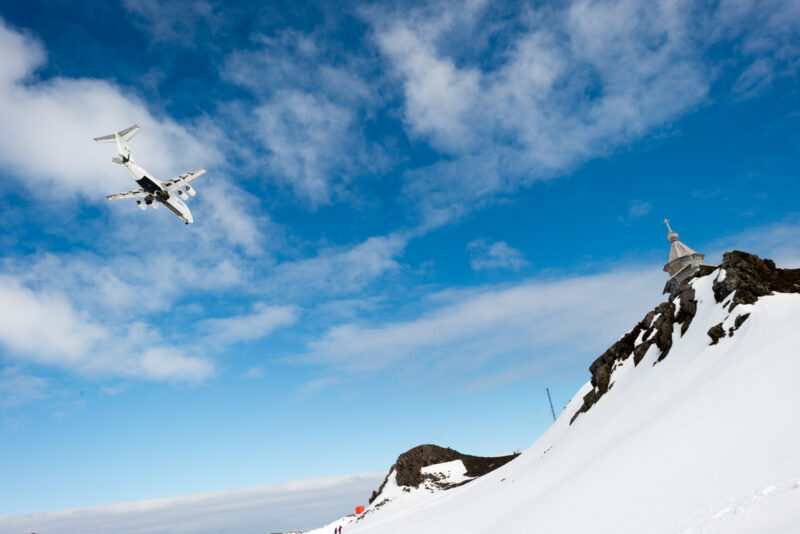
Trinity Church is part of Bellingshausen Station, one of the few stations on the Antarctic Peninsula that has an airstrip that (specialized) commercial jets can use. So some tourist expeditions use it as a way to do a fly-sail trip that only involves crossing the Drake Passage one way by ship. Some companies might even offer a fly-fly option with no ocean passage.
Notes & References:
Many locations in Antarctica go by competing names, typically by nationality, reflecting competing historical claims to the region. King George Island is the British name. To the Argentines, it’s Isla 25 de Mayo. To the Chileans, it’s Isla Rey Jorge. And for the Russians, it’s Vaterloo. [↩︎]
Enjoyed this article? Personalize your search results.
I'm a freelance travel photographer based in Washington DC. Seven continents, up mountains, underwater, and a bunch of places in between. My images have appeared in numerous publications, and you can check out some of my gear reviews and tips here. More »