When shopping for camera gear online, you will occasionally find brand-name bodies and lenses priced hundreds of dollars below the standard retail rate. While the big retailers do run legitimate sales, massive price discrepancies usually point to one thing: gray market gear.
Gray market equipment isn’t counterfeit, and there is nothing inherently unethical about buying it. These are often brand-new, authentic products manufactured in the exact same factories as their full-priced counterparts. However, because they are imported outside of the manufacturer’s authorized distribution channels, they carry specific risks — particularly regarding warranties and repairs.
I have purchased gray market gear myself several times to save money on specific lenses, and buying gray market is a valid way to stretch your budget. But you need to do it with your eyes open.
Here is exactly what the gray market is, and the pros and cons of utilizing it for your kit.
What does gray market mean?
The short version is that gray market gear is gear that the retailer has imported from an entity other than the original manufacturer or through the official distribution channels for that country. For example, in the US, rather than a Nikon camera being imported through Nikon USA, a retailer might import a batch of cameras directly from, say, Nikon Thailand. Sometimes it is referred to as “direct import,” because it hasn’t gone through the official authorized agents and distributors.1
In the purest sense, gray market gear should be brand new. It’s often authentic and legit gear. It’s often the same genuine article just intended for a different market. It should be in original unopened boxes. It has probably been manufactured in exactly the same factory by exactly the same people. And in many cases it performs just as well as gear that has gone through the traditional and official path to the store.
But camera gear manufacturers don’t like gray market channels. They don’t have the same control over supply or pricing. And they do their best to discourage consumers from buying gray market gear; some manufacturers, like Canon, even rename camera models for different regions. That desire by manufacturers to enforce control is one source of the downsides to gray market gear.
The other source comes down to the uncontrolled and unregulated aspect of it. You’ll notice that I’ve used a lot of qualifying “shoulds” and “oftens” above. That points to one of the risks to gray market gear: because there isn’t the same level of control over the distribution channel, there are also instances where products might be counterfeit or repackaged or previously opened items.
You can — and should — ask the retailer, but you’re relying on them being upfront and honest with you, and the reality of online retail is that not everyone is upfront and honest. You also don’t have the same level of support and recourse if something goes wrong with the transaction or gear.
Pros of buying gray market camera gear
Without the pros, there’s no reason for the gray market to even be a thing. Here is why photographers utilize it:
- Significant Price Drops: This is the primary driver. You can often save 15% to 20% on high-end bodies and lenses, freeing up your budget for other gear.
- Bypassing Backorders: When a highly anticipated camera is sold out in your local market, gray market importers often source inventory from regions with lower demand, allowing you to skip the waitlist.
- Niche Availability: You might be able to find specific models, colors, or feature sets that were never officially distributed in your home country.
Cons of buying gray market camera gear
The cons are crucial here, because they can make a meaningful difference in the decision on whether the discount is actually worth the risk.
- Warranty Voids and Repair Restrictions: This is the most significant risk. Manufacturers use after-sales service to enforce their distribution channels, meaning your official manufacturer warranty is immediately voided. Worse, the strictness of repair policies varies wildly. While Canon will usually let you pay out-of-pocket to repair a gray market camera, Nikon USA is notoriously strict and will often outright refuse to service gray market gear, even if you offer to pay full price.
- Reduced Resale Value: Because gray market gear carries a stigma regarding its long-term repairability, it typically commands a lower price on the used market. Savvy buyers know that a major failure on a gray market camera might be difficult to fix if the manufacturer restricts parts to third-party repair shops, which shrinks your pool of potential buyers.
- Regional Hardware and Firmware Differences: Products intended for other markets may have practical variations. You might receive a physical manual in a different language or a battery charger designed for a foreign wall outlet. Additionally, a camera’s wireless functionality might not be certified by your local regulatory body (like the FCC in the US), or it might lack certain regional firmware features.
- The “In-House” Warranty Gap: While reputable retailers like B&H or Adorama will often step in to offer their own 90-day or 1-year in-house warranty on imported items, these are usually more limited in scope than a manufacturer’s warranty and only cover defects right out of the box, not long-term wear and tear.
Why gray market gear can be cheaper
If it’s the same product, why is it cheaper?
There’s no single reason that gray market gear might be cheaper. In other words: it’s complicated. But some factors that can come into play include:
- Differently negotiated distribution agreements.
- Fluctuating currency exchange rates.
- Different market dynamics.
- Bulk buying.
- Purchasing excess or discontinued inventory.
- Market competition.
Where to find gray market gear
The most common place to run into gray market gear is when doing an internet search for deals on cameras or lenses. They’ll often stand out with prices that seem a lot cheaper than other places.
While some retailers can be shady, major, fully legit retailers still deal in these items. B&H Photo and Adorama, for example, regularly sell gray market items side-by-side with US-market products. Depending on the item, they will explicitly label them as “Grey Market” (or “Gray Market”) or use softer terminology like “Imported.” They are very transparent about it and clearly note that these items include their own in-house warranties to cover the gap left by the manufacturer.
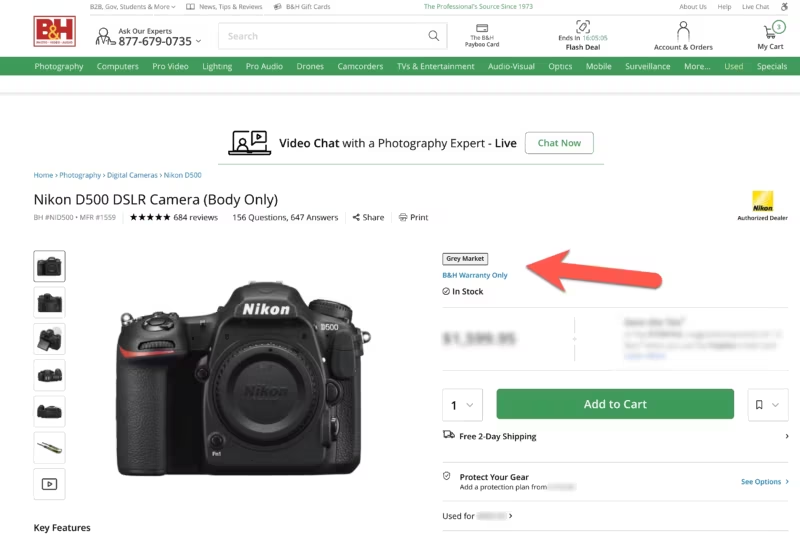
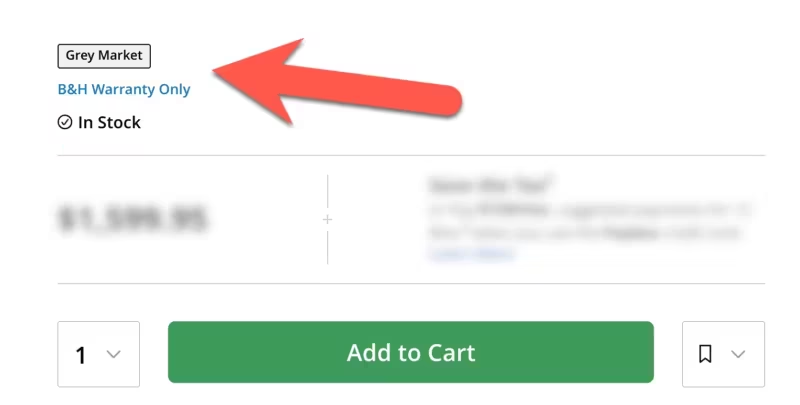
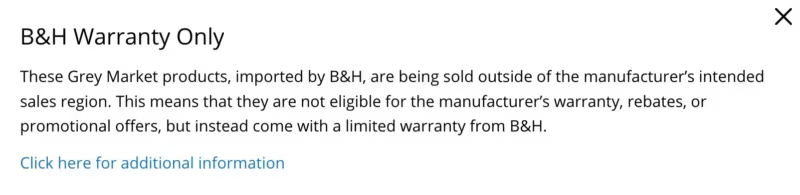
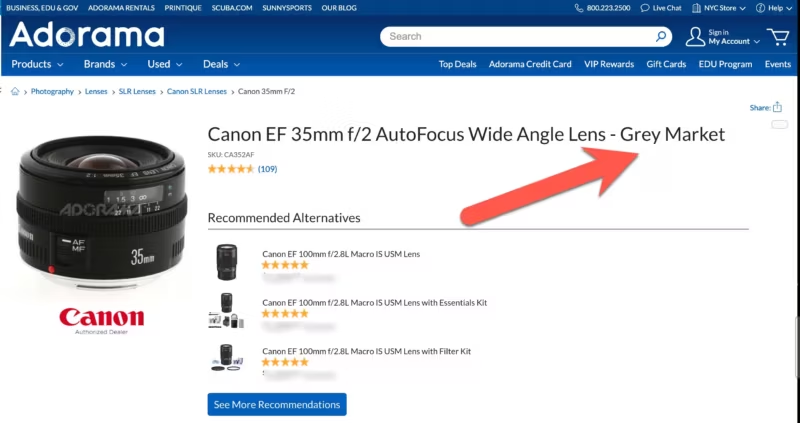
If it’s a retailer you’re not familiar with, it’s well worth doing some research on them, checking customer reviews and retailer ratings, and so on. Complaints about lackluster customer service or unsatisfactory experiences, for example, are red flags that suggest a heightened risk.


Buying camera gear overseas
When you’re traveling overseas, you can sometimes find some incredible deals at local stores. And in those local stores, the items are entirely legit and appropriate for that location.
But once you bring them home, there is a good chance you’ll run into the same kinds of issues. If you ever need to have them repaired, there’s a good chance they’ll be treated as gray market gear. (There are also important customs and importation considerations in that you are generally required to declare the items and may be subject to customs duties; it will depend on your home country’s customs laws.)
How to spot gray market gear
On occasion, an item will be explicitly listed as “gray market.” But more often than not, you’ll have to dig a little deeper. There are some giveaways that warrant more investigation:
- Prices that are significantly lower than anyone else. This isn’t always reliable, because sometimes stores just have great deals. But it’s at least something to look into further.
- No manufacturer’s warranty, or talk of a store warranty.
- Words such as “direct import” or simply “Imported”.
You can try asking the store whether an item is gray market. Or ask them if the manufacturer’s warranty applies. In theory, it’s also possible to check serial numbers. But that’s usually not practical in the absence of published serial number ranges coming from the manufacturers.
Should you buy it?
All of this comes down to a decision that’s not a clear-cut yes or no. But if the savings are so good that you want to proceed, it’s good to at least know what you’re getting into.
Notes & References:
- I’m going to use the US as the example here because that’s where I’m based. But it’s the same idea in other parts of the world. [↩︎]