The typical use for a fast 85mm prime is for portraits. It’s a flattering focal length that allows a comfortable working distance, and at this focal length, the fast f/1.4 maximum aperture provides enough sharpness to cover a face while providing good separation from the background with nicely blurred bokeh without having to rely on post-processing gimmicks.
That said, I don’t typically shoot portraits. But I do shoot events, where the combination of a mild telephoto perspective and a fast maximum aperture can not only be good for low light, but it’s also good for isolating a subject in a busy room. Wedding photographers will also often reach for them, especially during receptions.
For much the same reasons, I also like it for travel photography, street photography, and even general shooting. I specifically remember when this hit home for me — I was shooting with an 85mm f/1.4 on a trip to Istanbul and loved the combination’s usefulness and fun in that endlessly busy and fascinating city that offers just about every kind of lighting condition you can imagine. It might seem like it would be limiting shooting with a fast prime like this, but by making you adjust, it makes it really fun and interesting to shoot with.
It’s somewhat higher risk because the combination when shooting wide open can be very unforgiving when you’re shooting handheld on the go. So it’s very easy to end up with out-of-focus shots if you’re not careful, and that risk is something that you always have to be on guard about. But the upside is that it is excellent for isolating a subject from foreground and background, provides a slightly atypical perspective, and is great for low-light shooting.
I find that a step higher up to 100mm or so at f/1.4 can be too unforgiving wide open to get reliable results for this style of photography, but I like shooting with an 85mm. It takes a little more care than a typical 50mm f/1.4, but the results can be fun. It’s not necessarily the first lens I reach for all the time, but it can be a fun way to mix things up a bit.
The Meike 85mm f1.4 AF Z
So I’ve been looking forward to trying out some of the fast 85mm primes that have become available from third-party manufacturers recently.
The first I’ve been out shooting with is the Meike 85mm f/1.4 AF. It’s a full-frame autofocus lens. I’m using the Nikon Z version on a Nikon Z8; there’s also a version for Sony E-mount.
It’s priced at $470, although you can sometimes find it significantly cheaper. That makes it considerably more affordable than Nikon’s own offerings in this focal length, even though there’s not a direct apples-to-apples competitor right now from Nikon in their natively mirrorless lineup. In their Z lenses, Nikon has an 85mm f/1.8 at $850 and an 85mm f/1.2 at $3,000. In their F-mount DSLR lineup, they do have an 85mm f/1.4 (at $1600) that is an excellent lens and can be used on Z-mount mirrorless bodies with an FTZ II mount adapter. Meike also makes an 85mm f/1.8 at $200. (There are more and different direct competitors for the Sony E-mount version.)
Meike?
Meike is one of a wave of relatively new Chinese lens brands that have been coming up with some really interesting options in recent years. Meike has so far put most of their focus on cine lenses, but they’ve recently been expanding their stills and hybrid ranges as well. They probably haven’t gotten as much buzz as brands like Viltrox and 7Artisans, but they’re in that same vein.
Often (but not always), the appeal with these third-party lenses is price — they’re often priced much more affordably than the equivalents from the big camera manufacturers. But you can’t necessarily assume that that means they’ve cut corners on the optics; sometimes they have, sometimes the lenses are optically excellent. They’re often repurposing older lens designs for mirrorless mounts, which means they’re not investing nearly as much into research and development.
In many interesting cases, these third-party manufacturers are offering unusual or niche lenses. This one isn’t particularly unusual — it’s a bread-and-butter fast, mild-telephoto prime. But the price is certainly attractive. Its optics are very good. And my biggest quibble with it is the speed and reliability of the autofocus.
Build & handling
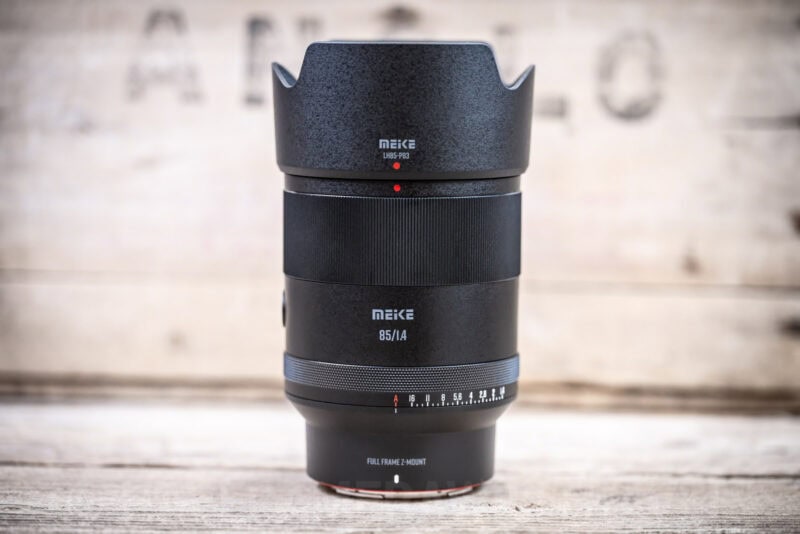
It’s not a small lens, by any means. But it’s also not annoyingly large and heavy. So it’s a comfortable lens to shoot with, but it will take up some space in your camera bag.
It’s 5 inches long (12.7cm) and has a diameter of 3.3 inches (8.4cm). It weighs 1 lb 12 oz (735g). But the balance is good, and it feels well-balanced when you’re shooting with it.
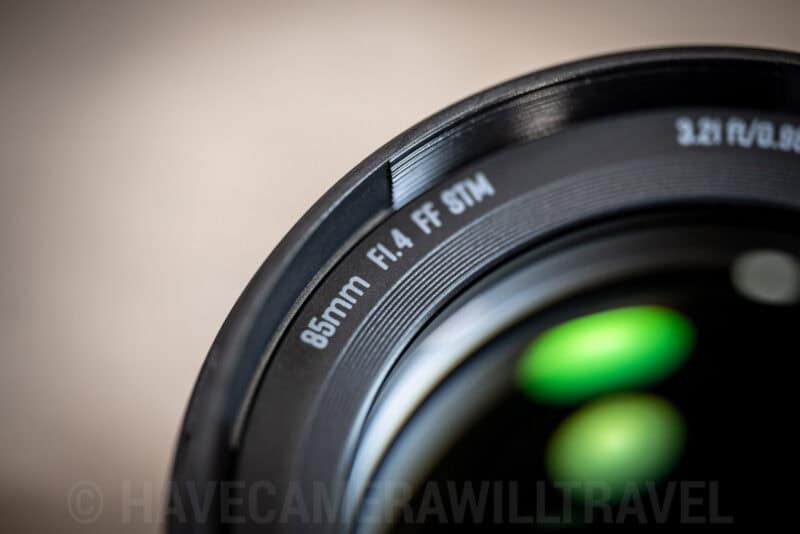
Overall, although the body is made of plastic (as so many lenses are these days, even from the big camera makers), it has a quality and modern feel to it. It doesn’t feel cheap and plasticky.
There aren’t a lot of bells and whistles. It has an AF/MF toggle switch and another utility button that can be programmed on your camera.
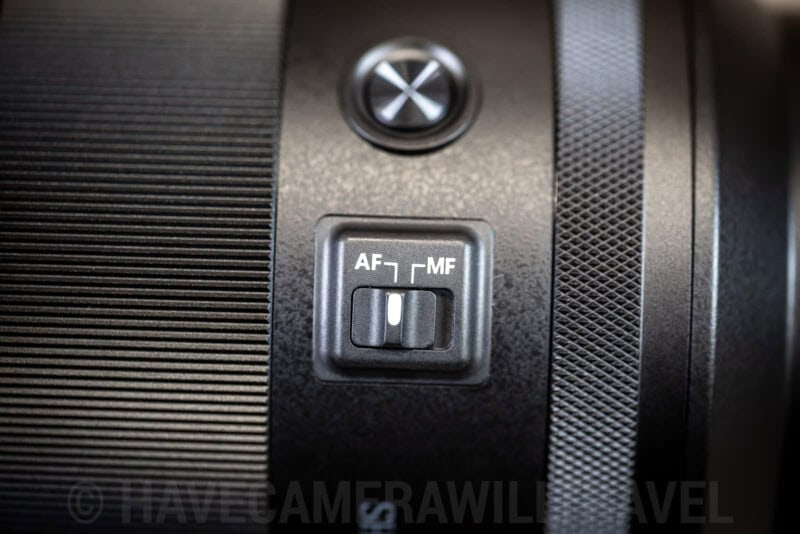
The manual focus ring is very smooth and light and works nicely for video. There have been times I’ve needed to tweak the autofocus a little, and the manual-focus ring has been fast and precise for that.
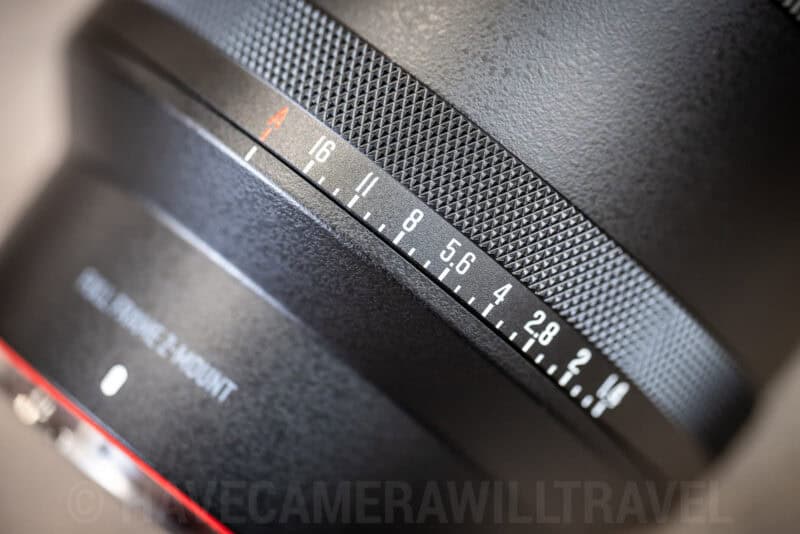
The aperture ring has click stops and is not declickable. Which is good for stills but less good for video. But, of course, you can just put the lens ring onto the A setting and control the aperture on the camera itself and bypass the manual clicking entirely.


Like quite a few newer lenses, it has a USB-C port for firmware updates. And Meike has released some firmware updates, which you can find at Meike’s firmware upgrade page.
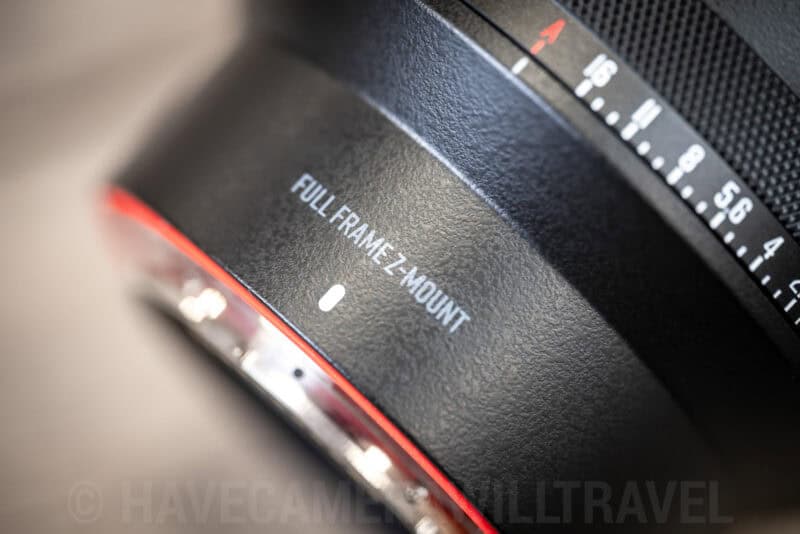
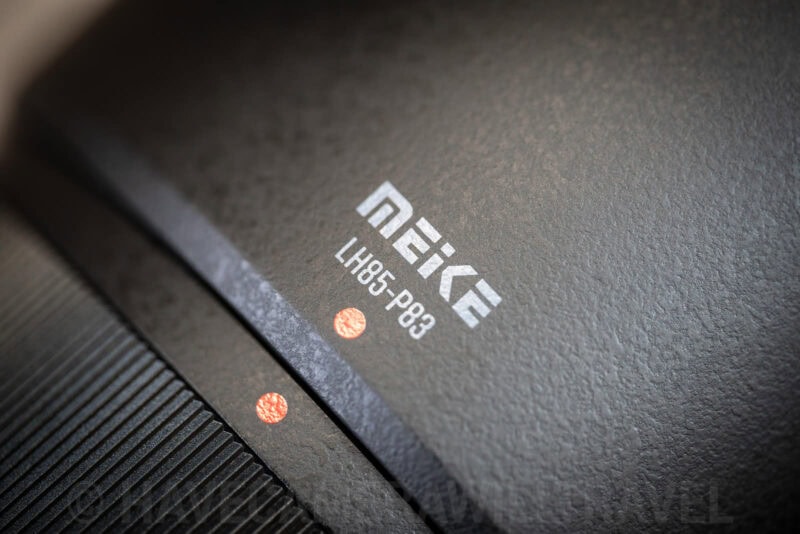
The lens takes 77mm filters and comes with a plastic petal-shaped lens hood. If you need a replacement, it’s model LH85-P83 (I haven’t been able to find these available as replacement parts separately).
The lens itself doesn’t have stabilization, but if your camera has IBIS (in-body stabilization), that’s going to be less of an issue.
Shooting with it
My focus here is on what it’s like to shoot with. I’m much less interested in lab test data, and there are other places you can find that type of thing. Ultimately, what matters to me is how it performs in real-world shooting and whether I’m happy with the images I get from using it.
Optical performance
I’ve found this lens to be optically very good. It’s very sharp. Surprisingly so, actually, even wide open. As you can see in some of the images below, even wide open it’s very sharp in the middle. There’s some softness near the edges, but it’s not egregious (the metal silo shot below is a good example of this).
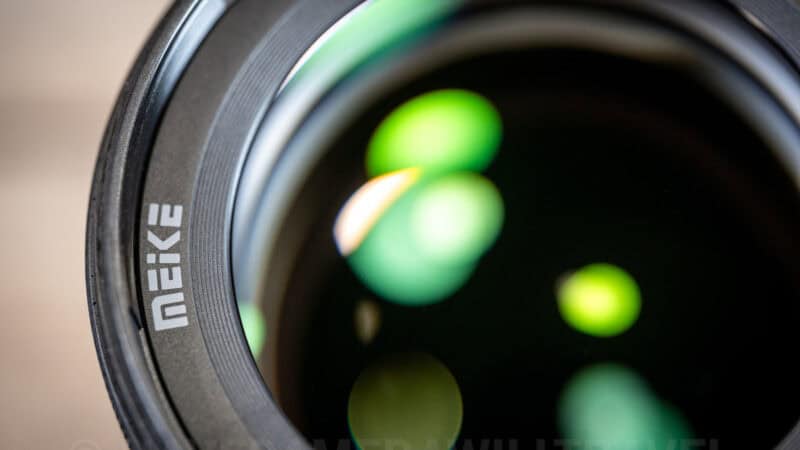
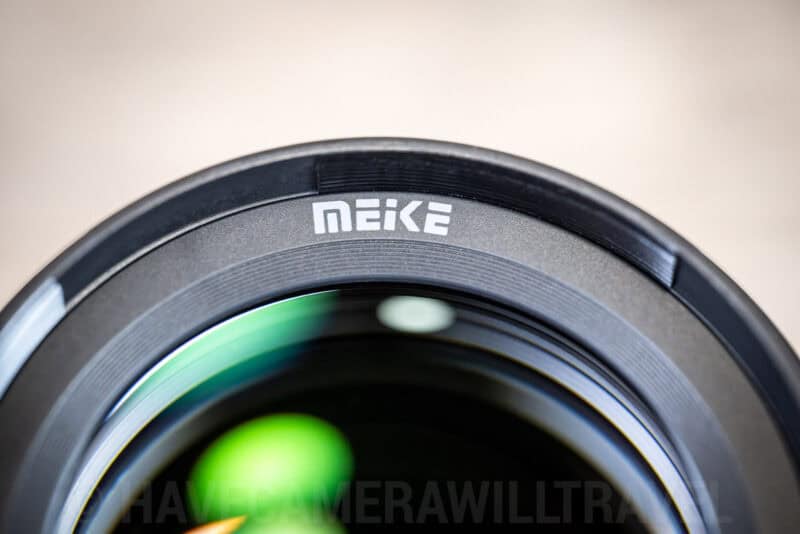
And with a lens like this, you want to be able to make use of the aggressively narrow depth of field to blur out the background. It has a nice smooth bokeh falloff, and specular highlights are nice and round thanks for the large number of aperture blades (13 of them).
There is a bit of lens vignetting at larger apertures, but that’s to be expected, and it’s quite smooth and subtle, and something I actually quite like, as it happens.
A weakness: Autofocus performance
While I quite like this lens and have enjoyed shooting with it overall, there is one issue that gives me pause. And it’s an important one: the autofocus performance. That’s important, because if you’re not going to use the autofocus, there are plenty of other good options in the manual-focus world. If you’re used to shooting with Nikon’s own lenses, especially their higher-end lenses, you’ll almost certainly notice the difference here.
This is an issue with many third-party lenses. Nikon could simply provide the information for third-party manufacturers to have full compatibility. But for business reasons, they don’t just give away that compatibility information. And they seem to have been licensing it only very sparingly. Instead, most third-party manufacturers are reverse-engineering the Nikon Z autofocus system. And the results of that can be hit or miss. Performance usually doesn’t stack up compared to Nikon’s own lenses, but on some lenses that doesn’t matter much. It does tend to be more noticeable on telephoto lenses, even mild telephotos like this one.
And with the Meike 85mm f1.4, the results aren’t entirely successful. There are a few things going on here.
The autofocus speed is what I’d call just OK. It is smooth and quiet, which is good, but it’s also a bit slow.
This may or may not be an issue, depending on what and how you like to shoot. It’s probably less of a problem for posted portraits, but I have found it a bit annoying for on-the-go style shooting. And I’d be reluctant to use it in a high-stakes, fluid setting like wedding photography.
But a bigger problem is the focusing reliability. I’d give it a passing grade, but only just. There are two main parts to this.
The first is that when focusing on closer subjects, say up to around 10 feet (3 meters), I’ve found it often takes a few stabs at it to lock onto the focus. It seems to do it in a two-step process, with a larger jump at the beginning followed by slower, smaller searching steps. I’ve found it generally reliable enough much of the time, but it can take a bit of searching to get where it needs to be. So you have to watch that, especially when shooting wide open or close to it.
The second part is that when focusing closer to infinity, but not actually at infinity, I often found it front focusing slightly — that is, the actual focus point ended up being a little in front of my intended focus point. I have some examples where it’s actually at infinity and it’s fine, but edging slightly in front of that could sometimes be unreliable. Again, that’s mainly an issue when shooting wide open, and you’re unlikely to notice it much if you’re shooting at smaller apertures. Some cameras, including the Nikon Z8 that I’m using, offer a feature for fine-tuning AF focusing, but that tends to be applied across the full focus range, so it’s an imperfect solution.
I found it to be at its most reliable when shooting at medium focus distances, which would be the sweet spot for portrait photography anyway.
Another issue wasn’t a flaw but is a design spec worth knowing about: its minimum focus distance is on the longer side. The lens has a specced minimum focus distance of 3.21 feet (0.98 meters). That’s a bit on the long side. Normally, this isn’t really something I would even check for a lens like this — it’s not a macro or even a long telephoto, after all. But in shooting with it, I did notice that you have to be further away from the subject than I’m used to. For comparison, the Nikon 85mm f/1.2 S has a minimum focus distance of 2.79 ft (0.85 m), and the Nikon 85mm f/1.8 has a minimum focus distance of 2.62 ft (0.8m). Those differences mightn’t sound like much — and they’re not really in raw terms — but it was enough for me to notice when out shooting. At first I thought it was a problem with the autofocus, but it turns out it was just running into a minimum distance threshold.
Sample images
I’ve posted a larger set of sample images separately, but here’s a short selection.
I’ve been using the Nikon Z version on a Nikon Z8. These were all shot in RAW and lightly processed in Lightroom Classic.
I generally have not applied much in the way of optical corrections to these, and there’s no direct lens profile in Lightroom for it. If you want to use a lens profile (I haven’t here), I did find that the profile for the Samyang AF 85mm F1.4 RF gave good results (more on that below).
You can click on each image for a full-size version for a closer look.


Conclusions
Pros:
- Optically very good: sharp with smooth bokeh falloff
- Affordable pricing compared to first-party options
- Fast f/1.4 maximum aperture for shallow depth of field
- Well-balanced despite its size
- Smooth and precise manual-focus ring for video
- USB-C port for firmware updates
- Click-stopped aperture ring for precise still photography control
- Smooth, pleasing vignetting at larger apertures (a matter of taste)
Cons:
- Autofocus speed is only adequate, not fast
- Focusing reliability has room for improvement, especially at closer distances and near infinity when shooting wide open
- Longer minimum focus distance than competing lenses
- Aperture ring not declickable (a drawback for video work)
- EXIF data typo (minor cosmetic issue)
- No built-in image stabilization
I’ve enjoyed shooting with this lens. I find the combination of the 85mm focal length and f/1.4 maximum aperture is a fun one for on-the-go photography, and the lens delivers good results when you get the focus right. Optically, it’s very good — sharp with a nice smooth bokeh falloff. The bit of vignetting at larger apertures is something I actually quite like.
But because of the somewhat slow autofocus, I have some hesitation in recommending it for critical work, especially when paying clients are involved in wedding photography or event photography. But for general creative shooting, like general travel photography or street photography, that’s less of an issue. For portrait photography, though, where the subjects are usually less active and fleeting, it should work well. The focusing is at its most reliable at typical portrait distances, and that’s where this lens will shine for most users.
The price point is certainly attractive — at $470 (or less), it’s considerably more affordable than Nikon’s own offerings while still delivering that fast f/1.4 aperture and good optical performance. Viltrox is rumored to be coming out with a Z-mount version of their 85mm f/1.4 AF Pro (at the time of writing, it’s only available with Sony E mount), and that’s a lens I’ll be particularly interested to try out and compare with this one — stay tuned!
Things worth knowing
EXIF Data Typo. The lens embeds EXIF information in the image, but oddly, there’s a typo — it shows as the Meke 85mmF1.4Z. It’s not remotely a big deal, of course, but it does seem like an easy thing to fix in a future firmware update.
Firmware Updates. The lens includes a USB-C port for firmware updates. Meike has released firmware updates for this lens, which you can download from their firmware upgrade page.
Compatibility Notes. The lens is currently available in three mount options: Nikon Z, Sony E, and L-mount. All versions share the same optical design and specifications.
Focus Distance Limitations. Be aware of the 3.21 ft (0.98m) minimum focus distance. This is longer than some competing 85mm lenses and may require you to step back more than you’re used to for close-up work.
Filter Size. I takes standard 77mm screw-on filters.
Lens Hood. It comes with a plastic petal-style lens hood. Its model number is LH85-P83.
Lightroom Lens Profile. There’s no dedicated lens profile in Lightroom Classic. If you’re bothered by the vignetting (the distortion is minimal) you can of course manually tweak it. I also found that the included Samyang AF 85mm F1.4 RF profile worked well. (Maybe that’s coincidence; maybe it’s not. Samyang is known to manufacturer lenses that are sold under other brand names, so it’s quite possible that this lens is actually manufactured by Samyang, but I have no actual evidence that that is the case.) Here’s a side-by-side comparison using that profile.


Technical specifications
| Specification | Details |
|---|---|
| Focal Length | 85mm |
| Maximum Aperture | f/1.4 |
| Minimum Aperture | f/14 |
| Lens Mount | Nikon Z (also available in Sony E and L-mount) |
| Format Coverage | Full-Frame |
| Angle of View | 28.9° |
| Optical Design | 13 elements in 8 groups |
| Aperture Blades | 12, rounded |
| Minimum Focus Distance | 3.21 ft / 0.98 m |
| Autofocus | Yes (STM motor) |
| Image Stabilization | No |
| Filter Size | 77mm (front) |
| Dimensions | ø 3.3 × L 5.0 in / ø 84 × L 127 mm |
| Weight | 1 lb 12 oz / 735 g |
| Hood Included | Yes (LH85-P83) |
| Firmware Updates | Via USB-C port |
| MSRP | $470 |
Price & availability
Check the current price and availability at:
You can also buy it directly from Meike, although I’m not the only one to be confused by what the import tariff implications and responsibilities are for products shipped directly from China these days.