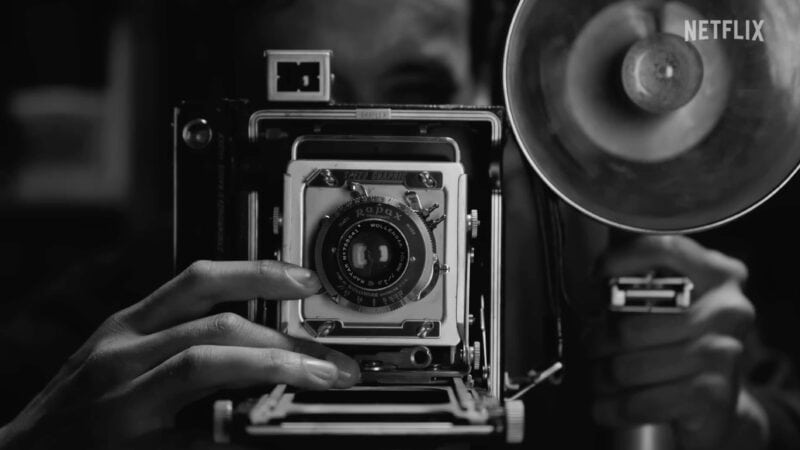
No, that’s not a typo. I do mean photography, even though it’s technically cinematography.
There are a few reasons for this. And it’s not just because it’s shot in luscious black and white.
I’ve been watching the new Ripley limited-series recently on Netflix. The story is based on Patricia Highsmith’s novel The Talented Mr. Ripley (1955), the first of what became a 5-book series. It’s centered on a conman imposter, Tom Ripley, played brilliantly here by Andrew Scott.
This Netflix version is writer-director Steven Zaillian‘s vision, but it’s beautifully interpreted and captured by cinematographer Robert Elswit. He’s won an Academy Award for cinematography in 2008 for his work on There Will Be Blood.
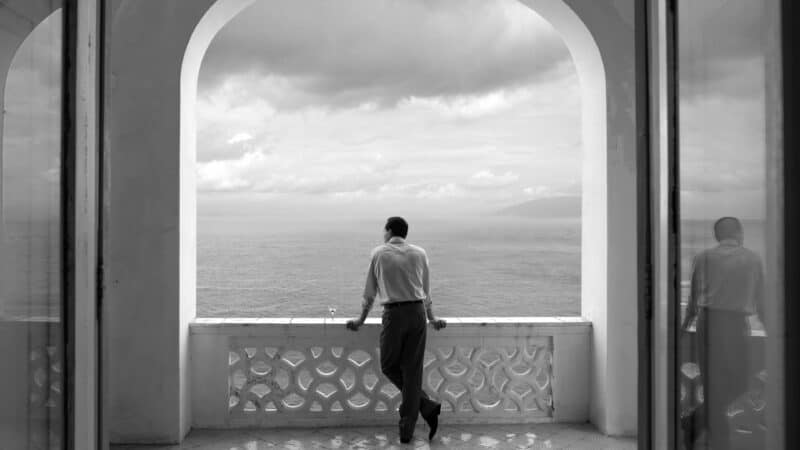
And quite aside from the story or acting, it’s the photography that has really drawn me in.
As a photographer, I’ve been struck by how its scenes really are just like photos. They’re composed as photos. They’re often taken from a fixed point, with the camera itself rarely moving or zooming or panning.

It’s not just the capture, but also the lighting, something that Elswit is known for. It’s sometimes unexpected, and he does some playful things with shadows, in particular. And not all of it was calculated in advance; they were both very open to happy accidents and letting the remarkable locations create opportunities.
There are complex compositions, with frames within frames and very effective use of negative space. There are shadows helping to tell the story. Large apertures are often used to add depth and isolate elements. There are frequent cutaways to small details that help set the context. Reflections on wet cobblestones at night — a classic. And grand interiors creating a sense of scale.
And an element I really like and appreciate more after reading some of the explanations by Zaillion and Elswit talk about their creative process, is how much of it was opportunistic. That they’d be choosing some of the shots on the fly when they were on location, not necessarily pre-visualizing it and staging it on a film studio lot. That also reminds me of how many of us photographers work when we’re not in a carefully controlled studio environment.
I certainly don’t want to diminish the acting, which is excellent, but, as a photographer, I’ve been struck by how it’s also not that far removed from being a photo essay on steroids. There are so many shots in this series that could easily make for a sumptuous large-format photography coffee table book.
Black & white isn’t just a gimmick
The choice of black and white here isn’t just some gimmick, and it proves quite masterful.
That’s what you get in black-and-white — texture. That’s just the great example of something that’s been done since the 1920s, and so I’m glad we were able to do it. It’s wonderful. It doesn’t look nearly as interesting, by the way, in color, it just doesn’t. Robert Elswit1
Set mostly in Italy in the early 1960s, it was filmed in locations that we’re used to seeing as picture postcard-perfect. And, crucially, in color. Places like Sanremo, Rome, Naples, Altrani, and Palermo, before moving across to Venice.

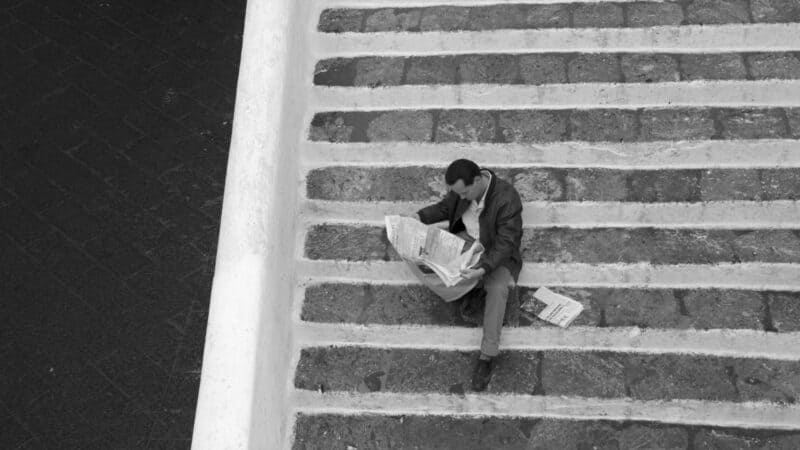
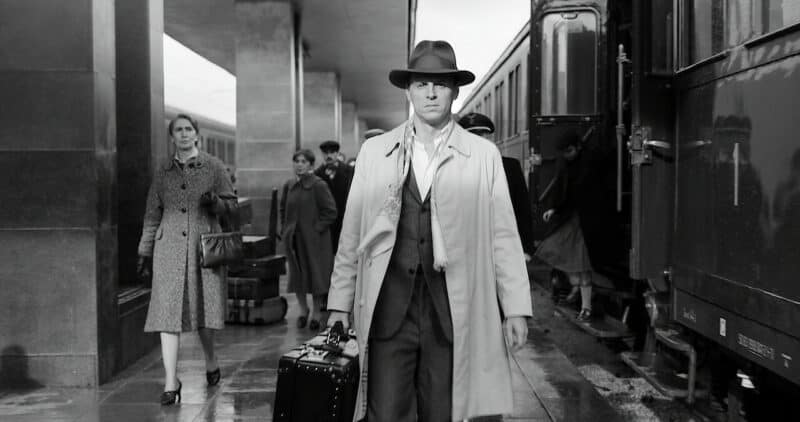
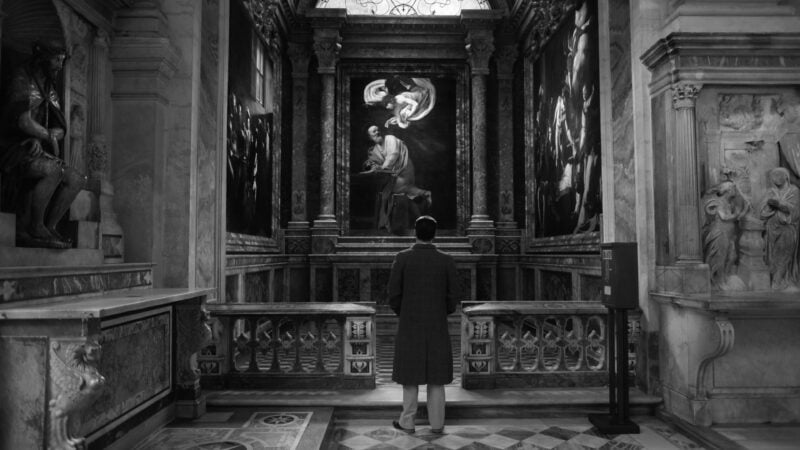

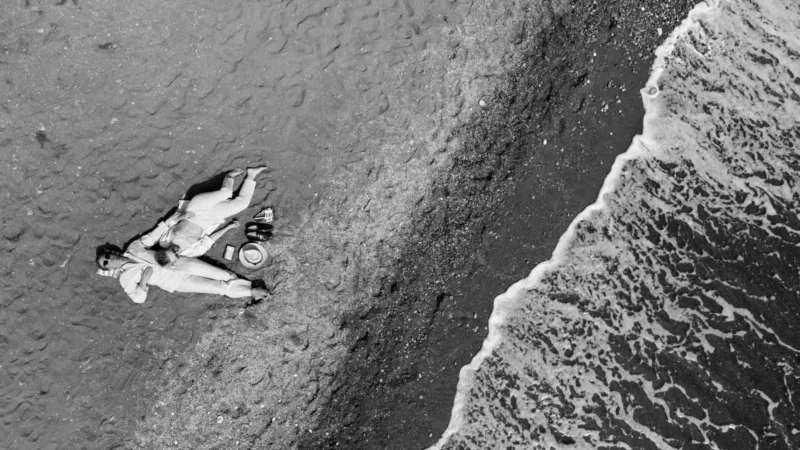
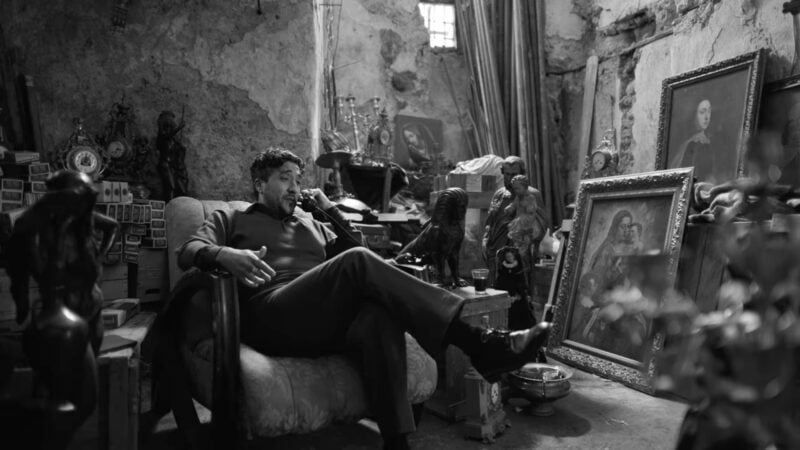

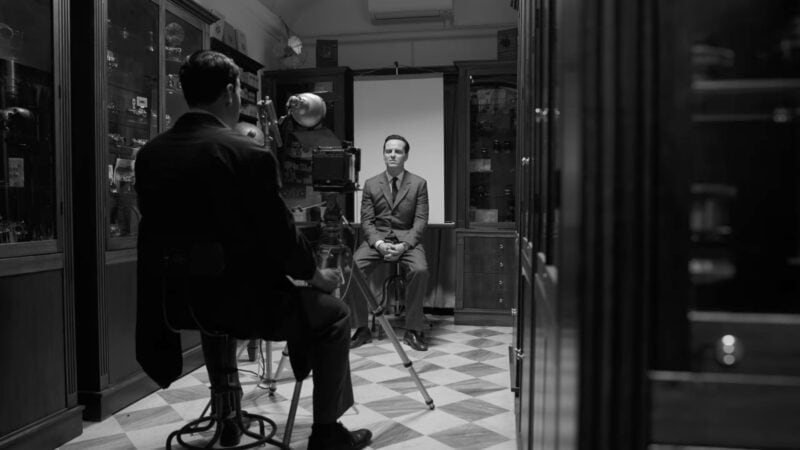
And that might be the foundational magic trick that the photography in this series pulls off: providing a striking new way to see these heavily touristed locations. We don’t get the beautiful blues of the Mediterranean sea and Sorrento coast. Or the colorful accents of the historic architecture.
It’s not like these places haven’t been seen in black and white before (see: Roman Holiday or La Dolce Vita). But Zaillian and Elswit add their own stylish film noir look. The result is both a throwback and yet still fresh.
I never saw it as some sunny, colorful postcard of a story but rather as the foreboding suspense story that it is. It takes place in the winter of 1960 and, like many of [Patricia] Highsmith’s stories, has a film noir quality to it. Black-and-white can be striking in a way color can’t be.
Stevel Zaillian (writer/director of Ripley)2
I knew from the beginning that I wanted to have this high contrast film-noir style,” Zaillian says. “We didn’t want to do anything that was familiar to us… I didn’t want to make a pretty travelogue.3
Frames within frames
There are quite a few recurring motifs used throughout the series. Some of items that the camera often lingers on. Some are shapes and details. Another is the use of using creative visual framing. Sometimes it’s to suggest tension; sometimes it’s to emphasize the voyeuristic tendencies of Tom Ripley. So you might see him around corners, or dwarfed by sets of stairs (the stairs! Oh, so many stairs!).
And it’s an area where they were clearly having some fun with exploring found elements of the locations, making their shots work with the locations rather than making locations to match their preconceived shots.
Here are a few examples.

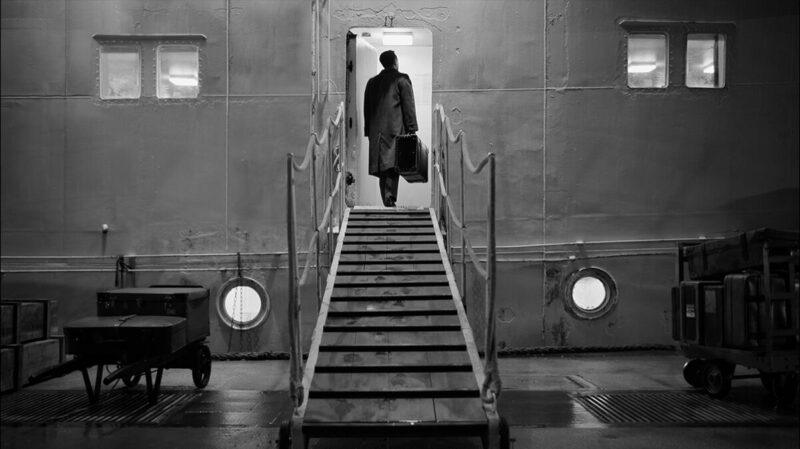
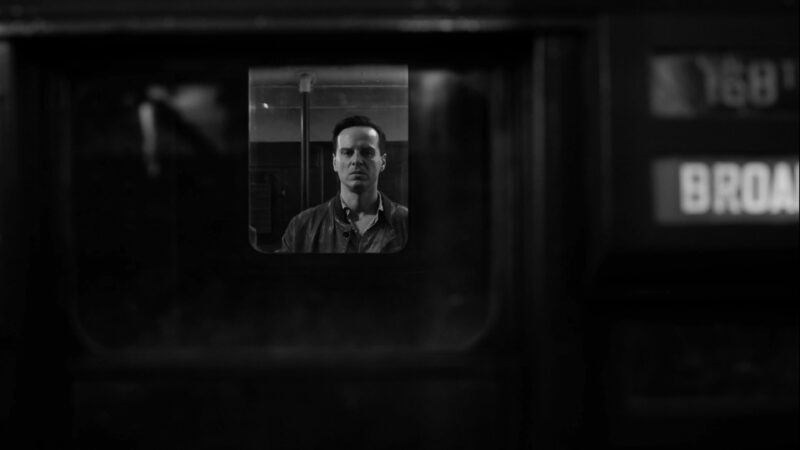


Shadows
As you’d expect with a film noir style, shadows figure prominently. There’s even a crucial scene near the end where Tom Ripley deliberately manipulated shadows for his own ends.


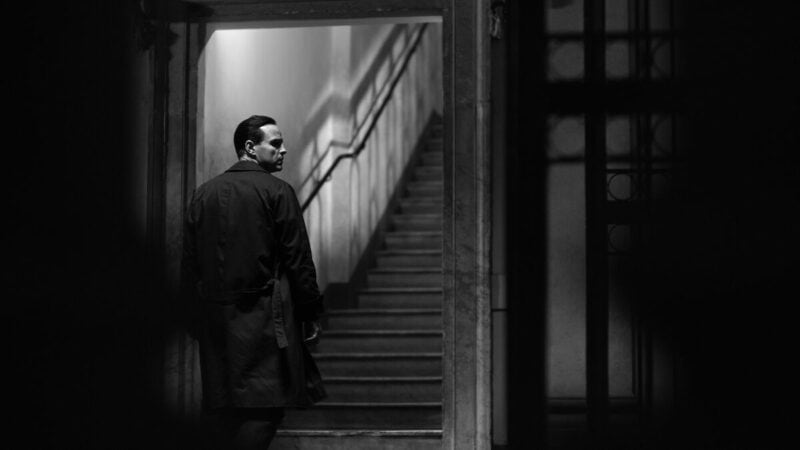
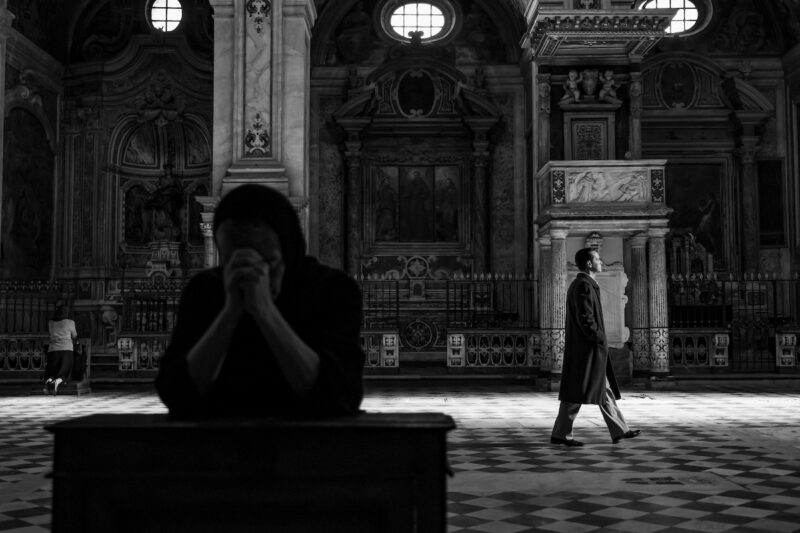


Trailer
I’ve included some frames in this post, but you can also get a wonderful sense of the photography from this short trailer:
Further reading
- I particularly recommend a piece in Vanity Fair where Zaillian and Elswit directly talk about some of the specific shots: David Canfield, “Inside the Stunning, Devious Cinematography of Netflix’s Ripley,” Vanity Fair, 4 April 2024.
- And also this piece in Vulture, which focuses on some specific shots: Roxana Hadadi, “37 Ripley Shots That Would Blow Caravaggio’s Mind,” Vulture, 18 April 2024.
- Nick Schager, “How ‘Ripley’ Because TV’s Most Beautiful Masterpiece,” Daily Beast, 6 April 2024.
- “Robert Elswit, ASC — The Traditionalist,” American Cinematographer, 3 September 2022.
Notes & References:
- David Candield, “Inside the Stunning, Devious Cinematography of Netflix’s Ripley,” Vanity Fair (April 4, 2024). [↩︎]
- Jean Bentley, “Inside Ripley: From Altrani to Caravaggio, how the series came to life,” TUDUM by Netflix, 8 April 2024. [↩︎]
- David Candield, “Inside the Stunning, Devious Cinematography of Netflix’s Ripley,” Vanity Fair (April 4, 2024). [↩︎]



Your thoughts echo mine exactly – especially where you talk about how each scene has been shot like a photo. Exactly!
On that note, I’ve been trying in vain to find an official collection of set photography from the production in the form of a book. I for one would certainly buy it, it would make a stunning coffee table book! Any such findings from yourself?
Pete
I haven’t come across such a book, although I confess I haven’t looked very hard. But I do hope they put one out! As well as a second season with the same team. I haven’t read the original novels, but since there are several of them, I assume there’s plenty more material to mine.
I think it’s going to be the rare series that I go back and watch again, mostly because of the beautiful imagery.