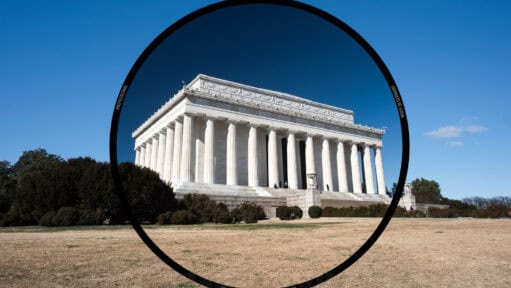
Why You Only Need One Polarizer Filter
Here's an old trick to save money and get better results at the same time.
Here's an old trick to save money and get better results at the same time.

There is nothing more frustrating than shooting a beautiful multi-frame landscape, only to get home and find dark, blotchy bands ruining the sky when you try to stitch it together. If you shoot panoramas, you've likely run into this issue. Here is a practical look at exactly why circular polarizers and stitched panoramas don't mix well, along with a few examples from my archive and the workarounds I rely on instead.
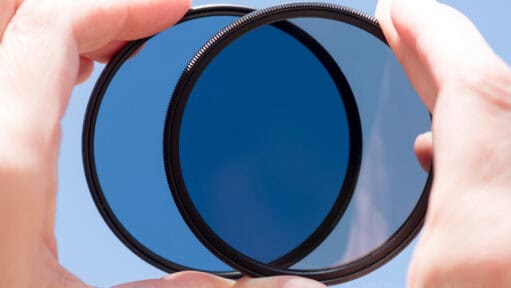
Here's a quick rundown on using some of the most common types of screw-in filters and considerations when using them.
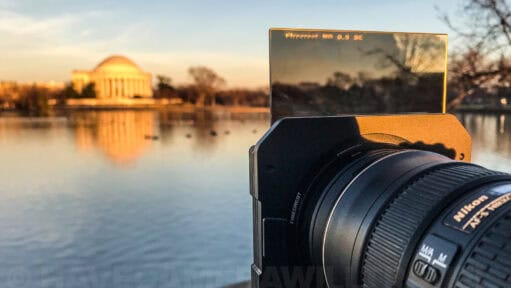
Screw-in filters are convenient, but for serious landscape photography, a square filter system offers unmatched flexibility. I took the Formatt Hitech Firecrest 100mm Pro Essentials Kit into the field to see if its aluminum holder and sandwich-coated glass really deliver the color neutrality they promise — and how they stack up against big names like Lee and Cokin.

A Circular Polarizer is a landscape photographer's best friend — until you put it on a wide-angle lens. Then, it can quickly become your enemy, turning beautiful blue skies into ugly, uneven gradients and dark 'blobs.' Here is the physics behind why wide-angle lenses and polarizers often don't mix, and the specific techniques you can use to avoid ruining your shot.
I put four popular circular polarizing filters, from Hoya, Tiffen, B+W, and Nikon, through the same side-by-side test on one camera and lens to see how their strength, color, and sharpness actually compare.
In the age of AI editing, many physical filters have become obsolete. But there is one that remains essential: the Circular Polarizer. Why? Because it manipulates light physics before it hits your sensor, removing glare that software simply cannot 'see.' Here is how to use the '90-Degree Rule' to capture shots that are impossible to fake.

My name is David Coleman, and this is my site. I take photos for a living. Seven continents. Dozens of countries. Up mountains. Underwater. And a bunch of places in between. I'm based in Washington, D.C.
This site is where I post practical photography help, tips, and troubleshooting.
All posts and reviews on this site are written by me. And I only review gear with which I have personal hands-on experience. By a photographer, for photographers. More about me.


© 2009-2026 David Coleman | Have Camera Will Travel LLC
Photos by David Coleman. Please contact me for licensing images. Images are registered with the U.S. Copyright Office.
Have Camera Will Travel LLC | 901 N Glebe Rd, Arlington, VA 22203 | +1.703.942.9245

