
The Instax Mini 8 is the simple, cheerful instant camera that started the modern Instax wave: fixed focus, a manual brightness dial, and credit-card-size prints. Fujifilm has since replaced it (Mini 9, 11, 12, 40), but the experience — and this review — still describes the line’s appeal.
Update: Since I originally posted this review, Fujifilm has released several updated models, starting with the Instax Mini 9 (which added a selfie mirror and a close-up lens attachment) all the way up to the Mini 12 and the Mini 41, which Fujifilm added to the lineup in 2025. However, the core design, the film it uses, and the sheer analog joy of the Instax Mini series remain virtually identical across generations. Here’s my original hands-on experience.
Fujifilm has become known in recent years for making some of the absolute best high-end digital mirrorless cameras on the market. They have excellent optics, top-notch features, and superb image quality. But what may be their best-selling range of cameras has next to nothing in common with those professional bodies. In fact, they even use, um, film.
Their Instax range has become so much more than a fringe novelty item. If you look up the best-selling cameras on Amazon, for example, they regularly take out most of the top 10 or so spots, charting high above the GoPros and the Nikon D3400. Polaroid must really be kicking themselves for missing this one — it’s the exact kind of camera Polaroid made famous, but this isn’t a Polaroid camera, it’s made by Fujifilm. (Polaroid does have something in the same spirit, the Polaroid Snap, although that one is really a digital camera that prints on ZINK paper rather than a film camera, and it hasn’t caught on in quite the same way. Polaroid has since gone back to true instant film with the Polaroid Now and the smaller Polaroid Go.)
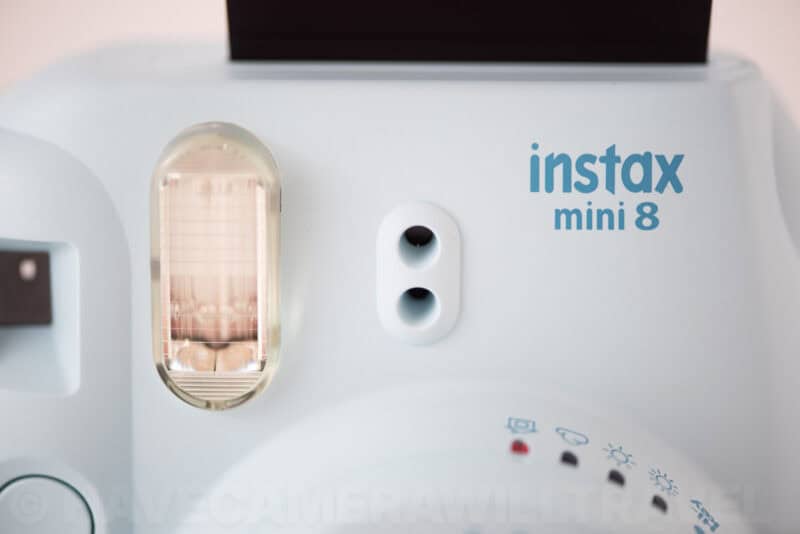
The image quality is so-so, there’s plenty of room for improvement in the overall usability, and it’s much bulkier than you might expect (it certainly won’t fit in your pocket). But reviewing these plastic cameras with an eye on any of the usual metrics like corner sharpness or dynamic range is entirely missing the point. These are designed to be fun.
I’d never actually used one of these before but was highly curious about them. So, we gave one to our 4-year-old for his birthday, which conveniently gave me the chance to sneak in some hands-on time with it. In short, he’s had an absolute blast. Once we showed him how to line up the viewfinder and push the shutter, he was off. He puts quite a lot of thought into his compositions, and with a surprisingly high success rate, he’s built up a collection of fun photos of the kinds of things a 4-year-old cares about: family, friends, and pets.
UPDATE: Since I originally wrote this, he’s had younger siblings age up, and they each got one of these cameras for their 4th birthday. Same story — they’ve loved it!
Controls & the shooting experience
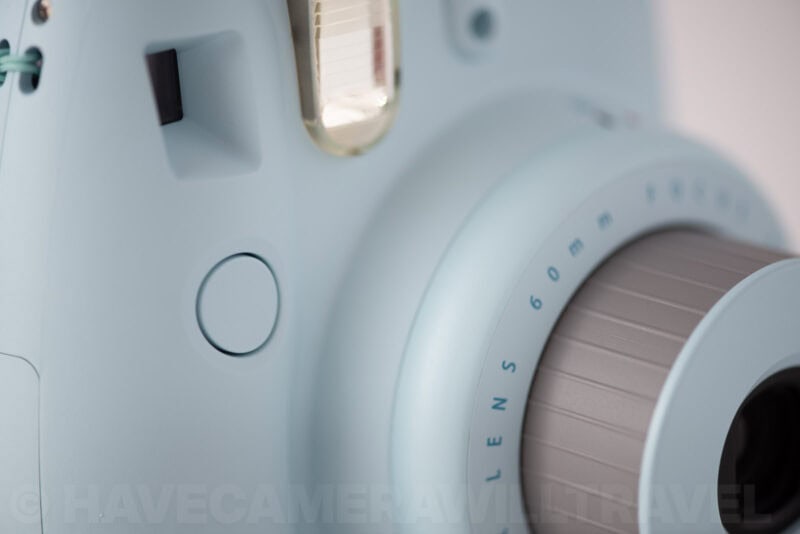
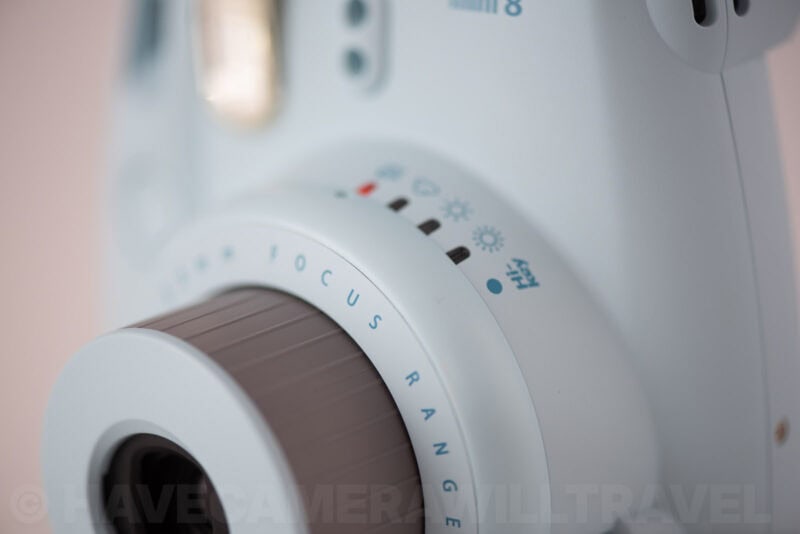
The controls are about as basic as they can possibly be. To turn the camera on and off, a light push of a button makes the lens pop out. You can rotate a dial around the lens barrel to toggle through a few different exposure settings, such as for cloudy or sunny conditions (although that might well be overkill for younger users). It has a fixed focus lens, so you don’t have to mess with acquiring focus. And the built-in flash fires automatically every single time.
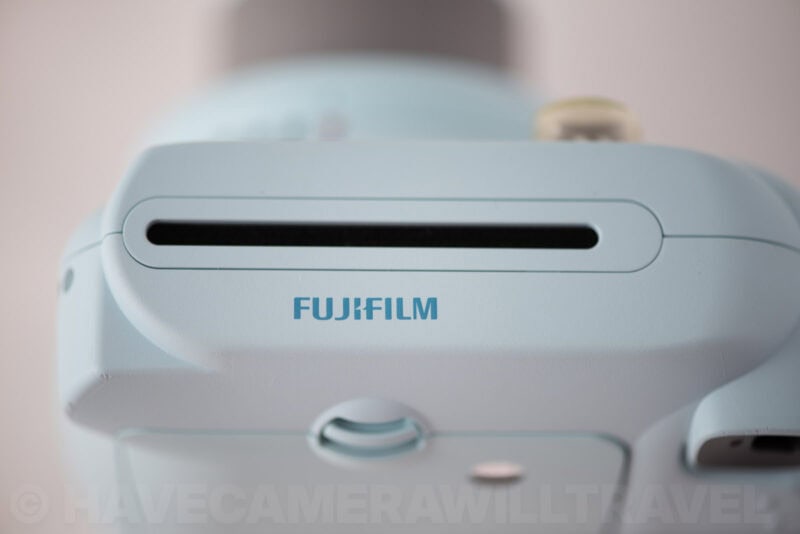
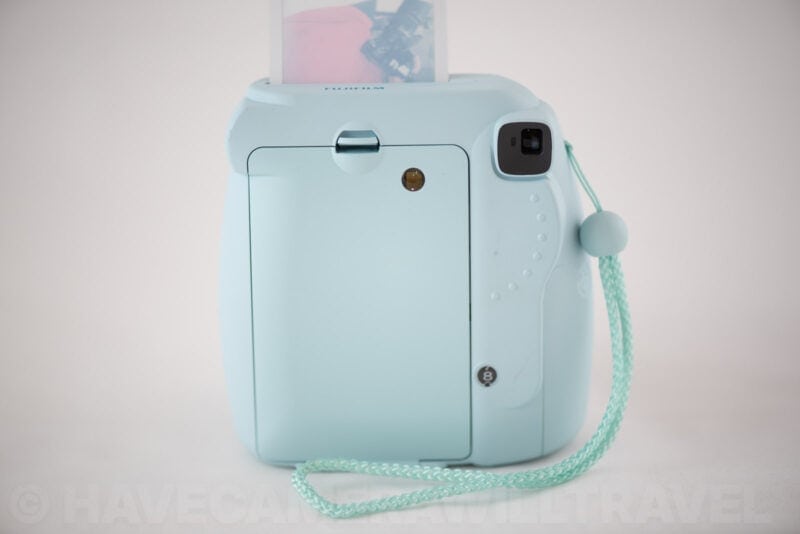
After you take a photo, the film starts mechanically pushing out of the top slot. And exactly like the old legacy Polaroid film, you have to wait around 90 seconds as the image gradually fades into view. That introduces a wonderful element of delayed gratification, which is just as well — spraying the shutter too quickly chews through expensive film in a major hurry.
Whatever you do, don’t shake it. The old habit of flapping a Polaroid in the air does nothing useful here, and Fujifilm specifically warns against creasing, squeezing, or shaking a print while it develops, because it disturbs the way the chemicals spread and can leave marks on the picture. Just hold it by the edges, keep it out of direct sunlight, and let it come up on its own.
Want to post it to Instagram or Facebook? Good luck with that. You will literally have to take a smartphone photo of your physical photo. But again, that’s kind of missing the point — there’s something about each photo’s physical uniqueness that adds to the appeal. It’s a true one-off, and that makes it special. It’s a real throwback to be able to actually hold your memory in your hand.
Instax Mini film: Size, speed & cost per shot
2026 Film Price Check: While bulk packs remain the best way to save, the cost of Instax film has crept up slightly over the years (hasn’t everything lately?!). As of early 2026, expect to pay between $16.99 and $18.99 for a standard twin pack (20 shots). If you’re shooting a lot, look for the 60-count or 100-count value packs at retailers like Walmart or Amazon, which can still bring your cost-per-shot down closer to 70 or 75 cents.
These cameras require a highly specific kind of film: Instax Mini Instant Film, which you can easily buy at Amazon and other major retailers like Target and Walmart.
They come in foil-wrapped packs of 10 shots, so it’s always worth picking up a few boxes at a time. I’ve found that the bundle packs often present the best value, and it’s handy to have spares on hand.


It’s worth being clear on which film you’re buying, because the instax formats aren’t interchangeable. Instax Mini film fits every instax Mini camera and Mini printer, but it won’t load in an instax Wide or instax Square body, and Wide or Square packs won’t fit a Mini. If you’re buying film as a gift for someone else’s camera, check the model name on the front before you order.
- Film Speed: The film is ISO 800, so it is highly usable under flexible indoor and outdoor lighting conditions.
- Physical Dimensions: The total size of each piece of film is about 3.4 x 2.1 inches (8.6 x 5.4 cm).
- Image Area: Like the old Polaroid film, a good chunk of that physical space is taken up with the iconic white border frame. The actual image window is 2.4 x 1.8 inches (6.2 x 4.6 cm).
- Cost Per Shot: Buying twin packs, it generally comes out to somewhere around 85 to 95 cents per photo for the basic film, and you can bring that down closer to 70 or 75 cents if you buy it in bulk.
You can also get versions with all sorts of cutesy frames in place of the usual white borders, including rainbows, stripes, or stars, if those are more your style. Something that might appeal to older shooters is that there’s also a dedicated monochrome film version for classic, high-contrast black-and-white shots.
Instax Mini accessories
The absolute most important accessory for this camera is simply buying enough film, but if you’re so inclined, you can accessorize your Instax Mini body in all sorts of ways.
Many of them seem to be squarely aimed at kids, but you can also get things like understated retro leather cases and hard cases.
Wrap up & final thoughts
This isn’t an ordinary camera, and it can’t really be compared with much else on the digital market these days. And yet, it has become a massive, unlikely best-seller.
Having used it and seeing it being used by my son, it’s undeniably fun. It’s simple enough for a 4-year-old to master, and they’re just as much fun for grown-ups. They’re also incredibly popular at wedding receptions — they’re often put on the tables for the guests to help themselves to take candid photos. Above all else, they make a genuinely fantastic gift idea.
You’ll find a huge range of different camera body colors, bulk film packs, and accessories on Amazon.





I’d dig instant camera – if it wasn’t:
a) so ridiculously expensive cost per photo
b) produced decent size photos (atleast as big as old Polaroids)
As it is it’s just cheaper to run Canon’s portable photo printer… sure it doesn’t have the cool factor of Polaroid-like form factor but it does the job while not draining your wallet.
Yeah, I was recently looking at the options for a full-sized Polaroid like the 600 series. The cameras are easy to pick up, either old used one or new third-party revival versions, but the film is very expensive. I think it’s great that someone has at least started manufacturing the film again, but the price per shot is very steep.