This is my hands-on review of the Laowa 10mm f/2.8 Zero-D FF autofocus lens. I’ve also posted separately a larger collection of sample images I’ve taken with it.
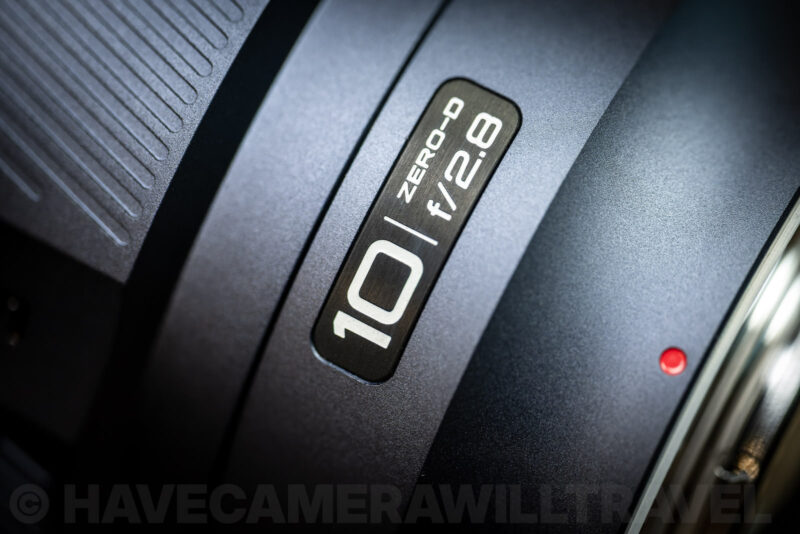
Some lenses are just plain fun to shoot with. This is one of them. It gives you the drama of a fisheye wide perspective without the overbearing distortion of a fisheye lens.
This is one of the more interesting lenses I’ve used in a while. And it’s distinctive. That’s in large part because of how wide it is. But it’s also because it’s both ultra-wide and aspherical. That’s not an easy combination to pull off. Throw autofocus in there too, and you’ve got something that really stands apart from the competition. Oh, and I forgot to mention that it’s also full-frame.
It’s not going to be a good fit for every shoot, for sure. It’s a specialized but very capable lens — niche but incredibly useful when you want to go ultra wide without the fisheye look.
The f/2.8 is also a nice feature. If this was f/4, I’d be much less inclined to shoot with it. In practice, it’s not a huge difference, especially with the way that modern cameras handle high ISO. But I just prefer faster lenses.
It comes in Sony E and Nikon Z mount versions. I’ve been shooting with it on the Nikon Z8. (There’s also a manual-focus version for other mounts; more on that below).

The basics
It’s a full-frame lens, so it has full coverage across the frame on full-frame cameras. So it’s a true 10mm perspective, not a 10mm that only works on an APS-C crop.
It comes in Sony E and Nikon Z mount versions for autofocus. I’ve been shooting with it on the Nikon Z8. It’s also available for Canon RF and Leica L mounts, but those are manual-focus versions. All versions are full-frame. You can also use them on APS-C bodies, but it won’t be quite as wide, with the focal length multiplied by either 1.5 or 1.6, depending on the camera brand. (Most have a crop multiplier of 1.5x, but Canon’s is 1.6x.)
It’s an autofocus lens, which is something that sets it apart from other third-party lenses at this kind of focal length. There are several other ultra wides and fisheyes that are manual focus. In those manual-focus alternatives, there’s a 9mm f/5.6 from 7Artisans or the 10mm f/2.8 also from 7Artisans.
Another thing that sets this one apart is its aggressive countering of lens distortion. It’s not strictly perfect–you can see a little bowing close to the edges of the frame. But I’ve found those to be either acceptable or easily fixed with some minor distortion correction in post.
I already have Nikon’s 14-24mm f/2.8 zoom, having recently moved from the F-mount version to the Z-mount version. I use that a lot, and I really don’t have any complaints about it. It’s a lovely lens to shoot with if you’re inclined toward wide angle.


The 10mm isn’t a replacement for that, by any means, but it’s a fun and useful complement to it.
It amps up the wide. You might not think that there’s a lot of difference between 10mm and 14mm. But the reality is that at the wide end, even small differences add up to big visual differences. The visual difference between 10mm and 14mm is vastly more noticeable than the visual difference between 100mm and 104mm.
Design & build
Refreshingly, the lens is almost entirely aluminum, giving it a solid, reassuring feel. It’s relatively compact, but it’s not a pancake or cookie lens (Laowa does have one of those for APS-C). And while this is aimed at the affordable end of the market, it feels well built and solid in the hand; it’s not some piece of lightweight plastic.
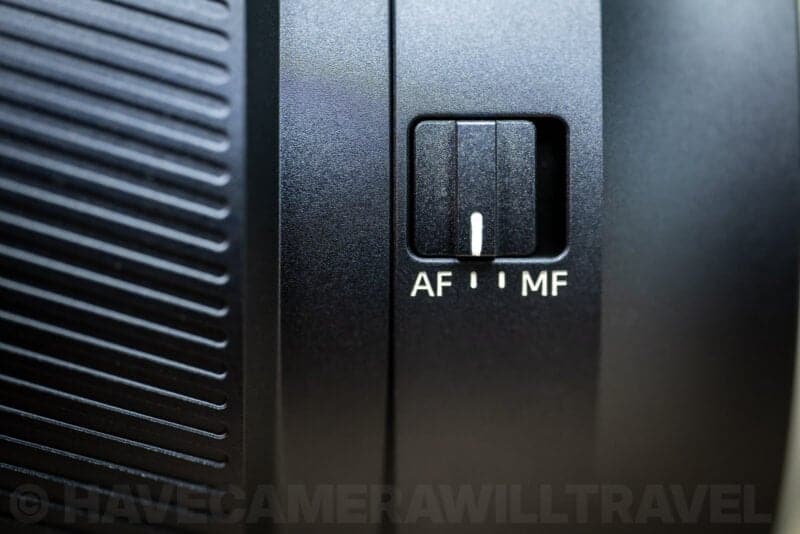
It also has a distinctive blue shimmer to the lens barrel body exterior, which makes no difference to shooting with it, but it does make it stand out a bit from the endless rows of black (and some white) lenses out there. And it has a unique blue sheen to it, setting it apart from all those other black and silver (and maybe white) lenses in your kit.

It has a metal lens hood that’s fixed to the lens. There’s a slim lens hood attached that is non-removable. That does help protect the front element, but as you can see from the shot above, the front element is actually pretty small. It doesn’t take up the whole of the front of the lens like it does on many other ultra-wide-angle lenses. As you’d expect with such a wide view, the hood is quite shallow so as to avoid interfering with the view.
It also has a distinctive blue shimmer to the lens barrel body exterior, which makes no difference to shooting with it, but it does make it stand out a bit from the endless rows of black (and some white) lenses out there.
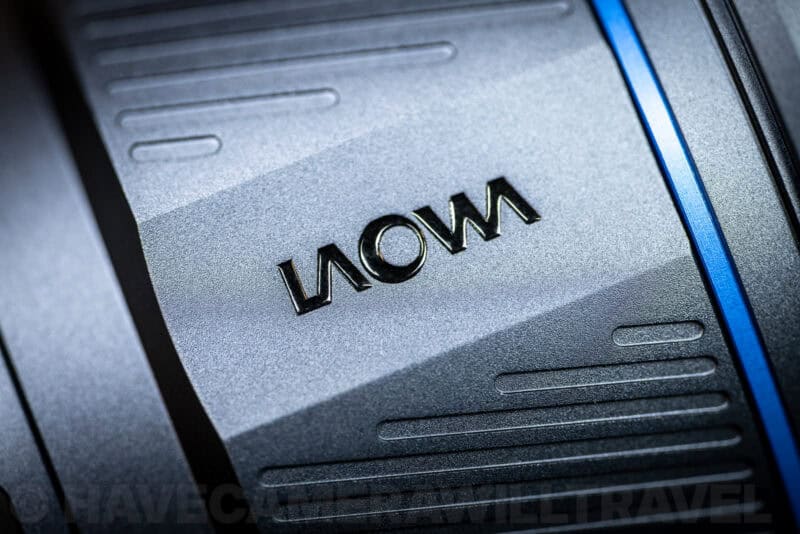
There’s a slim lens hood attached that is non-removable. That does help protect the front element, but as you can see from the shot above, the front element is actually pretty small. It doesn’t take up the whole of the front of the lens like it does on many other ultra-wide-angle lenses.
Shooting with it
But surely a 10mm has optical issues, right? Isn’t it just a gimmick? I was ready for this to have pretty major optical issues. But I’ve been very pleasantly surprised, and I’ve even started using it on client shoots.
Is it optically perfect? No. But is it optically very good? I’d give that a yes. Sure, there’s some softness in the corners and edges, as you’d expect. But most of the frame is surprisingly good. The aspherical elements work well to keep lines straight–again, not strictly perfect, but pretty darn good. And the autofocus is quick enough and quite reliable, providing a more convenient usage than messing with manual focus.
Angle of view
It’s wide. Very wide. Think fisheye wide, without the fisheye distortion.
This is an exceptionally wide lens, and it crams a heck of a lot of scene into the frame.
That does come with some shooting accommodations. If you want something to be big in the frame, get in close. If you want verticals to stay vertical, you’ll have to shoot with the lens square to the verticals (i.e., in a room, that means shooting with the camera level).
Distortion
he thing that sets this apart from a fisheye lens is that it has aspherical elements to counter the usual fisheye distortion. And they work very well.
That would seem to go against the Zero D (for Zero Distortion) in the name, wouldn’t it?
Well, yes and no. It comes down to what you mean by distortion. With a lens this wide, the traditional distortion you’d get would be lens distortion that bulges the frame and adds heavy curves to things that should be straight. Like a fisheye.
This lens has aspherical elements specifically to address that. The most important effect is that straight lines stay straight.
They’re not perfect. You can still see a little bowing if you run a straight line along the edge of the frame. But for me, it’s perfectly acceptable most of the time. And when it’s not, I’ve had no trouble correcting it with some light distortion correction in Lightroom Classic.
But there is a kind of distortion that happens with that; it’s just a different kind of distortion. Basically, it stretches and exaggerates anything near the edges of the frame. It becomes extremely and uncomfortably noticeable if you put people near the edges of the frame because they become stretched and unnatural-looking.
Sharpness
With a lens this wide, and especially one that’s aiming for the affordable end of the market, sharpness is going to be a concern.
But I’ve been pleasantly surprised. (To take a look for yourself, check out the full-size sample images below or the larger collection I’ve posted separately.) The short version is that, yes, there are sharpness issues near the edges of the frame but that I can live with them for the extra drama and the combination of features that this lens brings to the table.
More specifically . . .
Anywhere near the center of the frame is very sharp.
As you get close to the edges and corners, it’s significantly less so. But that doesn’t come as a surprise, and I still found it to be quite acceptable. I wouldn’t normally position crucial detail anywhere near the edges when shooting with a lens like this anyway, so those stretched edges that you get are there purely for overall drama.
Much of the time, I’ve been shooting with it wide-open, but isn’t ideal for sharpness. And stopping it down did help a little with that edge sharpness, but only a little. I didn’t come across a magic aperture where you could get true edge-to-edge sharpness.
Autofocus
I found the autofocus to work well. It’s reliable and true. It’s not the fastest I’ve ever seen, but with a perspective this wide, you’re not really going to get a lot of focus searching anyway, so the speed is much less of an issue than it would be on a telephoto lens.
Basically, it worked well with me, and I don’t recall any instances where it didn’t do just what it was supposed to do.
Sample images
I’ve posted a much larger collection of sample images separately, but here are some shots I’ve taken with it. Click on each image to open a full-size version.


Things worth knowing
Unusually for an ultra-wide lens like this, it actually will take screw-mounted filters on the front. The threads are inside the lens hood and positioned in such a way that a regular filter shouldn’t add any vignetting. Stacking them might be another issue, and the non-removable lens hood probably makes a circular polarizer not recommended as it would be difficult to adjust or remove.
Who this is for?
If you’re a fan of ultra-wide-angle, as I am, then it’s well worth a look. It’s particularly good for interior photography where you need to capture entire rooms from close quarters, and for architecture where you want those dramatic perspectives.
I’m also tempted as a lens for shooting interior panoramas. I’ve run into some issues with the edge sharpness (or relative lack of it) causing problems when stitching, but there are ways to factor that in when shooting.
I have not tried it out for astrophotography (there’s far too much light pollution where I live, and I haven’t been out on the road with it). But I would be skeptical because I suspect the stretching near the edges of the frame would become far too distracting. But I haven’t actually tested it for that use.
Not everyone is going to want or need something this ultra-wide. And it’s definitely a niche look. But I love it.
Pros & cons
Pros
- Very wide 10mm on full-frame
- Autofocus (unusual at this focal length)
- Sharp center performance
- f/2.8 maximum aperture
- Accepts front filters
- Well built
- Priced attractively
Cons
- Edge sharpness falls off significantly
- Dramatic edge stretching
- Non-removable lens hood
- Limited mount options for autofocus
Wrap up
I like it. And I’ve had a lot of fun shooting with it. And at $799, the price is attractive.
The only reason I haven’t pulled the trigger on it so far is that I already have the Nikon 14-24mm f/2.8, which is a lens I love and is a staple in my camera bag. There’s enough of a difference between 10mm and 14mm that I could justify carrying both, even though I much prefer traveling light. But there’s not so much difference that I can justify the financial outlay, as reasonable as it is, right now. My general criteria for lenses is whether it can help me get shots I couldn’t otherwise get, and that’s not really the case when I already have the 14-24mm. In other words, it wouldn’t pay for itself.
But if I didn’t have the 14-24mm already, I’d be even more tempted.
Overall, if you’re a fan of ultra wide-angle, as I am, then it’s well worth a look.
Other alternatives
There’s not a lot of direct competition with the combination of features that this lens has (which is precisely why Laowa has gone there). There are, however, other lenses that are similar in some respects.
In terms of perspective (that isn’t a fisheye), manufacturers like 7artisans and TTartisan have ultra-wide full-frame lenses around this focal length, but they’re manual focus. For that matter, Laowa themselves have a 9mm and also an 11mm, but those are also manual focus.
With autofocus, Sony has their excellent FE 12-24mm f/4 and FE 14-24mm f/2.8 GM, and Nikon has their (also excellent) 14-24mm f/2.8 (and also a 14-30mm f/4). Of those, only the last one is remotely in the same price ballpark, and even that’s not really close ($799 for the Laowa vs $1350 for the Nikon).
Price & availability
The Laowa 10mm f/2.8 Zero-D FF autofocus is available in its autofocus version for Sony FE and Nikon Z (I’ve been using the Nikon Z version). It has an MSRP of $799.
Prices on imported goods are pretty volatile at the moment, especially coming from China, so it’s possible that Venus Optics might adjust the pricing at some point.
Your corner camera store might not have it as part of their regular stock–if you even have a corner camera store, anymore. But you can find them at places like B&H Photo, Adorama, and Amazon.
Check the current price and availability at:
There are also manual focus versions for Canon RF and L-mount (in addition to manual-focus versions for the Sony FE and Nikon Z). Drilling down further in the manual focus versions, there are two flavors: one with a 14-blade aperture and another with a 5-blade aperture. You can find the various configurations on the Venus Optics website.
Technical specifications
| Specification | Details |
|---|---|
| Focal Length | 10mm |
| Maximum Aperture | f/2.8 |
| Minimum Aperture | f/22 |
| Format | Full-frame |
| Angle of View | 130.4° |
| Lens Structure | 15 elements in 9 groups (2 aspherical, 3 ED elements) |
| Aperture Blades | 5 (14-blade version available in manual focus) |
| Minimum Focus Distance | 4.7″ / 12 cm |
| Maximum Magnification | 0.24x |
| Focus Type | Autofocus (Sony E, Nikon Z) |
| Filter Thread | 77mm |
| Dimensions | 3.2″ × 2.8″ / 82 × 70.8 mm |
| Weight | 0.9 lb / 420 g |
| Mounts Available | Sony E, Nikon Z (AF); Canon RF, L-mount (MF) |