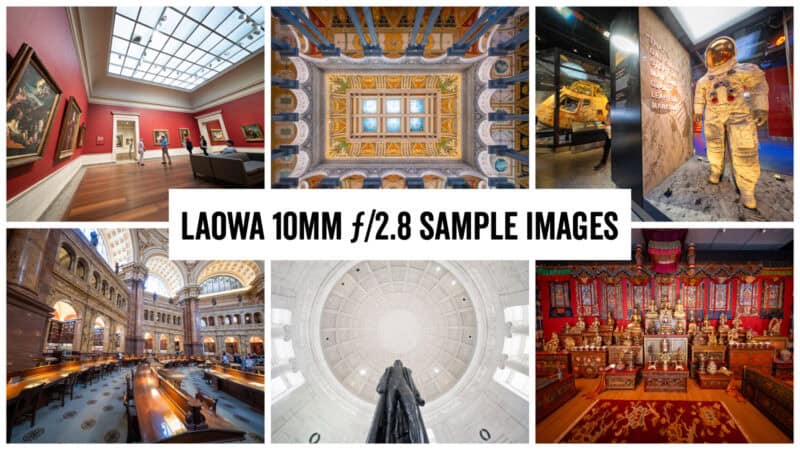
I’ve been out shooting with the ultra-wide Laowa 10mm f/2.8 autofocus lens (full-frame). Here’s a selection of high-resolution sample files I’ve taken with it.
For one, it’s wide. Very wide. 10mm isn’t unusual on an AF-C cropped-sensor lens, but this is designed for full-frame lenses.
Photo by David Coleman / Have Camera Will Travel
For another, it has autofocus. That’s quite unusual, because nearly all of the other full-frame ultra-wide lenses close to 10mm are manual-focus. The big manufacturers make 14mm and 12mm AF, but 10-11mm AF is unusual.
And for another, it has very effective aspherical elements. What that means is that lines stay straight rather than that bulging, distorted look you get with a fisheye lens. You still get a type of distortion that stretches the edges and corners of the frame, but it still manages to look somewhat more natural than a fisheye because things that you expect to be straight are straight.
Package all of those into a relatively compact and relatively inexpensive lens, and you’ve got something interesting and fun to shoot with.
Photo by David Coleman / Have Camera Will Travel
I’ve posted an in-depth review separately, but the purpose here is to provide a larger collection of sample images I’ve taken with this lens (the Nikon Z version on a Nikon Z8).
Sample images
So, a few things worth mentioning about these. They were all shot handheld with a Nikon Z8.
They were shot in RAW. I’ve lightly processed them in Lightroom Classic, but I haven’t put them through any extra optical corrections. I have, however, left the default lens profile active under the rationale that my objective here to test real-world use, not technical lab tests, and that that is how probably most users will shoot with it.
You can click on each image for a full-size version for a closer look.
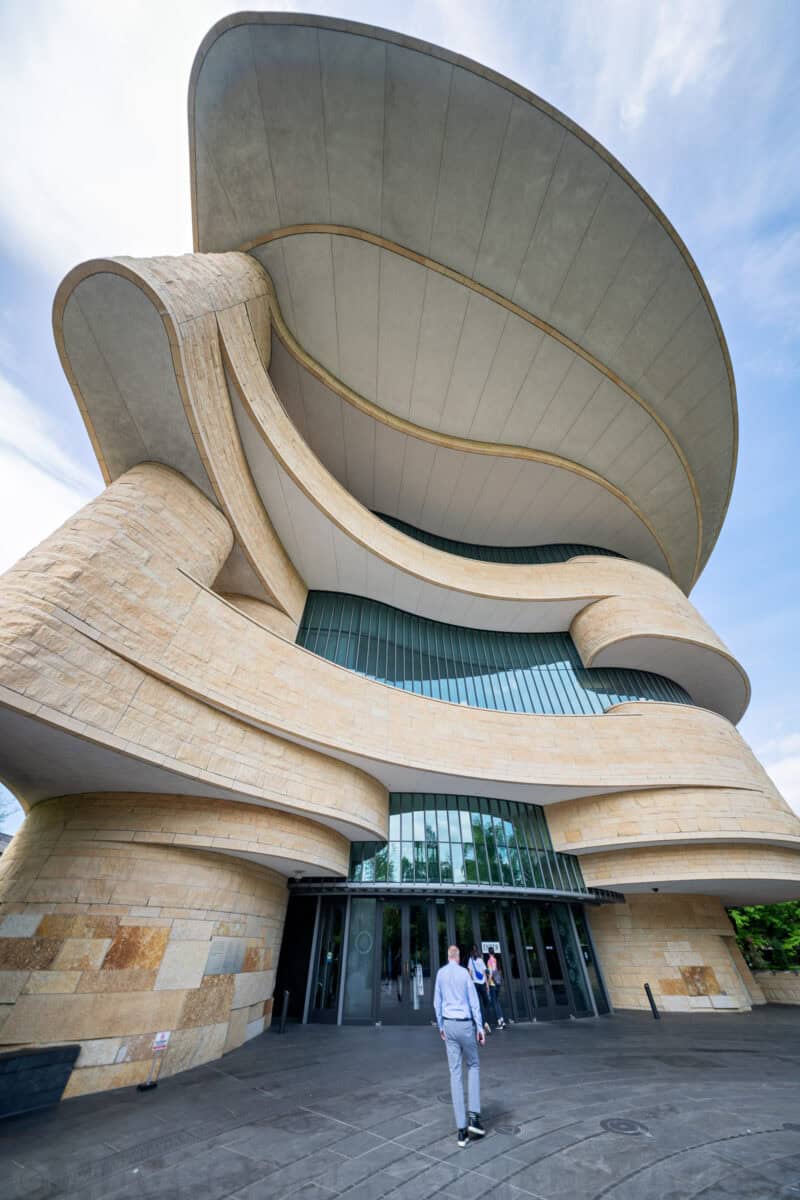
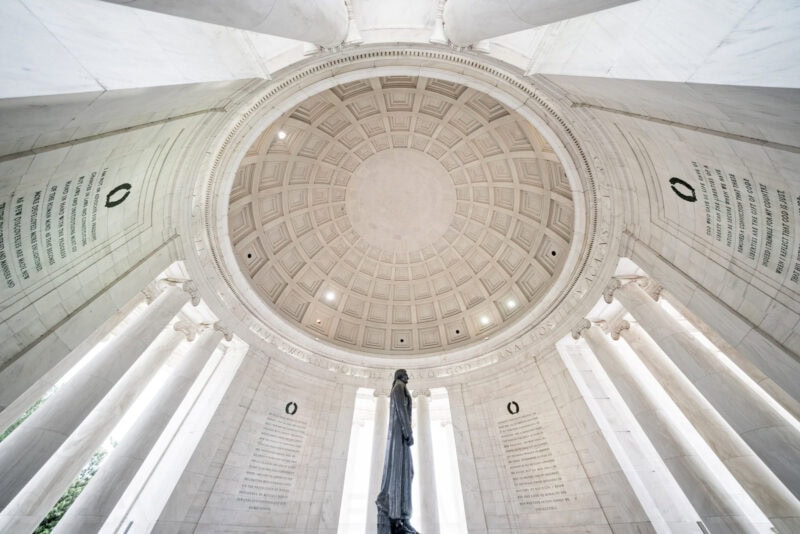
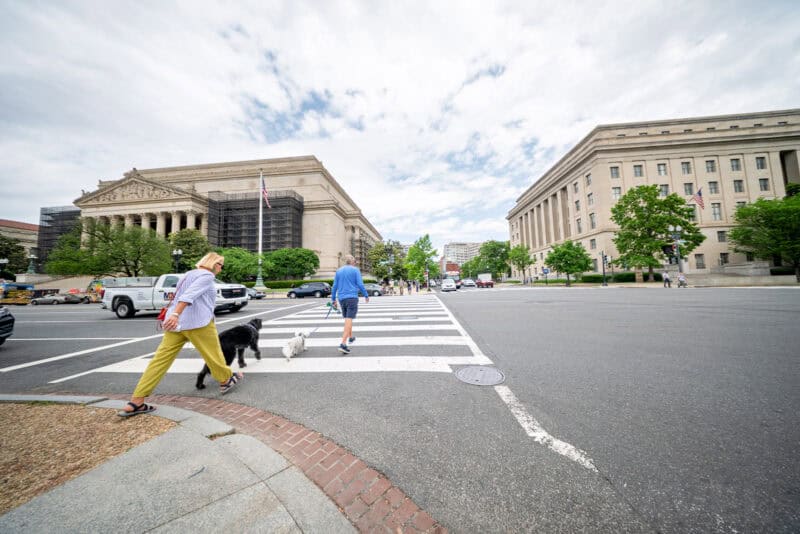
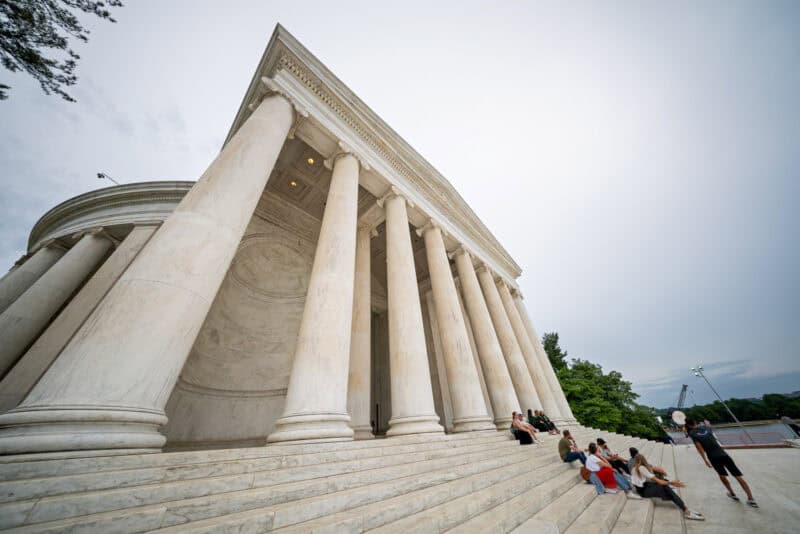
A good test of sharpness. With a lens like this, I’d often be shooting wide open or near to it, but I wanted to step this down to a fairer test of sharpness at a smaller aperture. It’s shooting straight up at the ceiling of the Library of Congress’s Jefferson Building. Camera & Lens: NIKON Z 8, LAOWA FFII 10mm F2.8 C&D Dreamer @ 10 mm (35mm equiv.); Exposure: ¹⁄₂₀ sec at ƒ / 11, ISO 640. Photo by David Coleman / Have Camera Will TravelIt’s quite distorted at the edges, but it packs a heck of a lot of scene into the frame. This is the main reading room of the Library of Congress. Camera & Lens: NIKON Z 8, LAOWA FFII 10mm F2.8 C&D Dreamer @ 10 mm (35mm equiv.); Exposure: ¹⁄₂₀ sec at f/4, ISO 400. Photo by David Coleman / Have Camera Will TravelNational Gallery of Art Washington DC Camera & Lens: NIKON Z 8, LAOWA FFII 10mm F2.8 C&D Dreamer @ 10 mm (35mm equiv.); Exposure: ¹⁄₂₀ sec at ƒ / 2.8, ISO 110. Photo by David Coleman / Have Camera Will TravelThe Jefferson Memorial. I’ve shot this scene many times, but this one packs in an even wider perspective that’s matched only by a fisheye (with that comes with heavy bulging distortion). Camera & Lens: Nikon Z8 + Laowa 10mm f2.8; Exposure: ¹⁄₂₀ sec at f/2.8, ISO 1400. Photo by David Coleman / Have Camera Will TravelRotunda of the National Gallery of Art, Washington, DC. Camera & Lens: Nikon Z8 + Laowa 10mm f2.8; Exposure: ¹⁄₂₀ sec at f/2.8, ISO 360. Photo by David Coleman / Have Camera Will TravelThe text in the center of the frame is a good test of sharpness (even handheld). And the f/2.8 gives some depth separation from the Apollo 11 command capsule in the background. The f/2.8 also comes in very handy for a relatively low-light scene like this. Camera & Lens: Nikon Z8 + Laowa 10mm f2.8; Exposure: ¹⁄₂₀ sec at f/2.8, ISO 2000. Photo by David Coleman / Have Camera Will TravelCamera & Lens: Nikon Z8 + Laowa 10mm f2.8; Exposure: ¹⁄₂₀₀₀ sec at f/2.8, ISO 64. Photo by David Coleman / Have Camera Will TravelAs with a fisheye lens, you can get in very close to your subject in the center of the frame and visually isolate it. Camera & Lens: Nikon Z8 + Laowa 10mm f2.8; Exposure: ¹⁄₂₀ sec at f/2.8, ISO 640. Photo by David Coleman / Have Camera Will TravelHalf of this frame is a reflection (on the left). It’s an exhibit that the Smithsonian’s National Air and Space Museum has to replicate what the five F-1 rocket engines on the bottom of a Saturn V rocket look like while only taking up a quarter of the space. Camera & Lens: Nikon Z8 + Laowa 10mm f2.8; Exposure: ¹⁄₂₀ sec at f/2.8, ISO 2500. Photo by David Coleman / Have Camera Will TravelCamera & Lens: NIKON Z 8, LAOWA FFII 10mm F2.8 C&D Dreamer @ 10 mm (35mm equiv.); Exposure: ¹⁄₂₀ sec at ƒ / 2.8, ISO 720. Photo by David Coleman / Have Camera Will TravelCamera & Lens: Nikon Z8 + Laowa 10mm f2.8; Exposure: ¹⁄₆₄₀₀ sec at f/2.8, ISO 64. Photo by David Coleman / Have Camera Will TravelI often use this scene to test cameras and lenses. Lots of detail and low light. You can see that it’s quite sharp in the center of the frame but much less so around the edges. And because this was shot relatively level, unlike several other shots here, you don’t get those aggressive angles on the side walls. Camera & Lens: Nikon Z8 + Laowa 10mm f2.8; Exposure: ¹⁄₂₀ sec at f/2.8, ISO 1600. Photo by David Coleman / Have Camera Will TravelCamera & Lens: Nikon Z8 + Laowa 10mm f2.8; Exposure: ¹⁄₂₅ sec at f/5.6, ISO 64. Photo by David Coleman / Have Camera Will TravelMore stars even at f/4. Camera & Lens: Nikon Z8 + Laowa 10mm f2.8; Exposure: ¹⁄₂₀ sec at f/4, ISO 560. Photo by David Coleman / Have Camera Will TravelThe curve along the top here is part of the original panel, not from the lens’s optics. Camera & Lens: Nikon Z8 + Laowa 10mm f2.8; Exposure: ¹⁄₂₀ sec at f/2.8, ISO 280. Photo by David Coleman / Have Camera Will TravelCamera & Lens: Nikon Z8 + Laowa 10mm f2.8; Exposure: ¹⁄₂₀ sec at f/2.8, ISO 90. Photo by David Coleman / Have Camera Will TravelThis sculpture is in quite low light in a small circular alcove (hence the curved floor line). Camera & Lens: Nikon Z8 + Laowa 10mm f2.8; Exposure: ¹⁄₂₀ sec at f/2.8, ISO 1400. Photo by David Coleman / Have Camera Will TravelThe curves here are part of the room design. It’s recreating a curved alcove to display the frescos. Camera & Lens: Nikon Z8 + Laowa 10mm f2.8; Exposure: ¹⁄₂₀ sec at f/4, ISO 2500. Photo by David Coleman / Have Camera Will TravelCamera & Lens: NIKON Z8, LAOWA FFII 10mm F2.8 C&D Dreamer @ 10 mm (35mm equiv.); Exposure: ¹⁄₂₀ sec at ƒ / 5.6, ISO 250. Photo by David Coleman / Have Camera Will TravelCamera & Lens: Nikon Z8 + Laowa 10mm f2.8; Exposure: ¹⁄₂₀ sec at f/2.8, ISO 1250. Photo by David Coleman / Have Camera Will TravelThis is an arched hallway, and the curves of the ceiling are the result of that, not the lens’s optics. Camera & Lens: Nikon Z8 + Laowa 10mm f2.8; Exposure: ¹⁄₂₀ sec at f/2.8, ISO 90. Photo by David Coleman / Have Camera Will TravelSame place and similar scene to above, but this time in landscape orientation. Camera & Lens: NIKON Z 8, LAOWA FFII 10mm F2.8 C&D Dreamer @ 10 mm (35mm equiv.); Exposure: ¹⁄₂₀ sec at f/2.8, ISO 320. Photo by David Coleman / Have Camera Will TravelAs with a fisheye, the heaviest distortion (or correction) is at the edges of the frame. If the subject is in the middle of the frame, it remains quite natural. I included this shot to show that it is possible to have a somewhat “normal” perspective and straight vertical and horizontal lines, so long as you keep the camera level and the subject in the center of the frame. You can tell that this was taken with a very wide-angle lens by the way the frame perspective projects, but it hasn’t particularly distorted the painting at its center. Camera & Lens: Nikon Z8 + Laowa 10mm f2.8; Exposure: ¹⁄₂₀ sec at f/4, ISO 2000. Photo by David Coleman / Have Camera Will TravelLots of opportunity here for curves and chromatic aberration, but neither is a particular issue. Camera & Lens: Nikon Z8 + Laowa 10mm f2.8; Exposure: ¹⁄₂₀ sec at f/4, ISO 2200. Photo by David Coleman / Have Camera Will TravelI found it interesting that even at large apertures, it would create prominent star patterns from light sources. On many lenses, you’d typically have to move to a much smaller aperture to get that effect. Camera & Lens: Nikon Z8 + Laowa 10mm f2.8; Exposure: ¹⁄₂₀ sec at f/4, ISO 900. Photo by David Coleman / Have Camera Will TravelI have another version of this below that was taken within a few seconds of this one. The difference is mostly that in the one below, there’s a person in the foreground. In this one, the lens’s distortion plays with and exaggerates the interesting architecture. In the version below, with the person in the foreground, the person is so distorted that it distracts in a negative way. Camera & Lens: Nikon Z8 + Laowa 10mm f2.8; Exposure: ¹⁄₃₂₀ sec at f/2.8, ISO 64. Photo by David Coleman / Have Camera Will TravelCamera & Lens: Nikon Z8 + Laowa 10mm f2.8; Exposure: ¹⁄₂₀ sec at f/2.8, ISO 180. Photo by David Coleman / Have Camera Will TravelCamera & Lens: Nikon Z8 + Laowa 10mm f2.8; Exposure: ¹⁄₂₀ sec at f/4, ISO 2000. Photo by David Coleman / Have Camera Will TravelEven in cramped indoor spaces, you can fit a lot of real estate into the frame. In this shot of the original Wright Flyer, you can even get the wingspan from a relatively close distance. Camera & Lens: Nikon Z8 + Laowa 10mm f2.8; Exposure: ¹⁄₂₀ sec at f/2.8, ISO 1800. Photo by David Coleman / Have Camera Will TravelThis is one of my go-to rooms in the National Gallery of Art for testing wide-angle lenses. There’s just so much going on with detail, perspective, and lines. Camera & Lens: Nikon Z8 + Laowa 10mm f2.8; Exposure: ¹⁄₂₀ sec at f/2.8, ISO 450. Photo by David Coleman / Have Camera Will TravelThe relatively fast maximum aperture of f/2.8 comes in very handy in low-light handheld shooting, like this. Camera & Lens: Nikon Z8 + Laowa 10mm f2.8; Exposure: ¹⁄₂₀ sec at f/2.8, ISO 9000. Photo by David Coleman / Have Camera Will TravelCamera & Lens: Nikon Z8 + Laowa 10mm f2.8; Exposure: ¹⁄₂₀ sec at f/5.6, ISO 2800. Photo by David Coleman / Have Camera Will TravelCamera & Lens: Nikon Z8 + Laowa 10mm f2.8; Exposure: ¹⁄₂₀ sec at f/2.8, ISO 125. Photo by David Coleman / Have Camera Will TravelNational Gallery of Art, Washington, DC. Camera & Lens: Nikon Z8 + Laowa 10mm f/2.8; Exposure: ¹⁄₂₀ sec at f/2.8, ISO 720.Photo by David Coleman / Have Camera Will TravelCamera & Lens: Nikon Z8 + Laowa 10mm f2.8; Exposure: ¹⁄₂₀ sec at f/2.8, ISO 110. Photo by David Coleman / Have Camera Will TravelIf I had raised the camera higher to be vertically centered on the frame at left, it would have created a more vertically correct image. Camera & Lens: Nikon Z8 + Laowa 10mm f2.8; Exposure: ¹⁄₂₀ sec at f/4, ISO 2500. Photo by David Coleman / Have Camera Will TravelA combination of lots of details in low light, but also testing out the sharpness of the text and detail on the edges of the frame. Camera & Lens: Nikon Z8 + Laowa 10mm f2.8; Exposure: ¹⁄₂₀ sec at f/2.8, ISO 4000. Photo by David Coleman / Have Camera Will TravelNational Gallery of Art, Washington, DC. Camera & Lens: Nikon Z8 + Laowa 10mm f2.8; Exposure: ¹⁄₂₀ sec at f/4, ISO 1600.Photo by David Coleman / Have Camera Will TravelNational Gallery of Art, Washington, DC. Camera & Lens: Nikon Z8 + Laowa 10mm f2.8; Exposure: ¹⁄₂₀ sec at f/4, ISO 900.Photo by David Coleman / Have Camera Will TravelIt’s a fun lens to play with architecturally abstract buildings like the Smithsonian’s National Museum of the American Indian, seen here. Camera & Lens: Nikon Z8 + Laowa 10mm f2.8; Exposure: ¹⁄₂₀ sec at f/2.8, ISO 220. Photo by David Coleman / Have Camera Will TravelCamera & Lens: Nikon Z8 + Laowa 10mm f2.8; Exposure: ¹⁄₂₀ sec at f/5.6, ISO 800. Photo by David Coleman / Have Camera Will Travel
What I would not use it for
As much as I enjoy shooting with this lens, it is not a jack-of-all-trades lens that you can just use anywhere. It’s not just that it’s super wide — it’s what that, and its aspherical elements, can do to certain shots.
In particular, it stretches anything near the edges and corners of the frame. It’s by no means alone in that, of course–it’s just a byproduct of such a wide perspective. And it can be fun. But it can also be distracting if you put certain things in that part of the frame.
And many times, it’s because it distorts people in distracting ways.
So I wanted to include a few images to illustrate times I wouldn’t use this lens.
I have a very similar shot to this up above that is just the building. But in this case, there’s a person prominently at the bottom of the frame. And the stretching here is distracting — he looks like a giant. Camera & Lens: Nikon Z8 + Laowa 10mm f2.8; Exposure: ¹⁄₂₅₀ sec at f/2.8, ISO 64. Photo by David Coleman / Have Camera Will TravelAs much as I like playing with the ultra-wide possibilities with architecture like this, in this particular framing, it just goes too far for my tastes. But that’s entirely a matter of personal preference; many shooters might find some of the other shots above too much for their tastes. Camera & Lens: Nikon Z8 + Laowa 10mm f2.8; Exposure: ¹⁄₂₀ sec at f/2.8, ISO 900. Photo by David Coleman / Have Camera Will TravelThis isn’t a slam dunk and might be perfectly acceptable sometimes. But you can clearly see that the stretching of the person in the yellow pants is disproportionate and conflicts uncomfortably with the other person in the frame. Camera & Lens: Nikon Z8 + Laowa 10mm f2.8; Exposure: ¹⁄₈₀₀ sec at f/2.8, ISO 64. Photo by David Coleman / Have Camera Will TravelThis is probably fine because it’s mostly focused on the columns, but the people in the bottom right are out of proportion. Camera & Lens: Nikon Z8 + Laowa 10mm f2.8; Exposure: ¹⁄₂₅ sec at f/5.6, ISO 64. Photo by David Coleman / Have Camera Will Travel
It’s not necessarily a lost cause, though, because you can dial back the distortion in post using lens distortion correction tools such as Lightroom Classic. You’ll lose some of the field of view, but you can reduce the disproportionate distortion.
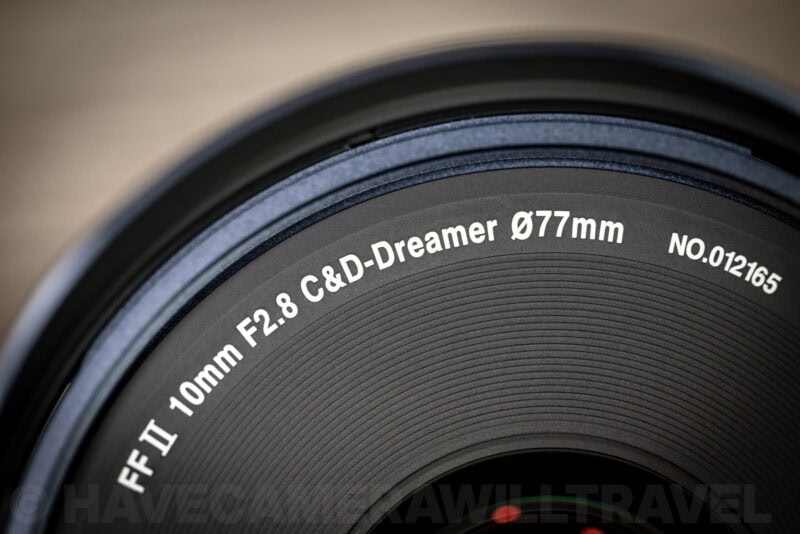
The Laowa 10mm f/2.8 Zero-D FF autofocus is available in its autofocus version for Sony FE and Nikon Z (I’ve been using the Nikon Z version). It has an MSRP of $799.
Prices on imported goods are pretty volatile at the moment, especially coming from China, so it’s possible that Venus Optics might adjust the pricing at some point.
There are also manual focus versions for Canon RF and L-mount (in addition to manual-focus versions for the Sony FE and Nikon Z). Drilling down further in the manual focus versions, there are two flavors: one with a 14-blade aperture and another with a 5-blade aperture. You can find the various configurations on the Venus Optics website.
Found this helpful? Personalize your search results.
I take photos for a living. Now based in Washington, D.C., I have spent the last 30+ years shooting across seven continents — from underwater environments to mountain peaks. My images and time-lapses have appeared in major newspapers, magazines, museums, professional sports stadiums, and even on massive architectural scrims covering world-famous buildings.
I started this site in 2009 to field-test gear, share problem-solving solutions, and share what I've learned in shooting around the world. I only review gear and services I have personally used. No armchair opinions — just real-world experience. Because, for me, the fun is in the making of the photo.