Nikon Zfc memory card quick recommendations
The Nikon Zfc remains one of the most compelling options for photographers who want a tactile, retro experience without the bulk of a full-frame system.
However, its internal hardware has specific limitations — particularly its single UHS-I SD slot — that dictate exactly what kind of memory card you should buy. The short version: a V30 (U3) UHS-I SDXC card in 128GB or 256GB is all this camera can take advantage of.
The Zfc arrived in 2021 and has been joined by newer APS-C bodies since, but it remains a popular choice for street photography. Because this camera is strictly limited to UHS-I speeds, my recommendations focus on finding the most reliable storage for your money rather than chasing expensive “Pro” speeds that this body cannot utilize.
If you want to cut to the chase, any of these SD cards will work reliably in the Nikon Zfc. They offer the exact speeds the camera requires without making you overpay for premium video features you don’t need.
- Type: SDXC / SDHC
- Video Speed Class: V30
- UHS Bus Interface Type: UHS-I
- Maximum Read Speed: 230 MB/s
- Storage Capacities: 32GB, 64GB, 128GB, 256GB, 512GB
Check current price and availability at:
- Video Speed Class: V30
- UHS Bus Interface Type: UHS-I
- Maximum Read Speed: 150 MB/s
- Storage Capacities: 64GB, 128GB, 256GB
Check current price and availability at:
- Type: SDXC
- Video Speed Class: V30
- UHS Bus Interface Type: UHS-I
- Maximum Read Speed: Up to 180 MB/s
- Storage Capacities: 128GB, 256GB, 512GB, 1TB
Check current price and availability at:
Recommendations checked: August 2026
Nikon Zfc compatibility & requirements
Nikon’s official documentation in the Zfc manual says that the camera supports SD, SDHC, and SDXC cards, and explicitly notes that it only supports UHS-I speeds. It recommends cards rated at “UHS Speed Class 3 or better” for video to avoid problems.
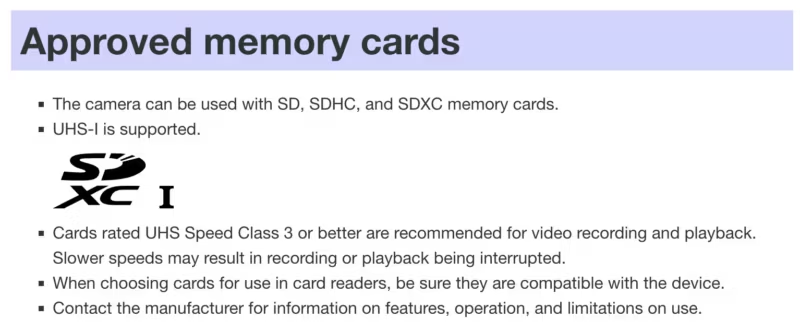
In practice, that means the Zfc’s demands are very modest.
It shoots 20.9-megapixel stills and basic 4K/30p video. To handle these files smoothly, you only need a card with a V30 (Video Speed Class 30) or U3 rating.
The card itself adds almost nothing to what you carry. Nikon rates the Zfc at 445 grams (15.7 ounces) with a battery and memory card loaded, against 390 grams for the bare body — a full-size SD card weighs about 2 grams on its own.
Will a UHS-II card make the Zfc faster?
Because the Zfc’s internal slot is limited to UHS-I technology, paying extra for a premium UHS-II V90 card is a waste of money. If you put a lightning-fast UHS-II card into the Zfc, the camera will simply roll it back to standard UHS-I speeds. You will see absolutely zero in-camera performance benefit when shooting bursts or recording video.
The only advantage a faster UHS-II card provides is when you remove the card and plug it into your computer using a fast reader. If shaving a few minutes off your computer transfer times is worth double the price, you can use a UHS-II card. Otherwise, stick to reliable V30 UHS-I cards. You can see how these different classes perform in my independent SD card speed tests.
Formats to avoid
When shopping for storage, you should also avoid buying SD Express cards or the newer SDUC formats. The Zfc lacks the hardware interface to utilize these emerging standards, meaning you would be paying a premium for tech the camera physically cannot use.
These cards are all rated V30 and work well in a very wide variety of cameras, with good versatility for shooting photos and 4K video.
My emphasis here is on cards that meet these criteria:
- They're fast enough for all the features of this camera.
- They're from a reputable and reliable brand, so you can count on them working well.
- They're readily available at major retailers, so you should be able to find them without much trouble.
- They're good value for money, so you're not paying too much for a card that is more than your camera can take full advantage of.
If you want to use a faster, fancier card, you can, but you won't see any extra benefit in doing so while you're operating the camera (but you might see some faster speeds when downloading the photos to a computer, depending on your computer and memory card reader combination). And, as always, I recommend buying from a major retailer to minimize the chances of getting burned with a counterfeit memory card.
SanDisk Extreme V30 UHS-I
- Type: SDXC / SDHC
- Video Speed Class: V30
- UHS Bus Interface Type: UHS-I
- Maximum Read Speed: 230 MB/s
- Storage Capacities: 32GB, 64GB, 128GB, 256GB, 512GB
Check current price and availability at:
SanDisk's Extreme range are good bets for many cameras, and that's true here too. SanDisk has faster ranges, like the Extreme Pro line, but this Extreme line is both quick enough for most cameras and usually less expensive than those faster cards.
One thing to note with SanDisk cards is that they recycle their model names. So you can find Extreme cards that are older and slower. You'll probably find those older versions work just fine — it really depends how far back you go. I've used many SanDisk Extreme cards over the years in many different cameras and have found them to be very reliable. They're also often good value, and you can sometimes find them sold in 2-packs (it's always good to have a spare on hand!).
Lexar High-Performance 800x PRO BLUE Series V30 UHS-I
- Video Speed Class: V30
- UHS Bus Interface Type: UHS-I
- Maximum Read Speed: 150 MB/s
- Storage Capacities: 64GB, 128GB, 256GB
Check current price and availability at:
The Lexar 800x Pro range is a relatively new model that replaces the old 633x cards that were mainstays of Lexar's SD cards for a long time. This newer V30 card is still a good combination of speed, reliability, and value, and you can often find them in multipacks to have spares on hand.
Delkin Devices ADVANTAGE V30 UHS-I SDXC (180 MB/s)
- Type: SDXC
- Video Speed Class: V30
- UHS Bus Interface Type: UHS-I
- Maximum Read Speed: Up to 180 MB/s
- Storage Capacities: 128GB, 256GB, 512GB, 1TB
Check current price and availability at:
Delkin Devices have recently come out with a range of new SD cards of varying speeds and specs. This is one of their mid-range cards that is rated for V30 video recording speeds. This newer version is rated for read speeds of up to 180 MB/s (the older version of the Advantage maxxed out at 90 MB/s).
Nextorage Classic V30 UHS-I SDXC Card
- Type: SDXC
- Video Speed Class: V30
- UHS Bus Interface Type: UHS-I
- Maximum Read Speed: Up to 200 MB/s
- Storage Capacities: 128GB, 256GB, 512GB
Check current price and availability at:
Japanese brand Nextorage makes excellent memory cards, although they're not always easy to find in stores in the US. But if you can find them, in my experience they're a very good bet. This is their basic (or "Classic") model, rated for V30.
Recommendations checked: August 2026
What capacity SD card do you need?
A 128GB or 256GB SDXC card represents the “sweet spot” for value per gigabyte. A 128GB card easily holds thousands of RAW images, allowing you to shoot a weekend trip without constantly worrying about your remaining space.
If you’re shooting video, or heading out on a much longer trip, 512GB or 1TB would also be good choices (or multiple smaller cards if you want to avoid the all-eggs-in-one-basket problem).
Formatting your cards correctly
Whenever you introduce a new SD card to your Zfc, you must format it in-camera before shooting. This builds the correct DCIM folder structures and ensures the file system is optimized for Nikon’s firmware.
MENU > Setup Menu (wrench icon) > Format memory cardBe aware that formatting wipes all data on the drive. If you are experiencing read/write errors and are deciding between a quick format or a full format to revive a problematic card, it is often best to use the official SD Card Formatter app on your computer for a deep overwrite before re-initializing it in the Zfc.