The Manfrotto 190Go! M-Series is a compact carbon-fiber tripod with fast twist locks and Manfrotto’s 90° column that swings horizontal — solid and well-made, though it skips extras (spikes, bag) that cheaper rivals include. The field test is below.
More: travel tripod reviews.
This post is another entry in my ongoing series of hands-on field tests covering the best travel tripods on the market. Today, I’m looking at the Manfrotto 190Go! M-Series Carbon Fiber Tripod.
There are actually two versions of this model. The one I’m testing here is the carbon fiber edition. There’s also an aluminum version that shares very similar specs but is a little heavier, slightly less stiff, and quite a bit cheaper. The carbon version I’m reviewing boasts a load capacity of 15.4 pounds (7 kg), a maximum height of nearly 58 inches (147 cm), folds down to under 18 inches (45 cm), and weighs in at under 3 pounds (1.4 kg).
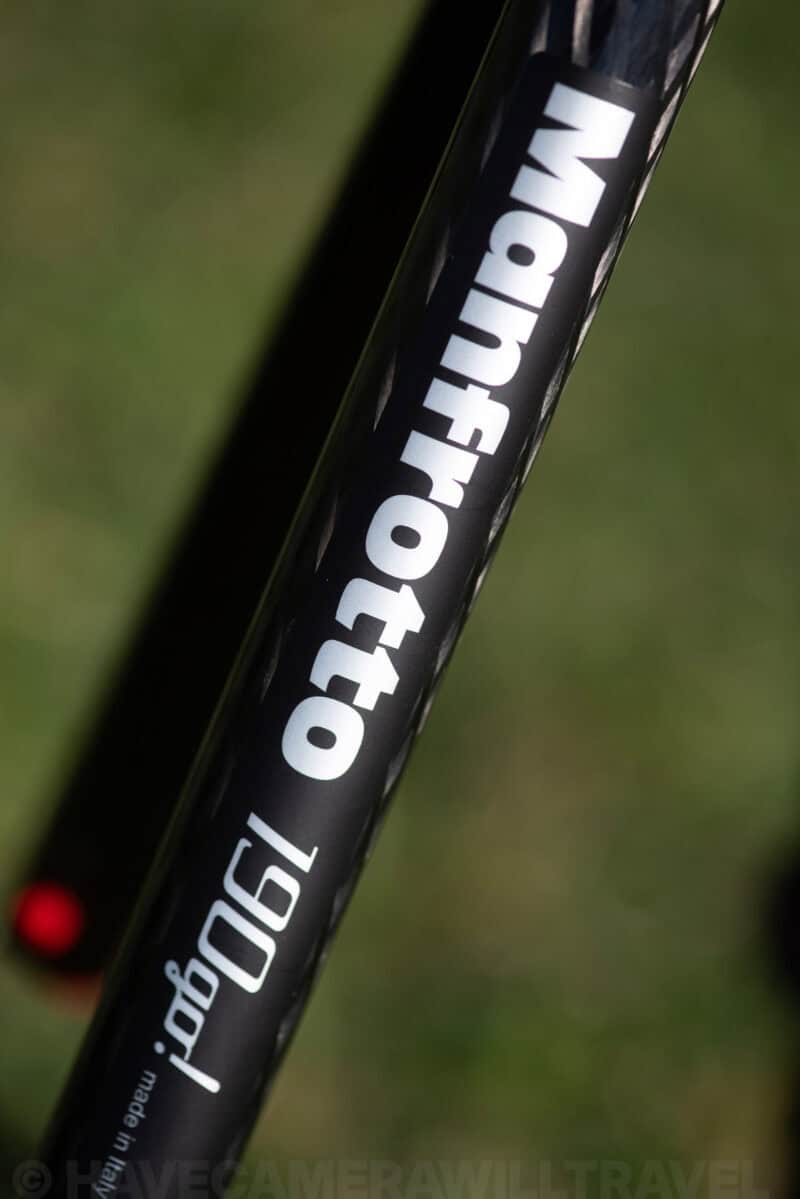
Manfrotto, of course, has a long and distinguished history in the photography gear world. They’re a legacy Italian brand — now owned by a British company — and much of their premium gear is still manufactured right in Italy.
Generally speaking, Manfrotto’s tripods cater to the middle of the price range, which strategically distinguishes them from the ultra-premium, high-end gear produced by their sister brand, Gitzo.
Leg mechanics & locks
Many of the top travel tripods on the market today collapse by folding their legs entirely back on themselves to minimize packing size. Ever since Gitzo introduced that inverted design several years ago, it has become the gold standard for travel sticks. Interestingly, the 190Go! doesn’t do that. It folds up the old-fashioned way.

The leg extensions use standard twist locks. They might look a bit more industrial than the sleek locks on some competitors, but they function beautifully. They’re a highly grippy, linear rotating lock. While they lack the fancy dual-stage resistance some other tripods feature, I’ve found them to lock incredibly tight. Better yet, they’re very easy to grip and turn even when you’re shooting with cold hands.

The angle locking mechanisms at the top of the legs are distinctive, but a bit quirky. In broad outlines, they’re essentially a spring-loaded ratchet lock. Normally, I highly prefer spring-loaded locks, but I’m not entirely sold on how Manfrotto implemented them here.
On the plus side, they’re incredibly streamlined and sit perfectly flush to the carbon legs. However, I’ve found them a little awkward to manually release in the field. There’s also quite a lot of physical movement in the mechanism itself. It’s secure enough once locked, but it just doesn’t inspire a ton of confidence when you’re actively operating it.

The 90-degree center column trick
This tripod’s absolute best party trick is its articulated center column. With the push of a button, the column can be switched out to a parallel bar, allowing you to easily shoot straight down.
It isn’t the only tripod on the market that does this — the Benro GoTravel has a similar feature, for instance — but I’m really impressed with Manfrotto’s specific mechanism. It feels much more solid than the Benro when deployed, and it’s incredibly fast to set up.


Heads & feet
The specific version I’ve been using is sold as “legs only,” but you can also pick up kit versions bundled with a Manfrotto ballhead or a 3-way pan head.
With just the legs, you can attach pretty much any third-party head you like. One notable advantage to this design is that it features an unusually broad baseplate. While you probably wouldn’t want to add a massive, heavy studio head to these relatively lightweight travel legs, the broad plate gives you the option to mount larger gear securely if you need to.

Down at the bottom, it comes with angled rubber feet. Because they have flat surfaces that sit flush to the ground, they’re quite a bit more grippy on hard floors than your standard conical rubber feet. The downside? The feet aren’t removable, meaning you can’t swap them out for steel spikes if you’re shooting on ice or mud.

The little things
There is one small, practical feature that’s sacrificed to accommodate the 90-degree swing mechanism: you lose the ballast hook on the bottom of the center column. Because that space is occupied by the release button you press to swing the column out, there’s nowhere to hang your camera bag for extra stability in high winds.


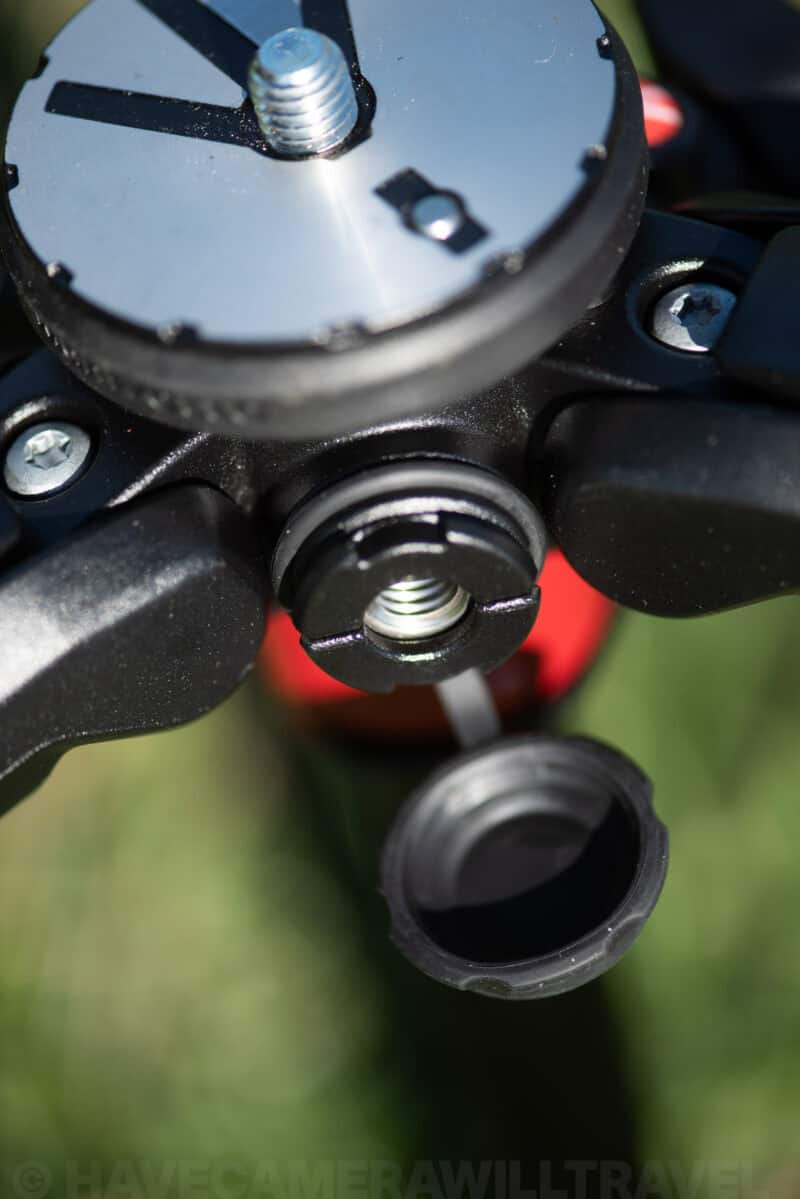
On the side of the canopy is what Manfrotto calls an “Easy Link.” It’s basically just a threaded 3/8″ attachment socket, but it’s incredibly handy if you want to mount a friction arm for an external monitor, an LED light, or a microphone.
Core specifications
- Load Capacity: 15.43 lb (7 kg)
- Maximum Working Height: 57.87 in (147 cm)
- Minimum Working Height: 3.15 in (8 cm)
- Folded Length: 17.72 in (45 cm)
- Head Mount Type: 3/8″-16 Screw
- Weight: 2.98 lb (1.35 kg)
- Leg Sections: 4 (Carbon Fiber)
- Made in: Italy
What’s in the box?
Honestly, not much. This is a very bare-bones package. It doesn’t include a padded carrying bag, short columns, or any extra terrain accessories.
Final verdict
Pros
- 90-degree shooting for straight down (or up) – highly useful for macro, product photography, and filming flat-lay how-to guides
- Solid, rigid Italian construction
- Reliable overall field performance
- Excellent, grippy twist locks for leg extension
Cons
- Quirky, somewhat awkward angle locking mechanisms
- Bare-bones kit doesn’t include useful accessories that competitors offer (e.g., removable spiked feet, padded bag, ballast hook)
Aside from not being completely sold on the leg angle locking mechanism, I haven’t found much to complain about with this tripod. After shooting with it extensively, I can confidently say it’s a very good, highly reliable piece of gear.
But, for the most part, there also isn’t a lot that truly stands out. Part of the problem is that it’s arguably a little overpriced for what you actually get in the box. With incredibly solid competition from brands like Sirui and Oben, the travel tripod market has become crowded and cutthroat. It’s just a space where it’s exceptionally hard to stand out from the pack without offering a ton of value.

One major thing the Manfrotto 190Go! definitely has going for it is the 90° center column. I like the way the swivel mechanism on this model works far better than how Benro implements theirs. It’s a feature that will massively appeal to macro and product photographers who desperately need that straight-down, flat-lay angle.
Overall, I’ve found the 190Go! M-Series delivers the typical high quality that Manfrotto is famous for, with just a hint of quirkiness in the swivel column and leg locks. While it isn’t remarkably strong or unyielding — there’s definitely a bit of give when the legs are fully extended — it operates well within the normal, acceptable limits for this class of lightweight travel tripod.
If there’s an area where it feels let down, it’s that it doesn’t include the practical extras its less-expensive competitors throw in as standard, like removable steel spikes and a dedicated carrying bag.
Price & availability
Check the current price and availability at: