When it comes to keeping your camera perfectly still in low-light conditions or locking down a massive telephoto lens, it is incredibly hard to beat a good heavy-duty tripod.
But tripods aren’t a perfect fit for every occasion. They are often big, bulky, and relatively slow to move around when tracking fast wildlife. And, as anyone who has ever tried taking one on a trip knows, there are a lot of places you simply cannot use them. Many tourist locations and stadiums explicitly ban tripods; security will often make you check them at the door or leave them in your car.
That is where a good monopod becomes an absolute necessity. It is more limited than a tripod, but infinitely more flexible. It doesn’t replace a tripod — it complements it, letting you nail sharp photos you otherwise wouldn’t get. With the right stance and technique, you can easily squeeze out a few extra stops of light compared to handholding, especially with a massive telephoto lens.
For travel, a monopod that is small and light enough to keep strapped to your camera bag “just in case” is ideal. In my experience, security guards at locations that explicitly ban tripods rarely bat an eye at a monopod. So long as it isn’t on their specific list of banned items, you can usually walk right in.
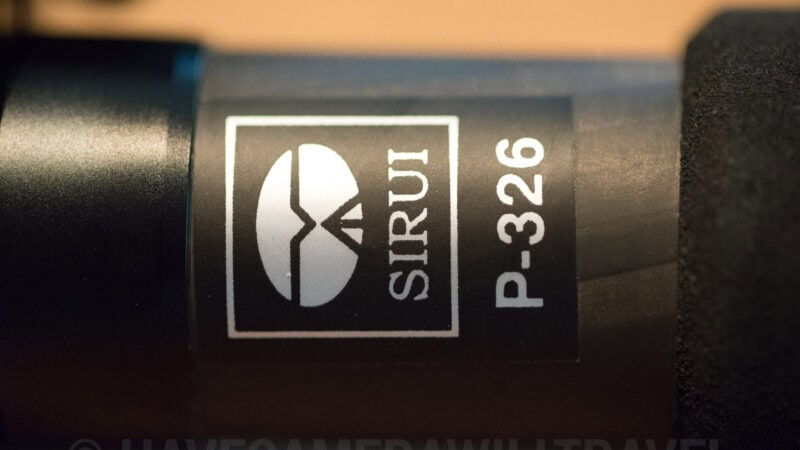
I originally bought the Sirui P-326 Carbon Fiber Monopod back in 2014. More than a decade later, it is still my absolute go-to stick when shooting sports or wildlife with long lenses. It has held up incredibly well. Here is my long-term review of why this affordable piece of gear earned a permanent spot in my kit.
Why I chose the Sirui P-326
The gold standard of compact travel monopods has long been the Gitzo Traveler series. They are tiny and have very impressive weight limits.
But there’s a massive catch: they cost upwards of $400. That’s is a painful amount ‘s a lot of money to pay for something that is a little too easy to accidentally leave on a train or under a seat in a restaurant. So while I am a big fan of Gitzo tripods, I balked at spending $400 on a monopod.
I went looking for a more cost-effective option. It needed to be small and incredibly light. The bigger and heavier it is, the less likely I am to actually take it with me. Crucially, it also needed to safely support a heavy camera and long telephoto lens in the outdoors.
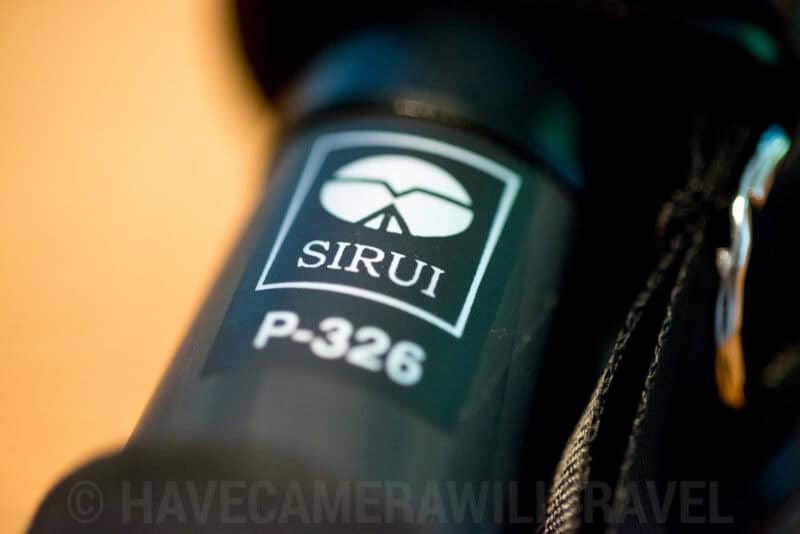
The Sirui P-326 hit every mark. Back in 2014, Sirui wasn’t a brand I was familiar with, but they have since built a phenomenal reputation.
Size, weight & load capacity
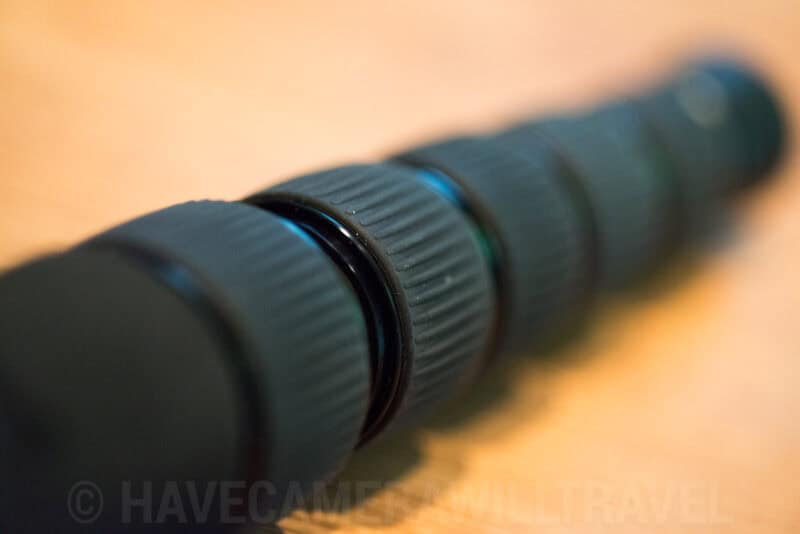
The P-326 features 6 carbon fiber sections. Because of those 6 sections, it collapses down to a tiny 15.6 inches (39.6 cm) and weighs less than a pound (0.9 lbs, to be precise). It is compact enough to throw into a daypack and won’t eat into your carry-on luggage allowance.
Despite its lightweight build, it supports a maximum load of 17.6 pounds (8 kg). That is more than enough for almost any practical camera and lens combination. For example, a heavy pro-body DSLR paired with a 70-200mm f/2.8 lens weighs in under 7 pounds. Even if you are mounting a massive 600mm prime lens for wildlife or sports, the combination will still likely come in under 15 pounds.
(Note: If you are genuinely shooting with cinema-grade glass or the heaviest 800mm primes on safari in Africa, you’re better off with a massive, heavy-duty stick like the Gitzo Series 5, but for 99% of travel photographers, the Sirui’s 17.6-pound limit is plenty).
The maximum extended height is 60.6 inches. I am 6 feet tall, and I find that just under fully extended makes for a very comfortable shooting height on flat ground, even without a monopod head attached.
Build details & features
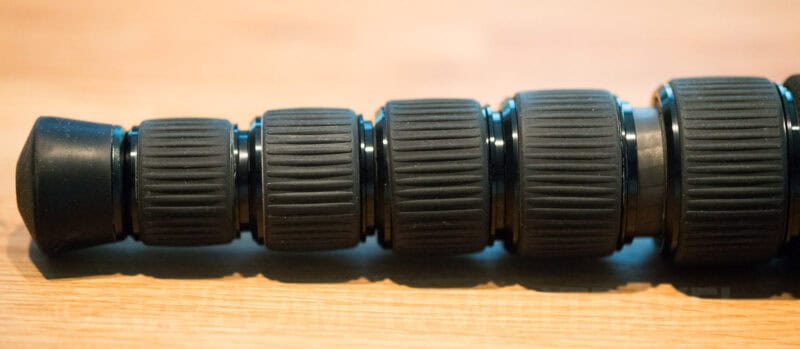
Twist Locks: Over the last decade of use, I have found that the twist locks remain incredibly tight. As with nearly all types of extension locks, they don’t play nicely with fine sand and dirt, but I haven’t found them to be any more problematic or delicate than the locks on my premium tripods.
Mounting Plate: The attachment plate that comes with it is solid and wide, making for a secure grip when attaching a camera or lens collar. I personally use Arca-style quick-release plates, so I fitted a lightweight Desmond skeleton clamp directly to the top of mine.
The downside to a direct clamp is that to shoot in portrait (vertical) mode, you either need an L-bracket on the camera or a rotating lens collar. For maximum flexibility, you can always add a dedicated tilt-head or ball-head like this one from Sirui.
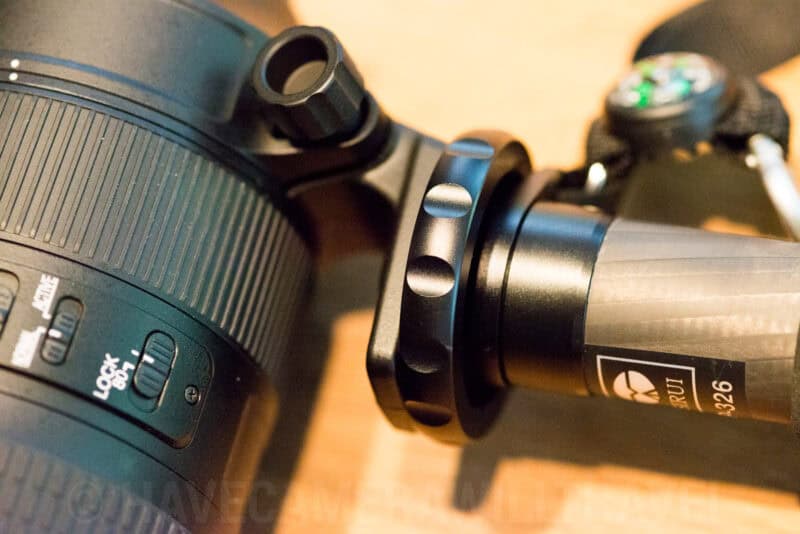
Reversible Screw: The mounting screw is reversible, offering both a 1/4″-20 and a 3/8″-16 thread. The 1/4″ is the standard size for the bottom of cameras, while the 3/8″ is the standard for attaching heavy-duty tripod heads. Because the screw is designed to simply flip over inside the plate, there is nothing to detach and accidentally lose in the field.
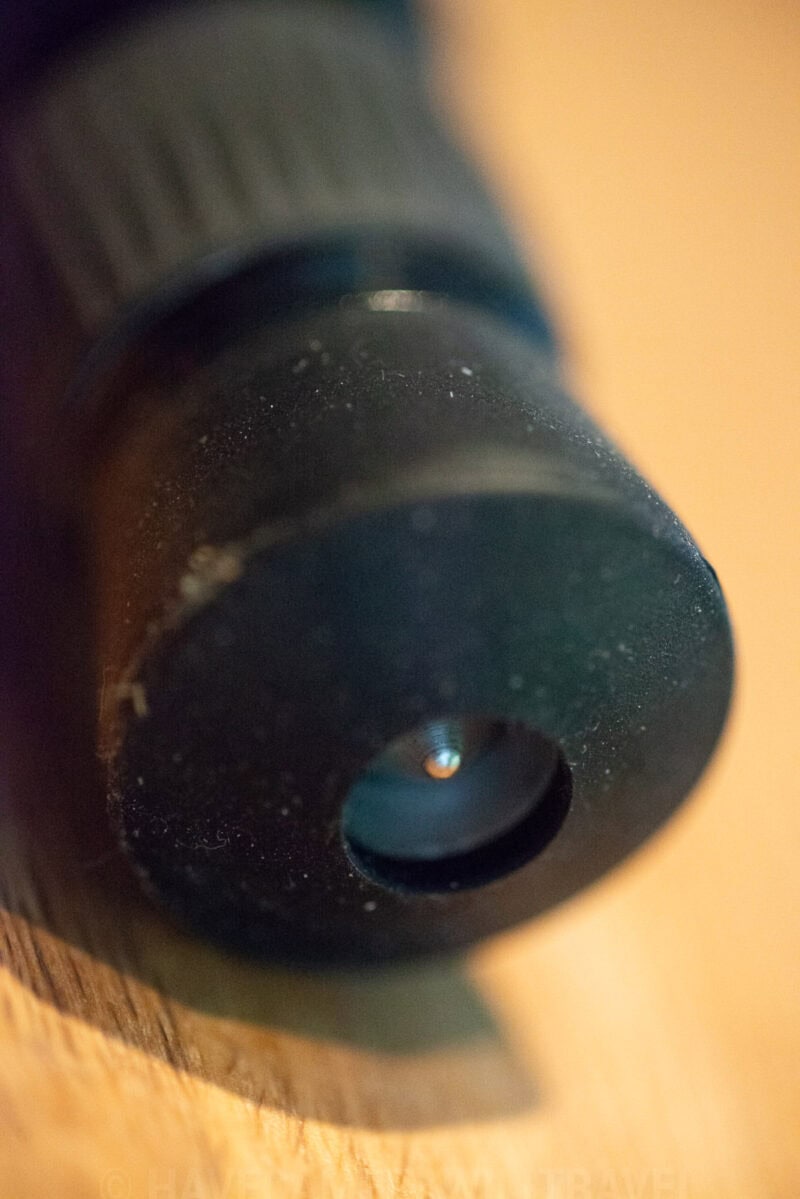
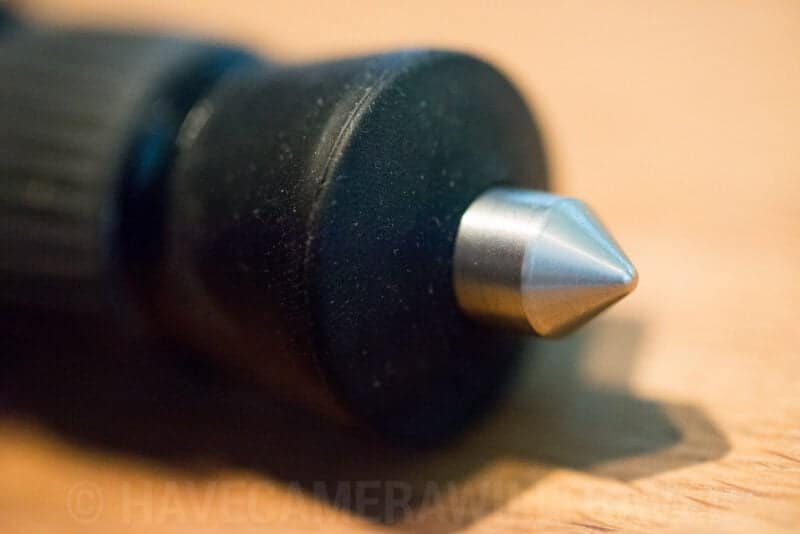
Retractable Spike: The foot of the monopod is fitted with a retractable steel spike. In its normal mode, the foot is rubberized, which provides great grip on a broad range of hard surfaces. By simply twisting the rubber foot, the steel spike extends. This is incredibly useful for shooting on ice, wet grass, or anywhere a pointier tip will help keep the stick from kicking out. Again, because of the clever design, there is nothing to clip off or remove, meaning there’s one less thing to lose.
Straps & Carabiners: It comes standard with a hand strap and a carabiner clip to attach to the outside of your camera bag. (There’s even a small compass built in, which is a bit of a gimmick, but why not?) All of these pieces are easily removable; the strap attaches to a collar that locks in under the attachment plate. If you don’t want them, just slide them off.

Key specifications
- Maximum Height: 60.6 in (154 cm)
- Folded Length: 15.6 in (39.6 cm)
- Weight: 0.9 lb (0.4 kg)
- Load Capacity: 17.6 lb (8 kg)
- Leg Sections: 6 (Carbon fiber)
- Locking Mechanism: Twist locks
- Foot: Rubber foot with integrated retractable steel spike
- Mounting Thread: Reversible 1/4″-20 and 3/8″-16 screw
- Warranty: 6-year warranty
10-year verdict: Do I still recommend it?
Absolutely. It has met all of my requirements for over a decade. It is strong, sturdy, remarkably light, and incredibly compact.
When I bought it, I didn’t know the brand, but I was pleasantly surprised by the build quality. Today, Sirui is a highly respected name, and the fact that this specific monopod is still strapped to my bag all these years later is a testament to its value. With a street price generally sitting under $100, the price-to-performance ratio is exceptional.
(Note: There is also an aluminum version, the Sirui P-306. It is less expensive, but it has a lower load rating of under 18 pounds and is about 20 percent heavier at 1.1 pounds. I highly recommend spending the few extra dollars for the carbon fiber version).
Price & availability
You can find the Sirui P-326 at the following retailers:


I just bought the carbon fiber version and also the L-10 head/mount. It works great with my D750 and Tamron 150-600, makes shooting wildlife much easier….
Thanks for the write up and sharing this useful information. I think I might be buying a Sirui p-326 monopod in the near future now after reading this, I shoot with big heavy gear and recently had a Oben 2400 monopod break while I was on a shoot… Time to upgrade again.
I also wanted to add that it might be possible to thread the spike foot. If I end up buying one I will try and thread it and let everyone know how it went.
Thanks again!
-Mike
mjkshots.com
Interesting idea. Would love to hear how it goes.
Thank you for the review. Question. Does the foot on this come completely off? I’m looking for the flexibility to add a fluid foot. Is there a 3/8 thread or something like that?
No, it doesn’t. There’s no way to remove the foot.