Nikon doesn’t (yet) make any Z-mount fisheye lenses (they do have a couple of F-mount lenses). But some third-party manufacturers have stepped up with fisheyes for both full-frame (FX) sensors and APS-C / DX cameras.
I’ve been testing out a few different options recently. The one I’m focusing on here is the AstrHori 12mm f/2.8 fisheye.
With the 185° angle of view and minimum focus distance of 7.9 inches (200 mm), this lens captures an incredibly wide perspective. And yes, it has the distinctive distortion of a fisheye lens.
This is an old-school analog lens. There are no electronic components — it just uses physics, no electronic wizardry.
That doesn’t mean it won’t work on digital cameras — it will — but there are some practical implications to factor in. That’s because you’re getting manual focus, manual aperture, and no EXIF communication with the camera.
On a fisheye, manual focus is often less of an issue than with a longer lens simply because the focus is much more forgiving with the incredibly deep depth of field that fisheye lenses naturally have. If your camera has it, the focus peaking indicator can be invaluable when using a manual-focus lens.
This is a full-frame coverage fisheye (as distinct from a circular fisheye that crams the scene into a circle surrounded by black), and there are versions available for E/Z/R/L mounts. I’ve been testing the Z version on a Nikon Z8.
For those unfamiliar with the brand, AstrHori is a Chinese lens manufacturer established in 2018 and based in Shenzhen. I haven’t used a lot of their lenses yet (and, for that matter, they haven’t released all that many yet). Circumstantial evidence points to this being a rebranded Samyang lens, but I don’t have direct confirmation backing that up (more on that below).
Build & handling
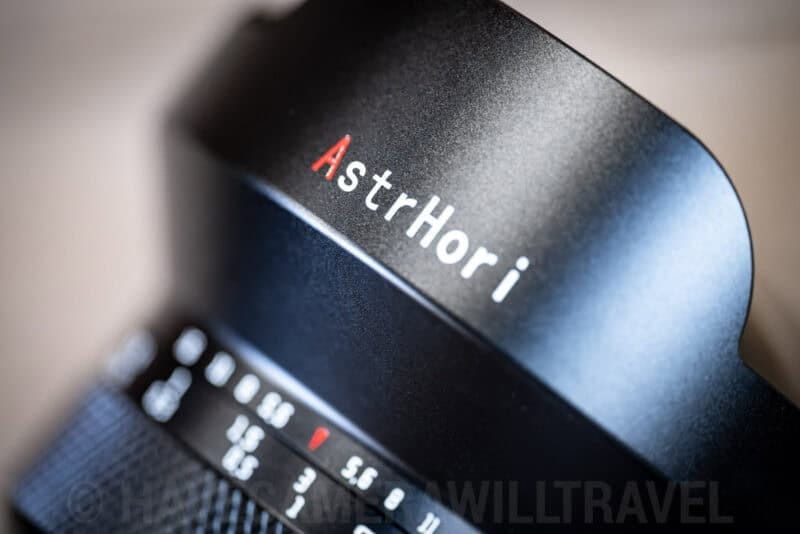
There’s no two ways about it — this is a chunky lens. It’s a solid brick of metal and glass weighing 1.7 lb (757.5 g) and measuring 3.5 x 3.9 inches (9 x 10 cm). As soon as you take it out of the box, you’ll notice that this is a heavy, solid lens. The lens barrel is metal, and the front element is a hefty chunk of glass.
When shooting with it, you’ll notice that weight. It’s not just a matter of the weight itself — even on a full-size body like the Nikon Z8, it’s not especially well-balanced, and the setup makes the camera feel front-heavy.
That said, shooting with it actually feels quite nice. It feels solid, and the focus and aperture rings rotate easily. And this being a manual-focus lens as well as manual aperture, that matters.
However, one of the key problems I ran into, and the thing I ultimately like least about this lens, is the difficulty of getting a sharp, focused image out of it. This was more than just a case of the usual challenge of using manual focus. The focus ring is very smooth, which feels good when shooting with. But it’s also almost too light and easy to move. And using the Z8’s focus peaking feature became unreliable for focus at f/2.8 much of the time.
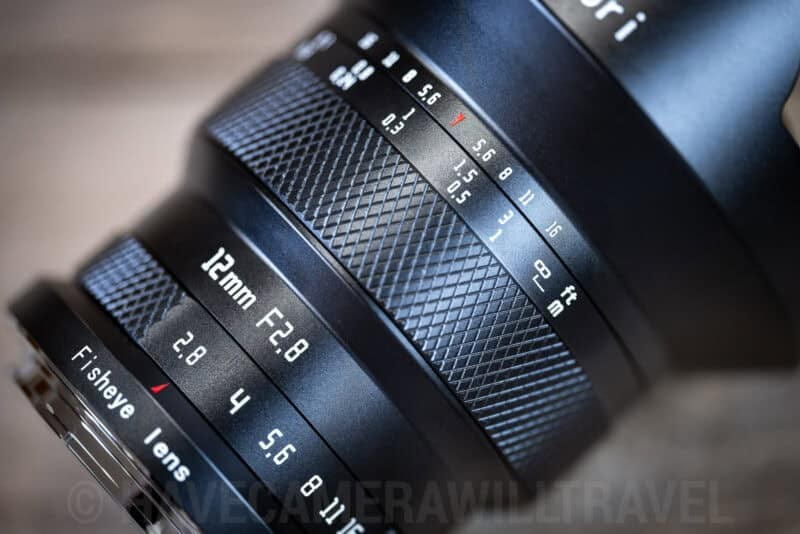
Since this became a somewhat decisive issue for me, I should explain in more detail. As with nearly all manual-focus lenses, turning the rotation ring all the way around actually takes it slightly past infinity (this design accounts for thermal expansion and manufacturing tolerances that could otherwise prevent reaching true infinity focus). So it’s not as simple as turning the ring to focus at infinity — you actually have to back off it a little. But I found this lens was unusually sensitive to how much to back off, and the focus peaking feature isn’t precise enough to reliably help. The upshot was that I ended up with a high proportion of out-of-focus images at f/2.8 — a much higher proportion than with a TTArtisan 11mm f/2.8 fisheye that I was shooting with alongside it. In fact, it’s pretty much this feature alone that makes me prefer the TTArtisan over the AstrHori — I simply get far more keeper photos in focus with the TTArtisan than the AstrHori, even with the same equipment and shooting technique. Of course, it’s quite possible that your mileage might vary. But for whatever reason, this became a problem for me.
That focusing challenge would be easier to correct when using a tripod for, say, astrophotography. But in walking-around shooting, that was problematic.

The aperture is also manual — you use the lens’s aperture ring to change settings from f/2.8 to f/16. You can’t change the aperture in the camera, which also means that automatic or some semi-automatic shooting modes like P and S (shutter priority) won’t work effectively. You can still use A (aperture priority) mode or full manual, although you won’t see the current aperture setting displayed in the viewfinder or back screen or in the image EXIF information.
Because the camera doesn’t control the aperture, it’s a case of what you see is what you get in terms of lighting. What I mean by that is if you step down the aperture to, say, f/8, it’s going to reduce the amount of light hitting the sensor (newer automatic lenses usually compose wide open and step down as the shutter is pressed). That will in turn darken the view through the viewfinder and live view back screen. That might make it harder to frame the shot and focus. On a camera like the Z8, there are two features that can help with it. I’ll provide a detailed guide on them separately, but if you run into this issue, you can experiment with either the View Mode setting (Custom Settings Menu > d9 View mode (photo Lv)) or Starlight view setting (Custom Settings Menu > d10 Starlight view (photo Lv)).
And, finally, as with most fisheyes, you can’t use standard screw-in filters — there are no filter threads, the front element isn’t flat, and the ultra-wide angle poses big problems with vignetting. The lens hood is built-in and non-removable. And the lens cap is a large plastic cap (which is supplied) that slides over the outside of the lens hood.
Sample images
Here are some examples I’ve shot with this lens, all on the Nikon Z8. I hope to add some more here soon. You can click on each image for a closer, full-size look.
These were originally shot in RAW and lightly processed in Lightroom Classic. I haven’t applied any lens profile corrections to these (more on that below).
Because the lens doesn’t communicate electronically with the camera, the aperture isn’t recorded in the EXIF information. In general, I’ve been shooting at f/2.8, f/4, and f/5.6.


Lens profiles when editing
The lens doesn’t communicate any EXIF information to the camera. That means there won’t be any lens EXIF information in the image metadata.
In Lightroom, for example, it’ll just show up as 0.0 mm f/0.0. That also means there are no embedded lens profiles for optical corrections when editing, although you can still apply corrections manually. On many Nikon Z cameras, including the Z8, you can use the non-CPU lens data feature to manually input basic lens information for informational and organizational purposes, as well as providing guidance to the camera’s IBIS stabilization.
Interestingly, Lightroom Classic doesn’t directly register the lens’s make and model, but when I ran some images through DxO PureRAW, it identified it as a Samyang 12mm f/2.8 ED AS NCS Fisheye (and DxO has a profile matching that lens). That would make sense — Samyang is known to manufacture lenses sold under several other brand names, although I don’t have any other evidence to corroborate this specific lens.
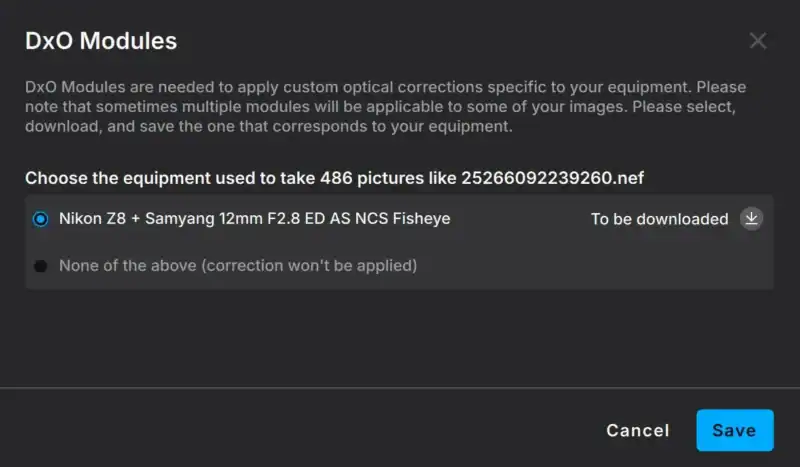
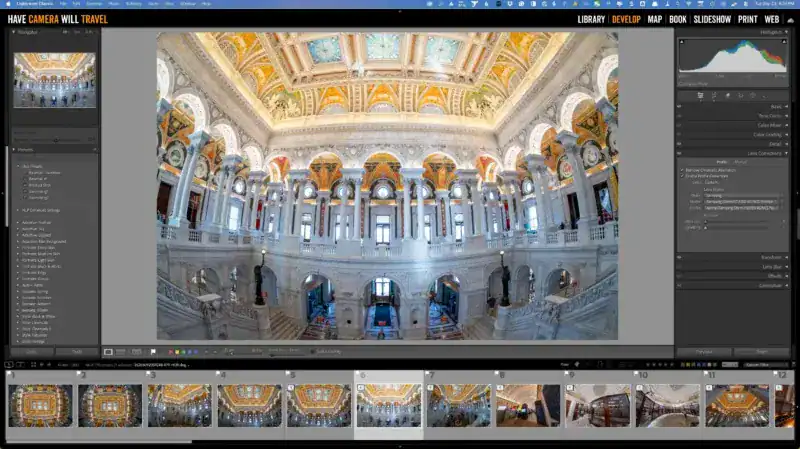
Lightroom Classic does include a profile for the Samyang 12mm f/2.8 ED AS NCS Fisheye, and I found that using that profile with images from this lens worked well for distortion correction but was wildly off for vignetting and created problems with white corners.


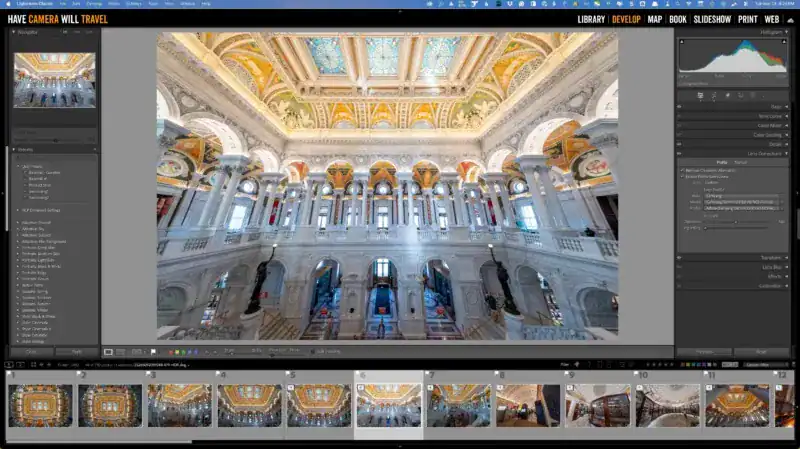
Here’s a quick side-by-side showing the effect of the distortion slider when using that profile, basically transforming fisheye distortion into to straight rectilinear. (NB: When using that profile, the vignetting slider is unhelpful.)
Conclusions
Pros & cons
Pros:
- Solid, well-built construction
- Sharp optics
- Full-frame fisheye coverage
- Available for multiple camera mounts
- Fast f/2.8 maximum aperture
Cons:
- Difficult to get reliable focus, especially at f/2.8
- Focus ring is overly light and sensitive
- Heavy and front-heavy on camera bodies
- No EXIF communication with camera
- Pronounced flaring in some conditions
- No filter thread compatibility (which is typical with most fisheyes)
The lens is surprisingly sharp across the frame when you can get it properly focused. But I have found it a bit of a struggle to reliably lock in the focus accurately, significantly harder than other manual-focus fisheye lenses I’ve been shooting with. That’s particularly noticeable with the kind of hand-held photography I’ve been shooting with it; it would be less of an issue if you’re shooting with a tripod.
AstrHori emphasizes use for astrophotography, and I can see how it would be a good choice for that. But there’s way too much light pollution where I live to put that to the test, and I haven’t had a chance to head out to darker skies with it. But aside from being sharp and fast, there’s nothing specific that limits it to that type of photography — except maybe that it’s kind of big and heavy, making it a bit of a pain to walk around with for any length of time.
I was trying out TTArtisan’s full-frame fisheye (TTArtisan 11mm f/2.8 fisheye) along side this one. When shooting, I actually preferred the feel of the AstrHori even though it’s quite a lot of heavier and bulkier. But when it came to processing the images, the scales swung strongly back in favor of the TTArtisan for the simple reason that I’ve been getting a hugely higher proportion of tack-sharp images out of it. I’ll be posting a separate review of the TTArtisan that will go into much more detail on that lens.

Things worth knowing
Like most of Nikon’s Z cameras, the Z8 has a really useful feature that at least embeds the lens name in the EXIF data (it doesn’t help with the lens profile part, though). You can manually enter non-CPU lens data by going to the Settings Non-CPU lens data section of the camera’s menu and entering the information there. I’ll go into more detail separately, but you can find this on the Z8 under Setup Menu > Noon-CPU lens data.
The optical design uses 11 elements in 8 groups with 5 aperture blades, and there’s no image stabilization – you’re relying on the camera body’s stabilization if you’re using a camera that has it.

Price & availability
One of the definite pluses of many of these third-party manual-focus lenses is how cost-effective they are, and this is no exception: it’s priced at $256.
I’ve been shooting with the Nikon Z version, but you can also get versions with the Sony E, Leica L, and Canon RF mount.
Check the current price and availability at:
Specifications
| Specification | Details |
|---|---|
| Focal Length | 12mm |
| Maximum Aperture | f/2.8 |
| Minimum Aperture | f/16 |
| Lens Mount | Nikon Z (also available in E/R/L) |
| Format Coverage | Full-Frame |
| Angle of View | 185° |
| Minimum Focus Distance | 7.9 in (200 mm) |
| Optical Design | 11 Elements in 8 Groups |
| Aperture Blades | 5 |
| Focus Type | Manual Focus |
| Image Stabilization | No |
| Dimensions (Diameter × Length) | 3.5 × 3.9 in (9 × 10 cm) |
| Weight | 1.7 lb (757.5 g) |